5 Omega-3 Foods for Brain, Skin and Heart Health
Omega-3 fats support your heart, brain and skin, but most people do not eat enough. Here are five of the best fish and plant sources and simple ways to add them to your week.
By KateLast reviewed
Omega-3s are essential fats, which means your body cannot make them in meaningful amounts; you need to get them from food. They are part of every cell membrane and are linked to heart health, brain function and healthy skin. Yet many people eat far less than recommended.
The 3 types of omega-3
- EPA and DHA: found mainly in fatty fish and algae. These are the forms most closely linked to heart and brain health.
- ALA: found in plant foods like chia, flax and walnuts. Your body can convert a small amount into EPA and DHA.
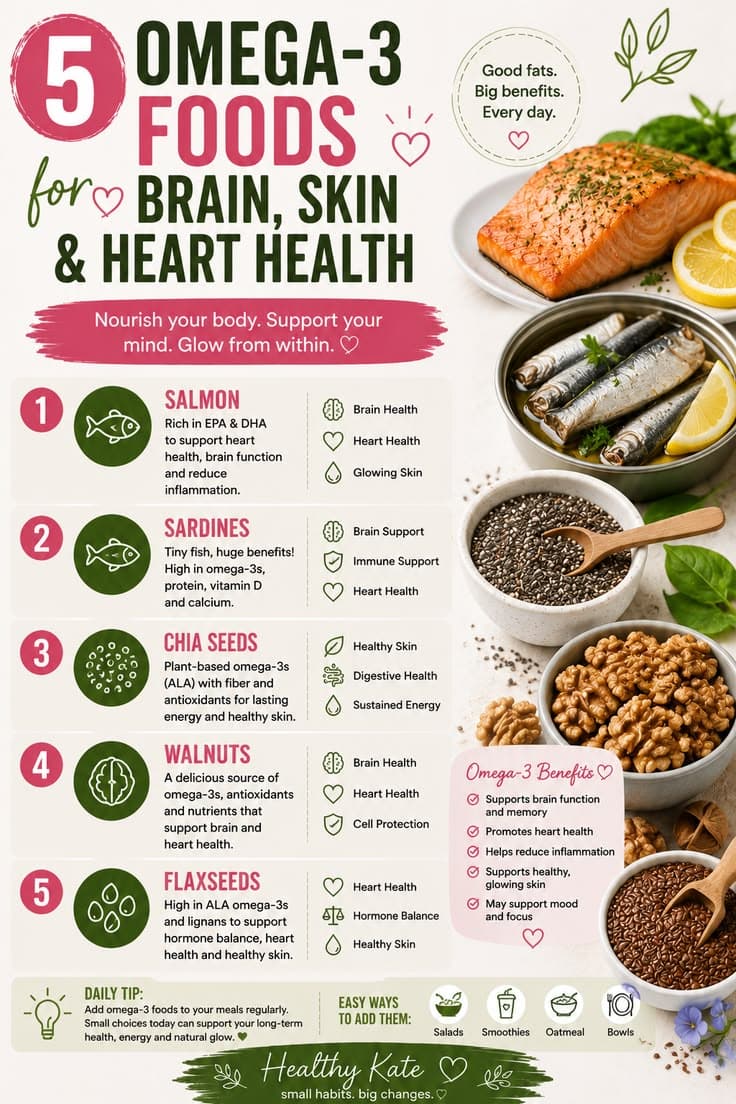
1. Salmon
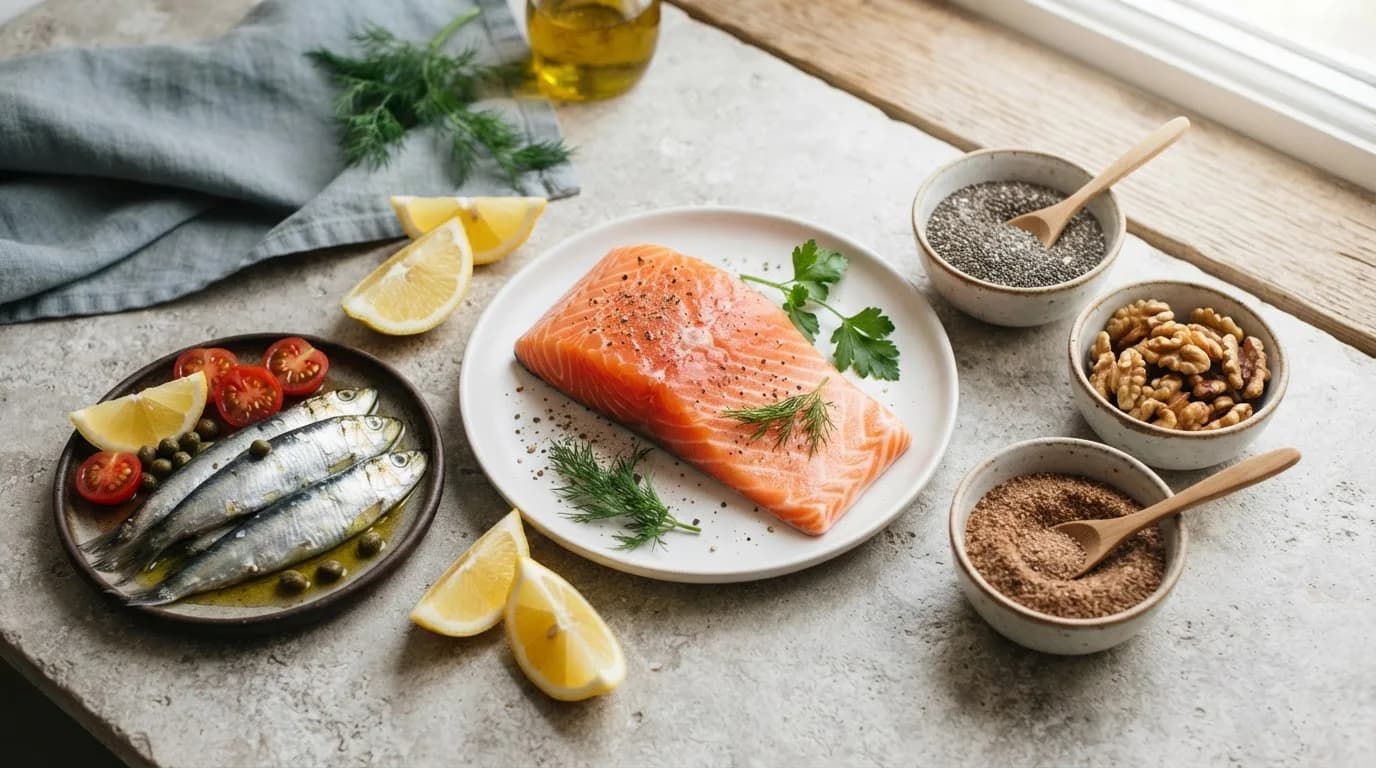
Rich in EPA and DHA plus high-quality protein and vitamin D. A 3-ounce portion of farmed Atlantic salmon provides around 1.5 to 2 g of omega-3s. Try our keto salmon dinner with roasted vegetables or the Mediterranean salmon avocado salad.
2. Sardines
Tiny fish with big benefits: omega-3s, protein, vitamin D and calcium (from the soft bones). They are affordable, sustainable and low in mercury. Mash them on whole-grain toast with lemon and herbs.
3. Chia seeds
The richest common plant source of ALA, with about 5 g per ounce, plus fiber and antioxidants. See 5 chia seed benefits.
4. Walnuts
The only common nut with significant ALA, about 2.5 g per ounce. A handful makes a great snack and is linked to heart health in research.
5. Flaxseeds
Rich in ALA and lignans. Always eat them ground, because whole seeds often pass through undigested. More in 5 flaxseed benefits.
Omega-3 benefits
- Heart health: omega-3s help lower triglycerides and support healthy blood vessels.
- Brain function: DHA is a major building block of the brain.
- Healthy skin: omega-3s are part of the skin barrier and may support hydration.
- Inflammation balance: they are used to make compounds that help resolve inflammation. More in 5 anti-inflammatory foods.
- Mood: some research links omega-3 intake with mood, although results vary.
Easy ways to add omega-3s to your week
- Salads: add canned salmon, sardines or walnuts.
- Smoothies: blend in 1 tbsp chia or ground flaxseed.
- Oatmeal: top with walnuts and ground flaxseed.
- Bowls: add salmon to a grain or salad bowl twice a week.
- Snacks: a small handful of walnuts with an apple.
A simple omega-3 week
- Monday: oats with ground flaxseed and walnuts
- Tuesday: salmon with roasted vegetables
- Wednesday: chia pudding for breakfast
- Thursday: sardines on toast for lunch
- Friday: salmon salad or leftovers
- Weekend: walnuts as a snack, smoothie with chia
Mercury and safety
Salmon, sardines, anchovies, herring and trout are low in mercury. Limit high-mercury fish like swordfish, king mackerel and bigeye tuna, especially if you are pregnant. If you take blood thinners, talk to your doctor before taking high-dose fish oil.
FAQ
Omega-3 Questions
How much omega-3 do I need?
Many health organizations recommend about two servings of fatty fish per week, which provides roughly 250 to 500 mg of EPA and DHA per day on average. For plant-based ALA, women need about 1.1 g per day.
Are plant omega-3s as good as fish omega-3s?
Plant foods provide ALA, which the body converts to EPA and DHA only in small amounts. Fish and algae oil provide EPA and DHA directly. Plant sources are still valuable.
Should I take a fish oil supplement?
If you rarely eat fatty fish, a supplement may help. Talk to your doctor first, especially if you take blood thinners or have a bleeding disorder.
Is canned fish a good source?
Yes. Canned salmon, sardines and mackerel are affordable, convenient and rich in omega-3s.
The bottom line
Eat fatty fish about twice a week and add plant sources like chia, walnuts and ground flaxseed on the other days. It is one of the simplest habits for your heart, brain and skin.
This article is for general information and does not replace medical advice. Talk to your doctor before making changes, especially if you have a health condition, are pregnant or take medication.