Probiotic and Prebiotic Foods for Gut Health, Less Bloating and Glowing Skin
Probiotics add beneficial bacteria, prebiotics feed them. Here are five of each, how they support digestion and skin, and easy ways to eat more every day.
By KateLast reviewed
Your gut is home to trillions of bacteria that help digest food, support immunity and even influence how your skin looks. Two groups of foods help keep that community healthy: probiotic foods add beneficial bacteria, and prebiotic foods feed them. You need both.
5 probiotic foods for gut health and less bloating
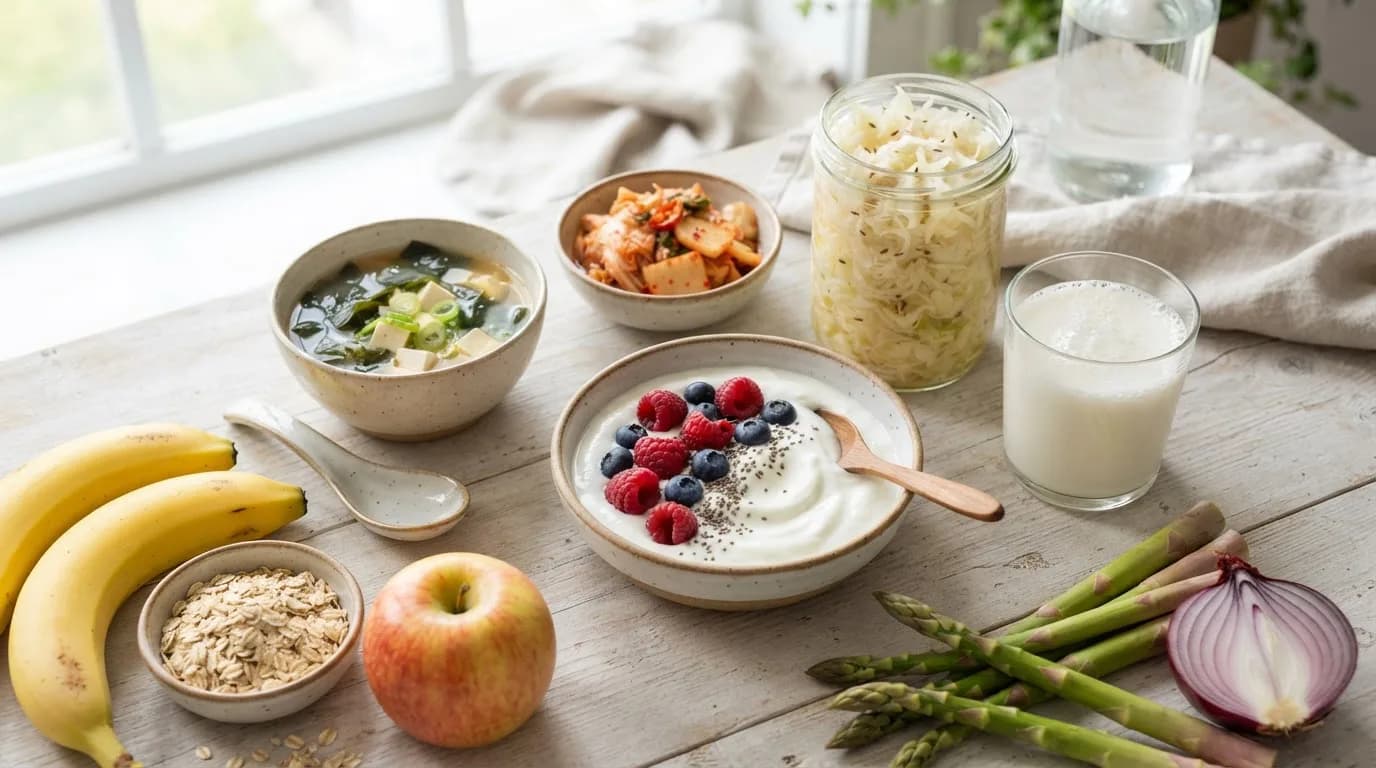
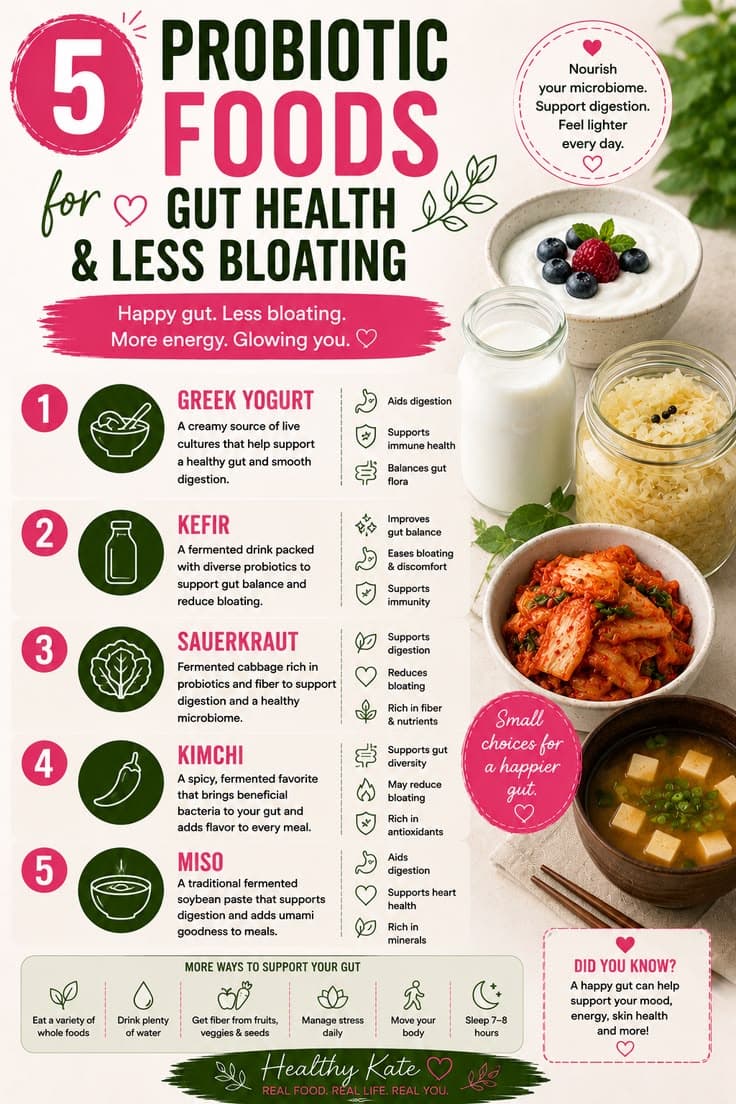
- Greek yogurt: look for "live and active cultures" on the label. It also adds protein. See 5 Greek yogurt benefits.
- Kefir: a fermented milk drink with an even wider variety of bacteria and yeasts than yogurt. Try it in smoothies.
- Sauerkraut: fermented cabbage. Choose refrigerated, unpasteurized versions, because heat kills the live cultures.
- Kimchi: spicy fermented vegetables, full of flavor and fiber.
- Miso: fermented soybean paste. Stir it into soups after cooking, not while boiling, to protect the cultures.
5 prebiotic foods that feed your good bacteria
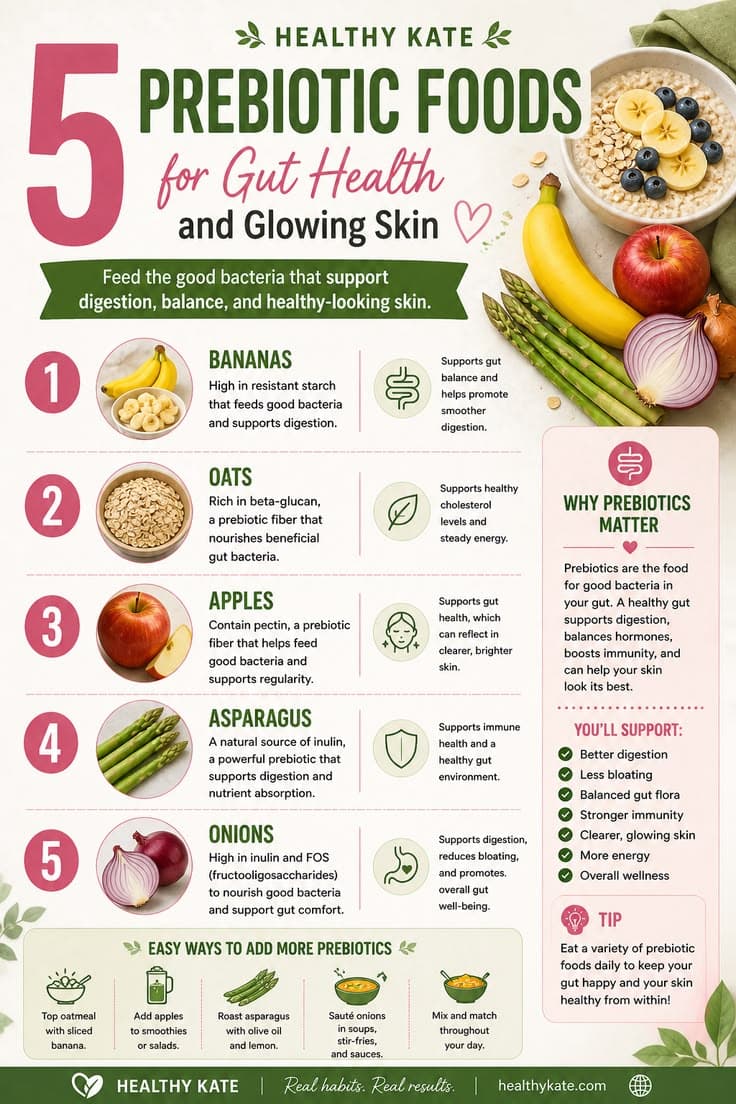
- Bananas: especially slightly green ones, rich in resistant starch.
- Oats: contain beta-glucan, a fiber that feeds gut bacteria and supports healthy cholesterol.
- Apples: rich in pectin. More in 5 apple benefits for gut health.
- Asparagus: a natural source of inulin.
- Onions and garlic: high in inulin and fructooligosaccharides (FOS).
Other great prebiotic foods: leeks, chicory, Jerusalem artichokes, beans, lentils and flaxseed.
5 gut-skin habits for healthy-looking skin
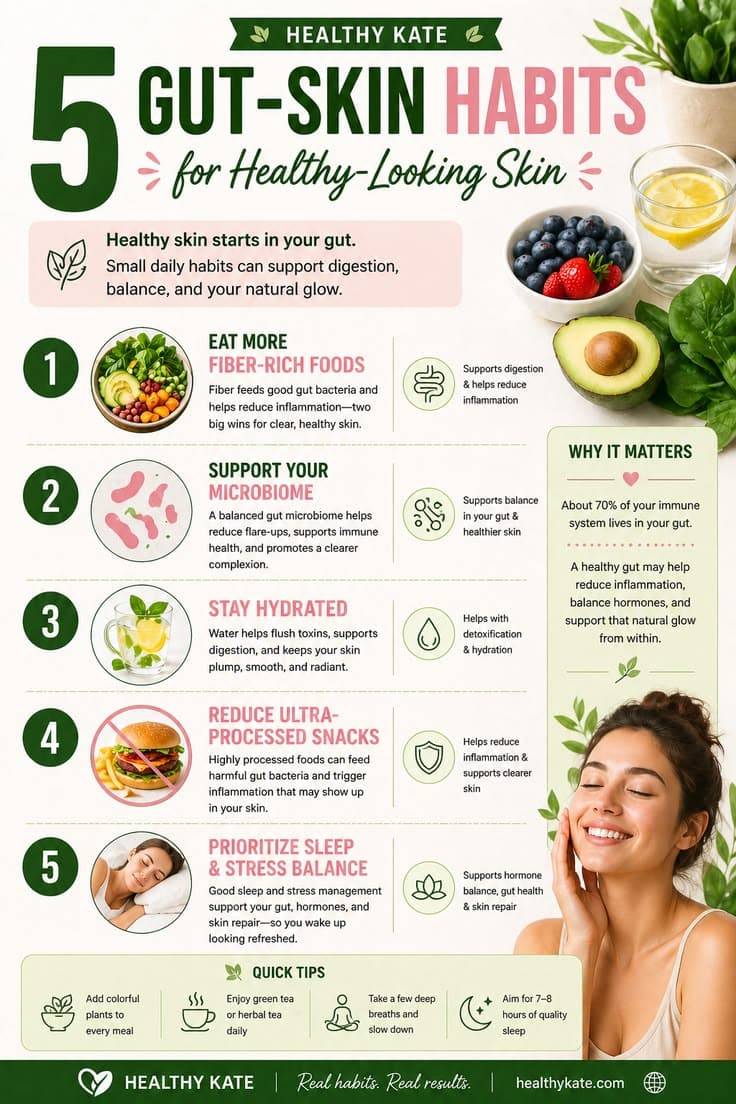
Researchers increasingly talk about the gut-skin axis: inflammation and imbalance in the gut may show up on the skin. These habits support both:
- Eat more fiber-rich foods: fiber feeds good bacteria. See 5 fiber habits for women over 40.
- Support your microbiome: add one fermented food a day.
- Stay hydrated: water supports digestion and keeps skin plump.
- Reduce ultra-processed snacks: they often push out the fiber your gut bacteria need.
- Prioritize sleep and stress balance: both influence gut health and skin repair.
Easy ways to eat more probiotics and prebiotics
- Top oats with Greek yogurt and a sliced banana: probiotic plus prebiotic in one bowl.
- Use kefir as the base for a smoothie.
- Add a spoon of sauerkraut or kimchi to eggs, bowls and sandwiches.
- Roast asparagus or sauté onions and garlic as a base for dinner.
- Snack on an apple with nut butter.
Gut-friendly day example
- Breakfast: Greek yogurt with oats, banana and chia seeds
- Lunch: a chickpea avocado bowl with a spoon of kimchi
- Snack: an apple and a few almonds
- Dinner: salmon with roasted asparagus and garlic
- Evening: a cup of peppermint tea
Go slowly
If you are new to fermented or high-fiber foods, start with small portions. Adding a lot at once can cause gas and bloating while your gut adjusts. If you have IBS or another digestive condition, some prebiotic foods (like onions and garlic) can trigger symptoms; a dietitian can help you find what works.
FAQ
Gut Health Questions
What is the difference between probiotics and prebiotics?
Probiotics are live beneficial microorganisms found in fermented foods like yogurt and kefir. Prebiotics are types of fiber that feed these bacteria, found in foods like bananas, oats, onions and asparagus.
How quickly can I improve my gut health?
Studies show the gut microbiome can begin to shift within days of a diet change, but lasting changes come from consistent habits over weeks and months.
Do probiotic foods help with bloating?
Some people find that fermented foods ease bloating over time, while others feel more bloated at first. Start with small amounts and see how your body reacts.
Do I need a probiotic supplement?
Most people can support their gut with food. Specific probiotic strains may help in certain situations, so it is best to ask your doctor which one fits your needs.
The bottom line
A healthy gut needs both: probiotic foods that add beneficial bacteria and prebiotic foods that feed them. Add one of each to your day, eat plenty of fiber and plants, and give your gut a few weeks to show the difference.
This article is for general information and does not replace medical advice. Talk to your doctor before making changes, especially if you have a health condition, are pregnant or take medication.