5 Chia Seed Benefits for Fiber, Fullness and Gut Health
Chia seeds are tiny, but they bring fiber, plant omega-3, protein and minerals. Here are 5 benefits, how much to eat, how to use them safely and an easy 5-minute chia pudding.
By KateLast reviewed
Chia seeds were once a niche health food. Today they show up in puddings, smoothies, overnight oats and even water. The reason is simple: these tiny seeds pack a lot of nutrition into a spoonful and are incredibly easy to use.
Here are five benefits of chia seeds that are backed by their nutrition profile, how much to eat, how to use them safely and an easy chia pudding you can prep in five minutes.
Chia seed nutrition at a glance
Two tablespoons (about 28 grams) of chia seeds provide roughly:
- 10 grams of fiber, about a third of the daily target for many adults
- 5 grams of protein
- 5 grams of plant omega-3 (ALA)
- Calcium, magnesium, phosphorus and iron
- About 140 calories
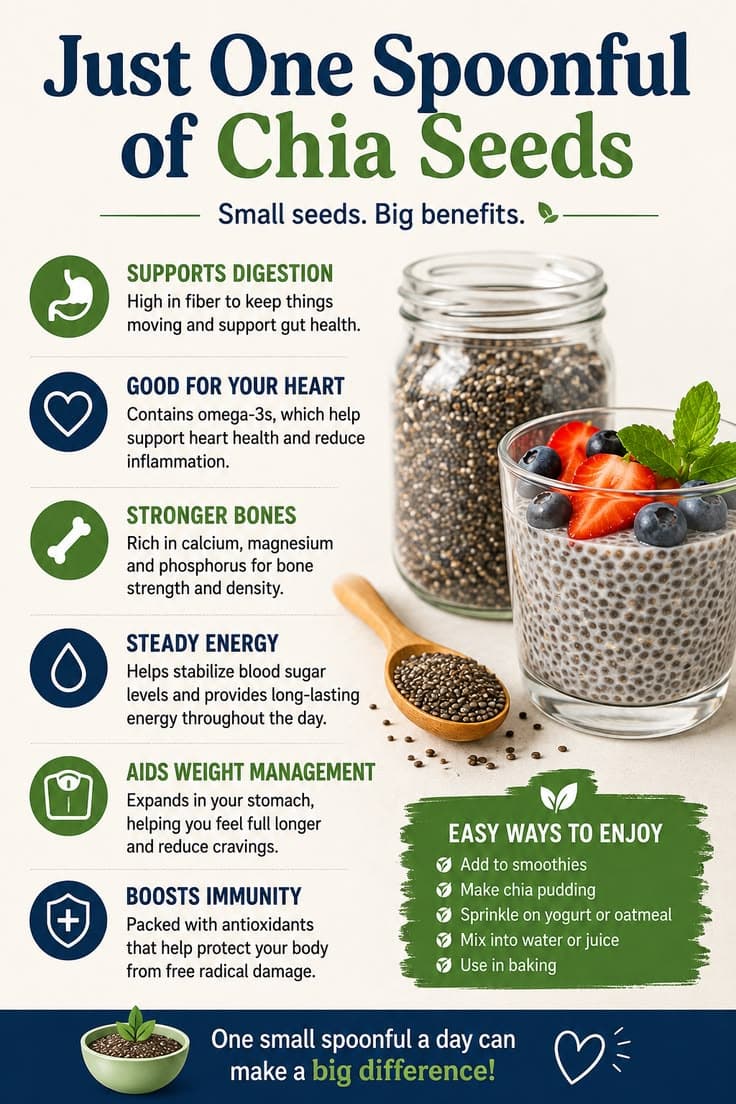
1. One of the richest fiber sources you can find
Chia seeds are mostly fiber. Most of it is soluble fiber, which absorbs water and forms the gel you see when chia seeds sit in liquid. This type of fiber helps slow digestion and supports regular bowel movements.
Since most people fall short on fiber, a spoonful of chia is one of the easiest upgrades you can make. It pairs well with other fiber foods like ground flaxseed, oats and berries.
2. They help meals feel more filling
Because chia seeds absorb many times their weight in liquid, they add volume to puddings, smoothies and oats. Together with their fiber and protein, this can help a breakfast keep you satisfied for longer.
This is exactly why a plain bowl of oats often leaves people hungry while the same bowl with chia, yogurt and nuts lasts until lunch. Our oatmeal habits for fullness and steady energy show more easy upgrades.
3. Food for your gut bacteria
The fiber in chia seeds is not only good for regularity. Part of it is fermented by the bacteria in your large intestine, which produce short-chain fatty acids that help keep the gut lining healthy.
For a happy gut, variety matters. Chia seeds, vegetables, legumes, whole grains and fermented foods like yogurt work best together.
4. Plant-based omega-3 fats
Chia seeds are one of the best plant sources of alpha-linolenic acid (ALA), an omega-3 fat. ALA is linked to heart health. The body converts only a small part of ALA into the omega-3 fats found in fish (EPA and DHA), so chia seeds are a great addition but not a full replacement for fatty fish if you eat it.
5. Steadier energy after meals
When you add chia seeds to a meal with carbohydrates, their soluble fiber can slow how quickly sugar enters the bloodstream. Some small studies found smaller blood sugar rises after meals that included chia seeds.
That makes them a natural fit for a balanced breakfast, along with other morning habits for steady blood sugar.
Easy vanilla berry chia pudding
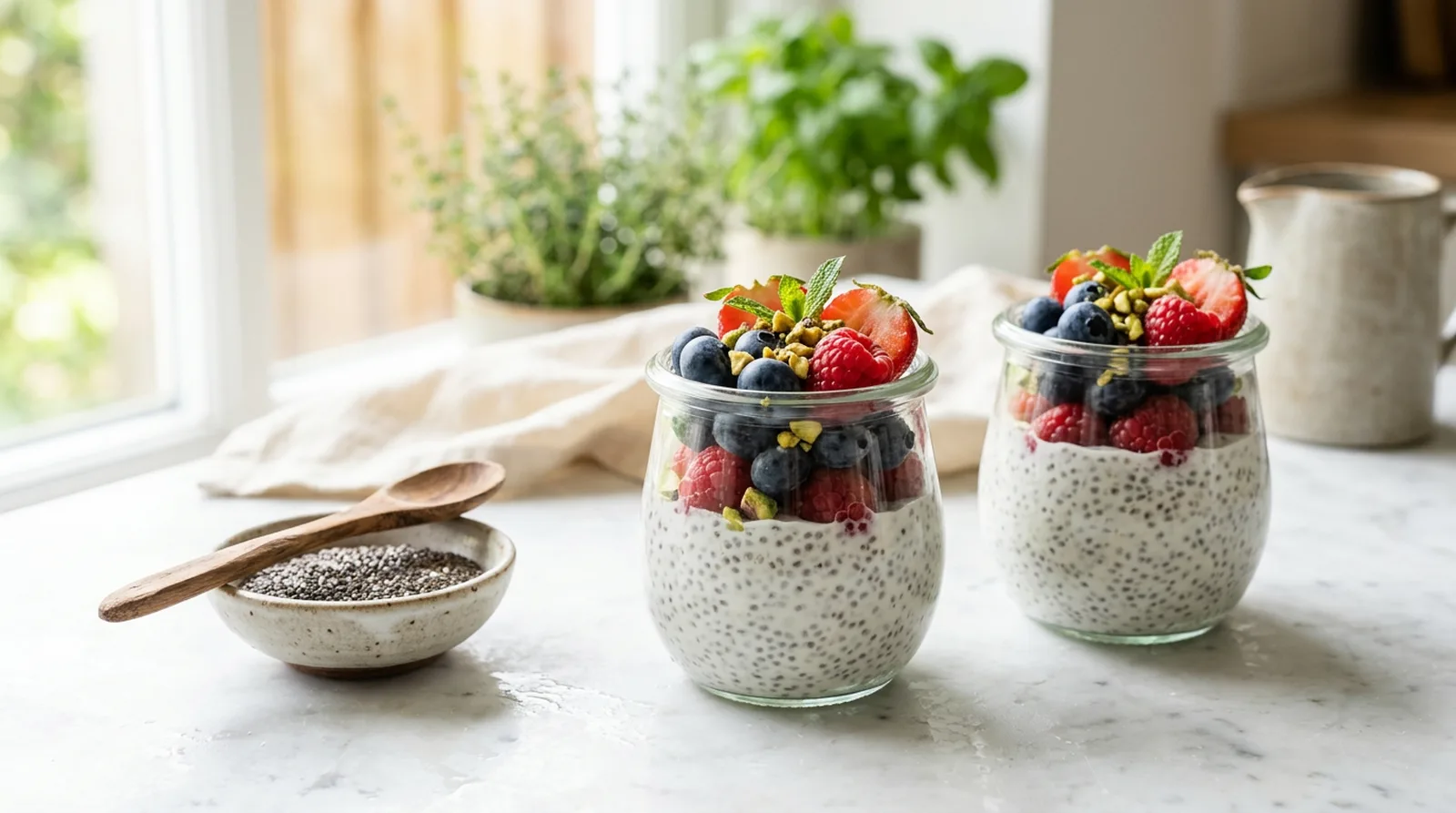
This is the simplest way to start with chia seeds. Mix it in the evening, and breakfast is ready when you wake up. The Greek yogurt adds protein, which makes the pudding much more filling than versions made with milk alone.
Recipe
Easy Vanilla Berry Chia Pudding
- Prep:
- 5 min
- Total:
- 2 h 5 min
- Serves:
- 2 servings
Ingredients
- 4 tbsp chia seeds (about 40 g)
- 1 cup (240 ml) milk or unsweetened plant milk
- 1/2 cup (125 g) plain Greek yogurt
- 1 tsp maple syrup or honey, optional
- 1/2 tsp vanilla extract
- 1 pinch cinnamon
- 1 cup mixed berries
- 1 tbsp chopped nuts or pumpkin seeds for topping
Instructions
- 1Add chia seeds, milk, Greek yogurt, maple syrup, vanilla and cinnamon to a jar or bowl and stir well.
- 2Wait 5 minutes, then stir again to break up any clumps.
- 3Cover and refrigerate for at least 2 hours or overnight until thick and creamy.
- 4Stir once more, divide into two jars and top with berries and chopped nuts before serving.
Approx. 260 kcal per serving. Nutrition values are estimates.
Tips for the perfect texture
- Stir twice. Stir right away and again after 5 minutes to prevent clumps.
- Adjust thickness. Too thick? Add a splash of milk. Too thin? Add a teaspoon more chia and wait 10 minutes.
- Make it smooth. Blend the pudding if you do not like the texture of whole seeds.
- Prep ahead. It keeps in the fridge for up to 4 days, so you can make several jars at once.
Flavor ideas
- Chocolate: add 1 tablespoon cocoa powder and top with banana.
- Tropical: use coconut milk and top with mango and passion fruit.
- Apple pie: top with diced apple, cinnamon and walnuts.
- Peanut butter and jelly: stir in 1 tablespoon peanut butter and top with mashed raspberries.
More easy ways to eat chia seeds
- In smoothies: add 1 tablespoon, as in this pineapple chia smoothie or a strawberry banana smoothie with Greek yogurt.
- On yogurt bowls: sprinkle over a Greek yogurt bowl with berries.
- In overnight oats: add 1 tablespoon per serving and a little extra liquid.
- As a jam: mash berries, stir in chia and let it thicken for 15 minutes.
- In baking: replace one egg with 1 tablespoon chia mixed with 3 tablespoons water.
If smoothies are your favorite way to use chia seeds and you would like a ready-made plan, this program may be a good fit:
How to eat chia seeds safely
- Start small. Begin with 1 teaspoon and work up to 1 to 2 tablespoons per day.
- Drink enough water. Fiber needs fluid to do its job.
- Do not eat a spoonful of dry seeds followed by water. They swell quickly and can be hard to swallow. Soak them or mix them into food.
- Check with your doctor if you have swallowing difficulties, a bowel condition or take blood thinning or blood pressure medication.
FAQ
Chia Seed Questions
How many chia seeds should I eat per day?
A common amount is 1 to 2 tablespoons (about 10 to 20 grams) per day. That already provides around 4 to 8 grams of fiber. If you are new to high-fiber foods, start with 1 teaspoon and increase slowly while drinking enough water.
Do chia seeds need to be soaked?
Not always. You can sprinkle them on yogurt or blend them into smoothies. Soaking makes them softer and easier to digest for many people. Avoid eating large amounts of dry chia seeds followed by water, because they swell quickly.
Do chia seeds help with weight loss?
Chia seeds are not a fat burner. Their fiber and protein can make meals more filling, which may help with balanced portions and fewer snacks. Studies on chia seeds and weight loss show mixed results, so think of them as a helpful habit, not a solution.
Can chia seeds cause bloating?
Yes, especially if you suddenly eat a lot of fiber. Start with small amounts, soak the seeds and drink enough fluids. Most people get used to them within a week or two.
Chia seeds or flaxseed, which is better?
Both are great. Chia seeds can be eaten whole and form a gel, which makes them perfect for puddings. Flaxseed should be ground to be absorbed well and adds lignans. Many people use both.
The bottom line
Chia seeds are a small habit with a big payoff: lots of fiber, plant omega-3, protein and minerals in one spoonful. They help meals feel more filling, support your gut and fit into almost any breakfast. Start with a teaspoon, soak them when you can and try the vanilla berry chia pudding as an easy first step.
This article is for general information and does not replace medical or nutritional advice. Talk to your doctor or a registered dietitian before making changes, especially if you have a health condition or take medication.