High-Protein Breakfast Without Eggs: 8 Easy Ideas (20–35 g Protein)
No eggs, no problem: Greek yogurt, cottage cheese, tofu, beans, soy milk and peanut butter make it easy to get 20 to 30 g of protein at breakfast. Here are 8 simple ideas with the protein math.
By KateLast reviewed
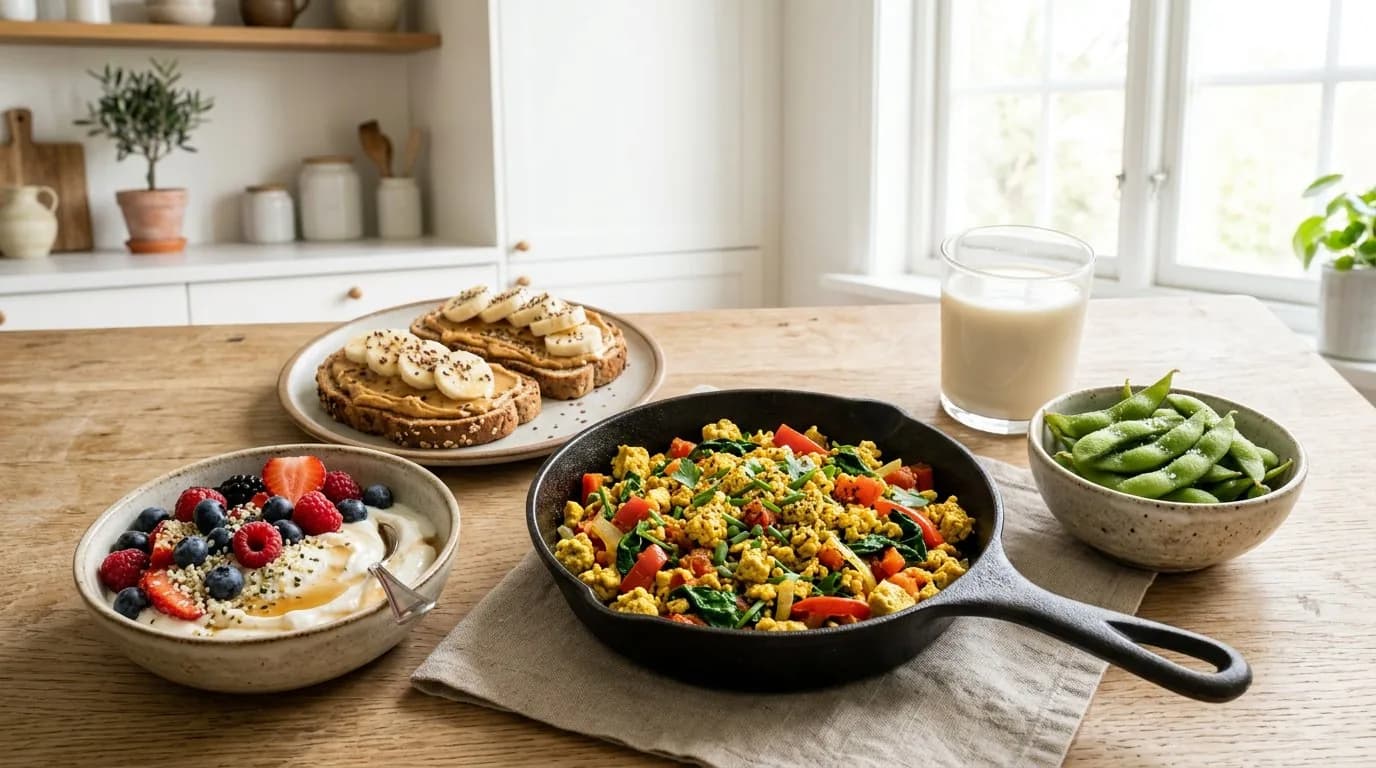
You can easily get 20 to 30 g of protein at breakfast without eggs. The trick is to build the meal around one strong protein food, like Greek yogurt, cottage cheese, tofu or beans, and add a second, smaller one such as soy milk, peanut butter or hemp hearts.
Maybe you are bored of eggs, maybe they do not agree with you, or maybe you simply have no time to cook. Either way, here are eight egg-free breakfasts, each with the protein math so you know what you are getting.
The 8 ideas at a glance
- Greek yogurt power bowl: about 27 g
- Tofu veggie scramble with toast: about 25 to 28 g
- Cottage cheese toast with smoked salmon: about 30 g
- No-powder overnight oats: about 28 g
- Peanut butter toast with a soy milk latte: about 22 g
- Black bean breakfast burrito: about 25 g
- Yogurt and soy milk smoothie: about 28 g
- Savory cottage cheese bowl with chickpeas: about 35 g
All values are approximate and based on typical products. Your brand may be a few grams higher or lower, so a quick glance at the label is worth it.
1. Greek yogurt power bowl (about 27 g)
One cup of plain nonfat Greek yogurt brings roughly 23 g of protein on its own. Add a tablespoon of hemp hearts (about 3 g), a handful of berries and a little cinnamon, and you are at about 27 g in two minutes.
Use plain yogurt and let fruit do the sweetening, since flavored versions often hide a lot of added sugar. Our yogurt bowl with berries, chia and nuts shows the full recipe and topping ideas, and here is more on what Greek yogurt does for protein and gut health.
2. Tofu veggie scramble with toast (about 25 to 28 g)
Tofu is the closest thing to scrambled eggs without the eggs. Crumble about 5 oz (150 g) of firm tofu into a pan with a little oil, add spinach, peppers and tomatoes, and season with turmeric, black pepper and a pinch of salt. That gives you roughly 22 to 25 g of protein, plus about 4 g from a slice of whole-grain toast.
Soy is a complete protein, which means it contains all the essential amino acids your body cannot make itself. That makes this scramble the best fully plant-based option on the list.
3. Cottage cheese toast with smoked salmon (about 30 g)
Spread 1/2 cup of cottage cheese (about 12 g) on two slices of whole-grain bread (about 8 g) and top with 2 oz of smoked salmon (about 10 g), cucumber and dill. It tastes like a lighter bagel with lox and takes five minutes.
Watch the salt here: both cottage cheese and smoked salmon are fairly high in sodium, so skip extra salt and choose a reduced-sodium cottage cheese if you can.
4. No-powder overnight oats (about 28 g)
If you want breakfast waiting in the fridge, overnight oats are hard to beat. Stirring Greek yogurt, cottage cheese, chia and hemp hearts into the oats lifts a jar from around 8 g to roughly 28 g of protein. The full recipe for these overnight oats made without protein powder includes four flavor variations.
5. Peanut butter toast with a soy milk latte (about 22 g)
Two slices of whole-grain toast (about 8 g) with 2 tablespoons of peanut butter (about 7 g), plus a latte made with a cup of soy milk (about 7 g), adds up to roughly 22 g. It is not the highest number on this list, but it is a fast, familiar breakfast that works without dairy.
Choose soy milk over almond or oat milk if protein is the goal. Most almond milks have only about 1 g of protein per cup.
6. Black bean breakfast burrito (about 25 g)
Fill a large whole-wheat tortilla (about 5 g) with 1/2 cup of warm black beans (about 7 g), 1 oz of cheddar (about 7 g), salsa and 1/4 cup of Greek yogurt instead of sour cream (about 6 g). Beans add fiber too, which makes this one of the most filling ideas here.
Make four at once, wrap them in foil and keep them in the fridge for up to 3 days or in the freezer for a month.
7. Yogurt and soy milk smoothie (about 28 g)
Blend 3/4 cup of Greek yogurt (about 17 g), a cup of soy milk (about 7 g), a tablespoon of peanut butter (about 4 g), half a frozen banana and a handful of spinach. You get a thick, milkshake-like drink with about 28 g of protein. For more blends, see our four high-protein smoothies for breakfast and after workouts.
8. Savory cottage cheese bowl with chickpeas (about 35 g)
A cup of cottage cheese (about 24 g) topped with 1/2 cup of chickpeas (about 7 g), hemp hearts, cucumber, tomatoes and olive oil is the highest-protein option here. The original cottage cheese breakfast bowl recipe uses an egg, but chickpeas work just as well and add extra fiber.
No eggs and no dairy?
Then soy and legumes do most of the work. Good combinations:
- Tofu scramble + whole-grain toast: about 25 to 28 g
- Smoothie with soy milk, soy yogurt and peanut butter: about 20 g, depending on the yogurt
- Peanut butter toast + soy milk latte: about 22 g
- Beans on whole-grain toast with hemp hearts: about 18 to 20 g
Plant proteins are easier to combine than to max out, so pair two sources in each meal. Harvard's Nutrition Source also points out that plant proteins like soy, beans and nuts come with a healthier overall "protein package" than processed meats.
How much protein should breakfast have?
There is no official breakfast target. The baseline recommendation is at least 0.8 g of protein per kilogram of body weight per day, which is about 54 g for a 150 lb (68 kg) woman. Many active women and women over 40 aim higher.
Spreading protein across meals is easier than catching up at dinner, which is why 20 to 30 g at breakfast is a practical goal. Pair it with fiber and you get the effect described in our protein and fiber combos for lasting fullness.
Quick tips to make it a habit
- Keep two protein bases in the fridge. A tub of Greek yogurt and a tub of cottage cheese cover most of the ideas above.
- Batch the slow parts. Press and crumble tofu, cook a pot of beans or mix overnight oats on Sunday.
- Think in pairs. One big protein food plus one small booster (hemp hearts, peanut butter, soy milk) is the simplest way to reach 25 g.
- Do not fear repetition. Two or three breakfasts you actually like beat a long list you never make.
Want even more inspiration? These simple breakfast ideas for staying full longer include a few egg-based options for the days you feel like them.
The bottom line
A high-protein breakfast without eggs is mostly about choosing the right base: Greek yogurt, cottage cheese, tofu or beans, plus one smaller booster. Every idea here lands at roughly 20 to 35 g of protein, needs no protein powder and takes ten minutes or less.
This article is for general information and does not replace medical or nutrition advice. If you have a food allergy, kidney disease or another medical condition, talk to your doctor or a registered dietitian about your protein needs.
FAQ
Egg-Free Protein Breakfast Questions
What can I eat for protein in the morning instead of eggs?
Greek yogurt or skyr, cottage cheese, tofu, beans, soy milk, peanut butter, hemp hearts, smoked salmon and leftover chicken are all good options. Combining two of them is the easiest way to reach 20 to 30 g.
How do I get 30 g of protein at breakfast without eggs?
A cup of plain Greek yogurt (about 23 g) with a tablespoon of hemp hearts and a glass of soy milk on the side gets you there. Cottage cheese toast with smoked salmon is another simple 30 g option.
What is a high-protein breakfast without eggs or dairy?
A tofu scramble with whole-grain toast, a smoothie with soy milk, soy yogurt and peanut butter, or peanut butter toast with a soy milk latte. Soy is a complete protein, which makes it the most useful dairy-free swap.
Is a high-protein breakfast good for weight loss?
It can help because protein tends to keep you full longer, which makes mid-morning snacking less likely. Your total intake over the day still matters most.
Can I get enough protein at breakfast without protein powder?
Yes. Every idea in this article uses whole foods only. Protein powder is convenient, but Greek yogurt, cottage cheese, tofu and soy milk do the job just as well.
Sources
We check health claims against research summaries and official fact sheets. Links open the original source.
- Protein · Harvard T.H. Chan School of Public Health, 2026
- Straight Talk About Soy · Harvard T.H. Chan School of Public Health, 2026
- FoodData Central · U.S. Department of Agriculture, 2026
- The role of protein in weight loss and maintenance · American Journal of Clinical Nutrition (Leidy et al.), 2015