5 Anti-Inflammatory Foods for Energy and Healthy Aging
Long-term, low-grade inflammation is linked to fatigue and faster aging. These five anti-inflammatory foods, plus a few daily habits, are a simple place to start.
By KateLast reviewed
Inflammation is your body's natural response to injury and infection, and in the short term it is helpful. The problem is chronic, low-grade inflammation, which can linger for years and is linked to fatigue, weight gain, joint pain and many age-related conditions. What you eat every day is one of the levers you can influence.
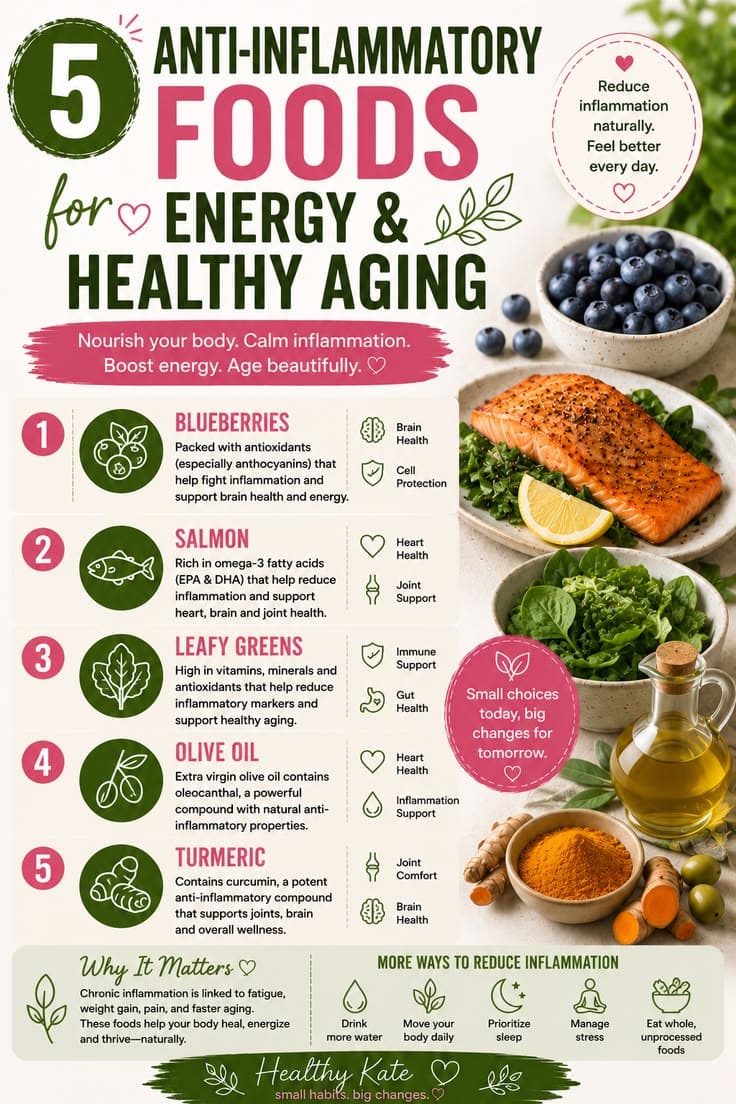
1. Blueberries
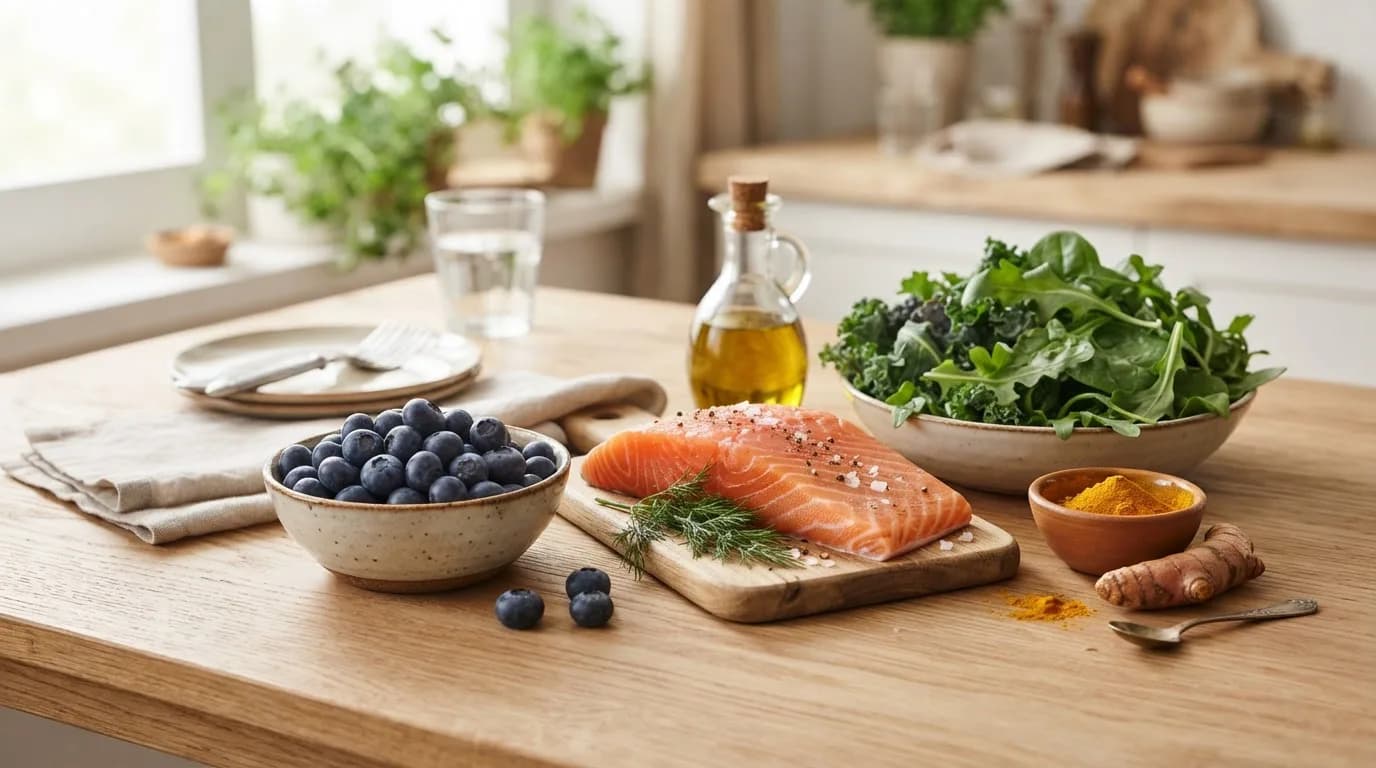
Blueberries are rich in anthocyanins, the pigments that give them their deep color and have antioxidant and anti-inflammatory effects. Add a cup to breakfast a few times a week. More in 5 blueberry benefits.
2. Salmon
Fatty fish provides the omega-3 fats EPA and DHA, which the body uses to make compounds that help resolve inflammation. Aim for two servings of fatty fish per week. See 5 omega-3 foods.
3. Leafy greens
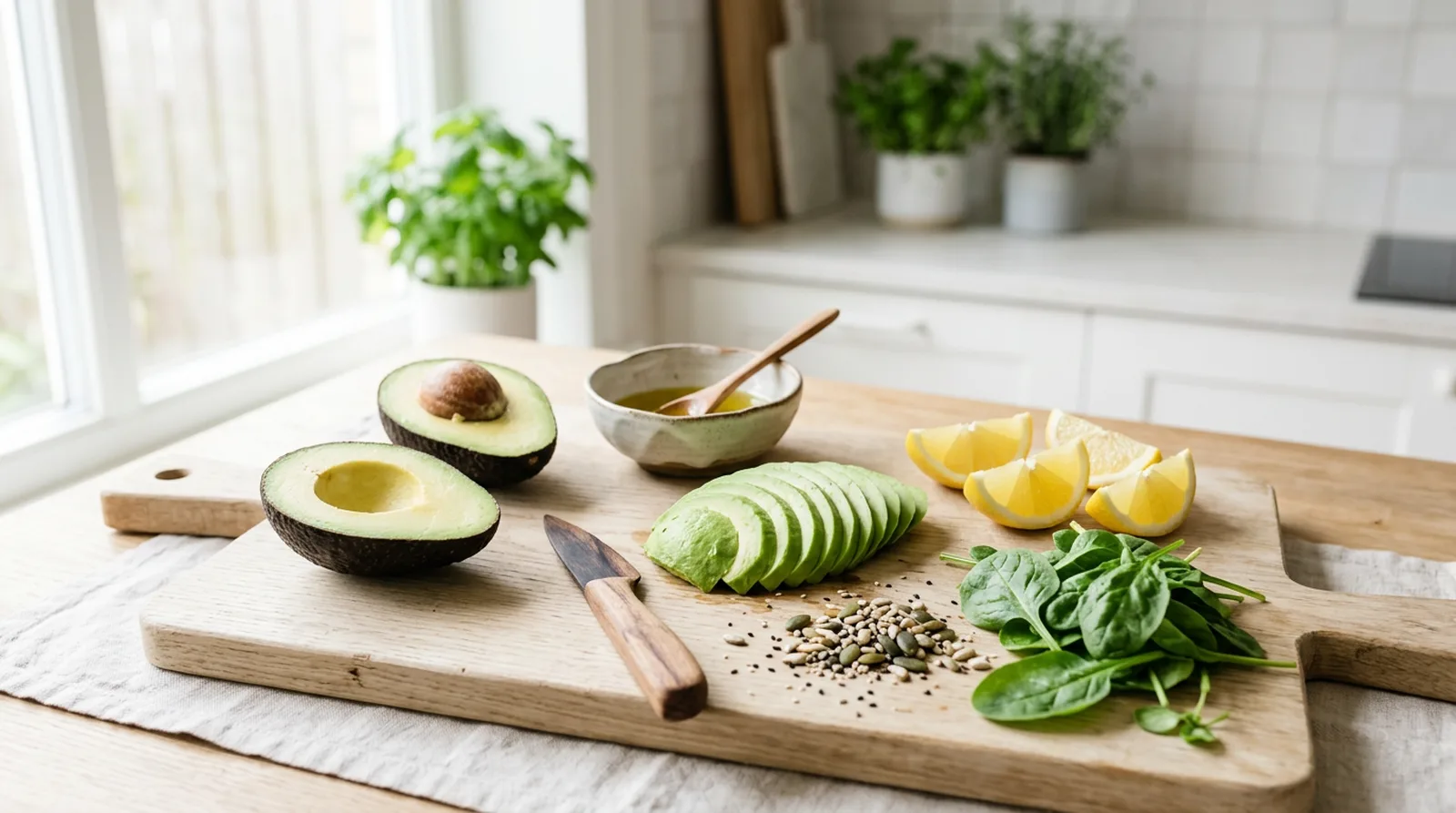
Spinach, kale, Swiss chard and arugula are packed with vitamins, minerals and antioxidants. They are also low in calories, so you can eat a lot of them.
4. Extra virgin olive oil
Olive oil contains oleocanthal, a compound with natural anti-inflammatory properties, and healthy monounsaturated fats. Use it as your main cooking and salad oil, as in the Mediterranean diet.
5. Turmeric
Turmeric contains curcumin, studied for its anti-inflammatory and antioxidant effects. Combine it with black pepper and some fat for better absorption. Learn more in 5 turmeric benefits or try our golden milk.
Why inflammation matters for energy and aging
Researchers sometimes call it "inflammaging": a gradual rise in inflammation with age that is linked to lower energy, stiffness and many chronic diseases. Food, sleep, stress, movement and body weight all influence it. No single food fixes it, but a pattern of eating can make a meaningful difference.
More ways to reduce inflammation
- Drink more water and fewer sugary drinks.
- Move your body daily: walking and strength training both help.
- Prioritize sleep: short sleep is linked to higher inflammatory markers.
- Manage stress: see 5 cortisol-balancing habits.
- Eat whole, unprocessed foods most of the time.
An anti-inflammatory plate
Use this simple formula for lunch and dinner:
- Half the plate vegetables, ideally including leafy greens
- A palm-sized portion of fish, beans, eggs or poultry
- A small portion of whole grains or starchy vegetables
- A drizzle of olive oil and a sprinkle of herbs or spices
Our high-protein Mediterranean bowl is a great example.
Foods to limit
Ultra-processed snacks, sugary drinks, refined white flour, processed meats and excess alcohol are consistently linked with higher inflammation. You do not need to avoid them completely, but making them the exception rather than the rule helps.
FAQ
Anti-Inflammatory Food Questions
What is an anti-inflammatory diet?
It is a way of eating built on vegetables, fruits, whole grains, legumes, nuts, olive oil and fish, with fewer ultra-processed foods and added sugars. The Mediterranean diet is a well-studied example.
How quickly do anti-inflammatory foods work?
Some markers of inflammation can change within weeks of eating differently, but the benefits come from consistent habits over months and years.
Which foods increase inflammation?
Diets high in ultra-processed foods, sugary drinks, refined carbs, processed meats and excess alcohol are associated with higher inflammation.
Do turmeric supplements reduce inflammation?
Curcumin supplements show some anti-inflammatory effects in studies, but quality and absorption vary and they can interact with medications. Talk to your doctor before using them.
The bottom line
Blueberries, salmon, leafy greens, olive oil and turmeric are simple, delicious foods with real anti-inflammatory potential. Combine them with movement, sleep and stress management, and you build a daily routine that supports energy and healthy aging.
This article is for general information and does not replace medical advice. Talk to your doctor before making changes, especially if you have a health condition, are pregnant or take medication.