5 Flaxseed Benefits for Fiber, Digestion, and Gut Health
Flaxseeds are small but nutrient-dense. They provide fiber, plant-based omega-3 ALA, lignans, and simple nutrition support for digestion and everyday wellness.
By KateLast reviewed
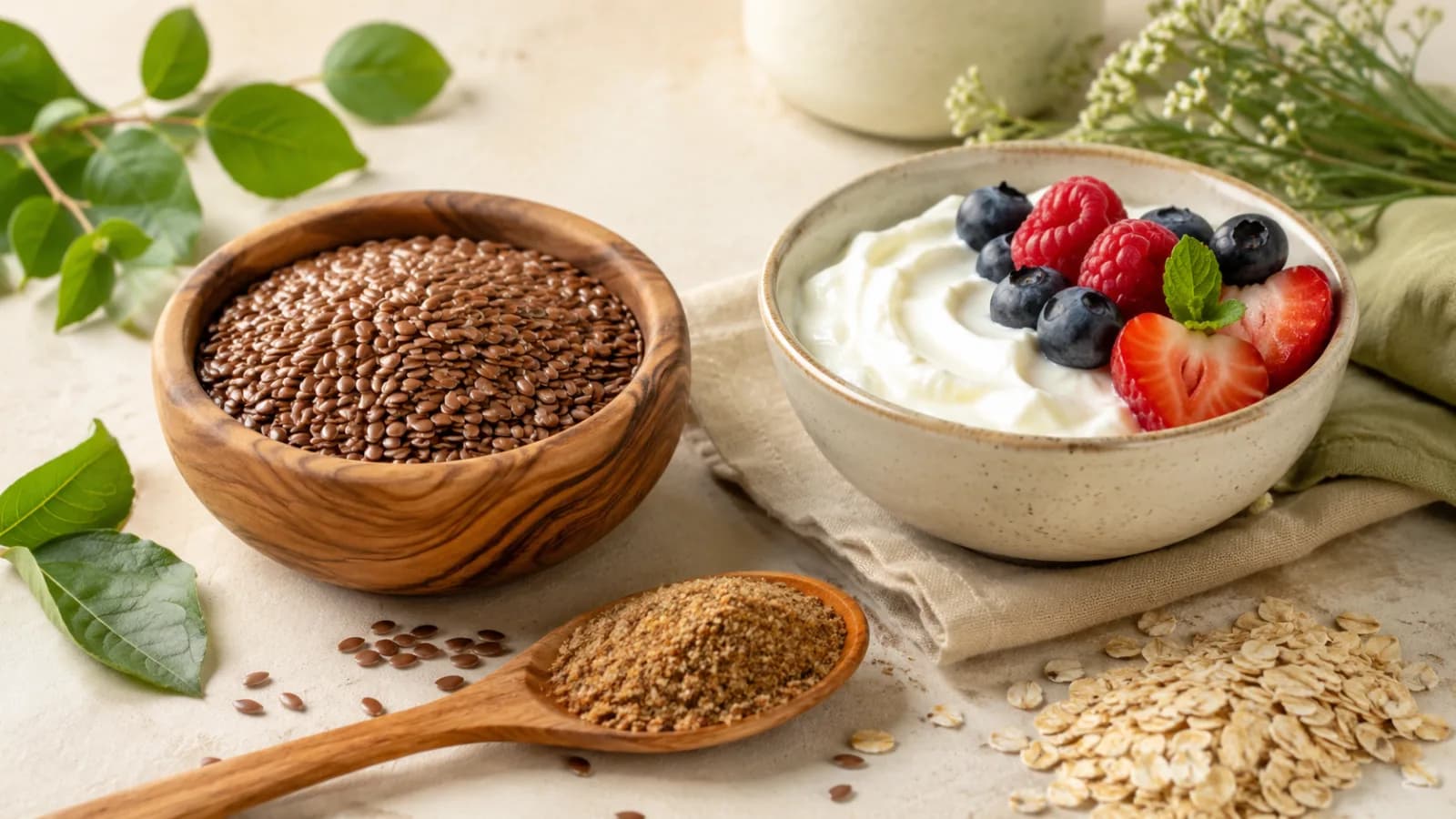
Flaxseeds are tiny, but they can add a lot to a simple wellness routine.
They are easy to mix into oatmeal, yogurt, smoothies, chia pudding, baked goods, and breakfast bowls.
They also contain nutrients that many people look for when they want to support digestion, fiber intake, heart health, and everyday wellness.
But like most “superfoods,” flaxseed is best viewed realistically.
It is not a magic fix.
It will not replace balanced meals, hydration, sleep, movement, or medical care.
But it can be a simple food to add to a routine that already feels realistic.
Here are five flaxseed benefits to know.
1. Flaxseeds are rich in fiber
One of the biggest reasons flaxseeds stand out is their fiber content.
Fiber is important because it supports digestive regularity, helps meals feel more satisfying, and plays a role in gut health.
Many people do not get enough fiber in their daily diet. A fiber-rich Buddha bowl is another easy way to close the gap.
That can make meals feel less filling and digestion feel less consistent.
Flaxseeds are an easy way to add a small amount of fiber to foods you already eat.
You can add ground flaxseed to:
- oatmeal
- Greek yogurt
- smoothies
- chia pudding
- pancakes
- muffins
- smoothie bowls
- homemade energy bites
You do not need a lot.
Starting with 1 teaspoon to 1 tablespoon can be enough at first, especially if you are not used to eating much fiber.
It is also important to drink enough water when increasing fiber.
Adding too much too quickly may cause bloating, fullness, gas, or digestive discomfort.
2. Flaxseeds may support digestion
Flaxseeds contain both soluble and insoluble fiber.
This is one reason people often use them in gut-health routines.
Soluble fiber can form a gel-like texture when mixed with liquid, while insoluble fiber adds bulk.
Together, these fibers can support more regular digestion for some people.
A simple way to use flaxseed for digestion is to add ground flaxseed to breakfast, as part of a simple breakfast habit for energy and digestion.
For example:
- oatmeal with ground flaxseed and berries
- yogurt with ground flaxseed and chia seeds
- a smoothie with ground flaxseed and spinach
- chia pudding with ground flaxseed and fruit
But remember: more is not always better.
If you add too much flaxseed at once, especially without enough fluid, it may make digestion feel worse instead of better.
Start small and increase slowly if your body tolerates it well.
3. Flaxseeds provide plant-based omega-3 ALA
Flaxseeds are one of the best-known plant sources of alpha-linolenic acid, also called ALA.
ALA is a plant-based omega-3 fatty acid.
Omega-3 fats are often discussed in relation to heart health and overall wellness.
However, it is important to understand the difference between plant-based ALA and the omega-3 fats found in fatty fish, such as EPA and DHA.
Your body can convert some ALA into EPA and DHA, but the conversion is limited.
That does not make flaxseeds useless.
It just means flaxseeds should be seen as one helpful plant-based omega-3 source, not a perfect replacement for all omega-3 sources.
Simple ways to add flaxseed:
- mix ground flaxseed into oats
- add it to smoothies
- stir it into yogurt
- add it to homemade granola
- sprinkle it into pancake batter
- use it in energy bites
If you eat mostly plant-based, flaxseed can be a particularly useful pantry staple.
4. Flaxseeds contain lignans
Flaxseeds contain plant compounds called lignans.
Lignans are phytoestrogens, meaning they can have weak estrogen-like activity in the body.
This is why flaxseeds are often talked about in conversations around hormones, menopause, and women’s wellness.
But it is important to be careful with this topic.
Flaxseeds do not directly “balance hormones” on their own.
Hormones are influenced by many factors, including sleep, stress, nutrition, body composition, age, menstrual cycle, menopause, medications, and medical conditions.
A better way to think about flaxseeds is this:
They are a nutrient-dense food that can fit into a routine that supports overall wellness.
If you are dealing with major hormone-related symptoms, such as irregular cycles, hot flashes, intense PMS, unexplained weight changes, hair loss, or severe fatigue, it is better to speak with a healthcare professional.
Food can support your body, but it should not replace proper guidance when symptoms are significant.
5. Flaxseed is easy to add to breakfast
The best wellness habits are usually the ones that are easy to repeat.
Flaxseed works well because it does not require much effort.
You can add it to foods you already eat.
Breakfast is one of the easiest places to start.
Try adding ground flaxseed to:
- oatmeal
- overnight oats
- Greek yogurt
- smoothies
- chia pudding
- cottage cheese bowls
- pancake batter
- homemade breakfast muffins
A simple breakfast idea:
Greek yogurt + berries + ground flaxseed + pumpkin seeds + cinnamon
Another easy option:
Oatmeal + banana + ground flaxseed + almond butter + chia seeds
These small additions can make breakfast feel more filling and balanced.
Ground flaxseed vs. whole flaxseed
Ground flaxseed is usually the better choice for everyday use.
Whole flaxseeds can pass through the digestive system without being fully broken down.
That means you may not absorb as much of the nutrients.
Ground flaxseed is easier for your body to use.
You can buy flaxseed already ground, often called flaxseed meal, or grind whole flaxseeds yourself in a coffee grinder or blender.
Because ground flaxseed contains oils that can become rancid over time, it is best to store it in an airtight container in the refrigerator or freezer.
How much flaxseed should you use?
For many people, 1 to 2 tablespoons of ground flaxseed per day is a common amount.
But if you are new to flaxseed, start smaller.
Try:
- 1 teaspoon per day for a few days
- then 2 teaspoons
- then 1 tablespoon if tolerated
Pay attention to how your body responds.
Because flaxseed is high in fiber, too much too quickly may cause bloating, gas, fullness, or diarrhea.
Also, make sure you drink enough water.
Who should be careful with flaxseed?
Flaxseed as a food is generally well tolerated by many people, but it is not right for everyone in every situation.
Speak with a healthcare professional before using flaxseed regularly or using flaxseed supplements if you:
- are pregnant
- are breastfeeding
- take blood-thinning medication
- take diabetes medication
- take hormone-related medication
- have a bowel obstruction or narrowing
- have significant digestive issues
- have a medical condition
- are unsure whether it fits your situation
Also, do not eat raw or unripe flaxseeds.
If you are using flaxseed oil or concentrated supplements, treat them differently from food amounts and check with a professional if needed.
Easy ways to use flaxseed
You do not need complicated recipes.
Here are simple ideas.
Oatmeal
Stir ground flaxseed into oatmeal after cooking.
Add berries, cinnamon, and nut butter for a more filling bowl. More ideas are in these oatmeal habits for fullness and steady energy.
Smoothies
Blend ground flaxseed into smoothies with berries, spinach, Greek yogurt, or protein. This pineapple chia smoothie is an easy base.
Yogurt bowls
Add ground flaxseed to Greek yogurt with berries and pumpkin seeds.
Baking
Add ground flaxseed to muffins, pancakes, banana bread, or homemade bars.
Flax “egg”
Mix 1 tablespoon ground flaxseed with 3 tablespoons water.
Let it sit for a few minutes until it thickens.
This can be used as an egg substitute in some baking recipes.
FAQ
Flaxseed Questions
How much flaxseed should I eat per day?
For many people, 1 to 2 tablespoons of ground flaxseed per day is a common amount. If you are new to it, start with about 1 teaspoon, increase slowly and drink enough water.
Is ground or whole flaxseed better?
Ground flaxseed is usually the better everyday choice because whole seeds can pass through the gut without being broken down. Store ground flaxseed in an airtight container in the fridge or freezer to keep it fresh.
Can flaxseed help with constipation?
Flaxseed contains soluble and insoluble fiber, which may support more regular digestion for some people. Too much too quickly, especially without enough fluid, can cause bloating or discomfort, and ongoing constipation is worth discussing with a doctor.
Who should avoid flaxseed?
Check with your doctor before using flaxseed regularly or taking flaxseed supplements if you are pregnant or breastfeeding, take blood thinners, diabetes or hormone-related medication, or have a bowel narrowing or significant digestive issues.
The bottom line
Flaxseeds are small, affordable, and easy to use.
They provide fiber, plant-based omega-3 ALA, lignans, and simple nutrition support for digestion and everyday wellness.
They are not a miracle food.
But they can be a helpful part of a routine that feels realistic.
Start small.
Use ground flaxseed.
Drink enough water.
And add it to meals you already enjoy.
Small habits are easier to repeat — and repeated habits are what shape your routine.
Not sure what wellness routine fits your body best?
Different people struggle with different patterns.
For some, the issue is cravings.
For others, it is low energy, digestion, bloating, snacking, stubborn weight, or not having a routine that feels realistic.
Take the free quiz to find the weight-loss routine that fits your body.
This article is for general information and does not replace medical advice. Talk to your doctor before making changes, especially if you have a health condition or take medication.