5 Greek Yogurt Benefits for Protein, Gut Health and Fullness
Thick, creamy and packed with protein, Greek yogurt is one of the easiest foods for steady energy and fullness. Here are five benefits, how to pick a good one and simple ways to eat more of it.
By KateLast reviewed

If there is one food that makes healthy eating easier, it might be plain Greek yogurt. It is ready in seconds, works for sweet and savory meals, and gives you a big serving of protein without cooking.
Here are five reasons it deserves a spot in your fridge, plus how to choose a good one and ten easy ways to eat it.
What makes Greek yogurt different?
Greek yogurt is regular yogurt that has been strained to remove much of the liquid whey. The result is thicker, creamier and more concentrated: roughly twice the protein of regular yogurt, with less sugar and lactose.
A typical 170 g (6 oz) container of plain nonfat Greek yogurt provides about:
- Calories: 90 to 100 kcal
- Protein: 15 to 18 g
- Carbs: 5 to 7 g, mostly natural milk sugar
- Calcium: around 15 percent of the daily value
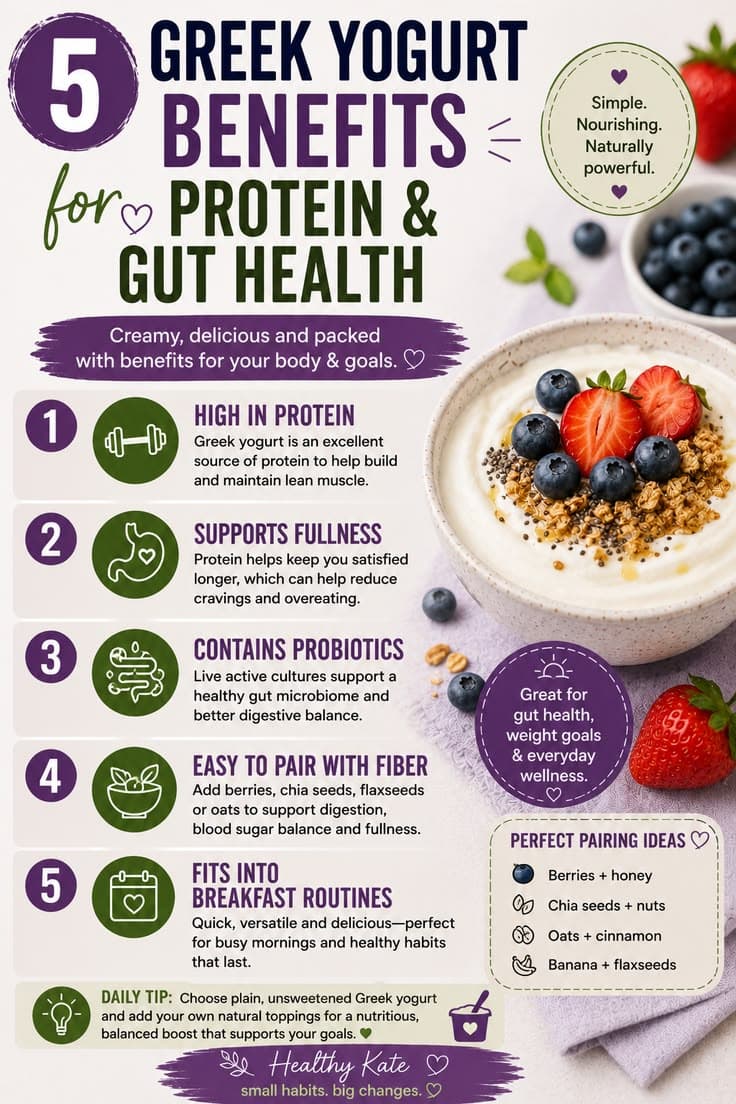
1. It is an easy high-protein food
Protein is the nutrient that keeps you full the longest, supports muscle and helps steady your energy. Many women eat too little of it at breakfast. One cup of Greek yogurt covers 20 g or more in seconds.
That makes it ideal for busy mornings: a balanced Greek yogurt bowl or a high-protein breakfast plate. For women over 40, getting enough protein matters even more; see 5 protein habits for women over 40.
2. It helps you feel full longer
Studies on high-protein yogurt snacks have found that they reduce hunger and lead people to eat a little less at their next meal compared with lower-protein snacks. Thick, creamy foods also tend to feel more satisfying than drinks.
For the biggest effect, pair Greek yogurt with fiber, for example berries, chia seeds or oats. That is the idea behind these protein and fiber combos that keep you full longer.
3. It can support gut health
Most Greek yogurts contain live and active cultures, beneficial bacteria such as Lactobacillus and Bifidobacterium. Fermented foods like yogurt are linked to a more diverse gut microbiome, which researchers associate with better digestion and overall health.
Look for "live and active cultures" on the label, and combine yogurt with fiber-rich foods, which feed the good bacteria. Ground flaxseed for fiber and gut health is an easy topping.
4. It supports bones and muscles
Greek yogurt provides calcium, phosphorus and high-quality protein, all important for bone health, especially after menopause when bone loss speeds up. Combined with strength training for women's metabolism, protein-rich foods like yogurt help you maintain muscle as you age.
5. It is incredibly versatile
Greek yogurt can replace sour cream, mayonnaise and cream in many recipes, which lowers calories and raises protein at the same time:
- As a dip with herbs and garlic
- As a sauce for bowls, like the lemon-dill sauce in our high-protein Mediterranean bowl
- In smoothies for creaminess, like the strawberry banana smoothie with Greek yogurt
- In baking instead of part of the butter or oil
How to choose the best Greek yogurt
- Pick plain. Flavored Greek yogurts can contain 12 g or more of added sugar per serving. Add your own fruit instead.
- Check the protein. Look for at least 15 g per 170 g serving.
- Look for live cultures. "Live and active cultures" means the beneficial bacteria are still alive.
- Short ingredient list. Milk and cultures are enough; skip thickeners like starches or gelatin.
- Choose the fat level you enjoy. Nonfat has the fewest calories; 2 percent or full-fat is creamier and very satisfying.
Plant-based eaters can look for soy- or pea-based "Greek-style" yogurts with at least 10 g of protein.
10 easy ways to eat more Greek yogurt
- Yogurt bowl with berries, chia and nuts
- Overnight oats made with half milk, half yogurt
- Savory bowl with cucumber, olive oil, salt and za'atar
- Tzatziki dip with vegetables on a healthy snack board
- Smoothie base for extra protein
- Topping for chili, tacos or baked potatoes instead of sour cream
- Creamy salad dressing with lemon and herbs
- Frozen yogurt bark with berries and dark chocolate
- Swirled with a spoon of homemade chocolate hazelnut spread
- Marinade for chicken, which makes it tender
FAQ
Greek Yogurt Questions
Is Greek yogurt good for weight loss?
Plain Greek yogurt is high in protein and relatively low in calories, which can help you feel full and eat less later. It fits well into a weight-loss routine, especially at breakfast or as a snack. Flavored versions can contain a lot of added sugar.
How much protein is in Greek yogurt?
Most plain Greek yogurts contain about 15 to 20 g of protein per 170 g (6 oz) container, roughly twice as much as regular yogurt.
Is it okay to eat Greek yogurt every day?
For most people, yes. A daily serving is an easy way to get protein, calcium and live cultures. Choose plain varieties and vary your toppings.
Is Greek yogurt better than regular yogurt?
Greek yogurt has more protein and less lactose because it is strained, but regular yogurt often has a little more calcium. Both are healthy choices; Greek yogurt is the better pick if you want more protein.
Can lactose-intolerant people eat Greek yogurt?
Many people with lactose intolerance tolerate Greek yogurt better than milk because straining removes some lactose and the live cultures help digest it. Start with a small portion or choose a lactose-free Greek yogurt.
The bottom line
Plain Greek yogurt is one of the easiest ways to add protein, live cultures and calcium to your day. It keeps you full, supports your gut, bones and muscles, and works in breakfasts, snacks and dinners. Keep a tub in the fridge, choose plain over flavored, and build your favorite toppings around it.
This article is for general information and does not replace medical advice. If you have a milk allergy or a digestive condition, talk to your doctor or dietitian.