High-Protein Mediterranean Bowl With Chicken, Quinoa & Feta
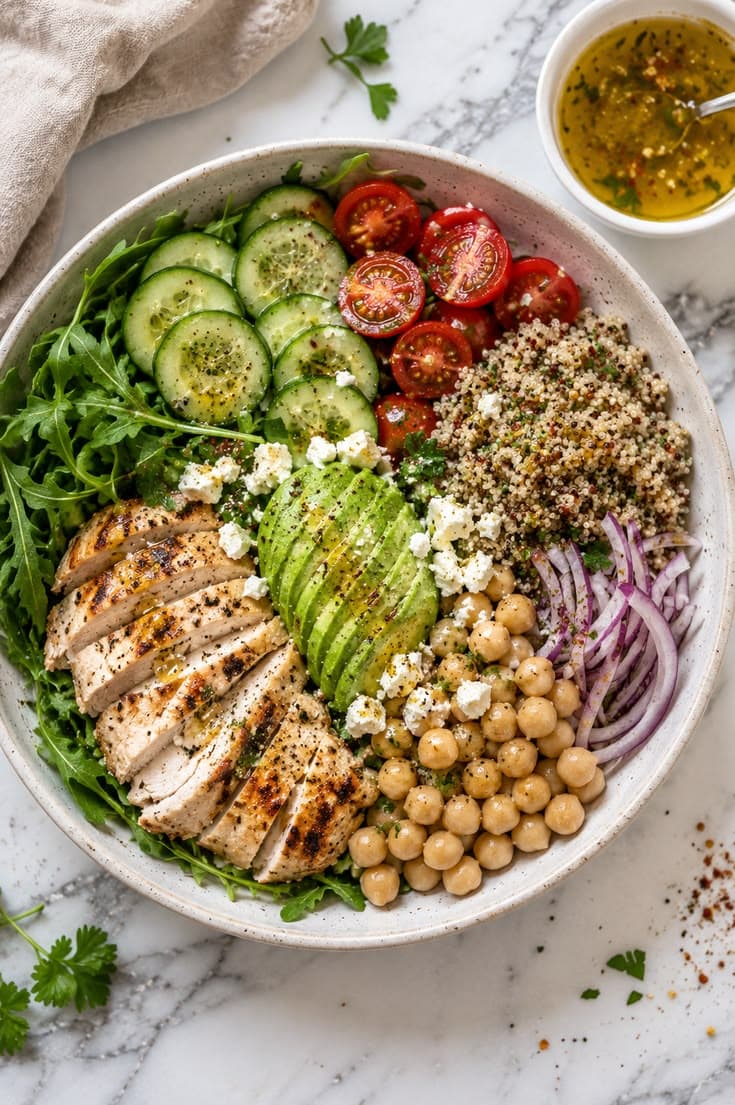
Juicy lemon-oregano chicken, fluffy quinoa, chickpeas, crunchy vegetables, feta and a cool yogurt sauce: a filling Mediterranean bowl with about 40 g of protein that is easy to meal prep.
By KateLast reviewed
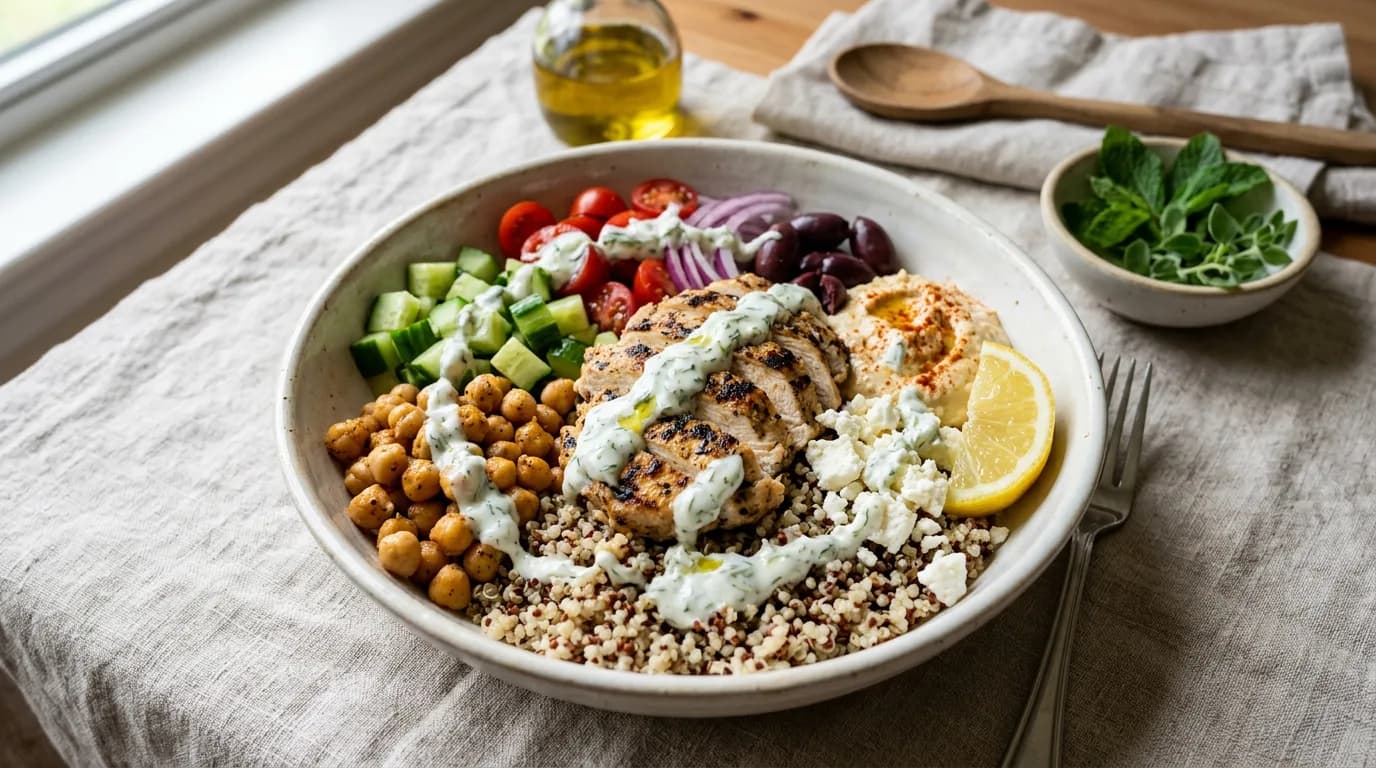
When lunch leaves you hungry an hour later, it usually lacks protein. This Mediterranean bowl fixes that. It combines lemon-oregano chicken with quinoa, chickpeas, crunchy vegetables, salty feta and a cool yogurt sauce, and it delivers about 40 g of protein per bowl.
It takes 25 minutes, tastes like a summer holiday and works just as well as a make-ahead lunch for busy weekdays.
Recipe
High-Protein Mediterranean Chicken Bowl
- Prep:
- 10 min
- Cook:
- 15 min
- Total:
- 25 min
- Serves:
- 2 bowls
Ingredients
- 8 oz (225 g) chicken breast, cut into 2 thin cutlets
- 1 tbsp olive oil
- Juice of 1/2 lemon, 1 tsp dried oregano, 1 small garlic clove (grated), salt and pepper
- 1 cup cooked quinoa
- 1/2 can (about 7 oz) chickpeas, drained and rinsed
- 1/2 cucumber, diced
- 1 cup cherry tomatoes, halved
- 1/4 red onion, thinly sliced
- 8 kalamata olives
- 2 oz (60 g) feta, crumbled
- 2 tbsp hummus
- Yogurt sauce - 1/2 cup plain Greek yogurt, 1 tbsp lemon juice, 1 tsp chopped dill, a pinch of salt
- Fresh parsley and lemon wedges to serve
Instructions
- 1Toss the chicken cutlets with olive oil, lemon juice, oregano, garlic, salt and pepper. Let them sit while you prepare everything else.
- 2Stir Greek yogurt, lemon juice, dill and salt into a smooth sauce. Add a splash of water if it is too thick.
- 3Cook the chicken in a hot skillet or grill pan for 5 to 6 minutes per side until cooked through. Rest for 3 minutes, then slice.
- 4Divide the quinoa between two bowls. Add chickpeas, cucumber, tomatoes, red onion and olives in sections.
- 5Top with the sliced chicken, feta and a spoonful of hummus. Drizzle with the yogurt sauce, add parsley and serve with lemon wedges.
Approx. 620 kcal per bowl. Nutrition values are estimates.
Why this bowl keeps you full
Protein from several sources. Chicken does the heavy lifting, while Greek yogurt, feta, chickpeas and quinoa add more. Protein is the most filling nutrient and helps you protect muscle, which matters even more after 40.
Fiber you can feel. Chickpeas, quinoa and fresh vegetables slow digestion and help you avoid the mid-afternoon energy dip.
Healthy fats for flavor. Olive oil, olives and hummus make the bowl satisfying, so you are not reaching for snacks soon after.
This mix of protein, fiber and healthy fat is the same idea behind the lazy plate method: build the plate well and portion control gets much easier.
Tips for the best Mediterranean chicken bowl
- Use thin cutlets. Slicing the chicken breast in half horizontally means it cooks in about 10 minutes and stays juicy.
- Let the chicken rest. Three minutes on the board keeps the juices in the meat instead of on your plate.
- Salt the vegetables. A pinch of salt and a squeeze of lemon over the cucumber and tomatoes makes them taste much brighter.
- Warm the quinoa. Slightly warm quinoa with cold, crunchy vegetables is a great contrast. Ready-to-eat quinoa saves even more time.
- Make extra sauce. The lemon-dill yogurt sauce also works as a dip for raw vegetables or as a dressing for a quick salad.
How to meal prep it for 4 days
Double the recipe and divide it into four glass containers. Put quinoa and chickpeas at the bottom, the chicken and the sturdier vegetables on top, and keep the yogurt sauce in small separate jars. Add feta and hummus right before eating so everything stays fresh.
For more make-ahead lunch ideas, try the 3-color lunch formula, which helps you avoid afternoon cravings with very little planning.
Easy variations
- Seafood version: swap the chicken for salmon, like in this Mediterranean salmon and avocado salad.
- Plant-based: skip the chicken, double the chickpeas and add avocado, similar to this chickpea and avocado bowl.
- Warm and cozy: add roasted sweet potato and red pepper, a bit like our fiber-rich Buddha bowl.
- Lower carb: replace the quinoa with chopped romaine or cauliflower rice.
- Extra greens: start with a handful of arugula or baby spinach at the bottom of the bowl.
How it fits into your day
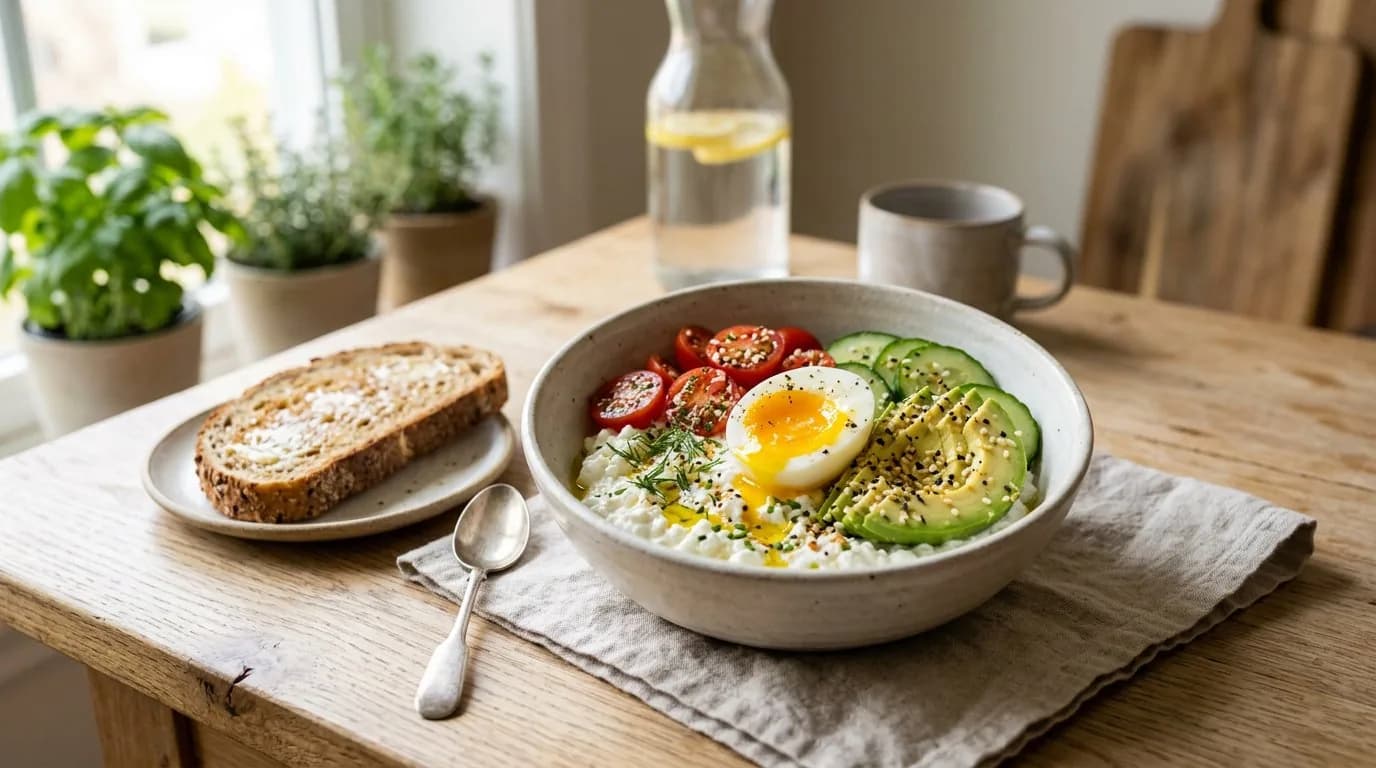
A protein-rich lunch makes the afternoon much easier. If you want to understand why the combination works so well, read 5 protein and fiber combos that keep you full longer. Pair it with a high-protein breakfast and you will have most of your daily protein covered before dinner.
FAQ
Mediterranean Bowl Questions
How much protein is in this Mediterranean bowl?
Each bowl has roughly 40 g of protein, mostly from the chicken, plus Greek yogurt, feta, chickpeas and quinoa. Exact numbers depend on your portions and brands.
Can I meal prep Mediterranean chicken bowls?
Yes. Cooked chicken, quinoa, chickpeas and chopped vegetables keep for 3 to 4 days in airtight containers in the fridge. Store the yogurt sauce separately and add feta and hummus just before eating.
What can I use instead of chicken?
Grilled salmon, shrimp, turkey, hard-boiled eggs or baked tofu all work. For a plant-based version, double the chickpeas and add edamame or lentils.
Is this bowl good for weight loss?
A bowl with plenty of protein, fiber and vegetables tends to keep you full for hours, which can make it easier to eat well for the rest of the day. It is not a magic weight-loss food, but it fits a balanced routine very well.
The bottom line
This high-protein Mediterranean bowl is simple, colorful and very filling. Cook the chicken, prep the vegetables and keep the sauce on the side, and you have a lunch that keeps you satisfied for hours, without any complicated cooking.
This article is for general information and does not replace medical or nutritional advice. If you have a health condition or special dietary needs, talk to your doctor or a registered dietitian.