5 Cortisol-Balancing Habits for Weight Support
Stress does not just live in your head. Here are five gentle, science-informed habits that support a healthier cortisol rhythm, steadier cravings and a calmer path to weight support.
By KateLast reviewed

Cortisol has become a buzzword on social media, often blamed for stubborn belly fat and sugar cravings. The truth is calmer. Cortisol is a normal, helpful hormone. It rises in the morning to help you wake up and falls in the evening so you can sleep.
Problems start when stress never really switches off. Short nights, skipped meals, constant rushing and too much caffeine can keep your body in "alert mode", and that can show up as cravings, poor sleep and low energy.
The good news: you do not need a complicated protocol. These five habits support a healthier daily rhythm, and they make every other weight-support habit easier.
1. Protect a steady sleep rhythm
Sleep is the foundation of a healthy cortisol rhythm. Even one short night can leave you hungrier and more drawn to sweet snacks the next day.
- Aim for a similar bedtime and wake-up time, even on weekends.
- Keep the bedroom cool, dark and quiet.
- Put your phone away 30 to 60 minutes before bed.
If sleep has become harder in your 40s, these sleep habits for women over 40 are a good place to start.
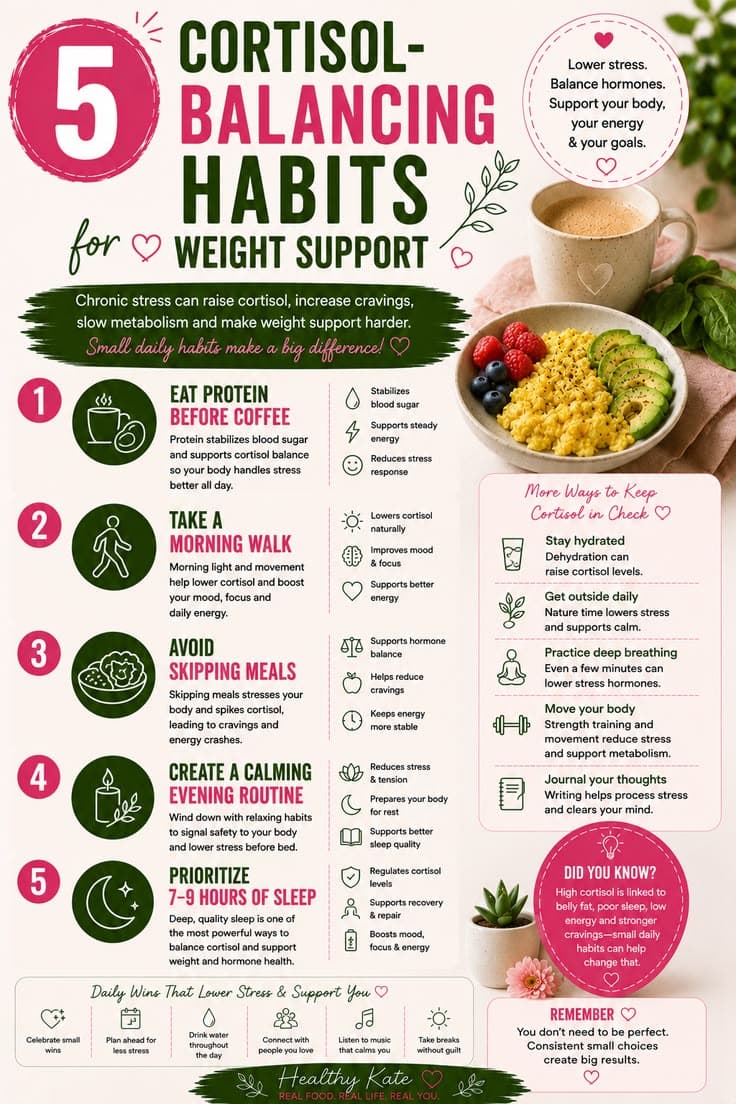
2. Get morning light and a real breakfast
Your natural cortisol peak happens shortly after waking. Morning daylight helps set your internal clock, so the rise happens at the right time and the evening wind-down comes more easily.
- Step outside or sit by a bright window for 10 minutes after waking.
- Have coffee after a glass of water and some food, not instead of breakfast.
- Build breakfast around protein, which helps keep energy and appetite steadier.
A calm morning routine combines all of this in about 25 minutes.
3. Eat enough, at regular times
Strict dieting and long gaps between meals are a stress signal for the body. Very low-calorie eating can raise stress hormones and often backfires as evening cravings.
- Eat three balanced meals with protein, fiber and some healthy fat.
- If lunch and dinner are far apart, plan a protein snack.
- Notice whether your cravings are really about stress or low energy.
If your sweet tooth always shows up mid-afternoon, read why you crave sugar in the afternoon for practical fixes.
4. Move in a way that calms you
Movement is one of the best stress relievers, but more is not always better. Very long or very intense workouts on top of poor sleep can feel like extra stress.
- Walk every day, ideally outdoors. Even a 10-minute walk after dinner counts.
- Add two or three short strength sessions per week to protect muscle.
- Keep high-intensity workouts for days when you have slept well.
Time in green spaces has its own calming effect. Here is why walking in nature feels so good.
5. Build a daily wind-down ritual
Your nervous system needs a clear signal that the day is done. A short, repeatable ritual works better than an occasional spa day.
- Try five minutes of slow breathing: in for four counts, out for six.
- Write tomorrow's to-do list so your mind can let go.
- Swap late coffee for herbal tea, and keep caffeine to the first half of the day.
Some people also like green tea for its calm focus. Learn more about L-theanine and calm energy.
A simple day with cortisol-friendly habits
- Morning: water, 10 minutes of daylight, protein breakfast, coffee with food.
- Midday: a balanced lunch and a short walk.
- Afternoon: a protein snack if dinner is far away, no caffeine after 2 p.m.
- Evening: an earlier dinner, five minutes of slow breathing, screens off before bed.
When to talk to your doctor
Ongoing exhaustion, sudden weight gain, trouble sleeping for weeks or very high stress are worth discussing with a professional. Rarely, cortisol problems are caused by a medical condition that needs testing, and long-term stress or anxiety deserves real support.
FAQ
Cortisol & Weight Questions
Can high cortisol make it harder to lose weight?
Long-term stress and poor sleep can affect appetite, cravings and where the body stores fat, and some people eat more when they are stressed. Cortisol is only one piece of the puzzle, though, so calm habits work best together with balanced meals, movement and good sleep.
What is a "cortisol belly"?
It is a social media term, not a medical diagnosis. Belly fat has many causes, including genetics, hormones, age, sleep and overall eating habits. If you notice sudden weight gain around the middle together with other symptoms, talk to your doctor.
How can I lower cortisol naturally?
The most reliable basics are regular sleep, daylight in the morning, eating enough at regular times, moderate movement such as walking or strength training, and a daily way to relax, such as slow breathing or time outdoors.
Do cortisol supplements work?
Research on supplements marketed for cortisol, such as ashwagandha or magnesium, is limited and results vary. They can interact with medications and are not right for everyone, so check with your doctor or pharmacist before trying one.
The bottom line
You cannot remove all stress from life, but you can give your body clear daily signals of safety: steady sleep, morning light, regular meals, calm movement and a short wind-down. These habits will not melt fat on their own, but they make cravings easier to manage and every other healthy habit easier to keep.
This article is for general information and does not replace medical advice. Talk to your doctor before making changes, especially if you have a health condition or take medication.