5 Turmeric Benefits for Joints, Energy, and Healthy Aging
Turmeric is a golden spice often used in warm drinks and meals. Here are five potential turmeric benefits for joint-friendly routines, antioxidant support, digestion, and healthy aging.
By KateLast reviewed
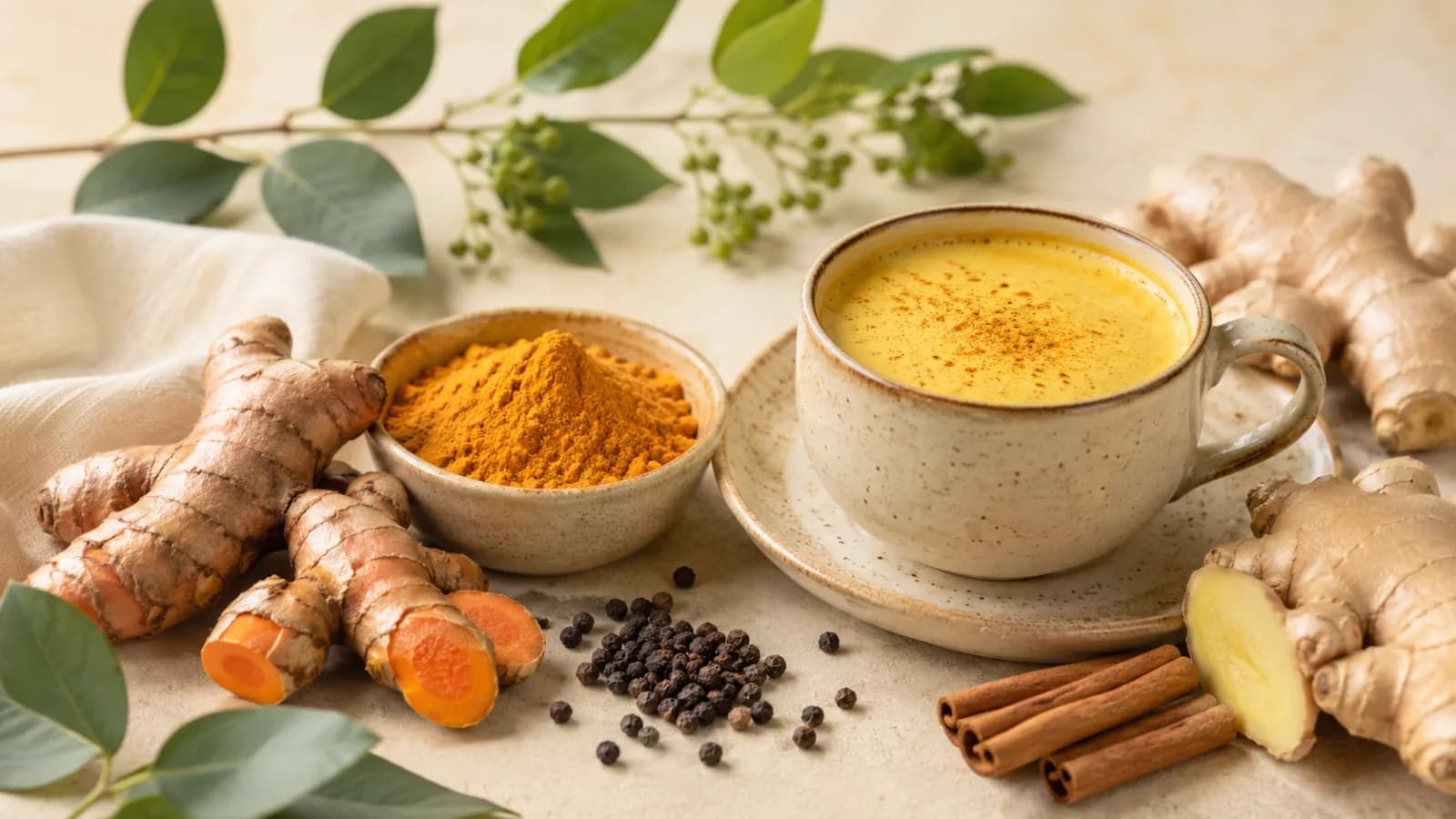
Turmeric is one of the most recognizable wellness spices.
It has a deep golden color, a warm earthy flavor, and a long history of use in food and traditional wellness routines.
You may have seen it in golden milk, curries, soups, smoothies, wellness shots, or supplement formulas.
The main compound people talk about in turmeric is curcumin.
Curcumin is one of the plant compounds that gives turmeric much of its wellness reputation.
But turmeric is not magic.
It does not replace movement, sleep, a balanced diet, medical care, or a healthy routine.
Still, turmeric can be a simple spice to include in meals and drinks if you enjoy it.
Here are five potential turmeric benefits to know.
1. Turmeric may support joint-friendly routines
Turmeric is often discussed in relation to joint comfort and mobility.
This is mostly because curcumin has been studied for its role in inflammatory pathways.
Some people like using turmeric in warm drinks or meals as part of a joint-friendly routine.
But it is important to stay realistic.
Turmeric will not rebuild a lifestyle on its own.
Joint comfort can be influenced by many factors:
- movement
- strength training
- body weight
- sleep
- stress
- hydration
- injury history
- posture
- age
- medical conditions
If you have persistent joint pain, swelling, stiffness, or reduced mobility, it is better to speak with a healthcare professional instead of relying on spices or supplements.
But if you are building a general wellness routine, turmeric can be one simple food-based addition.
Easy ways to use turmeric:
- add it to soups
- use it in curries
- mix it into rice dishes
- add it to roasted vegetables
- make golden milk
- add a small amount to smoothies
- use it in marinades or dressings
The goal is not to use huge amounts.
The goal is to make it easy and enjoyable enough to repeat.
2. Turmeric provides antioxidant support
Turmeric contains plant compounds, including curcumin, that are often discussed for antioxidant activity.
Antioxidants help support the body’s normal defenses against oxidative stress.
Oxidative stress is part of normal metabolism, but it can increase with things like poor sleep, smoking, pollution, stress, illness, and an overall low-nutrient diet.
That does not mean one spice can solve everything.
The bigger picture still matters:
- colorful fruits and vegetables
- enough protein
- healthy fats
- regular movement
- sleep
- hydration
- stress support
- not smoking
- limiting excessive alcohol
Turmeric can be part of that pattern.
It adds flavor, color, and plant compounds to meals.
That makes it useful not because it is a miracle, but because it can make healthy food more enjoyable.
And food you enjoy is easier to repeat.
3. Turmeric fits into warm drinks and meals
One of the best things about turmeric is how easy it is to use.
You do not need a supplement to start.
You can use turmeric as a kitchen spice.
This makes it much easier to fit into a normal routine.
Simple turmeric ideas:
- golden milk
- turmeric tea
- turmeric rice
- turmeric soup
- turmeric lentils
- turmeric roasted carrots
- turmeric scrambled eggs
- turmeric hummus
- turmeric chicken or tofu marinade
- turmeric smoothie with ginger and banana
Golden milk is one of the most popular options.
A simple version:
- warm milk or plant milk
- turmeric
- cinnamon
- ginger
- black pepper
- optional honey
This can be a calming evening drink or a cozy morning ritual. If you prefer something quick, this ginger turmeric wellness shot is another easy option.
You can also add turmeric to savory meals.
It pairs well with ginger, garlic, black pepper, lemon, coconut milk, lentils, rice, chicken, tofu, and roasted vegetables.
4. Turmeric may support digestion-friendly meals
Turmeric is often used in traditional cooking with other spices like ginger, cumin, coriander, and black pepper. These ginger benefits for digestion and everyday wellness show why the two are such a common pair.
For many people, warm, spice-rich meals can feel comforting and satisfying.
That can matter for digestion and routine.
A meal that tastes good and feels comforting is easier to repeat than a bland plan you dislike.
Turmeric can be added to:
- soups
- stews
- curries
- lentil bowls
- rice bowls
- vegetable dishes
- warm drinks
However, turmeric can also bother some people’s stomachs, especially in larger amounts or supplement form.
If you notice reflux, nausea, diarrhea, or stomach discomfort after turmeric, reduce the amount or avoid it.
Not every healthy ingredient works well for every person.
5. Turmeric can fit into healthy aging habits
Healthy aging is not about one spice, one supplement, or one perfect routine.
It is about small habits repeated consistently.
Turmeric can fit into healthy aging routines because it is simple, affordable, flavorful, and easy to add to meals.
It may support a broader routine focused on:
- colorful foods
- antioxidant-rich meals, including berries (see these blueberry benefits for brain, skin, and healthy aging)
- movement
- joint-friendly activity
- hydration
- sleep
- stress support
- consistency
But turmeric should not be viewed as a replacement for the basics.
If your lifestyle is built around poor sleep, high stress, very little movement, and low-nutrient meals, turmeric alone will not change everything.
Use it as a support habit.
Not the whole plan.
Why turmeric and black pepper are often paired
You may have heard that turmeric should be taken with black pepper.
That is because curcumin is not absorbed very well on its own.
Black pepper contains piperine, a compound that can increase curcumin absorption.
This is why you often see turmeric and black pepper paired in golden milk, supplements, and wellness recipes.
However, more absorption is not always automatically better.
Piperine can also affect how some medications are processed.
So if you take medications or have a health condition, be careful with concentrated turmeric and black pepper supplements.
For normal cooking, a small pinch of black pepper in a turmeric recipe is common.
For supplements, it is better to check with a healthcare professional.
Easy ways to use turmeric
Here are simple options.
Golden milk
Mix warm milk or plant milk with turmeric, cinnamon, ginger, black pepper, and optional honey.
Soups
Add turmeric to lentil soup, chicken soup, vegetable soup, or creamy blended soups.
Roasted vegetables
Toss carrots, cauliflower, sweet potatoes, or chickpeas with turmeric, olive oil, pepper, and spices.
Smoothies
Add a small amount of turmeric to smoothies with banana, pineapple, mango, ginger, and plant milk.
Eggs or tofu
Add turmeric to scrambled eggs or tofu scramble for color and flavor.
Rice and grain bowls
Stir turmeric into rice, quinoa, couscous, or grain bowls. A pinch works well in this fiber-rich Buddha bowl.
Who should be careful with turmeric?
Turmeric as a spice in food is generally fine for many people.
But turmeric supplements are different.
They can be much more concentrated.
Speak with a healthcare professional before using turmeric or curcumin supplements if you:
- take blood thinners
- take diabetes medication
- take blood pressure medication
- are pregnant
- are breastfeeding
- have gallbladder disease
- have liver disease
- have kidney stones
- have reflux or frequent heartburn
- are preparing for surgery
- take multiple medications
- have a medical condition
High doses or long-term supplement use may cause digestive upset in some people and may be risky for certain groups.
Natural does not automatically mean risk-free.
Possible side effects
Turmeric or curcumin supplements may cause side effects, especially at higher doses.
Possible side effects include:
- nausea
- diarrhea
- stomach discomfort
- reflux or heartburn
- headache
- rash in some people
There have also been concerns about liver injury in some supplement cases, especially with high-dose or enhanced-absorption formulas.
This does not mean turmeric in food is dangerous for most people.
It means concentrated supplements should be treated seriously.
Try turmeric in a cozy golden milk or ginger turmeric tea, and see 5 anti-inflammatory foods.
FAQ
Turmeric Questions
How much turmeric should I take a day?
There is no single recommended daily amount, and using turmeric as a spice in meals and drinks is generally considered fine for most people. For curcumin supplements, doses vary widely between products, so it is best to follow the label and check with a doctor first.
Is turmeric good for joint pain?
Curcumin has been studied for joint comfort, and some small studies suggest it may help, but research is limited and results vary. Persistent joint pain, swelling, or stiffness should be checked by a healthcare professional.
Why take turmeric with black pepper?
Curcumin is poorly absorbed on its own, and piperine in black pepper may increase absorption. Because piperine can also affect how some medications are processed, concentrated turmeric and pepper supplements are worth discussing with a doctor.
Who should not take turmeric supplements?
People who are pregnant or breastfeeding, take blood thinners, diabetes or blood pressure medication, or have gallbladder disease, liver disease, or kidney stones should talk to a doctor before taking turmeric or curcumin supplements. Turmeric used in normal cooking amounts is a different matter for most people.
The bottom line
Turmeric is a warm, golden spice with a long history of use in food and wellness routines.
It contains curcumin and other plant compounds that are often discussed for antioxidant and inflammation-related support.
It may fit into joint-friendly routines, digestion-friendly meals, warm drinks, and healthy aging habits.
But turmeric is not a miracle cure.
It should not replace medical care.
And supplements should be approached carefully.
The best way to start is simple:
Use turmeric in meals and drinks you already enjoy.
Keep it realistic.
Pair it with healthy habits.
And build a routine you can repeat.
Not sure what wellness routine fits your body best?
Different people struggle with different patterns.
For some, the issue is cravings.
For others, it is low energy, digestion, bloating, snacking, stubborn weight, poor sleep, or not having a routine that feels realistic.
Take the free quiz to find the weight-loss routine that fits your body.
This article is for general information and does not replace medical advice. Talk to your doctor before making changes, especially if you have a health condition or take medication.