5 Blueberry Benefits for Brain, Skin, and Healthy Aging
Blueberries are small but nutrient-dense. They provide antioxidants, fiber, vitamin C, and plant compounds that can fit easily into a healthy aging routine.
By KateLast reviewed
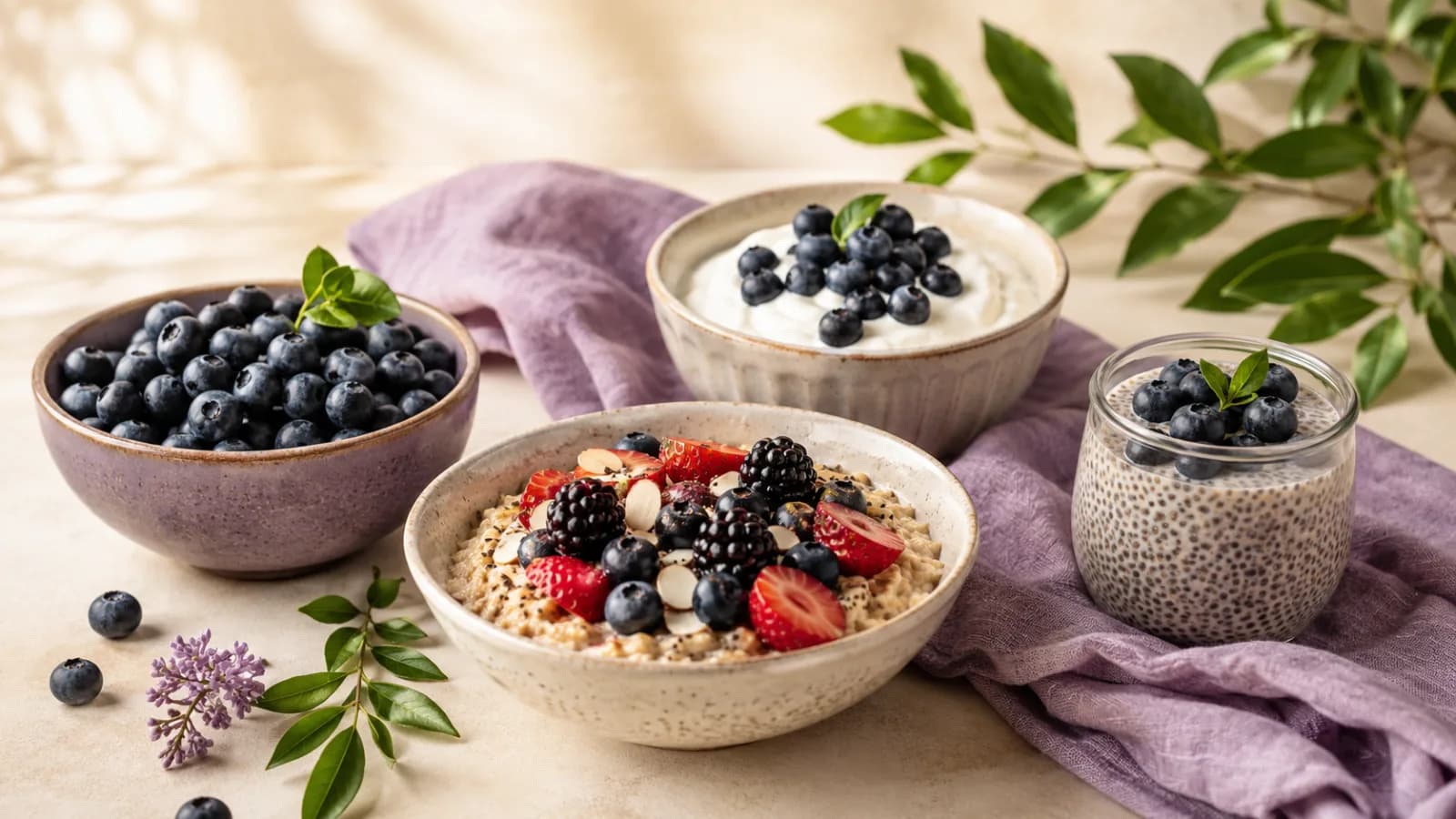
Blueberries are small, sweet, and easy to add to almost any meal.
You can put them in oatmeal, yogurt, smoothies, salads, chia pudding, pancakes, or simply eat them as a snack.
But blueberries are more than just a pretty topping.
They contain fiber, vitamin C, water, and plant compounds called polyphenols, including anthocyanins. Anthocyanins are the pigments that give blueberries their deep blue-purple color.
That is one reason blueberries often show up in conversations about brain health, skin, antioxidants, gut health, and healthy aging.
Of course, blueberries are not magic.
They will not cancel out poor sleep, stress, low protein, or an inconsistent routine.
But they can be a simple food to include in a routine that supports your body from the inside out.
Here are five blueberry benefits to know.
1. Blueberries are rich in antioxidants
Blueberries are often praised for their antioxidant content.
Antioxidants help protect cells from oxidative stress, which is a normal process in the body but can increase with stress, poor sleep, pollution, smoking, illness, and certain lifestyle factors.
Blueberries are especially known for anthocyanins, the plant pigments that give them their color.
This does not mean blueberries are a cure for aging.
But it does mean they can be part of a nutrient-rich diet that supports overall wellness.
Simple ways to eat more blueberries:
- add them to oatmeal
- mix them into Greek yogurt
- blend them into smoothies
- add them to chia pudding
- sprinkle them on cottage cheese
- use them in overnight oats
- pair them with nuts or seeds
- eat them frozen as a snack
The easiest habit is usually the one you can repeat.
A small handful of blueberries at breakfast is a simple place to start, for example in a balanced yogurt bowl with berries and seeds.
2. Blueberries may support brain health
Blueberries are often studied because of their polyphenols, especially anthocyanins.
Some research links regular berry and flavonoid intake with better cognitive aging patterns, although this does not mean blueberries guarantee sharper memory or prevent disease.
Brain health depends on many factors:
- sleep
- blood pressure
- movement
- stress
- social connection
- learning
- hydration
- nutrition
- blood sugar patterns
- overall health
Still, blueberries can be a smart food to include in a brain-friendly routine.
They are easy to pair with other helpful foods like:
- Greek yogurt
- walnuts
- oats
- chia seeds
- flaxseed
- pumpkin seeds
- cottage cheese
- smoothies with spinach
For example:
Greek yogurt + blueberries + walnuts + ground flaxseed for fiber and gut health
That gives you protein, fiber, healthy fats, and plant compounds in one simple bowl.
3. Blueberries may help support healthy-looking skin
Skin health is influenced by many things, including genetics, sleep, hydration, sun exposure, stress, hormones, skincare, and nutrition.
Blueberries can support a skin-friendly diet because they provide vitamin C and antioxidants.
Vitamin C is important for normal collagen formation, and antioxidants are part of the body’s broader defense against oxidative stress.
That does not mean eating blueberries will instantly change your skin.
But adding colorful fruits and vegetables to your diet is a smart long-term habit.
Blueberries work well because they are:
- easy to eat
- naturally sweet
- hydrating
- rich in plant compounds
- easy to pair with protein-rich foods
- convenient fresh or frozen
For a skin-supporting snack, try:
- blueberries with Greek yogurt
- blueberries with cottage cheese
- blueberries with chia pudding
- blueberries with almonds
- blueberries in a protein smoothie
The goal is not perfection.
The goal is adding more nutrient-dense foods in a way that feels realistic.
4. Blueberries provide gut-friendly fiber
Blueberries contain fiber, which helps support digestive regularity and gut health.
Fiber also helps meals feel more satisfying.
This can matter if you often feel hungry soon after eating.
A cup of blueberries contains about 4 grams of fiber, which makes them a simple way to add more fiber to breakfast or snacks.
Fiber works best when you include it consistently.
Easy pairings:
- blueberries + oats
- blueberries + chia seeds
- blueberries + flaxseed
- blueberries + Greek yogurt
- blueberries + nuts
- blueberries + cottage cheese
If you are not used to eating much fiber, increase slowly and drink enough water.
Too much fiber too quickly can cause gas, bloating, or digestive discomfort.
5. Blueberries are easy to add to breakfast and snacks
One of the biggest benefits of blueberries is how easy they are to use.
Healthy foods only help if you actually eat them consistently.
Blueberries are simple because they require almost no prep.
You can keep fresh blueberries in the fridge or frozen blueberries in the freezer.
Easy ways to enjoy blueberries:
- in oatmeal
- in smoothies
- with yogurt
- in salads
- with cottage cheese
- in chia pudding
- on pancakes
- in overnight oats
- as a snack
- with dark chocolate
- with nuts and seeds
Frozen blueberries are especially useful.
They are often more affordable, last longer, and work well in smoothies, oatmeal, yogurt bowls, and baking.
If you want to make breakfast feel more colorful and satisfying, blueberries are one of the easiest upgrades.
Delicious ways to enjoy blueberries every day
Here are a few simple ideas.
Blueberry oatmeal
Add blueberries to warm oats with cinnamon, Greek yogurt, and chia seeds. These oatmeal habits for fullness and steady energy show how to build the bowl.
This makes breakfast feel more filling and colorful.
Blueberry smoothie
Blend blueberries with Greek yogurt, spinach, protein, and a little nut butter, or try this blueberry green smoothie.
This can work as a quick breakfast or snack.
Blueberry yogurt bowl
Top Greek yogurt with blueberries, oats, pumpkin seeds, and walnuts.
This gives you protein, fiber, and healthy fats.
Blueberry salad
Add blueberries to a salad with greens, cucumber, chicken or tofu, and a lemon dressing.
The sweet-tart flavor can make salads more enjoyable.
Blueberry snack plate
Pair blueberries with nuts, cottage cheese, or a boiled egg.
This makes the snack more balanced than fruit alone.
Fresh vs. frozen blueberries
Both fresh and frozen blueberries can fit into a healthy routine.
Fresh blueberries are great for snacking, salads, yogurt bowls, and toppings.
Frozen blueberries work well for smoothies, oatmeal, baking, and sauces.
Do not overthink it.
Choose the version you will actually use.
Frozen fruit can be especially helpful because it reduces food waste and keeps healthy options available.
How many blueberries should you eat?
There is no perfect amount.
A small handful can be a great start.
Many people use about half a cup to one cup in meals or snacks.
The best amount depends on your appetite, goals, digestion, and overall diet.
If you are adding blueberries to a meal, try pairing them with protein or healthy fats.
For example:
- blueberries + Greek yogurt
- blueberries + cottage cheese
- blueberries + almonds
- blueberries + chia pudding
- blueberries + protein smoothie
This can help the meal feel more satisfying.
Who should be careful with blueberries?
Blueberries are safe and healthy for most people.
But a few situations may require attention.
If you have digestive sensitivity, increasing fruit and fiber too quickly may cause gas or bloating.
If you need to manage blood sugar carefully, pair blueberries with protein, fiber, or healthy fats instead of eating them alone in large amounts.
If you have allergies or medical dietary restrictions, follow your healthcare professional’s guidance.
And if you take blood thinners or have a medical condition requiring consistent vitamin K intake, ask your healthcare professional how berries and other foods fit into your plan.
FAQ
Blueberry Questions
Is it good to eat blueberries every day?
For most people, a daily serving of blueberries can fit well into a balanced diet. They provide fiber, vitamin C and plant compounds called anthocyanins, and they are easy to add to breakfast or snacks.
Are frozen blueberries as healthy as fresh?
Frozen blueberries are usually picked and frozen at peak ripeness, so they keep much of their nutritional value. They are often more affordable and work well in smoothies, oatmeal and baking.
Are blueberries good for your brain?
Some research links regular berry and flavonoid intake with healthier cognitive aging, but the evidence does not show that blueberries prevent disease or guarantee better memory. Sleep, movement, blood pressure and overall diet also play a big role.
How many blueberries should I eat a day?
There is no fixed amount, but about half a cup to one cup is a common serving. Pairing them with protein or healthy fats, like Greek yogurt or nuts, can make the snack more filling.
The bottom line
Blueberries are simple, colorful, and nutrient-dense.
They provide antioxidants, fiber, vitamin C, water, and plant compounds that can fit into a healthy aging routine.
They may support brain-friendly eating patterns, skin-supporting nutrition, gut-friendly fiber, and more satisfying breakfasts.
But the real benefit is consistency.
Add them to meals you already enjoy.
Keep them easy.
Use fresh or frozen.
And build small habits that feel realistic enough to repeat.
Not sure what wellness routine fits your body best?
Different people struggle with different patterns.
For some, the issue is cravings.
For others, it is low energy, digestion, bloating, snacking, stubborn weight, poor sleep, or not having a routine that feels realistic.
Take the free quiz to find the weight-loss routine that fits your body.
This article is for general information and does not replace medical advice. Talk to your doctor before making changes, especially if you have a health condition or take medication.