Why Eggs Are So Good for You: Protein, Choline and More
Affordable, versatile and packed with nutrients: here is why eggs deserve a place in your week, what to know about cholesterol and easy ways to enjoy them.
By KateLast reviewed

Eggs are one of the most affordable, versatile and nutrient-dense foods you can buy. One egg costs a fraction of most protein sources and delivers high-quality protein, healthy fats, vitamins and minerals. Here is why they deserve a regular spot in your week.
1. High in protein
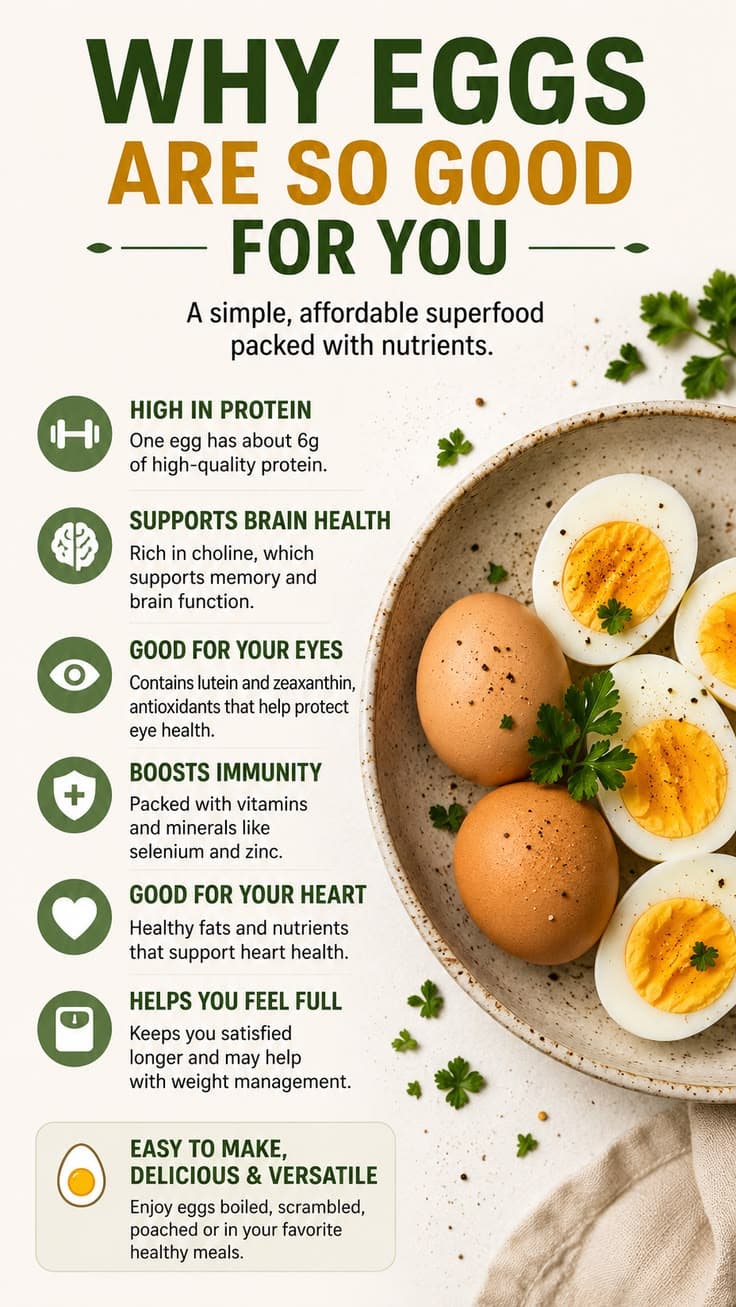
One large egg has about 6 g of high-quality protein with all essential amino acids. Two or three eggs at breakfast make it easy to start the day with 15 to 20 g of protein. More in 5 protein habits for women over 40.
2. Supports brain health
Eggs are one of the best sources of choline, a nutrient used to make acetylcholine, a messenger involved in memory and mood. Many people do not get enough choline; one egg yolk provides about 150 mg.
3. Good for your eyes
Egg yolks contain lutein and zeaxanthin, antioxidants that accumulate in the retina and help protect the eyes. They are better absorbed from eggs than from many other foods because of the fat in the yolk.
4. Supports immunity
Eggs provide vitamin D, vitamin A, selenium and zinc, nutrients involved in immune function.
5. A fit for heart-healthy eating
For most healthy people, moderate egg intake is not linked to a higher risk of heart disease. What you eat with eggs matters more: vegetables and whole grains rather than bacon and white toast.
6. Helps you feel full
Studies have found that egg breakfasts can increase fullness and reduce calories eaten later compared with a bagel breakfast with the same calories. That makes eggs a smart choice for weight support. See 7 filling breakfast ideas.
Egg nutrition at a glance
One large egg (about 50 g) provides roughly:
- Calories: 70 to 80
- Protein: 6 g
- Fat: 5 g, mostly unsaturated
- Choline: about 150 mg
- Vitamin D: about 40 IU
- Plus: vitamin B12, selenium, riboflavin, lutein and zeaxanthin
Easy ways to enjoy eggs
- Boiled: make a batch on Sunday for quick breakfasts and snacks.
- Scrambled: with spinach, tomatoes and feta.
- Egg muffins: whisked eggs with vegetables baked in a muffin tin.
- Shakshuka: eggs poached in a spiced tomato sauce.
- On bowls and salads: a jammy egg makes any Buddha bowl more filling.
- As wraps: try our 3-ingredient keto spinach wraps.
- Breakfast plate: eggs, cottage cheese toast and berries, like our high-protein breakfast plate.
Perfect boiled eggs
Place eggs in boiling water and cook for 6 to 7 minutes for jammy yolks or 9 to 10 minutes for firm yolks. Transfer to ice water for a few minutes before peeling. Boiled eggs keep in the fridge for up to a week.
Egg safety
Store eggs in the fridge, cook them until the whites are firm, and avoid raw eggs if you are pregnant or have a weakened immune system.
FAQ
Egg Questions
How many eggs can I eat per day?
For most healthy people, up to one or two eggs per day fits well into a balanced diet. If you have diabetes or high LDL cholesterol, ask your doctor what is right for you.
Do eggs raise cholesterol?
For most people, dietary cholesterol from eggs has a smaller effect on blood cholesterol than saturated fat. Research generally does not link moderate egg intake with heart disease in healthy people.
Are brown eggs healthier than white eggs?
No. Shell color depends on the breed of hen and does not affect nutrition.
What is the healthiest way to cook eggs?
Boiled, poached and scrambled or fried in a little olive oil are all great choices. Pair them with vegetables rather than processed meats.
The bottom line
Eggs are a simple, affordable superfood: high in protein, rich in choline and eye-friendly antioxidants, and very filling. Enjoy them with vegetables and whole grains, and they become one of the easiest healthy habits in your week.
This article is for general information and does not replace medical advice. Talk to your doctor before making changes, especially if you have a health condition, are pregnant or take medication.