5 Peppermint Tea Benefits for Digestion and Less Bloating
Peppermint tea is one of the simplest after-meal rituals. Here are five reasons people reach for it — and how to make it part of your routine.
By KateLast reviewed

Peppermint tea is one of those simple habits that is easy to keep. It is caffeine-free, refreshing and only takes a few minutes to make — which is probably why so many people enjoy it after dinner.
Here are five benefits often discussed around peppermint tea, explained without the hype.
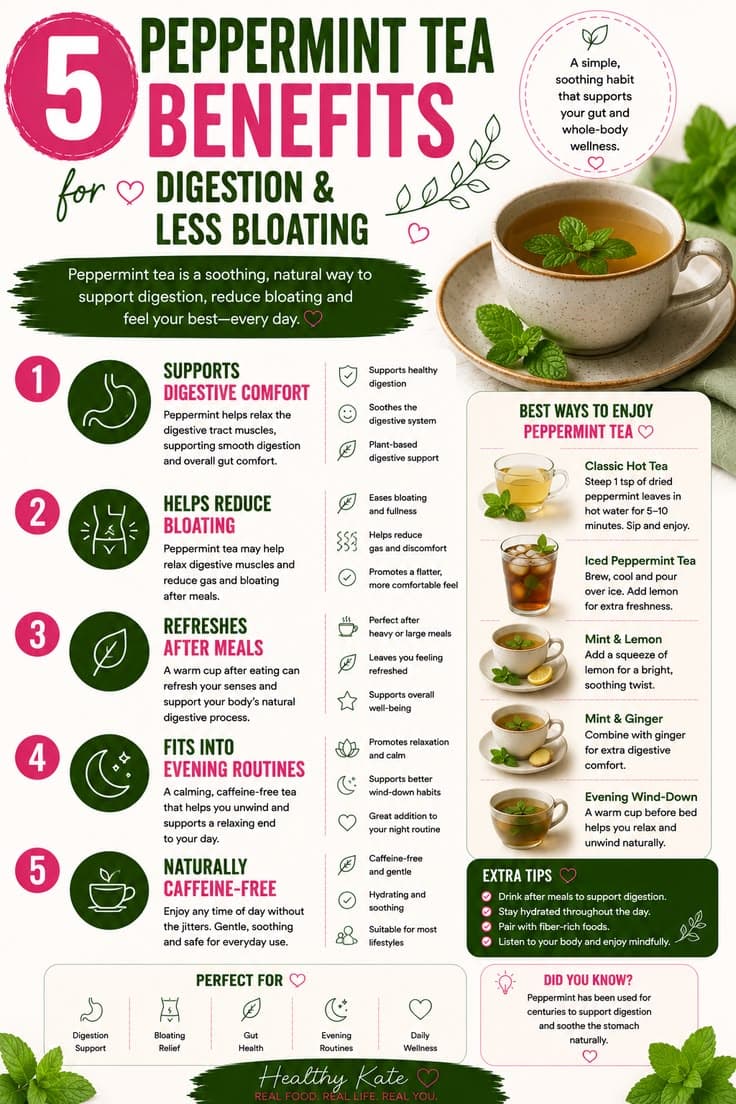
1. It may support digestive comfort
Peppermint contains menthol, which has a relaxing effect on the smooth muscles of the digestive tract. That is why peppermint has a long history in digestive routines and why peppermint oil has been studied for digestive discomfort.
A cup of tea is much milder than concentrated oil capsules, but many people find it a soothing way to end a meal.
2. It can help with that heavy, bloated feeling
After a large meal, a warm drink can feel calming. Peppermint's relaxing effect on digestive muscles is one reason people reach for it when they feel bloated. Pair it with other habits like a short walk after dinner and eating more slowly.
For more ideas, see our guide to cucumber benefits for less bloating.
3. A caffeine-free after-meal ritual
Peppermint tea is naturally free of caffeine, so you can drink it in the evening without affecting your sleep. A warm cup can also act as a signal that the meal — and the kitchen — is closed, which pairs nicely with our 7-minute kitchen closing ritual against night snacking.
4. It supports a calm evening routine
Making and slowly drinking a cup of tea is a small mindful pause. For many people, that pause is part of winding down. Combine it with the habits in our sleep habits for women over 40.
5. Fresh breath and an easy way to hydrate
Peppermint has a naturally fresh taste, and every cup counts towards your daily fluids. If plain water feels boring, herbal teas are an easy way to drink more.
How to make a great cup
- Use 1 tea bag or 1–2 tsp dried peppermint leaves per cup.
- Pour over just-boiled water.
- Steep covered for 5–7 minutes so the aroma stays in the cup.
- Fresh option: steep a handful of fresh mint leaves with a slice of lemon.
- Iced version: brew double strength and pour over ice.
What does the research say?
Most research on peppermint and digestion has looked at peppermint oil capsules, especially for people with irritable bowel syndrome (IBS). Several reviews found that enteric-coated peppermint oil can ease abdominal pain and bloating for some people with IBS. Peppermint tea contains much smaller amounts of the same compounds, mainly menthol, so its effect is gentler.
That means a cup of peppermint tea is best seen as a pleasant, soothing ritual that may help you feel more comfortable after a meal, not as a treatment. If you have ongoing digestive symptoms, talk to your doctor.
Fresh mint vs. tea bags
- Fresh mint: bright, sweet and very aromatic. Use 8 to 10 leaves per cup and bruise them lightly before adding hot water.
- Loose-leaf dried peppermint: stronger and more concentrated. Use about 1 teaspoon per cup.
- Tea bags: the most convenient option and perfect for work or travel. Choose pure peppermint rather than blends with flavorings.
Steep for 5 to 7 minutes and cover the cup so the aromatic oils stay in your tea.
Peppermint tea blends to try
- Peppermint and ginger: warming and great after a heavy meal. Here are 5 ginger benefits for digestion.
- Peppermint and chamomile: calming before bed.
- Peppermint and fennel: a classic after-dinner combination in many countries.
- Iced peppermint tea: brew it double strength, cool it and pour it over ice with lemon.
Who should skip peppermint tea
Peppermint can relax the muscle between the stomach and esophagus, which may make heartburn or acid reflux worse for some people. If you have reflux or GERD, try ginger or chamomile instead. Peppermint tea is generally considered safe in normal amounts, but pregnant or breastfeeding women and people on medication should check with their doctor if they plan to drink a lot.
Build a calming evening routine
A warm cup of tea pairs well with a 10-minute after-dinner walk and the 7-minute kitchen closing ritual, two small habits that can make evenings calmer and help you snack less late at night.
The bottom line
Peppermint tea is not a cure, but it is a pleasant, caffeine-free ritual that many people find soothing after meals and in the evening. Keep a box at home and let one cup a day become part of your routine.
FAQ
Peppermint Tea Questions
When is the best time to drink peppermint tea?
Many people enjoy it after meals or in the evening because it is naturally caffeine-free.
Who should be careful with peppermint tea?
Peppermint can make heartburn or reflux worse for some people. If you have reflux, are pregnant or take medication, talk to your doctor first.
How many cups a day are okay?
For most healthy adults, 1–3 cups a day is a common, comfortable amount.
Does peppermint tea help you lose weight?
Peppermint tea has almost no calories, so swapping it for sugary drinks or late-night snacks can help. It does not burn fat on its own.
Is peppermint tea good before bed?
Yes, for most people. It is naturally caffeine-free and the warm ritual can help you wind down. Skip it if it gives you heartburn when lying down.