5 Fiber Habits for Women Over 40 (and 5 High-Fiber Foods That Keep You Full)
More fiber means a happier gut, steadier blood sugar and fewer cravings. Five simple habits and five high-fiber foods to reach 25 grams a day without bloating.
By KateLast reviewed
Fiber is the most underrated nutrient for women over 40. It supports digestion, feeds healthy gut bacteria, steadies blood sugar and keeps you full, which makes cravings easier to manage. Yet most adults eat only about half of what they need.
The good news: you do not need a strict plan. Five small habits can easily double your fiber intake.
Why fiber matters more after 40
As hormones change, many women notice slower digestion, more bloating and stronger cravings. Fiber helps on all fronts. Soluble fiber (oats, beans, chia) forms a gel that slows digestion and supports steadier blood sugar. Insoluble fiber (vegetables, whole grains) keeps things moving. Both feed the gut bacteria that influence digestion, immunity and even mood.
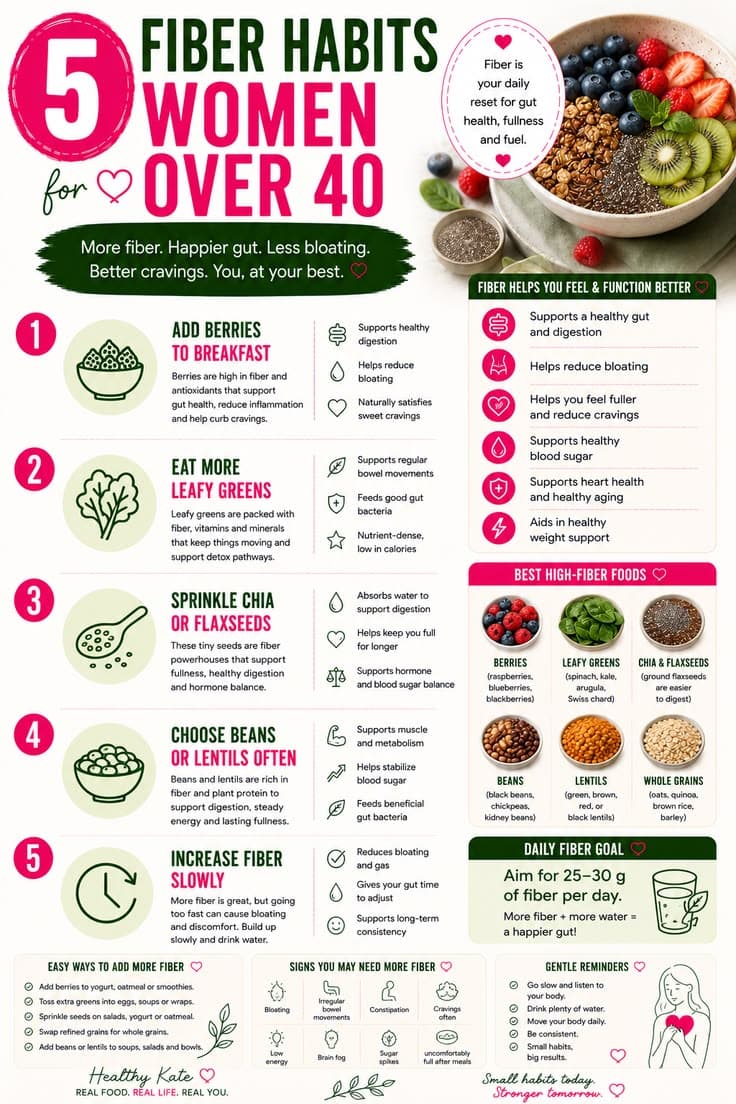
1. Add berries to breakfast
Raspberries and blackberries have about 8 g of fiber per cup, and blueberries about 4 g. Add them to oatmeal, yogurt or smoothies, like our Greek yogurt bowl or blueberry green smoothie.
2. Eat more leafy greens
Spinach, kale, arugula and romaine add fiber, vitamins and volume with very few calories. Fill half your plate with vegetables, the core idea of the Lazy Plate Method.
3. Sprinkle chia or flaxseeds
Two tablespoons of chia seeds add about 8 g of fiber; ground flaxseed adds about 4 g plus omega-3s. Stir them into yogurt, oats or smoothies. Learn more about flaxseed benefits and chia seed benefits.
4. Choose beans or lentils often
Half a cup of cooked lentils has about 8 g of fiber and 9 g of protein. Add beans to salads, soups and bowls, like our chickpea avocado bowl or quinoa chickpea salad.
5. Increase fiber slowly
This is the habit that makes the other four work. Add one high-fiber food every few days, not all at once, and drink an extra glass or two of water. Your gut needs time to adjust.
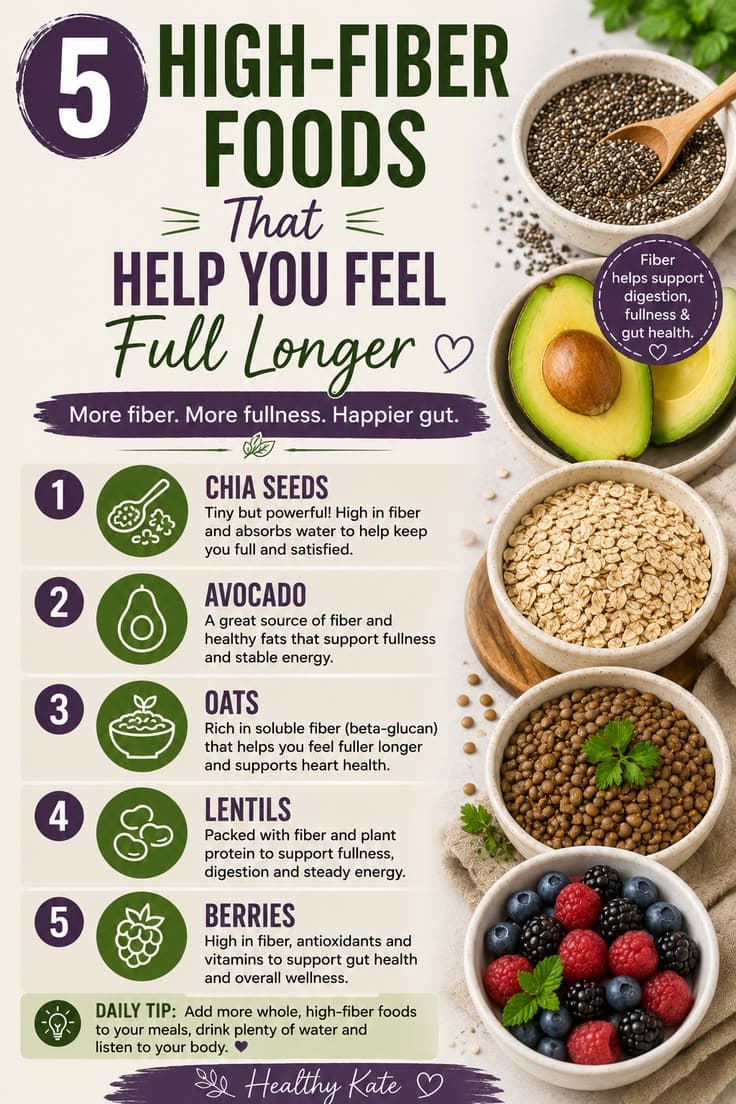
5 high-fiber foods that help you feel full longer
- Chia seeds: about 10 g of fiber per ounce (2 tbsp plus a bit) and they absorb liquid, adding volume.
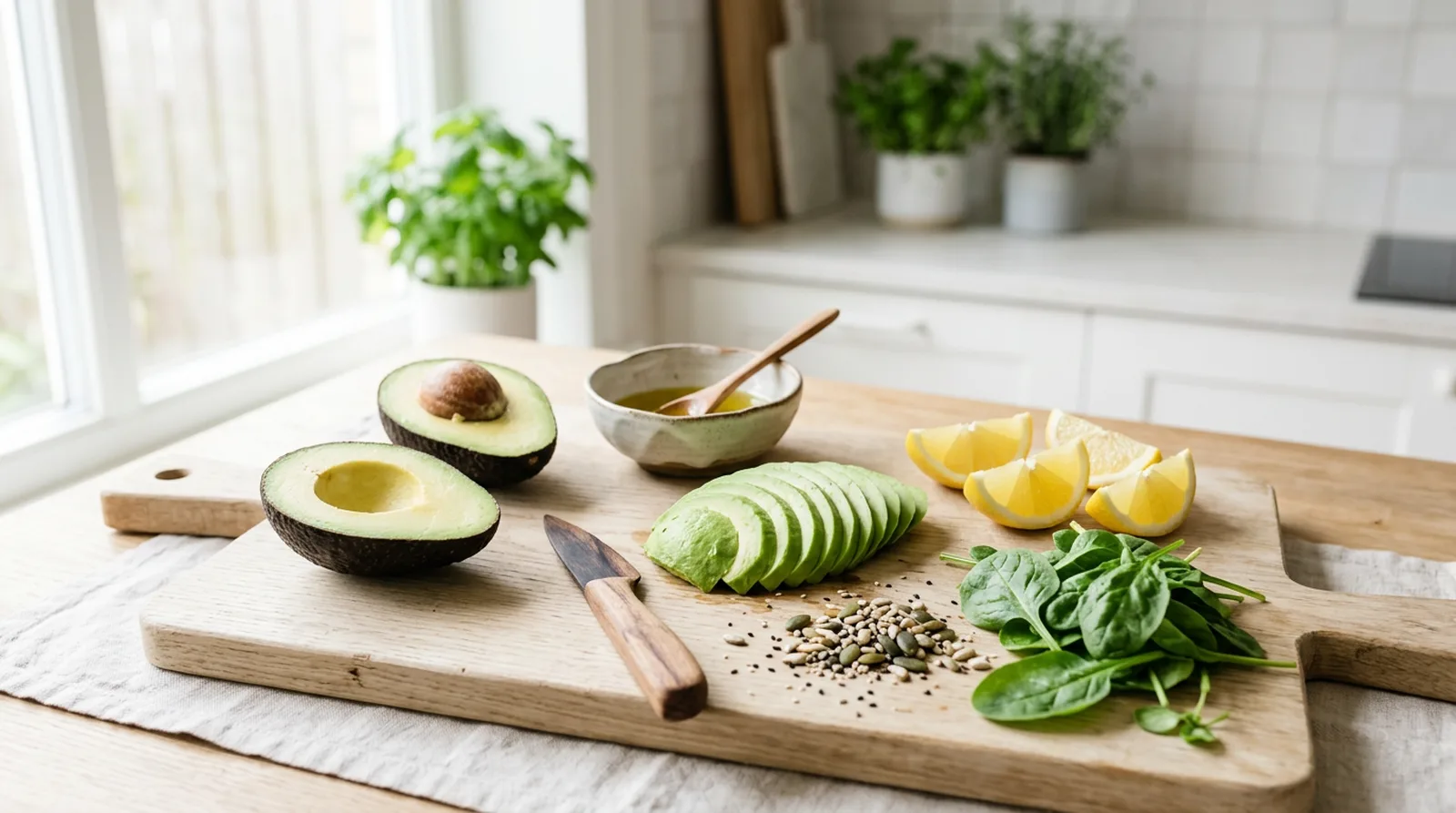
- Avocado: about 10 g of fiber per avocado plus healthy fats. See why avocado is a smart source of healthy fats.
- Oats: rich in beta-glucan, a soluble fiber linked to steadier blood sugar and healthy cholesterol. Here are 5 oatmeal habits that keep you full.
- Lentils: fiber plus plant protein, cheap and quick to cook.
- Berries: sweet, low in sugar and high in fiber and antioxidants.
A 25-gram fiber day (example)
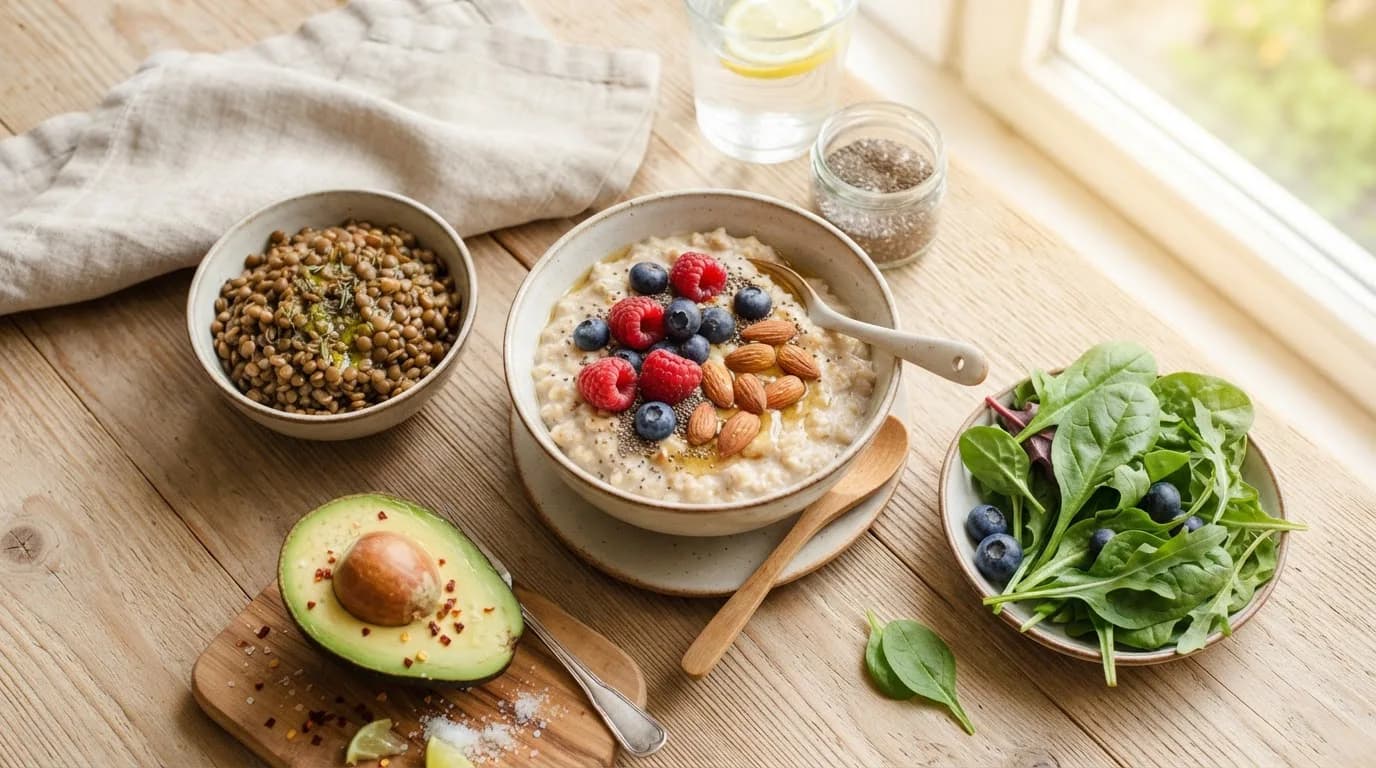
- Breakfast: oats with raspberries and 1 tbsp chia seeds (about 12 g)
- Lunch: salad with greens and half a cup of chickpeas (about 8 g)
- Snack: an apple (about 4 g). More in 5 apple benefits.
- Dinner: roasted vegetables with salmon (about 5 g)
Total: roughly 29 g, without supplements.
Signs you may need more fiber
- Irregular or hard bowel movements
- Feeling hungry soon after meals
- Strong sugar cravings in the afternoon
- Energy crashes after meals
If you have ongoing digestive problems, sudden changes or a condition like IBS, talk to your doctor before making big changes.
FAQ
Fiber Questions
How much fiber do women over 40 need?
Common recommendations are about 25 grams per day for women up to 50 and about 21 grams after 50. Most adults eat only around 15 grams.
Why does more fiber make me bloated?
A sudden jump in fiber gives your gut bacteria a lot to ferment at once. Increase slowly over two to three weeks and drink more water; the bloating usually settles.
Is fiber good for weight loss?
Fiber adds volume and slows digestion, which helps you feel full on fewer calories. High-fiber diets are linked with healthier body weight in research.
Are fiber supplements as good as food?
Supplements like psyllium can help, but whole foods also bring vitamins, minerals and different fiber types that feed a more diverse gut microbiome.
The bottom line
Fiber is one of the easiest upgrades for women over 40: more fullness, steadier energy and a happier gut. Start with berries at breakfast, add beans or lentils a few times a week, sprinkle seeds and go slowly. Your gut will thank you.
This article is for general information and does not replace medical advice. Talk to your doctor before making changes, especially if you have a health condition, are pregnant or take medication.