5 Magnesium Benefits for Sleep, Cravings and Energy (Plus 5 Magnesium-Rich Foods)
Magnesium is involved in hundreds of processes in your body, from sleep to stress to energy. Here are five benefits, five magnesium-rich foods and easy ways to get more.
By KateLast reviewed

Magnesium is a mineral your body uses in more than 300 processes, from turning food into energy to relaxing muscles and calming the nervous system. It is also one of the minerals many adults do not get enough of, especially when stress is high and diets include lots of processed foods.
5 magnesium benefits
1. Supports restful sleep
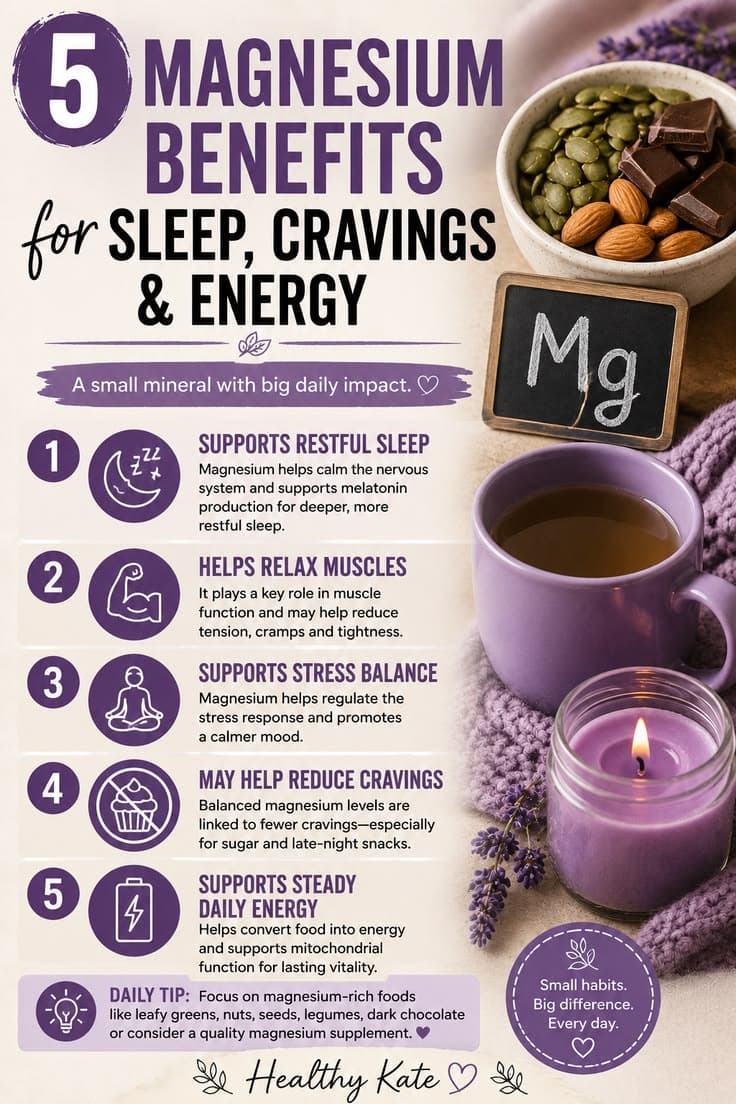
Magnesium helps regulate the nervous system and is involved in producing melatonin, the hormone that signals sleep. Some studies suggest magnesium may help people with low levels sleep better. Pair magnesium-rich foods with these sleep habits for women over 40.
2. Helps relax muscles
Magnesium works together with calcium in muscle contraction and relaxation. Low levels are linked to muscle tension and cramps, which is why many people notice tight muscles when they are low on magnesium.
3. Supports stress balance
Magnesium plays a role in the body's stress response. Stress can increase magnesium loss, and low magnesium can make you more sensitive to stress, a cycle worth breaking. Calm daily habits help too; see 5 cortisol-balancing habits.
4. May help reduce cravings
Magnesium is involved in blood sugar regulation. Some people notice fewer sugar and chocolate cravings when their diet includes enough magnesium-rich foods. Interestingly, dark chocolate is one of the best sources. More on why you crave sugar in the afternoon.
5. Supports steady daily energy
Magnesium helps convert food into usable energy in your cells. Low levels are linked to fatigue. Combined with iron and B vitamins, it is part of the foundation for steady energy; see iron-rich foods for less fatigue.
5 magnesium-rich foods
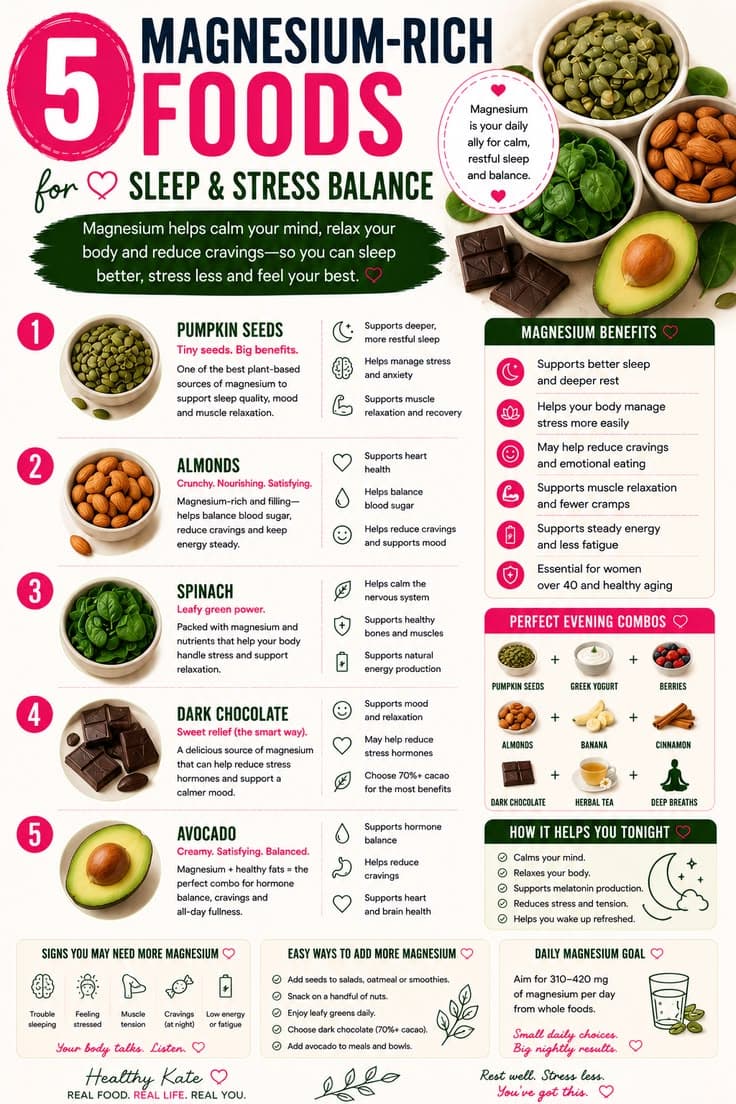
- Pumpkin seeds: about 150 mg per ounce, one of the richest sources. Read more about pumpkin seed benefits.
- Almonds: about 80 mg per ounce, plus healthy fats and fiber.
- Spinach: about 80 mg per half cup cooked.
- Dark chocolate (70 percent or more): about 65 mg per ounce. A sweet way to get magnesium.
- Avocado: about 45 mg per medium fruit, plus potassium and fiber.
Other good sources: black beans, edamame, cashews, whole grains, bananas and yogurt.
Perfect evening magnesium combos
- Pumpkin seeds sprinkled on Greek yogurt with berries
- A banana with almond butter
- Two squares of dark chocolate with a handful of almonds
- A cup of herbal tea with a small trail mix of nuts and seeds
These make a calming evening snack that may help you wind down without reaching for cookies.
Signs you may need more magnesium
- Muscle cramps or twitches
- Trouble sleeping
- Feeling stressed or wired
- Fatigue
- Strong chocolate cravings
These signs have many possible causes, so talk to your doctor if they persist. A blood test can check your levels, although it does not always reflect what is stored in tissues.
Easy ways to add more magnesium
- Add seeds to salads, oats and smoothies.
- Snack on a handful of nuts instead of chips.
- Choose whole grains over refined ones.
- Add a handful of spinach to eggs, soups and pasta.
- Keep a bar of dark chocolate for a small daily treat.
More evening and stress routines are collected in our guide for women over 35.
FAQ
Magnesium Questions
How much magnesium do women need?
Adult women need about 310 to 320 mg of magnesium per day, according to U.S. recommendations. Many people fall short through food alone.
Does magnesium help you sleep?
Magnesium supports relaxation of muscles and the nervous system. Some small studies, mainly in older adults, found improvements in sleep with supplements, but evidence is limited.
Which form of magnesium supplement is best?
Magnesium glycinate and citrate are well absorbed and commonly used. Magnesium oxide is cheaper but less absorbed and more likely to cause loose stools.
Can you take too much magnesium?
From food, it is very unlikely. From supplements, more than 350 mg per day can cause diarrhea and stomach upset. People with kidney disease should not take magnesium supplements without medical advice.
The bottom line
Magnesium supports sleep, relaxation, stress balance, cravings and energy. Most people can meet their needs with seeds, nuts, leafy greens, beans and a little dark chocolate. Start with an easy evening magnesium snack and build from there.
This article is for general information and does not replace medical advice. Talk to your doctor before making changes, especially if you have a health condition, are pregnant or take medication.
Sources
We check health claims against research summaries and official fact sheets. Links open the original source.
- Magnesium – Fact Sheet for Health Professionals · NIH Office of Dietary Supplements, 2026
- Oral magnesium supplementation for insomnia in older adults: a systematic review and meta-analysis (Mah & Pitre) · BMC Complementary Medicine and Therapies, 2021
- Ask the doctor: Sleep and magnesium supplements · Harvard Health Publishing, 2016