5 Iron-Rich Foods for Energy and Less Fatigue
Iron plays an important role in oxygen transport, energy, and healthy red blood cells. These five iron-rich foods can help you build more balanced, nourishing meals.
By KateLast reviewed
Feeling tired can have many causes.
Poor sleep, stress, not eating enough, dehydration, low protein, hormones, and busy routines can all play a role.
But one nutrient that often comes up in conversations about energy is iron.
Iron is important because your body uses it to make hemoglobin, a protein in red blood cells that helps carry oxygen through your body. When iron is too low, some people may feel tired, weak, dizzy, short of breath, or unusually drained.
That does not mean every low-energy day is caused by iron.
But it does mean iron-rich foods can be an important part of a balanced wellness routine.
Here are five iron-rich foods to know — plus simple ways to help your body absorb more iron from meals.
Why iron matters
Iron supports your body in several important ways.
It helps with oxygen transport, healthy red blood cells, energy production, and overall physical function.
There are two main types of iron in food:
- heme iron
- non-heme iron
Heme iron is found in animal foods like meat, poultry, and seafood. Non-heme iron is found in plant foods like legumes, nuts, seeds, leafy greens, whole grains, and fortified foods.
Heme iron is generally absorbed more easily by the body. Non-heme iron can still be valuable, but absorption depends more on what else you eat with it.
That is why food pairings matter.
For example, vitamin C can help your body absorb non-heme iron from plant foods.
1. Lean beef
Lean beef is one of the most well-known iron-rich foods because it contains heme iron.
Heme iron is the form of iron found in animal foods, and it is typically easier for the body to absorb than non-heme iron from plant sources.
Lean beef can also provide protein, zinc, and B vitamins, which can make it a satisfying part of a balanced meal.
Simple meal ideas:
- lean beef with roasted vegetables
- steak salad with spinach and bell peppers
- beef and bean chili
- lean ground beef lettuce bowls
- beef strips with rice and broccoli
If you eat beef, you do not need huge portions to get value from it. A small amount can be paired with fiber-rich sides like vegetables, beans, potatoes, or whole grains.
2. Spinach
Spinach is a popular plant-based iron source.
It contains non-heme iron, which is not absorbed as easily as heme iron, but it can still be a useful addition to meals.
Spinach also contains other nutrients and is easy to add to breakfast, lunch, or dinner.
Simple ways to use spinach:
- add spinach to omelets
- blend it into smoothies
- use it as a salad base
- stir it into soups
- add it to pasta or rice bowls
- sauté it with garlic and lemon
Because spinach contains non-heme iron, pairing it with vitamin C-rich foods can help.
Try spinach with:
- lemon juice
- strawberries
- oranges
- bell peppers
- tomatoes
- kiwi
This is one reason a spinach salad with citrus or bell peppers can be a smart pairing.
3. Lentils
Lentils are a great plant-based option because they provide iron, fiber, and protein.
They are filling, affordable, and easy to use in many meals.
Like spinach, lentils contain non-heme iron, so vitamin C pairings can help support absorption.
Simple meal ideas:
- lentil soup with tomatoes
- lentil salad with lemon dressing
- lentil curry with peppers
- lentils with roasted vegetables
- lentil bowls with greens and salsa
Lentils are especially useful if you want meals that feel hearty without being complicated.
They can also help make meals more filling because they contain both fiber and protein. For more ideas, see these protein and fiber combos that keep you full longer.
4. Pumpkin seeds
Pumpkin seeds are small, but they can be a helpful iron-rich addition to meals.
They are easy to sprinkle onto foods you already eat.
Try adding pumpkin seeds to:
- oatmeal
- yogurt bowls
- salads
- soups
- smoothie bowls
- roasted vegetables
- homemade trail mix
Pumpkin seeds also add crunch, which can make meals feel more satisfying. Learn more about pumpkin seed benefits for sleep and energy.
Because they are plant-based, their iron is non-heme iron, so they pair well with vitamin C-rich foods.
For example:
- pumpkin seeds with berries
- pumpkin seeds on a salad with bell peppers
- pumpkin seeds with citrus dressing
- pumpkin seeds in a bowl with tomatoes or salsa
A small topping can make a simple meal feel more complete.
5. Dark chocolate
Dark chocolate can provide some iron, depending on the cocoa content.
It is not usually something you would rely on as your main iron source, but it can still be part of a balanced routine.
The key is moderation.
A small piece of dark chocolate can be satisfying, especially if you pair it with other nutrient-dense foods.
Simple pairing ideas:
- dark chocolate with strawberries
- dark chocolate with nuts
- dark chocolate with pumpkin seeds
- dark chocolate with Greek yogurt
- dark chocolate with berries
If you enjoy sweet foods, dark chocolate can be a more satisfying option than highly processed sweets.
But it is still best treated as an add-on, not the foundation of your iron intake.
Tips to help your body absorb more iron
Getting iron-rich foods is one part of the picture.
Absorption also matters.
Here are simple ways to support iron absorption from meals.
Pair plant-based iron with vitamin C
Vitamin C can help improve absorption of non-heme iron, the type found in plant foods.
Good vitamin C pairings include:
- lentils with bell peppers
- spinach with lemon juice
- pumpkin seeds with berries
- beans with tomatoes
- iron-fortified cereal with strawberries
- chickpeas with citrus dressing
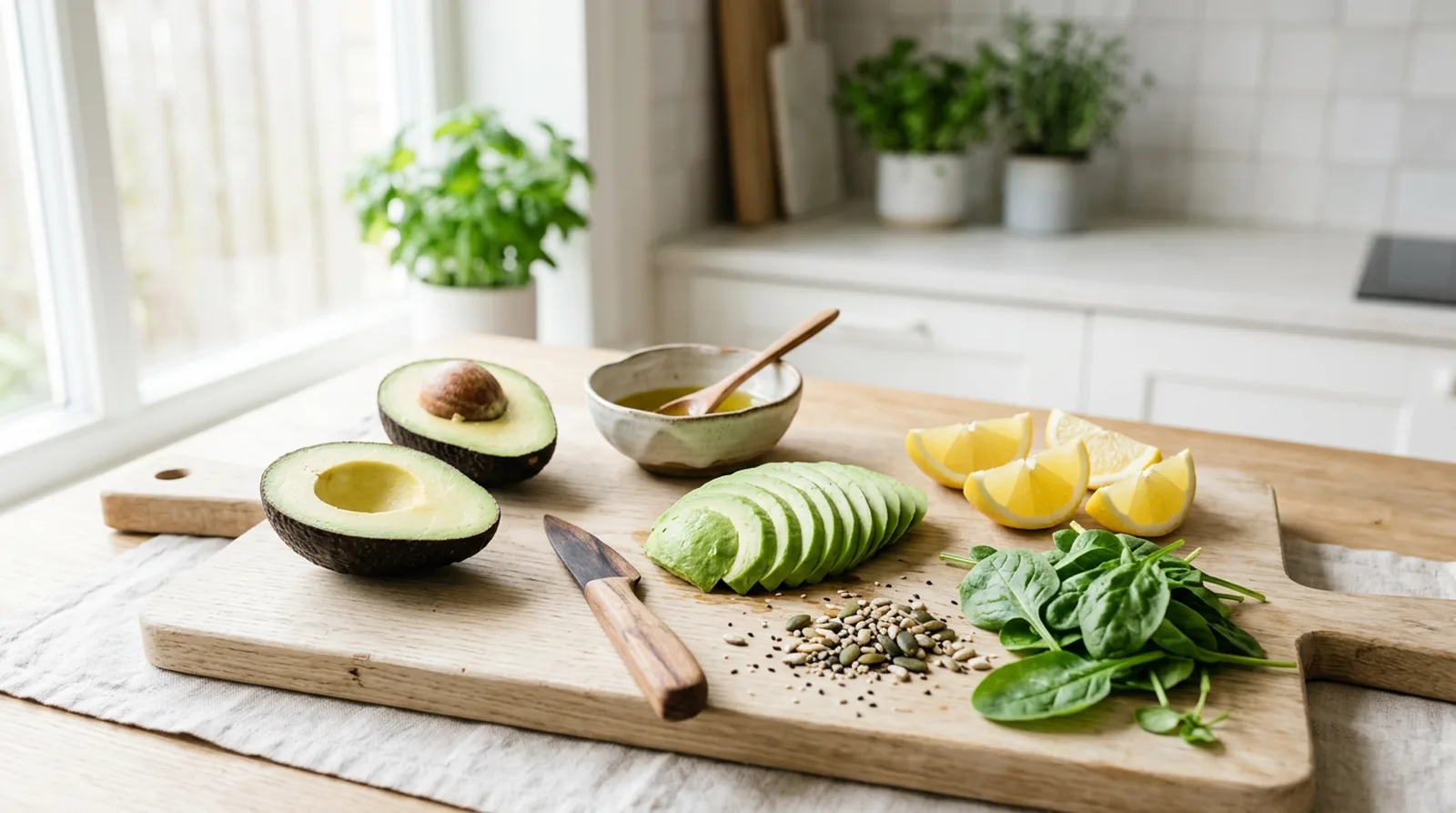
A high-fiber chickpea and avocado bowl with a squeeze of lemon is an easy example.
This is one of the easiest upgrades to make.
Avoid tea or coffee right with iron-rich meals
Tea and coffee can reduce iron absorption when consumed with meals.
You do not necessarily need to avoid them completely.
But if you are specifically trying to improve iron intake, consider drinking coffee or tea between meals instead of directly with your most iron-rich meal.
Mix heme and non-heme iron when possible
If you eat animal foods, pairing heme iron sources with plant-based iron sources can make meals more balanced.
For example:
- beef with lentils
- chicken with spinach
- fish with beans
- turkey with pumpkin seed salad
If you eat fully plant-based, focus more on vitamin C pairings and variety.
Soak or sprout legumes when possible
Some plant foods contain compounds that can reduce mineral absorption.
Soaking, sprouting, fermenting, or cooking legumes and grains properly can help make them easier to digest and may improve mineral availability.
You do not have to make this complicated.
Even rinsing canned lentils or beans and pairing them with vitamin C-rich foods is a good start.
Signs you may need to check your iron levels
Food can support a healthy routine, but it is not a replacement for proper testing.
If you often feel unusually tired, weak, dizzy, short of breath, cold, or notice pale skin, headaches, brittle nails, or unusual cravings like ice, it may be worth speaking with a healthcare professional.
Do not guess with iron supplements.
Too much iron can be harmful, and iron needs can vary depending on your age, sex, diet, health status, pregnancy, menstrual cycle, and medications.
If you suspect low iron, ask about blood testing and personalized guidance.
FAQ
Iron and Energy Questions
What foods are highest in iron?
Red meat, poultry, seafood, lentils, beans, tofu, pumpkin seeds, spinach and iron-fortified cereals are among the most common iron sources. Animal foods provide heme iron, which the body usually absorbs more easily than the non-heme iron in plant foods.
How can I absorb more iron from plant foods?
Pairing plant-based iron with vitamin C-rich foods like bell peppers, citrus, strawberries or tomatoes may help absorption. Drinking coffee or tea between meals instead of with an iron-rich meal can also help.
Can low iron make you feel tired?
Low iron is one possible cause of fatigue, weakness or shortness of breath, but tiredness has many other causes too. If you often feel unusually drained, ask your doctor about a blood test rather than guessing.
Should I take an iron supplement for energy?
Only take iron supplements if a healthcare professional recommends them after testing. Too much iron can be harmful, and needs differ with age, menstruation, pregnancy, health conditions and medications.
The bottom line
Iron-rich foods can be a helpful part of a routine that supports energy, blood health, and overall wellness.
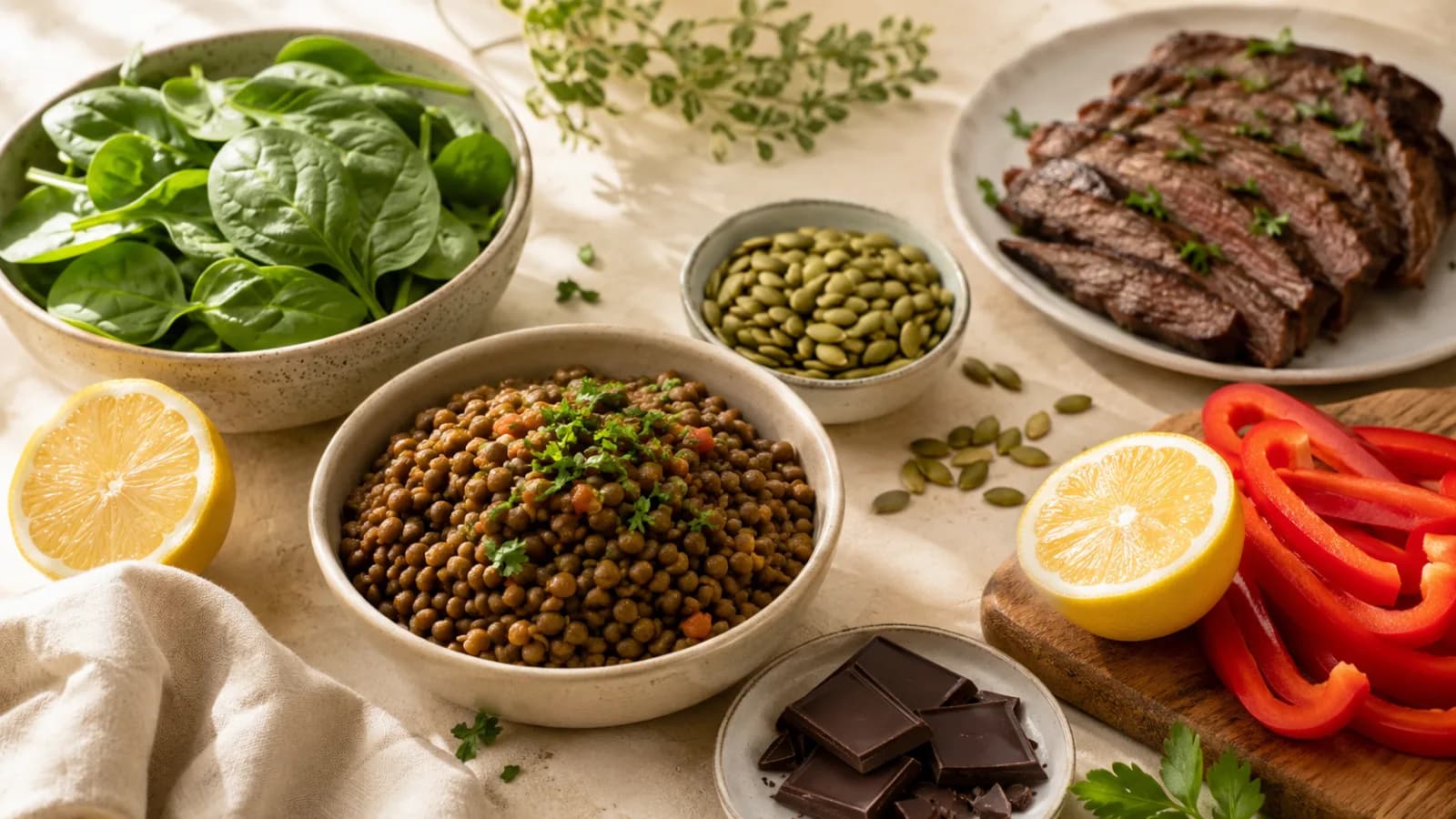
Lean beef, spinach, lentils, pumpkin seeds, and dark chocolate are five foods that can help you add more iron to your meals.
The best approach is not just eating more iron.
It is building balanced meals that include protein, fiber, iron-rich foods, and smart pairings like vitamin C.
Small choices can add up.
And the easiest routine is usually the one you can keep repeating.
Not sure what wellness routine fits your body best?
Different people struggle with different patterns.
For some, the issue is cravings.
For others, it is low energy, digestion, bloating, snacking, stubborn weight, or not having a routine that feels realistic.
Take the free quiz to find the weight-loss routine that fits your body.
This article is for general information and does not replace medical advice. Talk to your doctor before making changes, especially if you have a health condition or take medication.