5 Pumpkin Seed Benefits for Sleep, Energy, and Wellness
Pumpkin seeds are small, but they are packed with nutrients like magnesium, zinc, healthy fats, and plant-based protein. Here are five simple benefits to know.
By KateLast reviewed
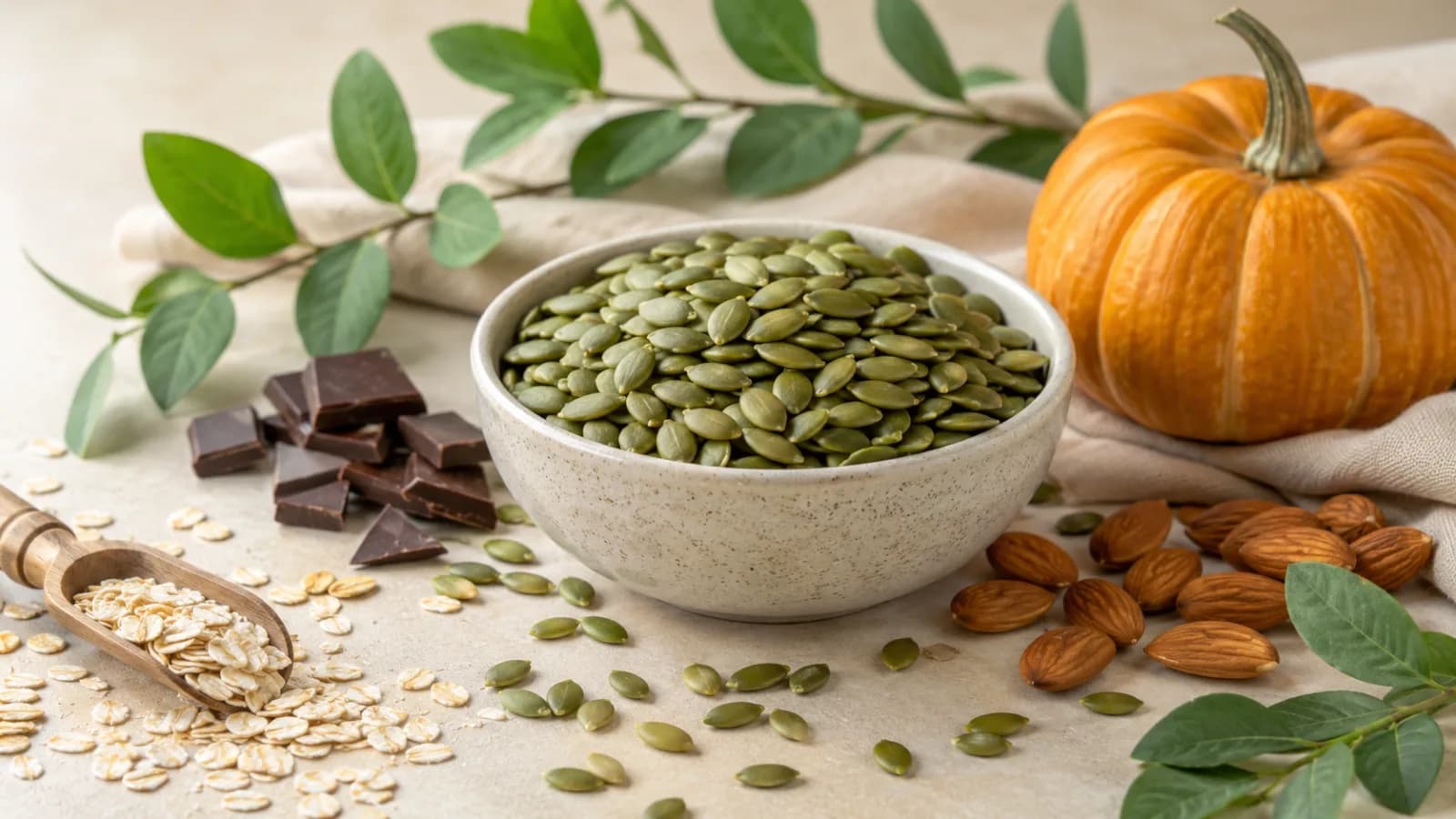
Pumpkin seeds are small, but they can add a lot to a simple wellness routine.
They are crunchy, easy to use, and packed with nutrients like magnesium, zinc, healthy fats, fiber, and plant-based protein.
You can sprinkle them on yogurt, oatmeal, salads, soups, smoothie bowls, or roasted vegetables.
But why do so many people talk about pumpkin seeds for sleep, energy, hormones, and everyday wellness?
The answer is not that pumpkin seeds are magic.
They are simply a nutrient-dense food that can help make your meals and snacks more balanced.
Here are five pumpkin seed benefits to know.
1. Pumpkin seeds are rich in magnesium
One of the biggest reasons pumpkin seeds stand out is their magnesium content.
Magnesium is an important mineral involved in many normal body functions.
Your body uses magnesium for muscle and nerve function, energy production, blood sugar regulation, bone health, and hundreds of enzyme reactions.
That is why magnesium-rich foods often come up in conversations around relaxation, sleep, energy, and stress. If rest is your main focus, these sleep habits for women over 40 are a good next step.
Pumpkin seeds are one of the easiest magnesium-rich foods to add to your routine.
You can use them as:
- a yogurt topping
- an oatmeal topping
- a salad crunch
- a soup garnish
- a snack with fruit
- part of a trail mix
- a topping for smoothie bowls
You do not need a complicated recipe.
A small handful can make a meal feel more satisfying and nutrient-rich.
2. Pumpkin seeds may support restful sleep routines
Pumpkin seeds are often mentioned in sleep-supporting routines because they contain magnesium and other nutrients that are connected to normal relaxation and nervous system function.
That does not mean pumpkin seeds will instantly fix sleep.
Sleep is affected by many things:
- stress
- caffeine
- screen time
- light exposure
- alcohol
- hormones
- room temperature
- evening meals
- sleep schedule
But adding magnesium-rich foods to your diet can be a simple food-first step.
If your nighttime routine feels chaotic, pumpkin seeds can fit into calming snacks like:
- Greek yogurt with pumpkin seeds
- oatmeal with pumpkin seeds and cinnamon
- a small trail mix with pumpkin seeds and almonds
- chia pudding topped with pumpkin seeds
- sliced apple with pumpkin seeds and nut butter
The goal is not to eat a huge snack before bed.
The goal is to build meals and snacks during the day that support your body more consistently.
3. Pumpkin seeds provide zinc for everyday wellness
Pumpkin seeds also contain zinc.
Zinc is an essential mineral that supports many normal body functions, including immune function, protein synthesis, DNA synthesis, and wound healing.
It also plays a role in healthy skin, hair, and overall wellness.
Many people think about zinc and its benefits for immunity and skin only when they feel run down, but it is better to think of it as part of a steady nutrition routine.
Foods that provide zinc include:
- pumpkin seeds
- meat
- seafood
- beans
- lentils
- chickpeas
- nuts
- dairy
- whole grains
Pumpkin seeds are helpful because they are easy to add to meals you already eat.
For example:
- sprinkle them on soup
- add them to a lunch bowl
- mix them into granola
- add them to roasted vegetables
- use them in homemade energy bites
Small additions can make a normal meal more nutrient-dense.
4. Pumpkin seeds can support balanced meals and snacks
One reason pumpkin seeds are useful is that they contain a mix of healthy fats, plant-based protein, and fiber.
That combination can make meals and snacks feel more satisfying.
This matters because many snacks are quick but not very filling.
They taste good for a few minutes, then leave you hungry again.
Pumpkin seeds can help add more staying power.
Simple snack ideas:
- pumpkin seeds with berries
- pumpkin seeds with Greek yogurt
- pumpkin seeds with dark chocolate
- pumpkin seeds with fruit
- pumpkin seeds with nuts
- roasted pumpkin seeds with spices
Simple meal ideas:
- add pumpkin seeds to salads
- sprinkle them over oatmeal
- add them to grain bowls
- use them on avocado toast
- top soups with pumpkin seeds
- blend them into pesto or sauces
They are especially useful if you want something crunchy without relying only on chips, crackers, or sweets. For more ideas, see these healthy snacks that help reduce cravings.
5. Pumpkin seeds are easy to add to a daily routine
The best wellness habits are usually the ones you can repeat.
Pumpkin seeds are useful because they do not require much effort.
You can keep them in your pantry and add them to whatever you are already eating.
That makes them different from habits that require a full meal plan, complicated prep, or a major lifestyle reset.
Easy ways to use pumpkin seeds:
- add 1 to 2 tablespoons to oatmeal (one of these oatmeal habits for fullness)
- sprinkle them on salads
- mix them into yogurt bowls
- add them to smoothie bowls
- use them in soups
- pair them with fruit
- add them to homemade trail mix
- use them as a crunchy topping for roasted vegetables
You can choose raw or roasted pumpkin seeds.
If you buy flavored versions, check the sodium, sugar, and added oils.
Simple is usually best.
Are pumpkin seeds good for hormones?
You may see pumpkin seeds mentioned in conversations about hormones.
This is usually because they contain nutrients like magnesium, zinc, healthy fats, and plant-based compounds that can be part of a nourishing diet.
But it is important to be careful with this claim.
Pumpkin seeds do not directly “balance hormones” on their own.
Hormones are influenced by many factors, including sleep, stress, nutrition, body composition, activity, age, menstrual cycle, menopause, medications, and medical conditions.
A better way to say it is:
Pumpkin seeds can be part of a nutrient-rich diet that supports overall wellness.
If you are dealing with symptoms like irregular cycles, intense PMS, hot flashes, hair loss, acne, major fatigue, or sudden weight changes, it is worth speaking with a healthcare professional.
Food can support your body, but it should not replace medical guidance when symptoms are significant.
How much pumpkin seed should you eat?
You do not need a huge amount.
For many people, 1 to 2 tablespoons is an easy place to start.
A small handful can also work as a snack.
Pumpkin seeds are nutrient-dense, but they are also calorie-dense, so more is not always better.
The goal is to add them in a way that supports your meals, not to force them into everything.
Try starting with one simple habit:
- add pumpkin seeds to breakfast
- add them to your afternoon snack
- add them to a salad
- keep them as a crunchy topping
Consistency matters more than doing everything perfectly.
Pumpkin seeds are one of the best magnesium-rich foods for sleep and stress.
FAQ
Pumpkin Seed Questions
Do pumpkin seeds help you sleep?
Pumpkin seeds provide magnesium, a mineral involved in normal muscle and nerve function, so they can be part of a sleep-friendly eating routine. They are not a sleep aid on their own, and habits like a steady schedule, less caffeine and less evening screen time usually matter more.
How many pumpkin seeds should I eat a day?
For many people, 1 to 2 tablespoons or a small handful is an easy daily amount. Pumpkin seeds are calorie-dense, so a modest portion is usually enough to add nutrients and crunch.
Are raw or roasted pumpkin seeds healthier?
Both can fit a healthy diet and have a similar nutrient profile. If you buy roasted or flavored seeds, check the label for added salt, sugar and oils.
Are pumpkin seeds good for weight loss?
Pumpkin seeds will not cause weight loss on their own, but their mix of protein, fiber and healthy fat can make meals and snacks more filling. Keeping portions small helps them fit into a calorie-aware routine.
The bottom line
Pumpkin seeds are small, simple, and nutrient-dense.
They provide magnesium, zinc, healthy fats, fiber, and plant-based protein.
They may support more balanced meals, restful evening routines, everyday wellness, and steady energy as part of an overall healthy lifestyle.
They are not a magic solution.
But they are one of the easiest foods to add to a routine that already feels realistic.
Small seeds.
Big nutrition.
Easy to repeat.
Not sure what wellness routine fits your body best?
Different people struggle with different patterns.
For some, the issue is cravings.
For others, it is low energy, sleep, digestion, bloating, snacking, stubborn weight, or not having a routine that feels realistic.
Take the free quiz to find the weight-loss routine that fits your body.
This article is for general information and does not replace medical advice. Talk to your doctor before making changes, especially if you have a health condition or take medication.