The Lazy Plate Method: How to Lose Weight Without Counting Calories
The lazy plate method is a simple way to build balanced meals without weighing food, tracking every calorie, or following a strict diet plan. It gives you structure while still letting your meals feel normal.
By KateLast reviewed
Counting calories can work for some people.
But for many women, it quickly becomes exhausting.
You start weighing everything.
You check every label.
You enter every snack into an app.
You feel guilty when you forget.
And suddenly, eating feels like a math problem.
That might feel motivating for a few days.
But long term, it can become stressful.
The lazy plate method is different.
It gives you structure without making food feel complicated.
No food scale.
No calorie app.
No perfect meal plan.
No strict rules.
Just one simple visual formula you can use again and again.
What Is the Lazy Plate Method?
The lazy plate method is a simple way to build meals by looking at your plate.
Instead of counting calories, you divide your plate into easy sections.
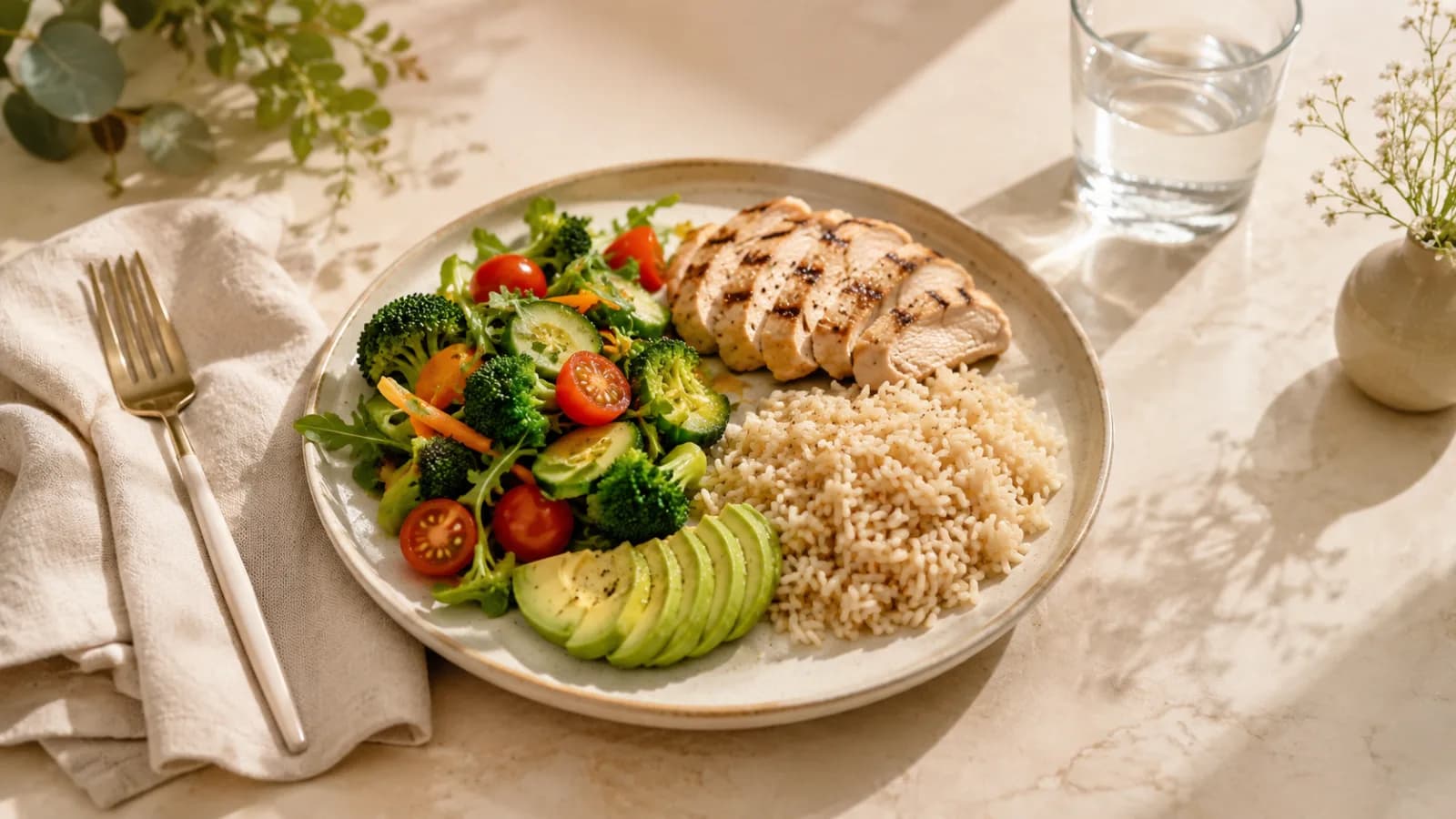
A simple version looks like this:
Half your plate: vegetables or high-volume foods
One quarter: protein
One quarter: slow carbs
A small amount: healthy fat
That is it.
You are not trying to create the perfect meal.
You are trying to create a balanced meal that keeps you full, gives you energy, and makes overeating less likely.
The reason it works so well is that it removes decision fatigue.
Instead of asking, “What should I eat?” every single day, you ask:
“Does my plate have protein, plants, carbs, and a little fat?”
That one question makes healthy eating easier.
Why This Works Better Than Random Healthy Eating
A lot of people try to lose weight by simply “eating healthier.”
But that can be vague.
One person thinks healthy means salad only.
Another thinks it means cutting carbs.
Another thinks it means skipping dinner.
Another thinks it means eating tiny portions and hoping cravings do not show up later.
The problem is that random healthy eating often does not create enough structure.
You might eat foods that are technically healthy but still feel hungry afterward.
Or you might eat meals that are too small during the day and then overeat at night.
The lazy plate method helps because it gives your body a more complete meal.
You get volume from vegetables.
You get fullness from protein.
You get energy from slow carbs.
You get satisfaction from healthy fats.
That combination is what makes the meal feel finished.
The First Part: Fill Half Your Plate With Volume
The easiest way to make weight loss meals more satisfying is to add more volume.
This usually means vegetables, salad, or other high-water, high-fiber foods.
Examples include:
broccoli
zucchini
cucumber
spinach
green beans
carrots
bell peppers
mushrooms
tomatoes
lettuce
cauliflower
roasted vegetables
mixed salad
The goal is not to force yourself to eat boring steamed vegetables.
The goal is to make your plate look full and feel satisfying.
You can roast vegetables with seasoning.
You can make a colorful salad.
You can add cucumber and tomatoes to a bowl.
You can use frozen vegetables if that makes life easier.
This part of the plate helps you feel like you are eating a real meal, not a tiny diet portion.
The Second Part: Add Protein
Protein is one of the most important parts of a weight loss meal because it helps the meal feel more satisfying.
Without enough protein, you may eat a full plate and still feel like something is missing.
Good protein options include:
chicken
turkey
eggs
Greek yogurt
cottage cheese
fish
shrimp
tofu
tempeh
lean beef
lentils
beans
edamame
protein-rich veggie patties
You do not need to eat the same protein every day.
The lazy plate method works best when it feels flexible.
For lunch, your protein might be chicken.
For dinner, it might be salmon.
For a vegetarian meal, it might be tofu, lentils, or eggs.
The point is simple:
Every main meal should have a clear protein source.
That one habit can make a big difference in how full you feel.
The Third Part: Keep Slow Carbs on the Plate
Many women try to lose weight by removing carbs completely.
But for a lot of people, that backfires.
You may feel low energy, more emotional, or more likely to crave sweets later.
The lazy plate method does not tell you to avoid carbs.
It simply gives carbs a clear place on the plate.
Good slow carb options include:
potatoes
sweet potatoes
rice
quinoa
oats
whole grain bread
beans
lentils
corn
fruit
whole grain pasta
The key is portion and balance.
Instead of making carbs the entire meal, you give them one part of the plate.
This can help you feel satisfied without feeling out of control around carbs.
Carbs are not the enemy.
Unbalanced meals are usually the bigger problem.
The Fourth Part: Add a Small Amount of Healthy Fat
Healthy fats make meals taste better.
They also help the meal feel more satisfying.
But they are easy to overdo, especially when you are not measuring anything.
That is why the lazy plate method keeps fat simple and intentional.
Examples include:
avocado
olive oil
nuts
seeds
peanut butter
almond butter
cheese
eggs
salmon
tahini
You do not need a lot.
A small amount is enough to make the meal feel richer.
For example, you might add avocado to a bowl, olive oil to vegetables, or a sprinkle of seeds on a salad.
The goal is not to avoid fat.
The goal is to use it in a way that supports satisfaction without accidentally turning a meal into something much heavier than you intended.
What a Lazy Plate Looks Like in Real Life
Here are a few simple examples.
Example 1: Chicken Dinner Plate
Half plate: roasted broccoli and carrots
One quarter: grilled chicken
One quarter: sweet potato
Healthy fat: olive oil or avocado
This meal is simple, filling, and easy to repeat.
Example 2: Salmon Rice Bowl
Half bowl: cucumber, spinach, carrots, and cabbage
One quarter: salmon
One quarter: rice
Healthy fat: avocado or sesame dressing
This feels more like a colorful bowl than a diet meal. If you prefer it cold, this Mediterranean salmon and avocado salad follows a similar idea.
Example 3: Vegetarian Plate
Half plate: roasted zucchini, mushrooms, and salad
One quarter: tofu or lentils
One quarter: potatoes or quinoa
Healthy fat: tahini sauce or olive oil
This works even without meat. A fiber-rich Buddha bowl is another easy plant-based version.
Example 4: Breakfast Plate
Half plate: berries or fruit
One quarter: eggs or Greek yogurt
One quarter: oats or whole grain toast
Healthy fat: nut butter or seeds
The same method can work in the morning too, as this high-protein breakfast plate shows.
Why This Method Feels Less Stressful
The best weight loss habits are the ones you can repeat when life is busy.
You need something that works when you are tired.
Something that works when you do not feel motivated.
Something that works when you do not want to track every bite.
The lazy plate method is helpful because it does not require perfection.
You can use it at home.
You can use it at a restaurant.
You can use it with leftovers.
You can use it when you are building a quick lunch.
You can use it even when the meal is not perfect.
That flexibility matters.
A method that works 80 percent of the time is much more useful than a perfect diet you quit after one week.
How to Use It Without Becoming Too Strict
The lazy plate method is a guide, not a rulebook.
Some meals will not fit perfectly.
That is okay.
Maybe your lunch is a sandwich.
Maybe your dinner is pasta.
Maybe you are eating out.
Maybe you are having a family meal where you do not control every ingredient.
You can still use the idea.
Ask yourself:
Can I add protein?
Can I add vegetables?
Can I keep the carbs reasonable?
Can I avoid adding extra fats from five different sources?
You do not need to rebuild the entire meal.
Just improve the plate slightly.
That is how realistic weight loss works.
Not by making every meal perfect, but by making more meals balanced.
Common Mistakes to Avoid
The first mistake is making the vegetable section too small.
A few lettuce leaves do not create much fullness.
Try to make the vegetable or high-volume part feel generous.
The second mistake is forgetting protein.
A plate of vegetables and carbs may look healthy, but it might not keep you full for long.
The third mistake is removing carbs completely.
This can make the meal feel unsatisfying and may lead to cravings later.
The fourth mistake is adding too much fat without realizing it.
Avocado, oil, nuts, cheese, and dressing can all be healthy, but they add up quickly when used together.
The fifth mistake is treating the method like a strict diet.
It is not meant to control every bite.
It is meant to make balanced eating easier.
The Lazy Plate Method for Cravings
One reason this method can help with cravings is that it makes meals feel more complete.
Cravings often get worse when your meals are too small, too low in protein, or too unsatisfying.
If you eat a light salad for lunch with almost no protein or carbs, you may feel proud at first.
But later, your body may push back.
You might crave chocolate.
Or chips.
Or bread.
Or anything quick and comforting.
That does not mean you failed.
It may simply mean your meal was not complete enough. That is one of the common reasons you crave sugar in the afternoon.
The lazy plate method helps prevent that by giving your body what it needs before cravings become loud.
How to Start Today
Do not overhaul your entire diet.
Start with one meal.
Choose lunch or dinner.
Look at your plate and ask:
Where are my vegetables?
Where is my protein?
Where are my slow carbs?
Where is my healthy fat?
Then adjust gently.
Add cucumber to your plate.
Add eggs to your lunch.
Add sweet potato to dinner.
Use a little olive oil instead of a heavy sauce.
Keep it simple.
Your first lazy plate does not need to be perfect.
It only needs to be more balanced than before.
To make it easier during the week, try these 5 simple meal prep habits.
FAQ
Lazy Plate Method Questions
Can you lose weight without counting calories?
Many people can, by focusing on balanced portions, enough protein, and plenty of vegetables instead of exact numbers. Visual methods like the lazy plate method give structure, but results depend on your overall habits and individual needs.
What should a balanced weight loss plate look like?
A simple guide is half the plate vegetables or other high-volume foods, a quarter protein, a quarter slow carbs, and a small amount of healthy fat. This mix tends to feel filling while keeping portions reasonable.
Is the plate method good for weight loss?
Plate-based approaches are widely used because they are easy to remember and make meals more balanced without tracking apps. They work best as a flexible guide, combined with regular meals, movement, and good sleep.
Can I still eat carbs with the lazy plate method?
Yes. Carbs like potatoes, rice, oats, or whole grain bread simply get about one quarter of the plate. Keeping them in the meal can help with energy and may make cravings later in the day less likely.
The Bottom Line
The lazy plate method is a simple way to lose weight without counting every calorie.
It gives you enough structure to build better meals, but enough flexibility to still enjoy food.
You do not need to weigh every ingredient.
You do not need to cut out carbs.
You do not need to eat tiny portions.
You just need a simple visual formula:
Half volume.
One quarter protein.
One quarter slow carbs.
A small amount of healthy fat.
That is the lazy plate method.
Simple enough to remember.
Flexible enough to repeat.
And realistic enough for everyday life.
This article is for general information and does not replace medical advice. Talk to your doctor before making changes, especially if you have a health condition or take medication.