High-Protein Mediterranean Breakfast: 8 Ideas With 20 to 30 g Protein
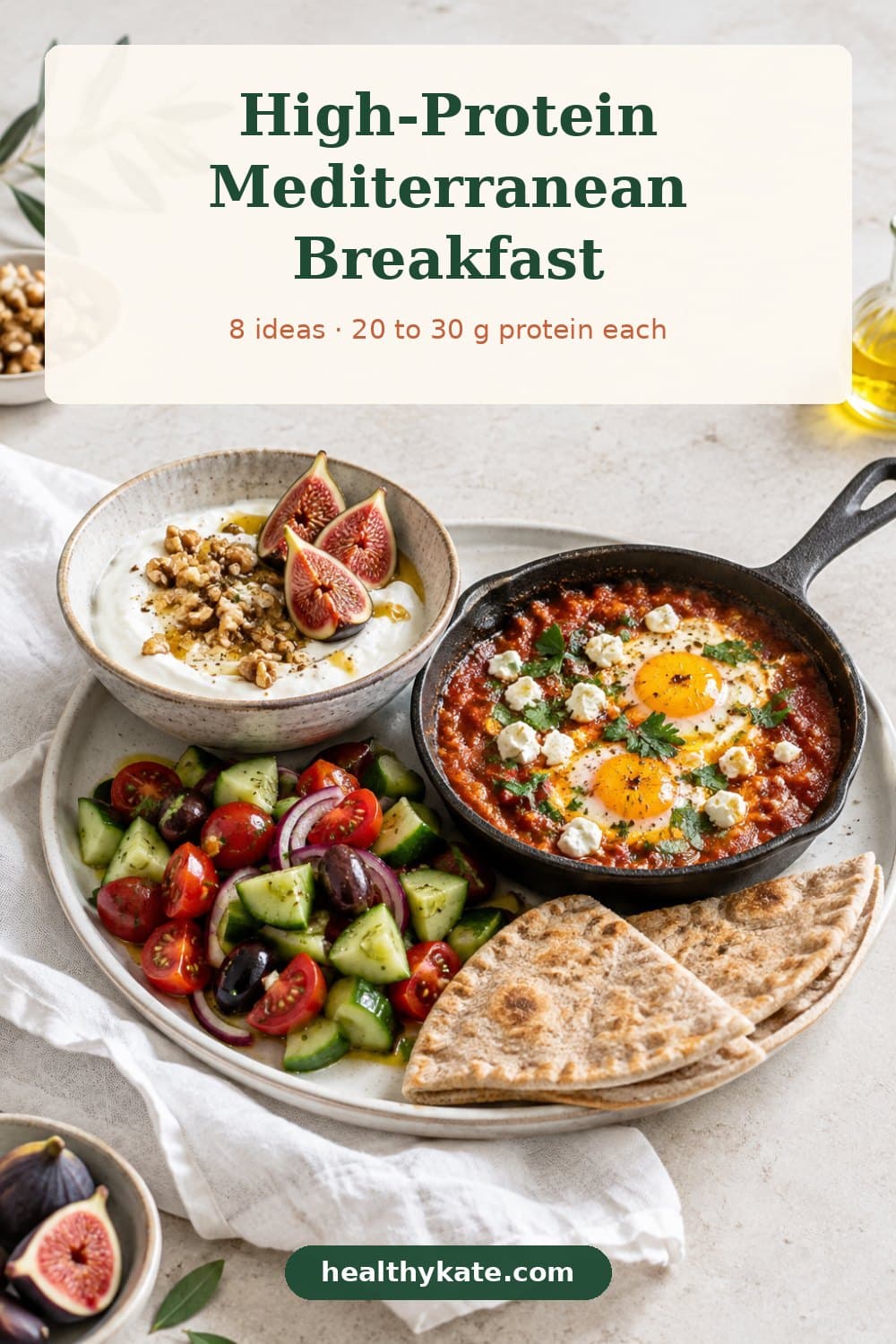
Shakshuka with chickpeas, Greek yogurt with walnuts and figs, smoked salmon toast, a make-ahead feta casserole: eight Mediterranean-style breakfasts that bring 20 to 30 g of protein.
By KateLast reviewed
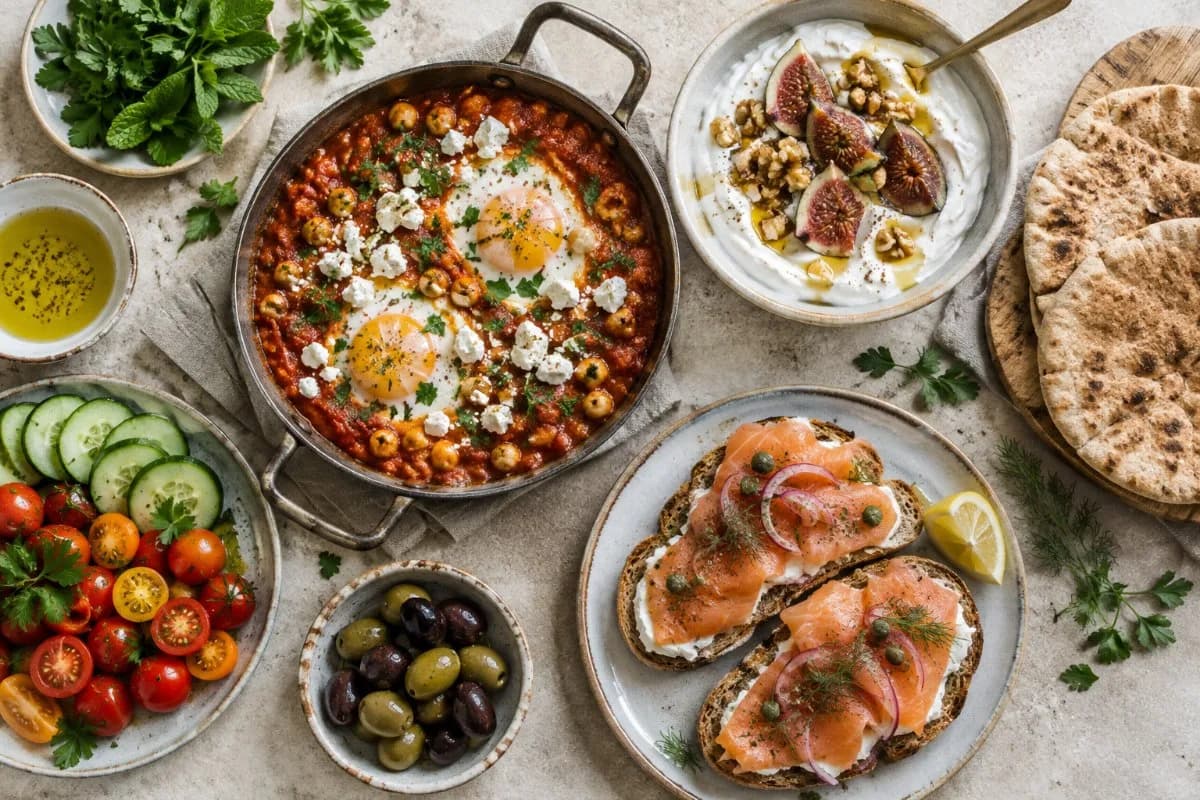
A high-protein Mediterranean breakfast is easier than it sounds: build it around Greek yogurt, eggs, fish or chickpeas, then add vegetables, olive oil and a little whole grain. Shakshuka with chickpeas and feta, Greek yogurt with walnuts or smoked salmon on toast each bring about 20 to 30 g of protein without any protein powder.
The Mediterranean way of eating is less about strict rules and more about a pattern: lots of plants, fish as the favorite animal protein, eggs and dairy in moderate portions, and olive oil as the main fat. The eight ideas below follow that pattern and still get you to a protein-rich start. Protein numbers are approximate USDA values; brands differ.
Quick overview
- Shakshuka with chickpeas and feta: about 30 g
- Feta and spinach omelet with egg whites: about 30 g
- Smoked salmon toast with cottage cheese: about 29 g
- Savory chickpea and yogurt bowl (no eggs): about 28 g
- Mezze breakfast plate with cottage cheese: about 28 g
- Greek yogurt with walnuts and figs: about 27 g
- Hummus and egg pita: about 24 g
- Make-ahead Mediterranean egg casserole: about 20 g per square
Warm and savory
1. Shakshuka with chickpeas and feta (about 30 g)
Simmer canned crushed tomatoes with garlic, cumin and paprika, stir in half a cup of chickpeas and crack two eggs into the sauce. Cover until the whites set, then crumble 1 oz of feta on top and serve with half a whole-wheat pita. Eggs (about 13 g), chickpeas (6 g), feta (4 g) and pita (6 g) add up quickly. Make the sauce for four servings and keep it in the fridge; on weekdays you only need to reheat a portion and cook the eggs in it.
2. Feta and spinach omelet with egg whites (about 30 g)
Whisk two eggs with half a cup of liquid egg whites, pour into a hot pan with a little olive oil and fill with wilted spinach, cherry tomatoes and 1 oz of feta. The egg whites add about 13 g of protein for very few calories. Serve with a sliced cucumber and a few olives.
3. Hummus and egg pita (about 24 g)
Spread a quarter cup of hummus into a whole-wheat pita and fill it with two sliced hard-boiled eggs, cucumber, tomato and parsley. It travels well and works as a five-minute breakfast if you boil eggs ahead of time.
Fish for breakfast
4. Smoked salmon toast with cottage cheese (about 29 g)
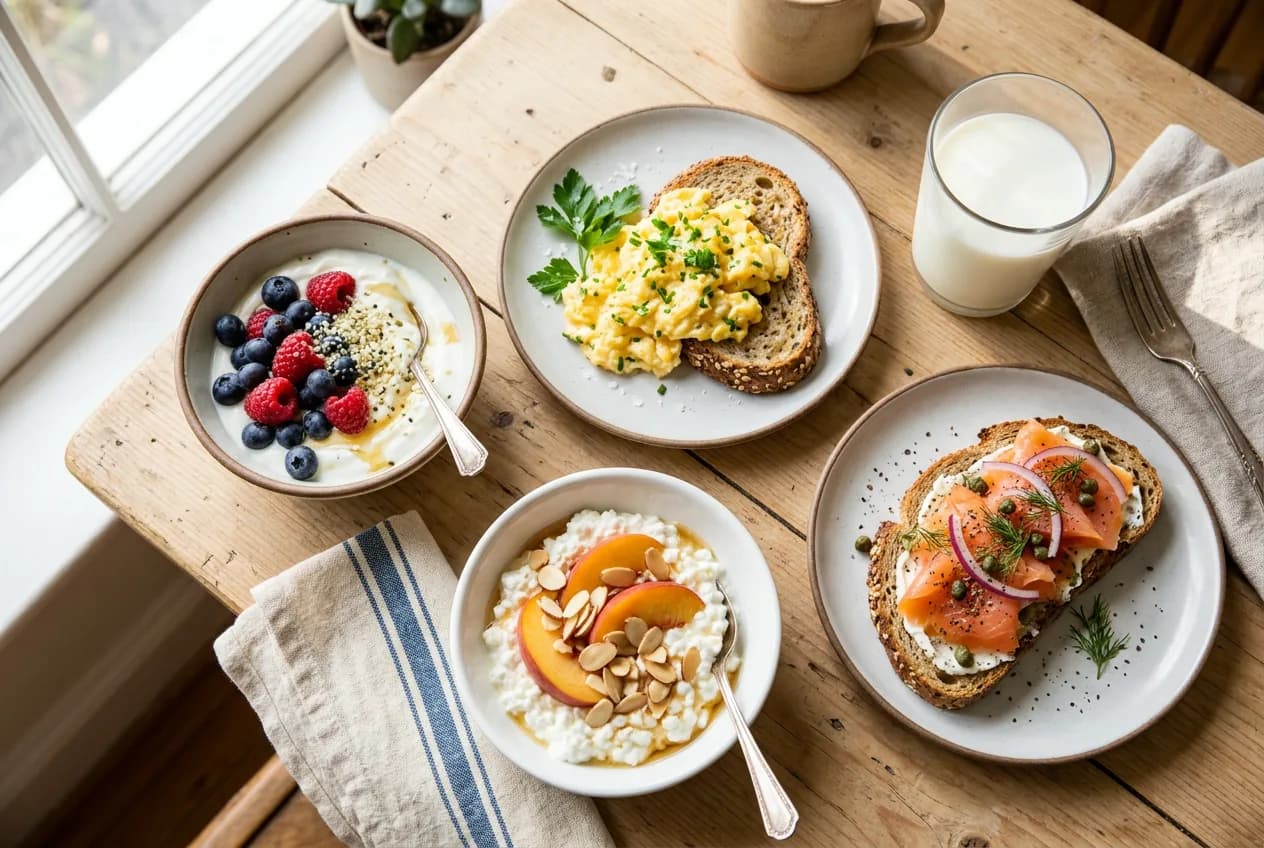
Spread two slices of whole-grain bread with a quarter cup of cottage cheese (or whipped cottage cheese), add 3 oz of smoked salmon, capers, red onion and dill. Salmon brings about 15 g of protein along with omega-3 fats; our overview of omega-3 foods for brain, skin and heart explains why fish twice a week is worth it. Smoked salmon is salty, so this is a great weekend breakfast rather than a daily one if you watch sodium.
No eggs needed
5. Greek yogurt with walnuts and figs (about 27 g)
One cup of plain nonfat Greek yogurt has about 23 g of protein. Top it with 1 oz of walnuts, sliced fresh figs (or berries out of season), a drizzle of honey and cinnamon. If you like the idea, our Greek yogurt bowl recipe with toppings and protein math has more combinations.
6. Savory chickpea and yogurt bowl (about 28 g)
Spread three-quarters of a cup of Greek yogurt in a shallow bowl, top with three-quarters of a cup of warm chickpeas sautéed in olive oil with paprika and garlic, then add cucumber, parsley and a few toasted walnuts. It is filling, egg-free and ready in about eight minutes.
7. Mezze breakfast plate with cottage cheese (about 28 g)
Think of it as a small Mediterranean board: a cup of cottage cheese drizzled with olive oil and za'atar, a quarter cup of chickpeas, tomatoes, cucumber, olives and a whole-grain crispbread. If you prefer it in a bowl with a jammy egg, try our savory cottage cheese bowl with everything seasoning.
Make ahead for the week
8. Mediterranean egg casserole (about 20 g per square)
Whisk 12 eggs with 1 cup of cottage cheese, stir in spinach, sun-dried tomatoes, red onion and 4 oz of crumbled feta, and bake in a 9x13-inch dish at 375°F for about 30 to 35 minutes until set in the middle. Cut into six squares, each with roughly 19 to 20 g of protein. Add a cup of milk or a small yogurt and you are close to 30 g. If you prefer portable portions, the same idea works as egg muffins baked with cottage cheese, and for a heartier freezer option there are our make-ahead breakfast burritos with turkey and black beans.
How to build your own Mediterranean breakfast
Use this simple formula and you will rarely need a recipe:
- One main protein: Greek yogurt, eggs, smoked salmon, cottage cheese or chickpeas.
- Vegetables or fruit: tomatoes, cucumber, spinach, peppers, figs or berries.
- A little healthy fat: olive oil, olives, walnuts or tahini.
- Optional whole grain: whole-wheat pita, whole-grain bread or a crispbread.
- Flavor: za'atar, oregano, lemon, dill, paprika or a few capers.
Olive oil, nuts and cheese are healthy but calorie-dense, so measure them roughly if you are trying to lose weight. A tablespoon of olive oil has about 120 calories.
Where this fits
These breakfasts are part of our collection of breakfasts that keep you satisfied until lunch. If you like the flavors for lunch too, the chicken, quinoa and feta bowl with a meal-prep plan brings about 40 g of protein.
The bottom line
A high-protein Mediterranean breakfast combines a clear protein source, such as Greek yogurt, eggs, fish or chickpeas, with vegetables, olive oil and a little whole grain. Shakshuka with chickpeas, a feta omelet or yogurt with walnuts all reach about 25 to 30 g of protein and fit the Mediterranean pattern without any powders or special products.
This article is for general information and does not replace medical or nutrition advice. If you have a health condition, need to limit sodium or have food allergies, talk to your doctor or a registered dietitian.
FAQ
Mediterranean Breakfast Questions
What is a high-protein Mediterranean breakfast?
It combines typical Mediterranean foods such as Greek yogurt, eggs, feta, fish, chickpeas, vegetables, olive oil and whole grains so the meal reaches roughly 20 to 30 g of protein. Examples are shakshuka with chickpeas, Greek yogurt with walnuts or smoked salmon on whole-grain toast.
Can I eat eggs on the Mediterranean diet?
Yes. In the traditional Mediterranean pattern, eggs, poultry, cheese and yogurt are eaten in moderate portions, while fish is the preferred animal protein and plants make up most of the plate. A couple of eggs for breakfast fits well.
What is a Mediterranean breakfast without eggs?
Greek yogurt with walnuts and fruit (about 27 g), a savory chickpea and yogurt bowl (about 28 g) or smoked salmon on toast with cottage cheese (about 29 g) all work without eggs.
Is a Mediterranean breakfast good for weight loss?
It can help because protein, fiber and healthy fats tend to keep you full. Weight loss still depends on your overall eating pattern and portions, especially with calorie-dense foods like olive oil, nuts and cheese.
Is feta high in protein?
Feta has roughly 4 g of protein per ounce, which is helpful but not a lot. Think of it as a flavorful topping and get most of the protein from eggs, yogurt, fish or legumes.
Sources
We check health claims against research summaries and official fact sheets. Links open the original source.
- Diet Review: Mediterranean Diet · Harvard T.H. Chan School of Public Health, 2026
- FoodData Central · U.S. Department of Agriculture, 2026
- The role of protein in weight loss and maintenance · American Journal of Clinical Nutrition (Leidy et al.), 2015
- Protein · Harvard T.H. Chan School of Public Health, 2026