Cottage Cheese Egg Muffins (About 10 g Protein Each)
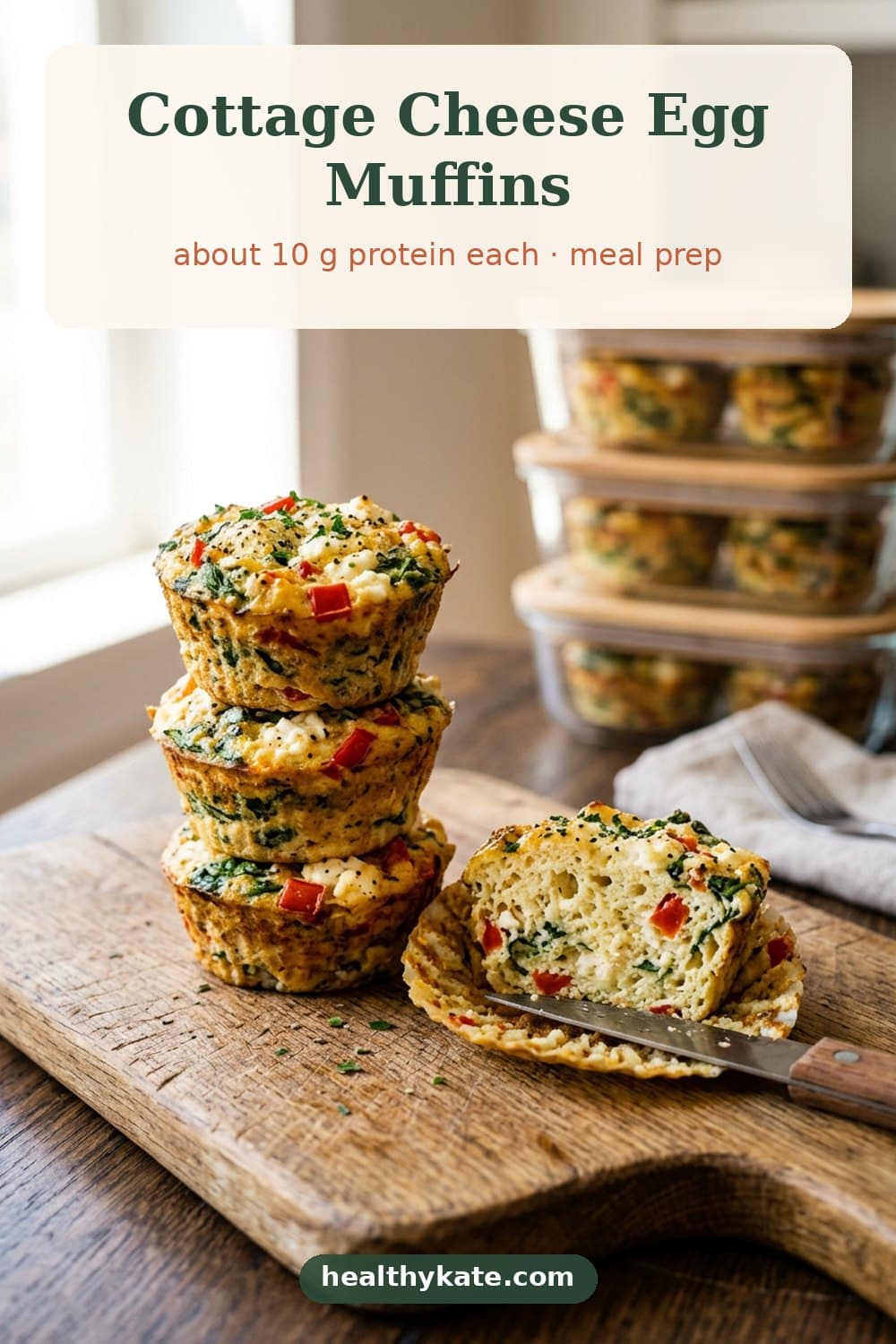
Eggs, egg whites and blended cottage cheese bake into fluffy, savory muffins with about 10 g protein each. Make 12 on Sunday and breakfast is done for days.
By KateLast reviewed

These cottage cheese egg muffins have about 10 g of protein and roughly 95 calories each, so three of them make a 30 g protein breakfast. Blending the cottage cheese into the eggs is the trick: it makes them fluffy and tender instead of rubbery.
They take about 30 minutes, keep for four days in the fridge and reheat in under a minute. On a busy morning, that is hard to beat.
Recipe
Cottage Cheese Egg Muffins
- Prep:
- 10 min
- Cook:
- 22 min
- Total:
- 32 min
- Serves:
- 12 muffins
Ingredients
- 8 large eggs
- 1 cup (240 ml) liquid egg whites
- 1 cup (225 g) low-fat cottage cheese
- 1/2 cup (55 g) shredded cheddar
- 2 cups baby spinach, chopped
- 1 red bell pepper, finely diced
- 2 green onions, sliced
- 1/2 tsp garlic powder
- 1/4 tsp salt and black pepper to taste
- Oil spray or silicone muffin cups
Instructions
- 1Heat the oven to 350°F (175°C) and grease a 12-cup muffin tin well or use silicone cups.
- 2Blend the cottage cheese with the eggs and egg whites for 20 to 30 seconds until smooth. Season with garlic powder, salt and pepper.
- 3Divide spinach, bell pepper, green onions and most of the cheddar between the 12 cups.
- 4Pour the egg mixture over the vegetables until each cup is about three quarters full, then top with the remaining cheddar.
- 5Bake for 20 to 24 minutes until puffed, set in the center and lightly golden. The center should reach 160°F (71°C).
- 6Cool for 5 minutes, loosen the edges with a knife and lift the muffins out.
Approx. about 95 kcal per muffin. Nutrition values are estimates.
Why cottage cheese works so well here
Plain egg muffins tend to turn spongy and dry once they cool. Cottage cheese fixes two things at once:
- Texture. Blended, it adds moisture and makes the muffins soft and custardy, a lot like the egg bites sold in coffee shops.
- Protein. One cup brings about 25 g of extra protein to the batch without adding much fat.
Egg whites do the rest. Using 8 whole eggs plus a cup of egg whites keeps the yolks' flavor and choline while lifting the protein per muffin.
Where the protein comes from
Approximate values for the whole batch of 12:
- 8 large eggs: about 50 g
- 1 cup liquid egg whites: about 26 g
- 1 cup low-fat cottage cheese: about 25 to 28 g
- 1/2 cup shredded cheddar: about 13 g
- Spinach, pepper and onions: about 3 g
Total: about 118 g protein, or roughly 10 g per muffin. Calories land at about 1,150 for the batch, so around 95 per muffin.
Three muffins with a piece of fruit or a slice of whole-grain toast is a balanced breakfast. Want more ways to reach that number? Here are ten breakfasts that hit about 30 g of protein, each with the math.
Step by step
- Prep the tin. Grease all 12 cups generously or use silicone cups. Eggs stick fast, and this is the step people skip.
- Blend the base. Cottage cheese, eggs and egg whites go into a blender for 20 to 30 seconds. No blender? Whisk hard. You will see small curds, which is fine.
- Fill with vegetables first. Spinach, bell pepper and green onions go into the cups, then the egg mixture on top. This spreads the fillings evenly.
- Bake until set. 20 to 24 minutes at 350°F (175°C). The tops should spring back and the center should no longer jiggle. USDA guidance is 160°F (71°C) for egg dishes.
- Rest, then release. Five minutes in the tin lets them firm up, so they come out in one piece.
4 flavor variations
Mediterranean
Swap cheddar for crumbled feta, add chopped sun-dried tomatoes and a pinch of oregano. If you like this flavor profile, this chicken, quinoa and feta Mediterranean bowl makes a good high-protein lunch later in the day.
Broccoli cheddar
Use 1 1/2 cups finely chopped steamed broccoli instead of spinach and pepper. A kid-friendly favorite.
Southwest
Add black beans, diced green chiles and a pinch of cumin, then top with salsa after baking. The beans add fiber and a couple of extra grams of protein.
Smoked salmon and dill
Fold in 3 oz chopped smoked salmon and fresh dill, and leave out the extra salt. This one tastes especially good cold.
Meal prep and storage
- Fridge: cool completely, then store in an airtight container lined with a paper towel. Eat within 3 to 4 days.
- Freezer: freeze on a tray first, then move to a freezer bag. They keep for 2 to 3 months.
- Reheat: 30 to 45 seconds in the microwave from the fridge, about 90 seconds from frozen, or 10 minutes in a 350°F oven. Heat until hot all the way through.
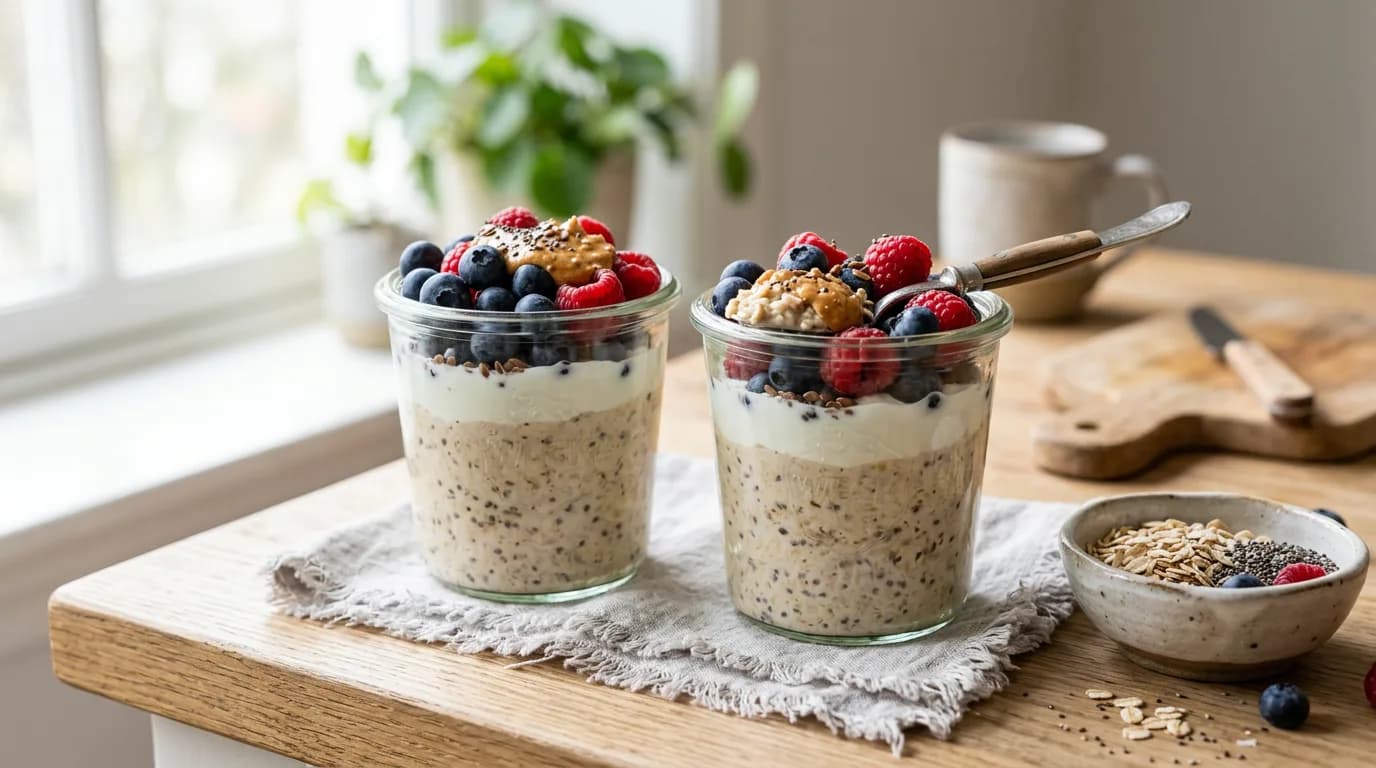
Pairing one batch of egg muffins with one sweet make-ahead option, like these overnight oats that get their protein from yogurt and cottage cheese, covers most of the week. For a simple Sunday routine around it, see these stress-free meal prep habits.
Common mistakes
- Overfilling the cups. Egg puffs up while baking. Three quarters full is plenty.
- Wet vegetables. Raw mushrooms, zucchini and tomatoes release water. Sauté them first or use drier vegetables.
- Overbaking. Once the center is set, take them out. Overbaked eggs turn rubbery and shrink a lot.
- Skipping the salt check. Cottage cheese and cheddar are already salty. Taste a tiny bit of the cooked mixture before adding more.
Are egg muffins good for weight loss?
They can be a helpful part of it. A breakfast built around protein tends to keep you full longer, and having it ready to grab makes it easier to skip the drive-through or a pastry. Each muffin is small and portion-controlled, so it is easy to adjust: two on a lighter day, three when you train.
Eggs also bring choline, vitamin B12 and other nutrients. Here is more on what makes eggs such a nutritious breakfast protein.
More high-protein breakfasts
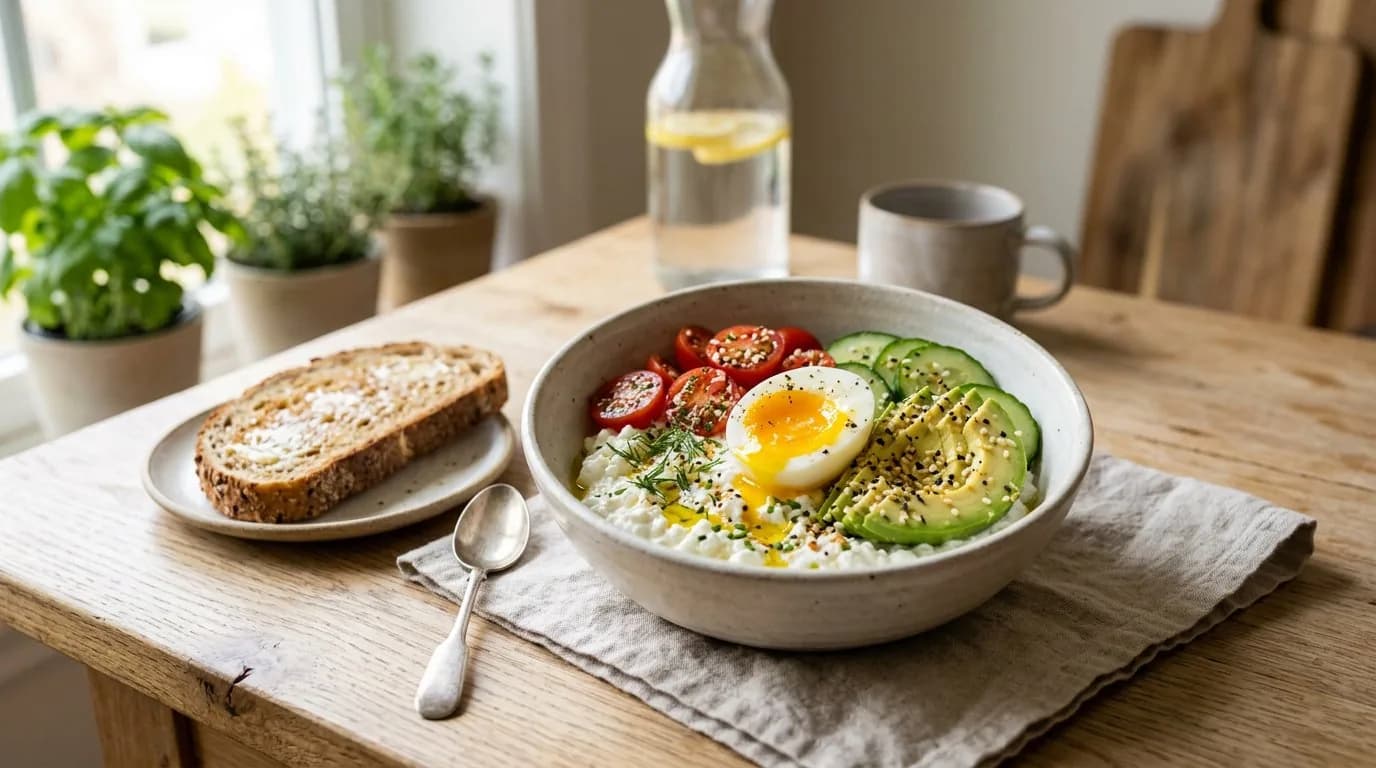
When you want something warm without baking, try the savory cottage cheese bowl topped with a jammy egg. And for a wider mix of sweet and savory options, browse our easy breakfasts that keep hunger away until lunch.
The bottom line
Cottage cheese egg muffins are one of the easiest high-protein breakfasts to prep: blend, pour, bake, done. With about 10 g of protein each, three of them cover a 30 g protein breakfast, and a batch of 12 keeps you set for most of the week.
This article is for general information and does not replace medical or nutrition advice. If you have an egg or dairy allergy, high cholesterol or another medical condition, talk to your doctor or a registered dietitian.
FAQ
Cottage Cheese Egg Muffin Questions
How much protein is in one cottage cheese egg muffin?
About 10 g per muffin with this recipe, so three muffins give you roughly 30 g. The exact amount depends on the brands of cottage cheese, egg whites and cheese you use.
Do I have to blend the cottage cheese?
No, but blending makes the muffins smooth and fluffy, similar to coffee-shop egg bites. If you skip it, you will see small curds, which some people like.
Why are my egg muffins watery?
Usually the vegetables released water while baking. Chop them small, pat spinach dry and sauté watery vegetables like mushrooms or zucchini before adding them.
Why do egg muffins stick to the pan?
Eggs bond to metal quickly. Grease every cup generously, use silicone cups or parchment liners, and let the muffins rest for 5 minutes before removing them.
How long do egg muffins last?
Up to 3 to 4 days in the fridge in a sealed container, or 2 to 3 months in the freezer. Reheat until hot all the way through.
Can I make them without cheese?
Yes. Leave out the cheddar and add a little extra cottage cheese or a few more egg whites. Each muffin will have about 9 g of protein.
Sources
We check health claims against research summaries and official fact sheets. Links open the original source.
- Shell Eggs from Farm to Table · USDA Food Safety and Inspection Service, 2026
- Choline – Fact Sheet for Health Professionals · NIH Office of Dietary Supplements, 2026
- Eggs · Harvard T.H. Chan School of Public Health, 2026
- FoodData Central · U.S. Department of Agriculture, 2026