30 Grams of Protein for Breakfast: 10 Easy Ideas (With the Math)
Hitting 30 g of protein at breakfast is easier than it sounds. Pick one strong protein base, add a booster and a side. Here are 10 ideas with the numbers.
By KateLast reviewed
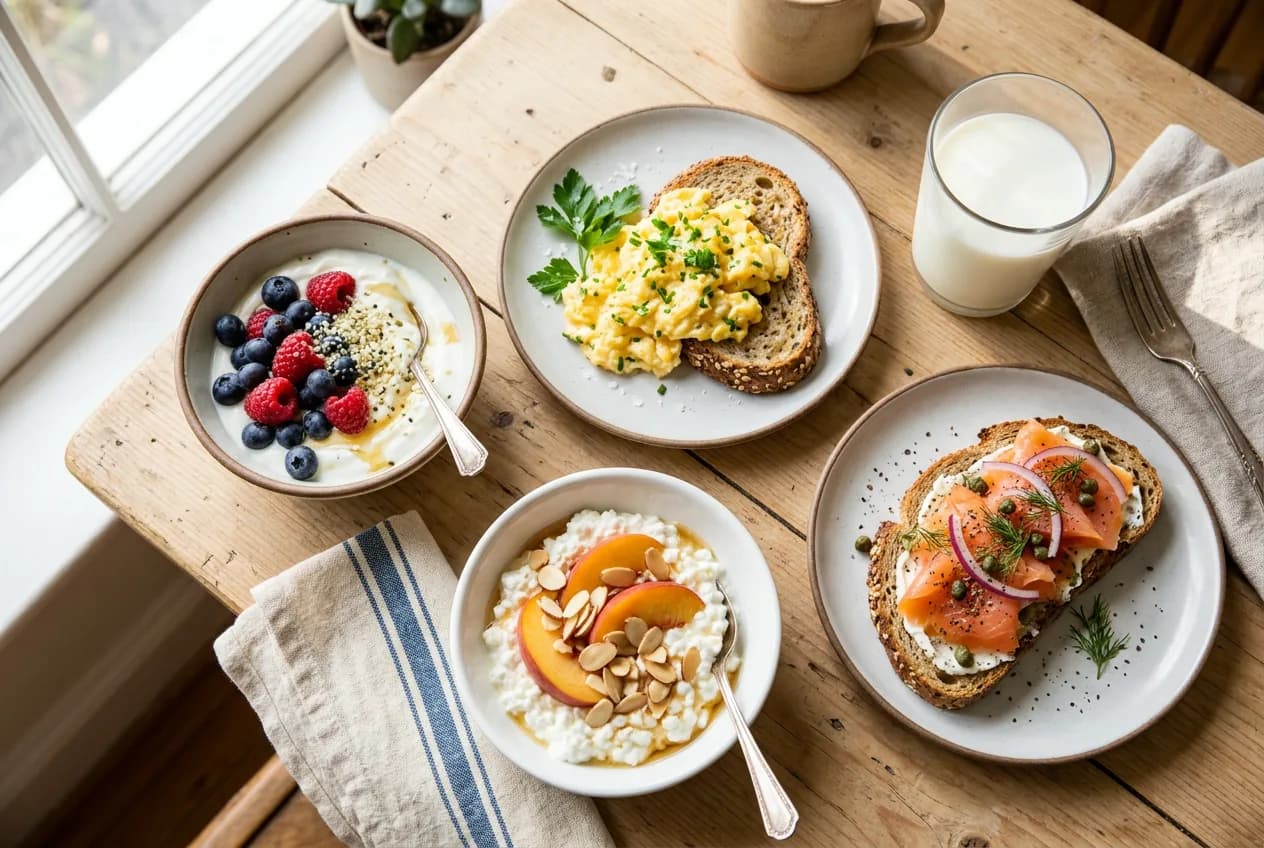
To get 30 grams of protein at breakfast, build the meal around one food that already brings 20 to 25 g, like a cup of Greek yogurt, a cup of cottage cheese or two eggs plus egg whites, then add a small booster and a side. That simple formula covers every idea below.
Most typical breakfasts land far lower. A bowl of cereal with milk has around 10 g, a slice of toast with jam maybe 4 g. So if you are hungry by 10 a.m., the gap is usually protein, not willpower.
The 30 g formula
Think of your plate in three parts:
- Anchor (20 to 25 g): 1 cup Greek yogurt, 1 cup cottage cheese, 2 eggs + 1/2 cup egg whites, 7 oz extra-firm tofu, 3 oz smoked salmon
- Booster (4 to 8 g): 2 tbsp hemp hearts, 1 cup milk or soy milk, 1 oz cheese, 2 tbsp peanut butter, 1/4 cup beans
- Side (2 to 5 g, plus fiber): whole-grain toast, oats, a tortilla, fruit, vegetables
The side matters more than it looks. Protein keeps you full, but fiber from oats, beans, berries and whole grains slows things down even further. If you want the reasoning behind that pairing, here is how protein and fiber work together at every meal.
All numbers below are rounded estimates based on USDA data and typical labels. Brands vary, so check yours if you track closely.
Ready in under 5 minutes
1. Greek yogurt bowl with hemp hearts (about 32 g)
- 1 cup plain nonfat Greek yogurt: about 23 g
- 2 tbsp hemp hearts: about 6 g
- 1 tbsp chia seeds: about 2 g
- A handful of berries: about 1 g
Plain yogurt plus berries tastes sweet enough for most people. If not, a teaspoon of honey is fine. For more topping ideas, see this Greek yogurt bowl you can build without protein powder.
2. Cottage cheese with peaches and almonds (about 29 g)
- 1 cup low-fat cottage cheese: about 25 to 28 g
- 2 tbsp sliced almonds: about 2 g
- Sliced peaches or berries and a pinch of cinnamon
Prefer savory? Swap the fruit for cucumber, tomatoes, chickpeas and everything bagel seasoning, as in our jammy-egg cottage cheese bowl with about 34 g of protein.
3. Smoked salmon toast (about 30 g)
- 2 slices whole-grain bread: about 8 g
- 1/4 cup cottage cheese as the spread: about 6 g
- 3 oz (85 g) smoked salmon: about 15 g
- Cucumber, dill, capers, red onion
It tastes like a bagel with lox, with more protein and less refined flour. Smoked salmon is salty, so skip extra salt.
4. Ricotta toast with berries (about 28 g)
- 1/2 cup part-skim ricotta: about 14 g
- 2 slices whole-grain bread: about 8 g
- 2 tbsp hemp hearts sprinkled on top: about 6 g
- Berries and a little lemon zest
Add a glass of milk on the side and you are closer to 36 g.
5. Protein smoothie (about 32 g)
- 1 scoop whey or plant protein powder: about 20 g (check your label)
- 1 cup milk or soy milk: about 7 to 8 g
- 1 tbsp peanut butter: about 4 g
- Frozen berries, half a banana, a handful of spinach
This is one of only two ideas here that uses powder. For four tested blends, including versions without powder, try these protein smoothies for breakfast or after a workout.
Hot breakfasts in about 10 minutes
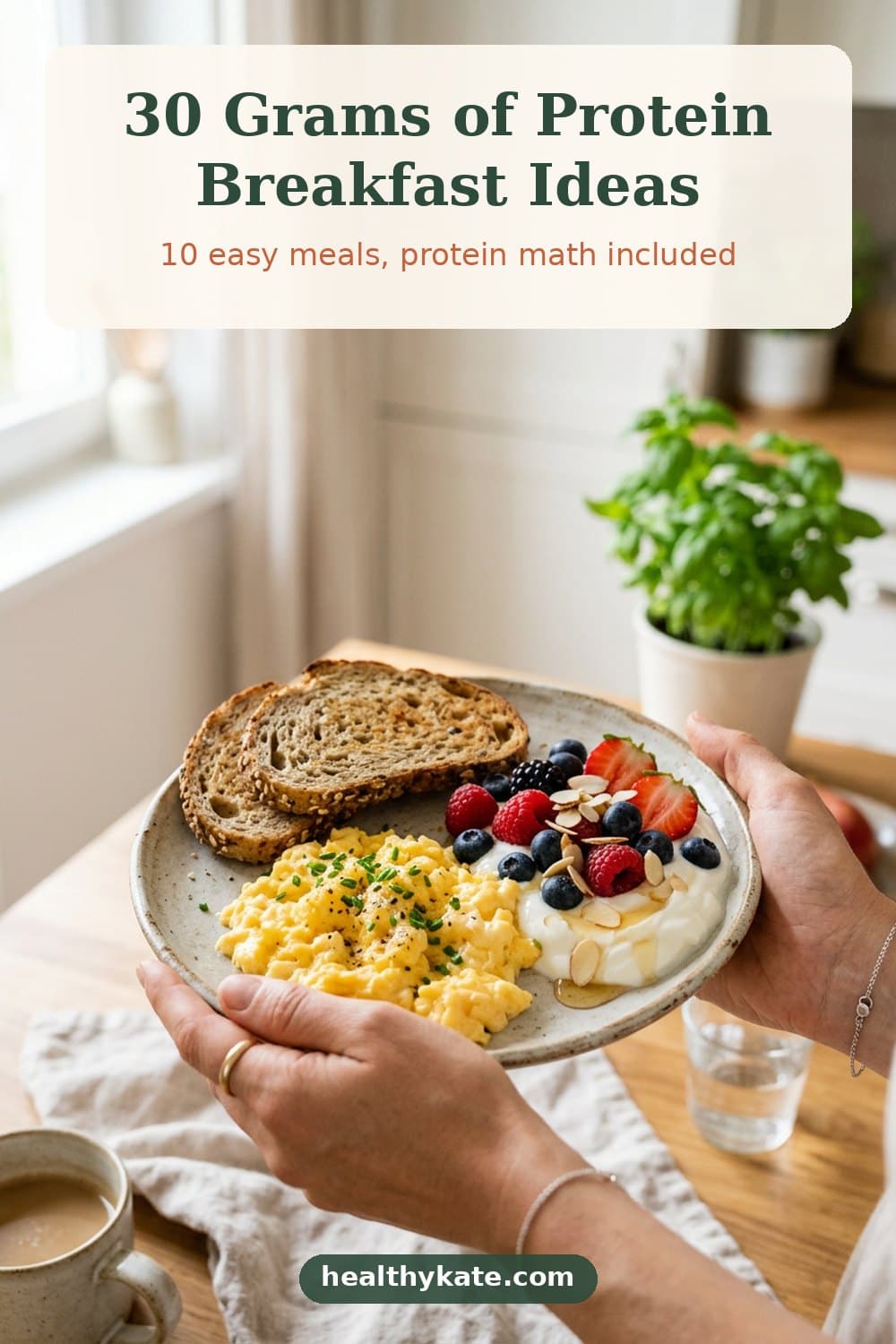
6. Egg and egg-white scramble with toast (about 30 g)
- 2 large eggs: about 13 g
- 1/2 cup liquid egg whites: about 13 g
- 1 slice whole-grain toast: about 4 g
- Spinach, tomatoes or peppers in the pan
Five whole eggs would also get you to 30 g, but mixing in egg whites keeps the plate lighter and leaves room for toast and vegetables.
7. Savory egg-white oats (about 30 g)
- 1/2 cup rolled oats cooked in 1 cup milk: about 13 g
- 1/2 cup liquid egg whites, stirred in while the oats simmer: about 13 g
- 2 tbsp grated Parmesan: about 4 g
- Black pepper, sautéed spinach or mushrooms
Stir constantly for 2 to 3 minutes after adding the egg whites so they cook through. The result is creamy, a bit like risotto, and keeps you full far longer than sweet oatmeal.
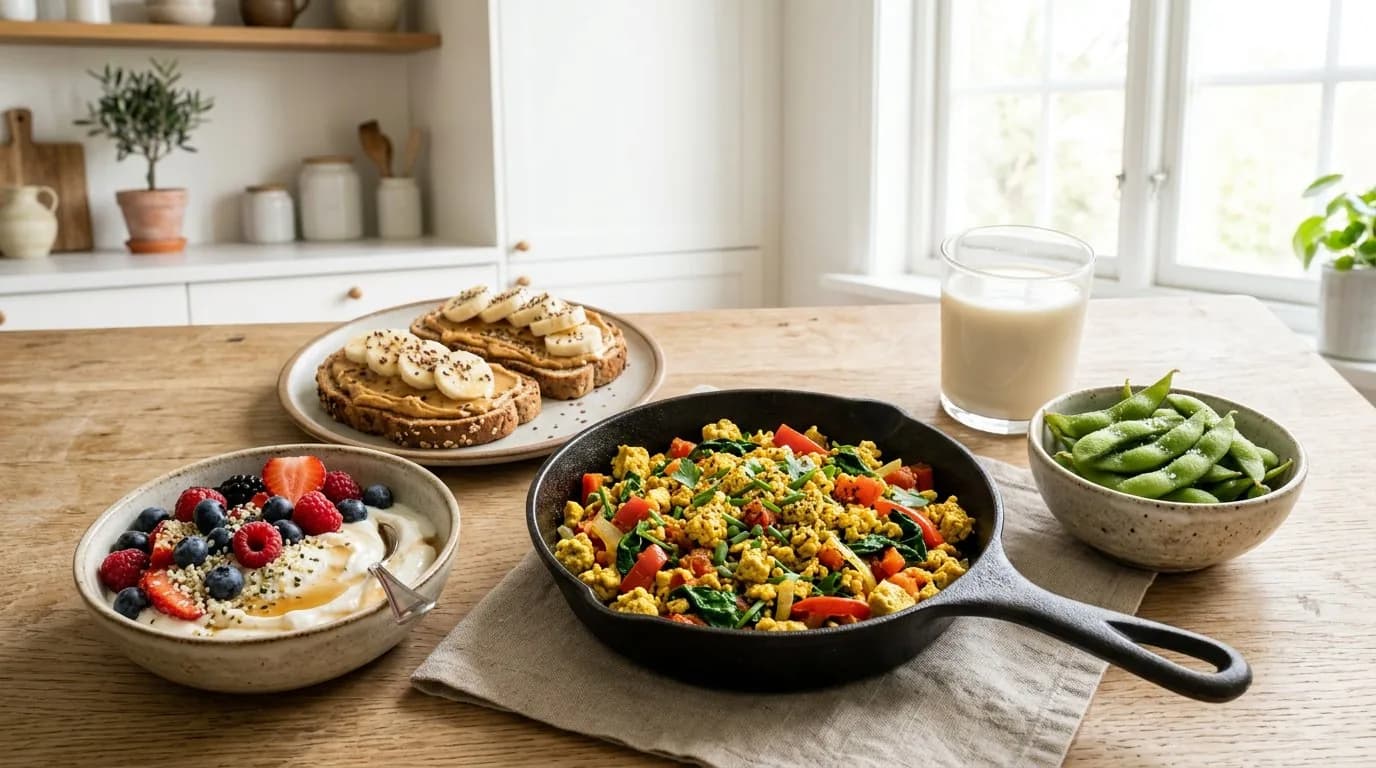
8. Tofu scramble with toast (about 28 to 32 g)
- 7 oz (200 g) extra-firm tofu, crumbled: about 20 to 28 g, depending on the brand
- 1 slice whole-grain toast: about 4 g
- Turmeric, black pepper, spinach and a little nutritional yeast
This is the best fully plant-based option. If eggs are off the table for you, there are eight more egg-free ideas with 20 to 35 g of protein.
Make it the night before
9. No-powder overnight oats (about 28 to 31 g)
Oats, Greek yogurt, cottage cheese, milk, chia and hemp hearts in one jar. Mix it in five minutes before bed and breakfast is waiting. Here is the full overnight oats recipe with Greek yogurt and cottage cheese, plus four flavors.
10. Freezer breakfast burritos (about 31 g each)
- 1 large whole-wheat tortilla: about 5 g
- 2 scrambled eggs: about 13 g
- 1/4 cup black beans: about 4 g
- 1 oz shredded cheddar: about 7 g
- 2 tbsp Greek yogurt as a sour cream swap: about 3 g
Make six at once, wrap them in foil and freeze. Reheat in the microwave (without foil) or oven until hot all the way through.
Quick protein cheat sheet
Handy numbers for building your own 30 g breakfast:
- 1 large egg: about 6 g
- 1/2 cup liquid egg whites: about 13 g
- 1 cup plain nonfat Greek yogurt: about 23 g
- 1 cup low-fat cottage cheese: about 25 to 28 g
- 1/2 cup part-skim ricotta: about 14 g
- 1 cup cow's milk: about 8 g
- 1 cup soy milk: about 7 g
- 1 oz cheddar: about 7 g
- 2 tbsp hemp hearts: about 6 g
- 2 tbsp peanut butter: about 7 g
- 1/2 cup black beans: about 7 to 8 g
- 1 slice whole-grain bread: about 3 to 5 g
Do you really need 30 g at breakfast?
Not strictly. There is no official breakfast target. The baseline recommendation is at least 0.8 g of protein per kilogram of body weight per day, about 54 g for a 150 lb (68 kg) woman, and many active women aim higher.
The 30 g idea comes from two lines of research. In one small study, adults who ate about 30 g of protein at each of three meals had higher muscle protein synthesis over 24 hours than when most of their protein came at dinner. In another, young women who usually skipped breakfast felt fuller and snacked less in the evening after a breakfast with 35 g of protein. Both studies were small, so take them as a helpful direction, not a hard rule.
In everyday life, the practical benefit is simple: when breakfast has real protein, you are less likely to graze all morning or arrive at dinner starving. And if you are over 40, spreading protein through the day also supports muscle, especially when you combine it with strength training two or three times a week.
Common mistakes
- Counting the yogurt, not the serving. Many single-serve cups hold 5.3 oz, which is closer to 15 g than 23 g.
- Relying on "protein" cereals and bars. They are often lower in protein than the label suggests per realistic serving, and high in sugar.
- Forgetting the side. A 30 g breakfast with zero fiber is less satisfying than 25 g with oats or berries.
- Going all in on day one. If you currently eat 8 g at breakfast, move to 20 g first, then build from there.
More high-protein breakfast inspiration
Not every morning needs 30 g. On lighter days, our roundup of breakfasts that keep you satisfied until lunch has simple options to rotate.
The bottom line
Thirty grams of protein at breakfast is mostly about choosing the right anchor: Greek yogurt, cottage cheese, eggs plus egg whites, tofu or fish. Add a booster and a fiber-rich side, and you have a meal that takes 5 to 10 minutes and carries you to lunch.
This article is for general information and does not replace medical or nutrition advice. If you have kidney disease, a food allergy or another medical condition, talk to your doctor or a registered dietitian about how much protein is right for you.
FAQ
30 g Protein Breakfast Questions
How can I get 30 grams of protein at breakfast?
Start with one food that brings 20 to 25 g on its own, such as 1 cup of Greek yogurt, 1 cup of cottage cheese or 2 eggs plus 1/2 cup of egg whites. Then add a booster like hemp hearts, milk or cheese and a side like whole-grain toast.
Is 30 grams of protein at breakfast too much?
For most healthy adults it is a reasonable amount, not an extreme one. It is roughly a third of what many active women eat in a day. If you have kidney disease or another medical condition, ask your doctor what amount is right for you.
How many eggs equal 30 grams of protein?
About five large eggs, since one egg has roughly 6 g. Most people find it easier to combine two eggs with egg whites, cheese, beans or Greek yogurt instead.
Can I get 30 g of protein at breakfast without protein powder?
Yes. Eight of the ten ideas in this article use only whole foods like Greek yogurt, cottage cheese, eggs, tofu, beans, fish and seeds.
Does a 30 g protein breakfast help with weight loss?
It can make weight loss easier because protein helps you feel full, which may reduce snacking later in the day. Results still depend on your total intake, sleep, activity and overall habits.
What is the cheapest way to get 30 g of protein for breakfast?
Eggs, liquid egg whites, plain Greek yogurt in large tubs, cottage cheese, canned beans and dried oats cooked in milk are usually the most affordable options.
Sources
We check health claims against research summaries and official fact sheets. Links open the original source.
- Protein · Harvard T.H. Chan School of Public Health, 2026
- Dietary protein distribution positively influences 24-h muscle protein synthesis in healthy adults · The Journal of Nutrition (Mamerow et al.), 2014
- Beneficial effects of a higher-protein breakfast on the appetitive, hormonal, and neural signals controlling energy intake regulation in overweight/obese, breakfast-skipping, late-adolescent girls · American Journal of Clinical Nutrition (Leidy et al.), 2013
- FoodData Central · U.S. Department of Agriculture, 2026