Hibiscus Tea Recipe: Hot, Iced and Cold Brew With Dried Flowers
Two tablespoons of dried hibiscus flowers and hot water give you a ruby-red, caffeine-free tea with zero calories. Here are hot, iced and cold-brew methods, plus what research says about blood pressure and weight loss.
By KateLast reviewed
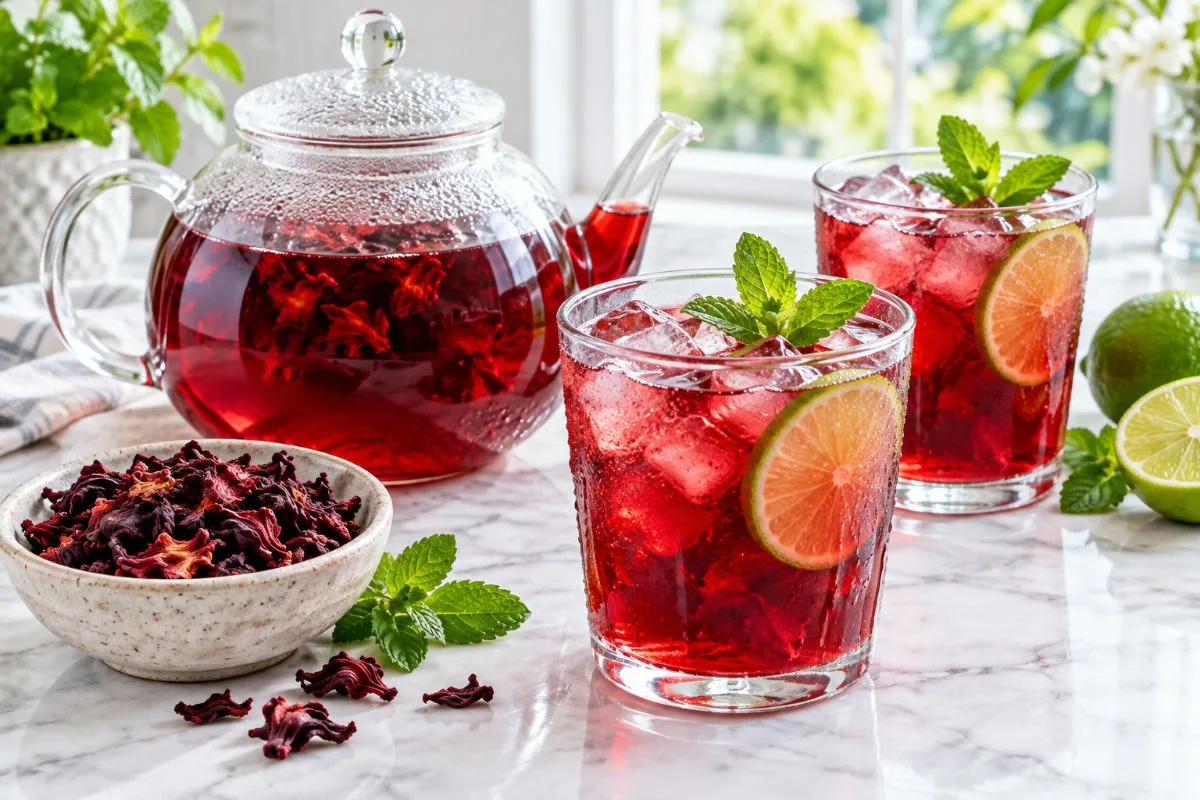
For hibiscus tea, pour 2 cups of water just off the boil over 2 tablespoons of dried hibiscus flowers, steep for 5 to 10 minutes and strain. You get a tart, cranberry-like, ruby-red tea with zero calories and no caffeine, and it is just as good iced with lime as it is hot.
Below you will find three methods (hot, iced and overnight cold brew), easy flavor ideas and an honest look at the two things people most often ask about: blood pressure and weight loss.
Recipe
Hibiscus Tea (Hot or Iced)
- Prep:
- 5 min
- Cook:
- 10 min
- Total:
- 15 min
- Serves:
- 2 cups (480 ml)
Ingredients
- 2 tbsp dried hibiscus flowers (calyces), loose or about 2 tea bags
- 2 cups (480 ml) water, just off the boil
- Lime or orange slices, optional
- A few mint leaves, a cinnamon stick or a few slices of fresh ginger, optional
- Honey or maple syrup to taste, optional
- Ice, for iced tea
Instructions
- 1Put the dried hibiscus flowers in a teapot, heatproof jar or large mug.
- 2Pour the hot water over them. Add ginger or a cinnamon stick now if you are using them.
- 3Steep for 5 minutes for a lighter tea or up to 10 minutes for a stronger, more tart tea.
- 4Strain the tea and taste. Add a squeeze of lime and a little honey if you like it less sour.
- 5Drink it hot, or let it cool and pour it over a glass full of ice with lime slices and mint.
Approx. 0 kcal unsweetened. Nutrition values are estimates.
Quick ratios to remember
Hibiscus is forgiving, but these amounts give a balanced, not-too-sour cup:
- Hot tea: 1 tbsp dried flowers per 1 cup (240 ml) water, steeped 5–10 minutes
- Iced tea: 2 tbsp per 1 cup water, steeped 10 minutes, then poured over a full glass of ice
- Cold brew: 1/4 cup (4 tbsp) per 1 liter cold water, 6–12 hours in the fridge
- Tea bags: usually 1 bag per cup, but check the package
What you buy matters. Look for dried Hibiscus sabdariffa calyces, often sold as "flor de Jamaica" in Latin grocery stores. They are deep red, leathery and much cheaper in bulk than in bags. Ornamental garden hibiscus is a different plant and not what you want here.
Method 1: Hot hibiscus tea
This is the recipe in the card above. Water just off the boil pulls out the color and tartness in a few minutes. After about 10 minutes the tea only gets more sour, so taste it at 5 and decide.
Hot hibiscus tea pairs especially well with a cinnamon stick or a few slices of fresh ginger steeped right along with the flowers. On cold evenings it is a caffeine-free alternative to black tea, and it fits nicely next to the ginger, turmeric and green tea drinks you can make at home.
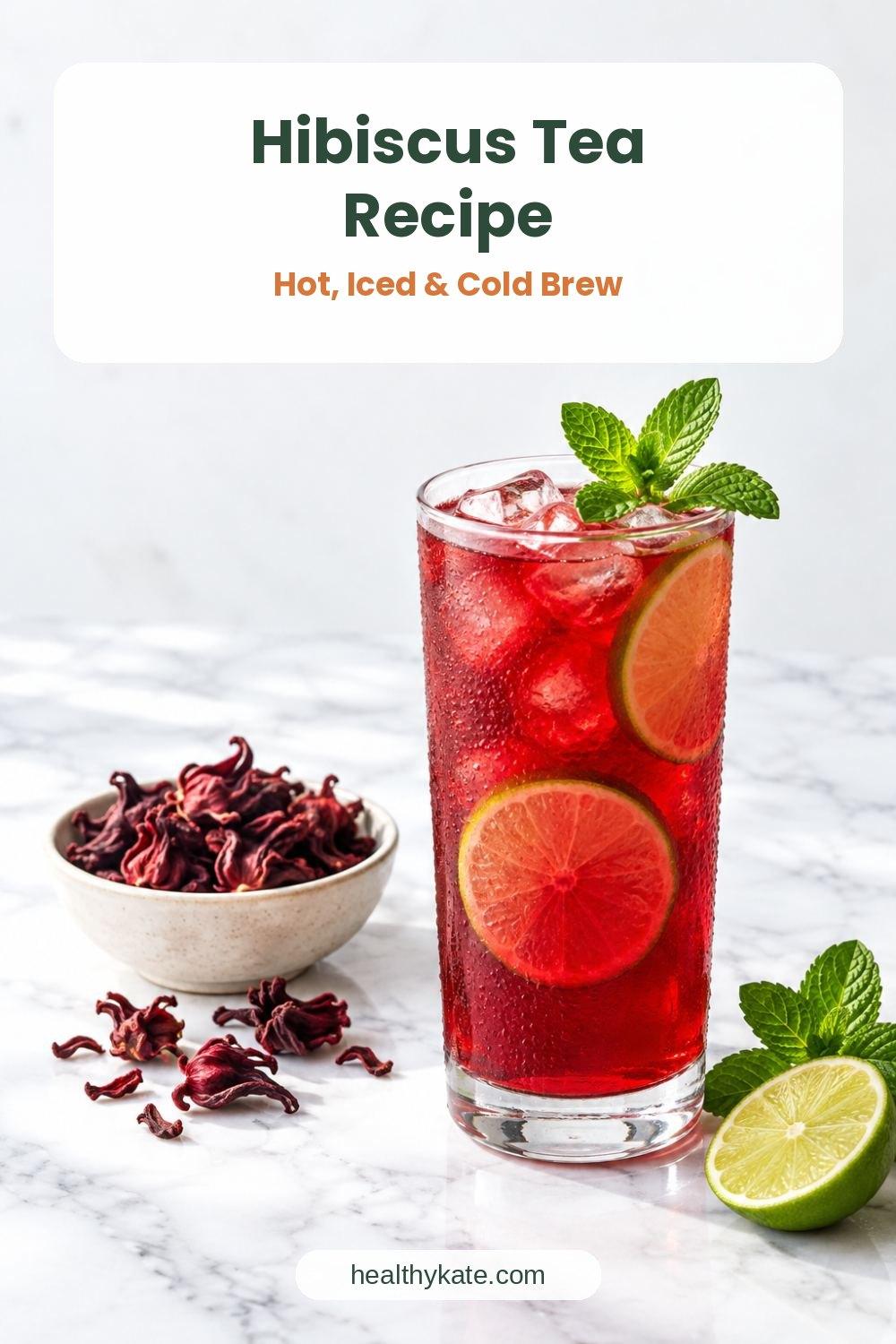
Method 2: Iced hibiscus tea with lime
For iced tea, brew it double strength so the melting ice does not water it down.
- Steep 2 tbsp dried flowers in 1 cup (240 ml) hot water for 10 minutes.
- Strain and let it cool for a few minutes.
- Fill a tall glass with ice and pour the tea over it.
- Add the juice of half a lime, a few lime wheels and a sprig of mint.
The lime does more than decorate: its acidity makes the tea taste brighter, so you need less sweetener. If you like spa-style drinks, it is a fun change from cucumber lemon water for a light, refreshing pitcher.
Method 3: Cold brew hibiscus tea (overnight)
Cold brewing is the easiest method of all and gives a smoother, slightly less sour tea.
- Put 1/4 cup (4 tbsp) dried hibiscus flowers in a 1-liter jar or pitcher.
- Fill with cold water and add a few slices of orange or ginger if you like.
- Cover and refrigerate for 6 to 12 hours.
- Strain and keep the tea in the fridge for up to 3 days.
A liter of cold brew in the fridge makes it much easier to drink more fluids during the day. Over a full liter, the potassium adds up to roughly 200 mg (USDA lists about 20 mg per 100 g), which is a small bonus rather than a reason to drink it.
Sweetening ideas (without a sugar bomb)
Unsweetened hibiscus tea is quite tart. Try these before reaching for sugar:
- Citrus: lime, orange slices or a strip of orange peel soften the sourness.
- Warm spices: cinnamon, star anise or ginger make it taste rounder and sweeter.
- Fruit: a few crushed strawberries or a splash of 100% apple juice in the pitcher.
- Mix with another tea: half hibiscus, half rooibos or mint tea is noticeably milder.
- A little honey or maple syrup: start with 1 teaspoon per large glass. Stir it into the warm tea, as it does not dissolve well once the tea is iced.
Every teaspoon of sweetener adds sugar and calories, so if you drink several glasses a day, keep the citrus-and-spice approach as your default.
Hibiscus tea for blood pressure: what the research shows
This is where hibiscus has the most research behind it, and the results are modest but real.
- A 2015 meta-analysis in the Journal of Hypertension pooled five randomized trials with 390 participants. Hibiscus lowered systolic blood pressure by about 7.6 mmHg and diastolic by about 3.5 mmHg on average, with larger effects in people whose blood pressure started higher. The authors called for better, larger trials.
- In one of the best-known trials, 65 adults with prehypertension or mild hypertension drank three 240 ml servings of hibiscus tea a day for six weeks. Their systolic pressure fell by 7.2 mmHg, compared with 1.3 mmHg in the placebo group.
That is promising, but keep it in perspective: the studies were small and short. Hibiscus tea can be one part of a heart-friendly routine, together with less salt, more vegetables, regular movement and good sleep. It is not a replacement for blood pressure medication, and you should never stop or change prescribed medication on your own.
Hibiscus tea for weight loss: be skeptical
You will see hibiscus marketed for weight loss, but there is no good human evidence that the tea itself makes you lose weight. What it can do is replace drinks that add a lot of sugar. Swapping a daily can of soda or a large glass of juice for unsweetened hibiscus tea cuts those calories completely, because brewed hibiscus tea has 0 kcal.
If you want caffeine-free drinks with a few more evidence-based perks, peppermint tea for after-dinner bloating is worth a spot in your rotation. And for mornings, hibiscus works well alongside a few simple green tea rituals for calm, steady energy, since it has no caffeine of its own.
Who should be careful
Hibiscus tea is a common everyday drink in many countries, but check with your doctor before drinking it regularly if you:
- Take blood pressure medication. Because hibiscus may lower blood pressure, it could add to the effect of your medication.
- Take diuretics (water pills). An animal study found that hibiscus extract can interact with hydrochlorothiazide.
- Tend to have low blood pressure or feel dizzy when you stand up.
- Are pregnant, trying to get pregnant or breastfeeding. There is not enough safety research, so ask your doctor or midwife first.
- Take other medications regularly. Ask your pharmacist whether hibiscus is a good fit.
Hibiscus tea is also quite acidic, so rinse your mouth with water afterward if you drink a lot of it and are worried about tooth enamel.
More hydrating drinks
On hot or sweaty days, pair your iced hibiscus with a salt-and-lime electrolyte drink for long, sweaty workouts. And for ten more ideas for staying hydrated without soda, see our easy guide to healthy drinks for hydration, digestion and glow.
The bottom line
Hibiscus tea is easy: 1 tablespoon of dried flowers per cup of hot water for 5 to 10 minutes, or 1/4 cup per liter as an overnight cold brew. It has zero calories and no caffeine, tastes great iced with lime and may modestly lower blood pressure based on small studies. It will not melt pounds away, and it does not replace medication, so if you take blood pressure pills or diuretics or are pregnant, ask your doctor first.
This article is for general information and does not replace medical advice. If you have high or low blood pressure, take medication or are pregnant or breastfeeding, talk to your doctor before drinking hibiscus tea regularly.
FAQ
Hibiscus Tea Questions
How do you make hibiscus tea from dried flowers?
Use about 1 tablespoon of dried hibiscus flowers per cup (240 ml) of water just off the boil. Steep for 5 to 10 minutes, strain and add lime or a little honey if you like. For iced tea, let it cool and pour it over ice.
How long should hibiscus tea steep?
Hot hibiscus tea needs 5 to 10 minutes. Longer steeping makes it more sour, not more useful. Cold brew needs 6 to 12 hours in the fridge.
Does hibiscus tea lower blood pressure?
Small studies suggest it can lower blood pressure modestly. A 2015 meta-analysis of five trials with 390 people found an average drop of about 7.6 mmHg systolic and 3.5 mmHg diastolic. The studies were small, and hibiscus tea is not a replacement for prescribed medication.
Does hibiscus tea help with weight loss?
There is no good evidence that hibiscus tea itself causes weight loss. It can help indirectly if it replaces soda or juice, because unsweetened hibiscus tea has zero calories.
Does hibiscus tea have caffeine?
No. Hibiscus tea is an herbal tea made from the dried calyces of the hibiscus flower, and USDA data list 0 mg caffeine. That makes it a good choice in the afternoon and evening.
Who should not drink hibiscus tea?
If you take blood pressure medication or diuretics, have low blood pressure, are pregnant or breastfeeding, ask your doctor before drinking hibiscus tea regularly.
Sources
We check health claims against research summaries and official fact sheets. Links open the original source.
- Beverages, tea, hibiscus, brewed (FDC ID 171946) · U.S. Department of Agriculture, FoodData Central, 2026
- The effect of sour tea (Hibiscus sabdariffa) on arterial hypertension: a systematic review and meta-analysis of randomized controlled trials · Journal of Hypertension (PubMed), 2015
- Hibiscus sabdariffa L. tea (tisane) lowers blood pressure in prehypertensive and mildly hypertensive adults · Journal of Nutrition (PubMed), 2010
- Herb-drug interaction between the extract of Hibiscus sabdariffa L. and hydrochlorothiazide in experimental animals · Journal of Medicinal Food (PubMed), 2011