Beet Juice Recipe in a Blender: Beet, Apple and Ginger (No Juicer)
Three raw beets, one apple, a little ginger and lemon: this blender beet juice tastes earthy-sweet, not muddy. With exact amounts, nutrition per glass, three variations and an honest look at the blood pressure research.
By KateLast reviewed
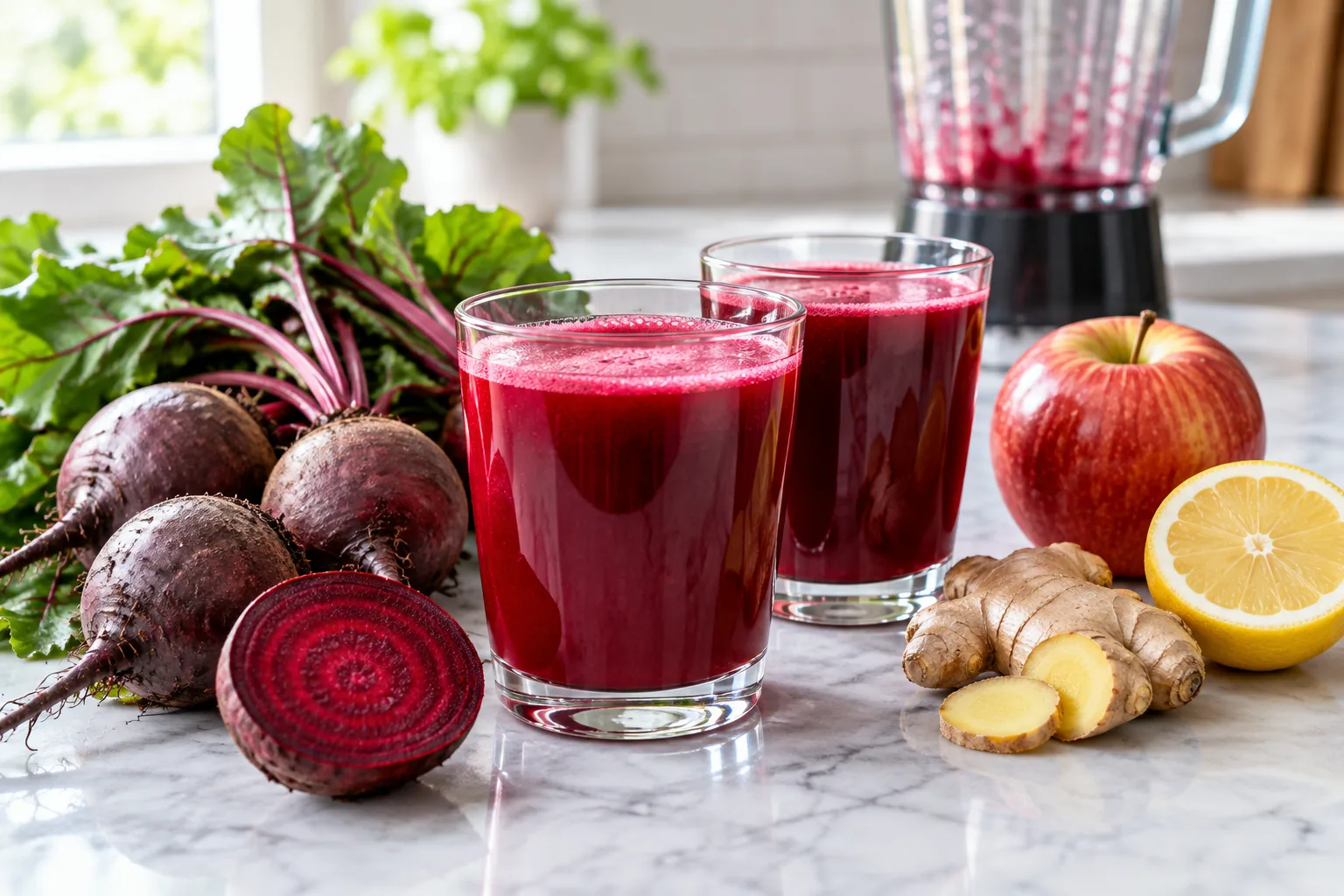
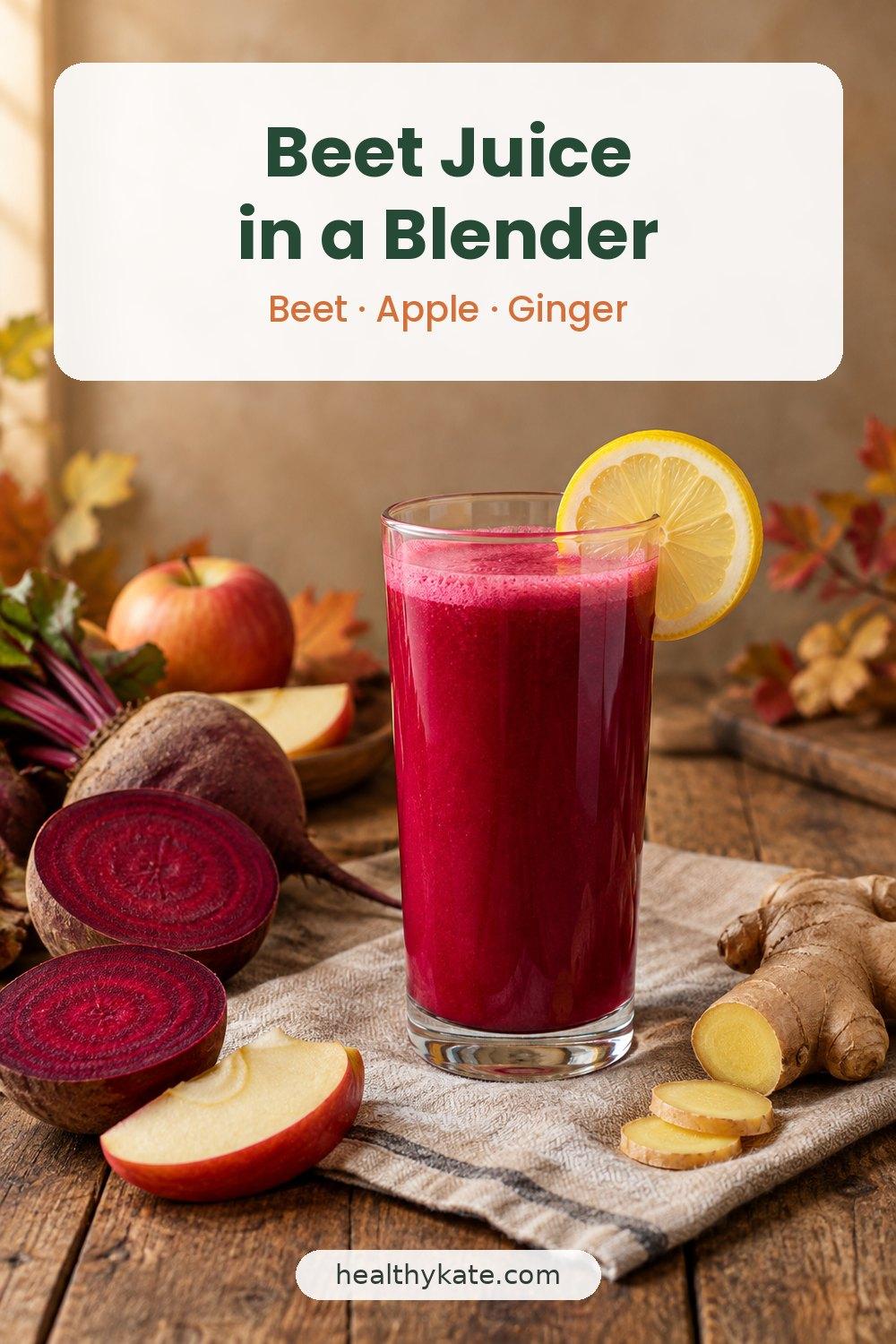
Beet juice in a blender takes about 15 minutes: blend 3 small cubed raw beets with 1 apple, a slice of ginger and 1 cup of water, strain it, and finish with lemon. The apple and lemon balance the earthy taste, so the result is sweet, bright and deep ruby red.
If you have only ever tried store-bought beet juice and thought it tasted like soil, this version is worth a second chance.
Recipe
Blender Beet Juice With Apple and Ginger
- Prep:
- 15 min
- Total:
- 15 min
- Serves:
- 2 glasses (about 10 oz each)
Ingredients
- 3 medium raw beets (about 250 g), scrubbed and peeled
- 1 medium apple (about 180 g), cored
- 1 inch (2–3 cm) fresh ginger, peeled
- Juice of 1/2 lemon
- 1 cup (240 ml) cold water
- A few ice cubes, optional
Instructions
- 1Scrub and peel the beets, then cut them into small cubes of about 1/2 inch (1 cm). Core the apple and cut it into chunks. Slice the ginger.
- 2Pour the water into the blender, add beets, apple and ginger and blend on high for 60 to 90 seconds until completely smooth.
- 3Strain through a nut milk bag or fine sieve, squeezing out as much juice as possible. For more fiber, skip this step and drink it as a thin smoothie.
- 4Stir in the lemon juice, taste, and add a splash of water if it is too strong.
- 5Serve over ice or refrigerate in a sealed jar for up to 48 hours.
Approx. about 105 kcal per glass. Nutrition values are estimates.
Why this combination works
Beets on their own are sweet but very earthy. Each extra ingredient has a job:
- Apple adds fresh sweetness, so you don't need sugar or honey.
- Lemon cuts through the earthiness. Don't skip it.
- Ginger gives a gentle warmth, like a mild version of a small, spicy ginger shot.
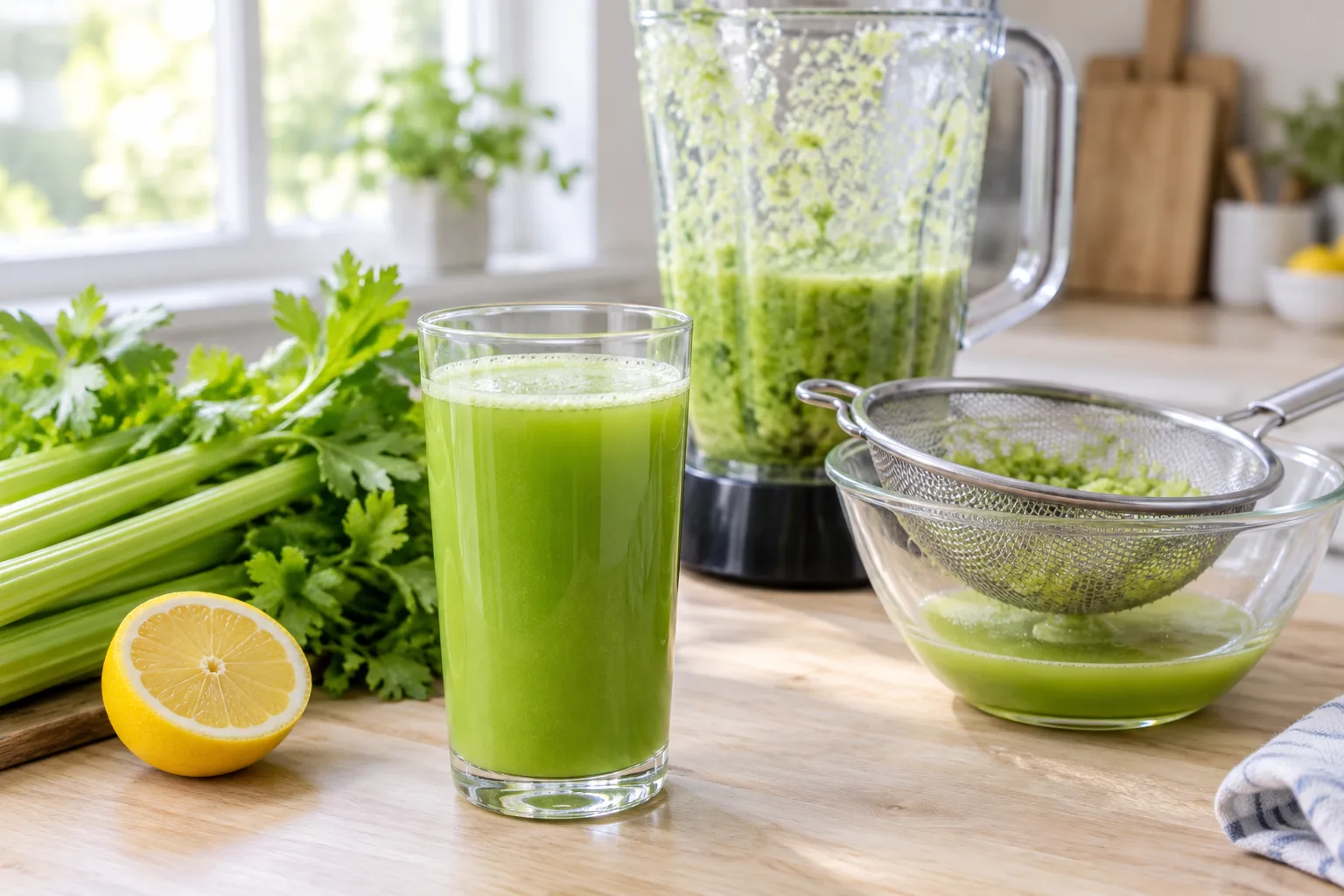
The method is the same blend-and-squeeze routine we use for how to make celery juice without a juicer, just with harder vegetables.
Tips for a smooth beet juice
Cut small. Raw beets are dense. Cubes of about 1/2 inch blend in 60 to 90 seconds in a regular blender; big chunks bounce around and heat up the motor.
Liquid first. Water at the bottom keeps the blades moving. If your blender struggles, add another 1/4 cup water.
Protect your hands and counter. Beet juice stains. Wear gloves when peeling, use a plastic or glass cutting board, and rinse the nut milk bag right after squeezing.
Strain or not? Straining gives classic juice. Unstrained, you keep all the fiber and get a thin, filling smoothie. Both are fine; it depends on what you want from the glass.
Nutrition per glass
The recipe makes two glasses of about 10 ounces. Calculated from USDA data for raw beets and apple, per glass:
- Calories: about 105
- Natural sugar: about 18 g (from beets and apple)
- Fiber: about 5 to 6 g unstrained, much less once strained
- Potassium: about 500 mg
- Folate: about 140 µg, roughly a third of the daily 400 µg
That sugar figure is worth knowing. It is all from whole produce, but it is still a fruit-and-root drink, not a zero-calorie one. If you watch your blood sugar, drink it with a meal or go for the unstrained version.
3 easy variations
Beet, carrot and orange
Swap the apple for 2 medium carrots and the juice of 1 orange. Sweeter, more orange-red and a little lighter on the earthy taste. If you like this direction, try a carrot and ginger juice made the same way.
Beet and pineapple
Use 1 cup of pineapple chunks instead of the apple. Pineapple covers the earthiness best of all fruits and makes this the most "tropical" version, at about the same calories.
Pure beet with lemon
Only beets, lemon and water. The most intense taste and the least sugar, roughly 55 calories per glass. Best as a small 4- to 6-ounce serving over ice.
Beet juice and blood pressure: what studies show
Beets are rich in inorganic nitrate. The body converts part of it into nitric oxide, which helps blood vessels relax. A well-known meta-analysis pooled 16 small, short trials with 254 adults and found that nitrate or beetroot juice lowered systolic blood pressure by about 4.4 mm Hg on average, with a much smaller effect on diastolic pressure.
That is a real but modest effect, measured over hours to about two weeks, often with concentrated beetroot juice. It is not a treatment. If you take blood pressure medication, keep taking it, and mention a daily beet juice habit to your doctor. Daily movement and potassium-rich food matter at least as much; our guide to potassium and other electrolyte foods shows easy places to find them.
Is beet juice good before a workout?
Some athletes drink beetroot juice two to three hours before endurance training because of the same nitrate effect. For everyday walks or a gym session, a glass is fine but not necessary. On long, sweaty days a homemade electrolyte drink for long workouts is the more useful companion.
Who should be careful
- Kidney stones: beets are among the higher-oxalate vegetables. If you have had calcium oxalate stones, ask your doctor or dietitian how much is okay.
- Blood pressure medication or low blood pressure: the effect is small, but talk to your doctor if you plan to drink it daily.
- Blood sugar: about 18 g natural sugar per glass; drink it with food or choose the pure beet version.
- Pink urine or stools: this is harmless beeturia, not blood. Red color without beets is a reason to see a doctor.
How to store it
Pour leftover juice into a glass jar, fill it to the top and close it tightly. It keeps well for up to 48 hours in the fridge. Shake before drinking, because it separates. You can also freeze it in ice cube trays and add a cube to smoothies.
More colorful drinks
For more ideas in the same spirit, browse our full lineup of anti-inflammatory drinks or the healthy drink ideas that go beyond water, from cold juices to warm evening mugs.
The bottom line
A good blender beet juice needs only beets, an apple, ginger, lemon and water. Cut the beets small, blend long enough, strain if you want it smooth, and enjoy one glass at a time. It is a colorful source of folate and potassium with a small, well-studied effect on blood pressure, but not a replacement for medical care.
This article is for general information and does not replace medical or nutrition advice. If you have kidney stones, high or low blood pressure, diabetes or take medication, check with your doctor or a registered dietitian before drinking beet juice daily.
FAQ
Beet Juice Questions
Can you make beet juice in a blender?
Yes. Cut raw beets into small cubes, blend them with apple, ginger and about 1 cup of water until smooth, then strain through a nut milk bag or fine sieve. Small cubes are the key, because raw beets are hard.
Do you peel beets before juicing?
You don't have to if you scrub them very well, but peeling removes the earthy, slightly bitter taste of the skin and any leftover soil. For a first batch, peeling gives a cleaner flavor.
How much beet juice should I drink a day?
One glass of about 8 to 10 ounces is a sensible amount for most healthy adults. More is not better: it adds sugar and oxalate, and it can turn urine and stools pink or red.
Does beet juice lower blood pressure?
Studies suggest a small short-term drop. A 2013 meta-analysis of 16 trials with 254 adults found systolic blood pressure about 4.4 mm Hg lower with nitrate or beetroot juice. It does not replace blood pressure medication.
Why is my urine pink after beet juice?
That is called beeturia. The red pigment in beets passes through in some people and is harmless. If you see red without having eaten beets, talk to your doctor.
Can I use cooked beets for beet juice?
Yes. Cooked or vacuum-packed cooked beets blend more easily and taste milder. Choose plain ones without vinegar or added sugar.
Sources
We check health claims against research summaries and official fact sheets. Links open the original source.
- Beets, raw (SR Legacy, FDC ID 169145) · USDA FoodData Central, 2026
- Inorganic nitrate and beetroot juice supplementation reduces blood pressure in adults: a systematic review and meta-analysis · Journal of Nutrition (Siervo et al.), 2013
- Folate – Fact Sheet for Health Professionals · NIH Office of Dietary Supplements, 2026
- Eating, Diet, & Nutrition for Kidney Stones · National Institute of Diabetes and Digestive and Kidney Diseases (NIDDK), 2026