7 Anti-Inflammatory Drinks You Can Make at Home (Morning to Bedtime)
Golden milk, a ginger turmeric shot, iced green tea and a tart cherry spritzer: seven easy anti-inflammatory drinks for morning to bedtime, plus what they can and cannot do.
By KateLast reviewed
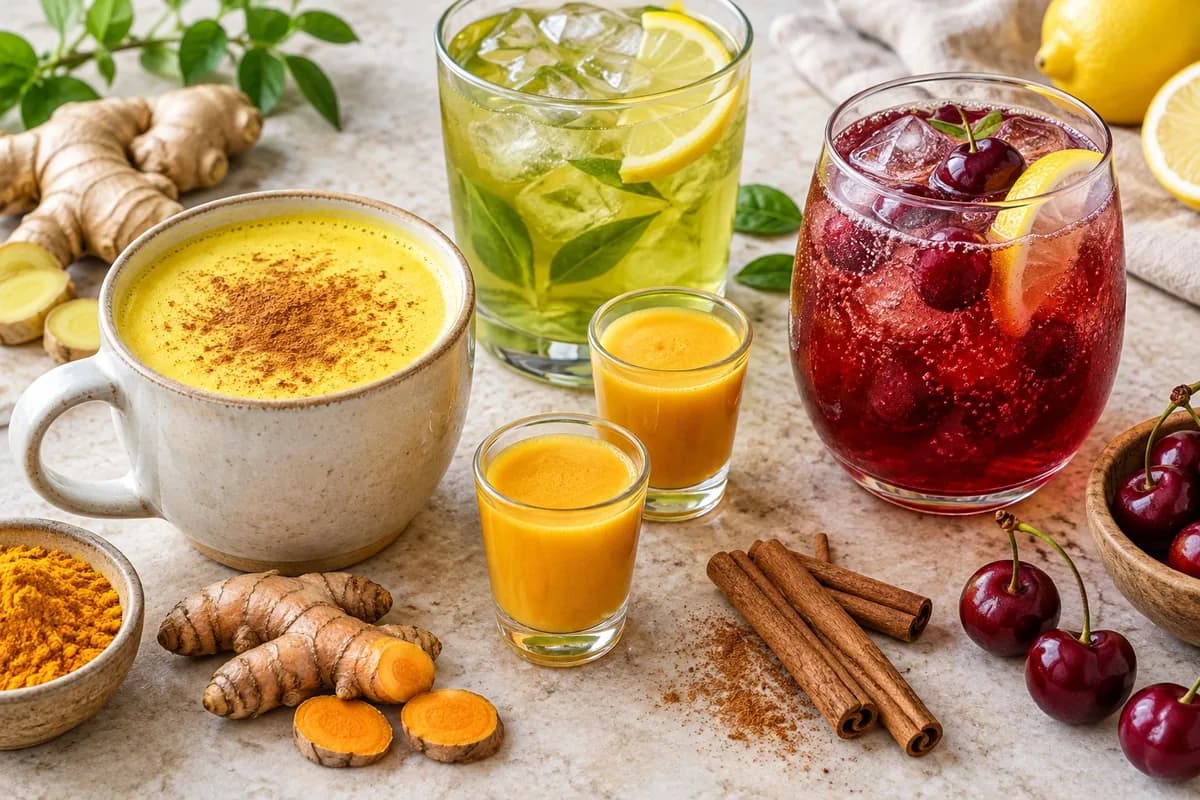
The easiest anti-inflammatory drinks are unsweetened drinks built on foods linked to lower inflammation: green tea, coffee, ginger, turmeric, berries and tart cherries. The biggest win, though, is what they replace. Swapping one soda or syrupy coffee a day for one of the seven drinks below does more than any single "miracle" ingredient.
No drink cures inflammation, and you will not find that promise here. What you will find are seven simple recipes, sorted from morning to bedtime, with honest notes on what the research says.
Which drink when? A quick guide
- Morning: iced or hot green tea, black coffee or a small ginger turmeric shot
- Afternoon: tart cherry spritzer or a berry-spinach smoothie
- Evening: fresh ginger lemon tea or golden milk (both caffeine-free)
1. Iced green tea with lemon
Green tea is one of the most studied drinks of all. As a beverage, no safety concerns have been reported in adults; the rare liver problems you may read about were linked to concentrated extract pills, not to cups of tea.
How to make it: Steep 2 green tea bags in 1 cup of water at about 175 °F (80 °C) for 2 to 3 minutes, so it does not turn bitter. Pour over a glass full of ice, top up with cold water and add a squeeze of lemon.
Green tea contains caffeine, so keep it to the first half of the day if you are sensitive. Here is how to turn it into a daily green tea routine for steady energy.
2. Ginger turmeric shot
A small, fiery shot of blended ginger, turmeric, orange and lemon is a popular morning ritual. You do not need a juicer: our blender ginger shot recipe for a whole week makes about seven shots in 10 minutes.
Honest note: ginger has the most evidence for nausea, especially in pregnancy. For turmeric, there is not yet enough evidence to say it helps with a specific condition. Enjoy the shot as a fresh, spicy habit, not as a remedy.
Prefer something tangy instead? A gentle, well-diluted apple cider vinegar shot is another option with a meal.

3. Coffee, made simpler
Coffee belongs on the list, too. Harvard Health counts it among the foods that may protect against inflammation. The catch is what often goes into it: syrups, whipped cream and sweet creamers turn a cup into a dessert.
How to make it work: Drink it black or with a splash of milk, add cinnamon instead of syrup and pair it with breakfast. These simple coffee habits for steady morning energy explain why the timing helps.
4. Tart cherry spritzer
Cherries are on Harvard's list of anti-inflammatory foods, and tart cherry juice makes a pretty, refreshing afternoon drink.
Recipe (1 glass):
- 1/4 cup (60 ml) unsweetened tart cherry juice
- 3/4 cup (180 ml) sparkling water
- ice and a squeeze of lime
That is about 35 kcal per glass. Diluting the juice keeps the sugar low while you still get the deep cherry flavor. Choose bottles labeled 100% tart cherry juice without added sugar.
5. Berry spinach smoothie
Berries and leafy greens are two of the foods most consistently linked to a healthy eating pattern, and a smoothie combines both.
Recipe (1 glass): Blend 1 cup frozen mixed berries, 1 handful baby spinach, 1/2 cup plain Greek yogurt, 1 tbsp ground flaxseed and about 3/4 cup water or milk until smooth.
The yogurt adds protein, so this works as a snack or light breakfast. For a version with blueberries and a little banana, try this blueberry green smoothie.
6. Fresh ginger lemon tea
This is the simplest drink on the list and one of the coziest.
How to make it: Simmer 5 to 6 thin slices of fresh ginger in 2 cups of water for 10 minutes. Pour into a mug, add a squeeze of lemon and a little honey if you like. It is caffeine-free, so it works after dinner, too. For a stronger brew, add a thin slice of fresh turmeric root and a pinch of black pepper.
7. Golden milk before bed
Golden milk is warm milk with turmeric, ginger, cinnamon and a pinch of black pepper. The pepper matters: curcumin from turmeric is poorly absorbed, and in a small human study, piperine from black pepper raised absorption about 20-fold. Some fat from the milk also helps.
Quick version: Warm 1 cup of milk (or unsweetened oat or soy milk) with 1/2 tsp ground turmeric, 1/4 tsp cinnamon, a few gratings of fresh ginger and a pinch of black pepper. Whisk, sweeten lightly if needed and sip slowly.
Want the full recipe with variations? Here is our step-by-step golden milk and ginger turmeric tea.
Drinks worth cutting back on
The drinks you limit matter as much as the ones you add. Harvard Health lists sugar-sweetened drinks such as soda among the foods that promote inflammation. Large sweetened coffee drinks, sweet iced teas, energy drinks and a lot of juice fall into the same category.
A simple rule: one sugary drink a day out, one of the drinks above in.
What these drinks can and cannot do
They can:
- replace sugary drinks, which lowers your added sugar
- help you drink more fluids through the day
- add plant compounds from tea, berries, ginger and turmeric
They cannot:
- cure joint pain, arthritis or any other condition
- make up for a diet that is mostly processed foods
- replace medication your doctor has prescribed
The overall pattern is what counts. Our list of foods that help with inflammation and healthy aging shows how to build a full plate around the same ideas.
Safety notes
- Turmeric and ginger are safe in food amounts for most people. Concentrated supplements are a different matter: highly absorbable curcumin products have been linked to rare cases of liver injury.
- Ask your doctor first if you are pregnant, take blood thinners or other regular medication, or have gallbladder problems.
- Caffeine: green tea and coffee are best before mid-afternoon if they affect your sleep.
- Tart cherry juice still contains natural sugar, so keep it diluted.
More drinks to rotate
On hot or sweaty days, a simple salt-and-citrus electrolyte drink is the better pick. And for ten more everyday ideas, from hibiscus tea to mint water, see our healthy drinks guide for hydration and digestion.
The bottom line
The best anti-inflammatory drinks are simple and unsweetened: green tea or coffee in the morning, a tart cherry spritzer or berry smoothie in the afternoon and ginger tea or golden milk in the evening. Their real power lies in replacing sugary drinks inside an overall healthy routine.
This article is for general information and does not replace medical advice. If you have a health condition, are pregnant or take medication, talk to your doctor before making regular changes, especially with turmeric or ginger.
FAQ
Anti-Inflammatory Drink Questions
What is the best anti-inflammatory drink?
There is no single best one. Unsweetened drinks built on foods linked to a healthy eating pattern, such as green tea, coffee, berries, cherries, ginger and turmeric, are all good choices. Swapping sugary drinks for them is the change that matters most.
What is a good anti-inflammatory drink in the morning?
Green tea, black coffee or a small ginger turmeric shot with breakfast are easy morning options. If you prefer something without caffeine, a fresh ginger lemon tea works well.
Which anti-inflammatory drink is best before bed?
Choose something caffeine-free, such as golden milk or a fresh ginger tea. Skip green tea and coffee in the evening if caffeine affects your sleep.
Do anti-inflammatory drinks help with weight loss?
Not directly. They do not burn fat. They can help if they replace soda, sweet coffee drinks or juice, because that cuts sugar and calories. Overall eating pattern, movement and sleep matter far more.
Why add black pepper to turmeric drinks?
Curcumin, the main compound in turmeric, is poorly absorbed. In a small human study, piperine from black pepper increased curcumin absorption about 20-fold. A pinch of pepper in golden milk is enough for a food-based drink.
Are turmeric and ginger drinks safe every day?
In normal food amounts they are safe for most people. Concentrated supplements are different: they can cause stomach upset, and highly absorbable curcumin products have been linked to rare liver injury. Ask your doctor if you are pregnant, take blood thinners or other medication, or have gallbladder problems.
Sources
We check health claims against research summaries and official fact sheets. Links open the original source.
- Foods that fight inflammation · Harvard Health Publishing, 2026
- Turmeric: Usefulness and Safety · National Center for Complementary and Integrative Health (NIH), 2025
- Ginger: Usefulness and Safety · National Center for Complementary and Integrative Health (NIH), 2025
- Green Tea: Usefulness and Safety · National Center for Complementary and Integrative Health (NIH), 2025
- Influence of piperine on the pharmacokinetics of curcumin in animals and human volunteers · Planta Medica (PubMed), 1998