Homemade Electrolyte Drink: 3 Easy Recipes (Including a No-Sugar Version)
Two cups of water, a small pinch of salt and fresh citrus: that is the base of a homemade electrolyte drink. Here are three versions, what each one provides and when you actually need one.
By KateLast reviewed

A good homemade electrolyte drink needs only 2 cups of water, 1/8 teaspoon of salt and a squeeze of lemon and lime. That gives you about 290 mg of sodium, almost no calories and no added sugar, which is plenty for a long walk on a hot day or a sweaty workout.
Below are three versions: the no-sugar everyday mix, a coconut water version with more potassium and a fruity orange version. You will also find out when water alone is enough, because most days it is.
Recipe
No-Sugar Lemon Lime Electrolyte Drink
- Prep:
- 3 min
- Total:
- 3 min
- Serves:
- 1 large glass (2 cups / 480 ml)
Ingredients
- 2 cups (480 ml) cold water
- 1/8 tsp table salt or fine sea salt (about 0.75 g)
- 1 tbsp fresh lemon juice
- 1 tbsp fresh lime juice
- 1/4 tsp cream of tartar, optional (adds potassium)
- Ice, mint leaves or cucumber slices, optional
Instructions
- 1Pour about 1/2 cup of the water into a jar or bottle.
- 2Add the salt and the cream of tartar, if using, and stir or shake until fully dissolved.
- 3Add the lemon and lime juice and the rest of the water.
- 4Taste: it should taste only faintly salty, like a light lemonade without sugar. Add more water if it tastes salty.
- 5Add ice and mint and sip it during or after exercise or on a hot day.
Approx. under 10 kcal. Nutrition values are estimates.
When an electrolyte drink actually helps
Electrolytes are minerals like sodium, potassium and magnesium that help your body keep fluid in the right places. You lose mainly sodium through sweat, plus smaller amounts of potassium.
A homemade electrolyte drink makes sense when:
- you exercise for more than about an hour, especially in heat
- you sweat heavily (salt stains on your shirt or cap are a good hint)
- you spend a long day outdoors in hot weather
- you feel washed out after a sauna session or a sweaty hike
For an ordinary office day, plain water and normal meals are enough. Food already supplies most of what you need, and our guide to potassium- and magnesium-rich foods shows how easy that is with avocado, spinach or yogurt.
If you are sick with vomiting or diarrhea, skip the DIY approach and use an oral rehydration solution from the pharmacy. Its sugar-to-salt ratio is set precisely to help your gut absorb fluid, and you should call your doctor if you cannot keep fluids down.
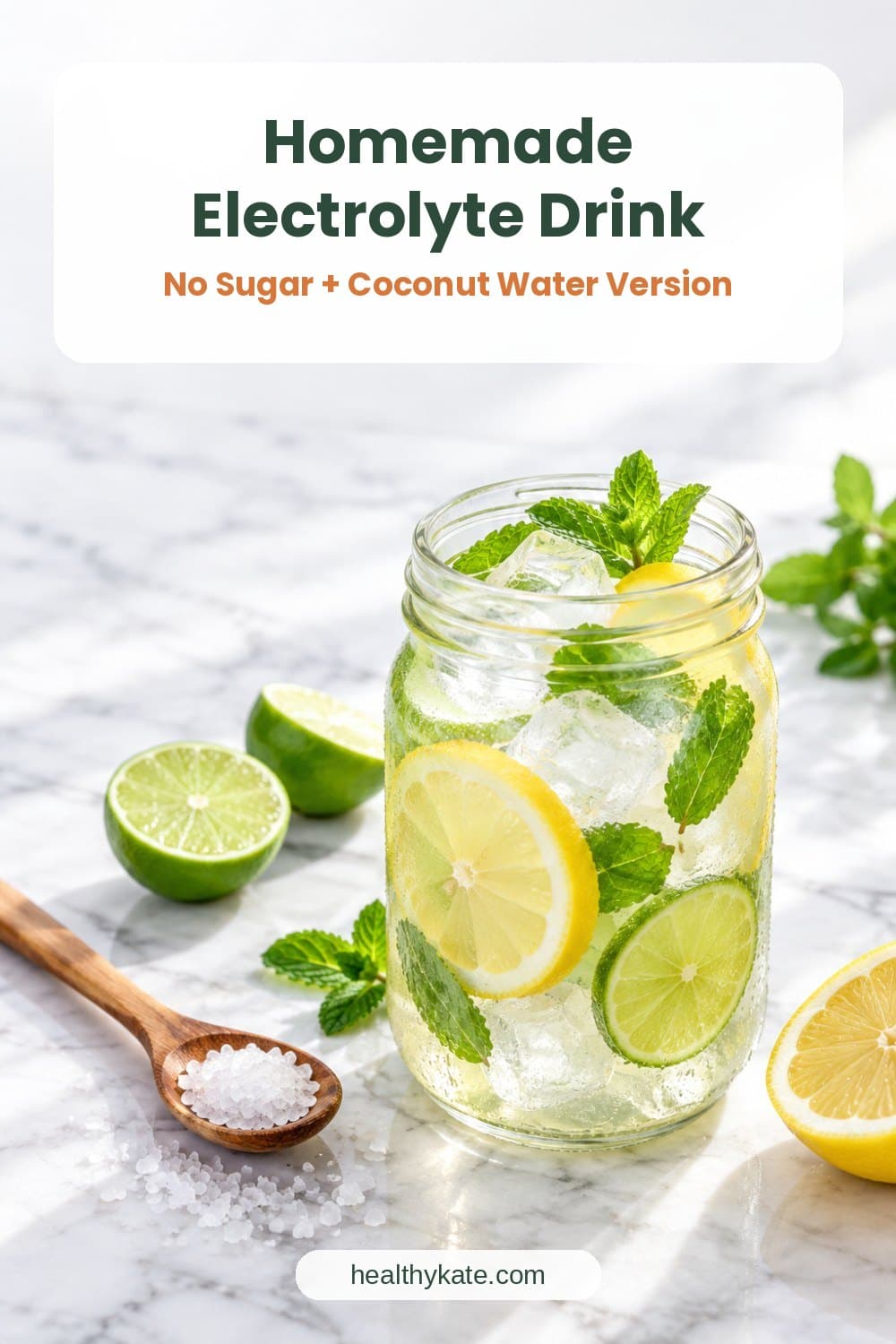
Recipe 1: No-sugar lemon lime electrolyte drink
This is the recipe in the card above and the one to make most often.
Per 2-cup glass (approximate):
- Sodium: about 290 mg (from 1/8 tsp salt)
- Potassium: about 30 mg, or about 155 mg with 1/4 tsp cream of tartar
- Calories: under 10 kcal
- Sugar: less than 1 g, all from the citrus juice
Why cream of tartar? It sounds odd, but this baking staple is mostly potassium. A quarter teaspoon adds roughly 120 mg, and you will not taste it in the citrus.
Tip: Dissolve the salt in a little water first. Undissolved salt sinks to the bottom, and the last sip tastes like seawater.
Recipe 2: Coconut water electrolyte drink
Coconut water is naturally high in potassium but relatively low in sodium. Mixing it with plain water and a small pinch of salt balances it out.
Ingredients (2 cups):
- 1 cup (240 ml) unsweetened coconut water
- 1 cup (240 ml) water
- a small pinch of salt (about 1/16 tsp)
- juice of 1/2 lime
Per glass (approximate): about 400 mg sodium, 615 mg potassium, 60 mg magnesium and 50 kcal.
That is almost a quarter of the daily potassium target for women, which makes this version a nice choice after a long, hot workout. Check the label: some bottled coconut waters contain added sugar or juice.
Like the coconut flavor? It is also the base of our tropical pineapple smoothie with chia and spinach, which works well as a post-workout snack.
Recipe 3: Orange electrolyte drink (no coconut water)
If you prefer a little natural sweetness, use orange juice instead of coconut water.
Ingredients (2 cups):
- 1/2 cup (120 ml) fresh orange juice
- 1 1/2 cups (360 ml) water
- 1/8 tsp salt
- a squeeze of lemon
Per glass (approximate): about 290 mg sodium, 250 mg potassium and 55 kcal. Half a cup of orange juice contains about 250 mg of potassium, but also natural sugar, so this one is best kept for days with real sweating.
Electrolyte drink vs. other drinks
Which one to reach for depends on the situation:
- Plain water: zero calories, enough for most days. If it bores you, water infused with fruit and herbs keeps the zero-calorie benefit and adds flavor.
- Homemade no-sugar electrolyte drink: adds sodium, very few calories. Good for long walks and workouts.
- Coconut water version: most potassium, a little natural sugar. Good after long sessions in heat.
- Store-bought sports drinks: sodium plus sugar for fuel. Useful for endurance events, but often 20 g of sugar or more per bottle.
- Pharmacy oral rehydration solution: precise salt and glucose balance. The right choice when you are sick.
How much salt is too much?
Salt is the ingredient people get wrong most often. Online recipes sometimes call for 1/2 teaspoon or more per glass. That is about 1,160 mg of sodium, half of the recommended daily limit of 2,300 mg, in a single drink.
Most adults already eat around 3,400 mg of sodium a day without trying. So unless you are an endurance athlete who sweats heavily, stay with 1/8 teaspoon per 2 cups. If the drink tastes clearly salty, it has too much.
Who should be careful
Talk to your doctor before using salt or potassium additions regularly if you:
- have kidney disease or a condition that makes it hard to get rid of potassium
- have heart failure or high blood pressure
- take medication that affects potassium or sodium levels, such as some blood pressure medications or diuretics
- are on a sodium-restricted diet
Make it a habit (without overdoing it)
The easiest approach: keep a small jar of pre-mixed salt and cream of tartar (1 part cream of tartar to 2 parts salt by volume) next to your water bottle. On workout days, add a small pinch and fresh citrus. On other days, just drink water.
If plain water bores you, rotate in infused versions. Our spa-style cucumber water with mint is a favorite, and a glass of soaked chia water adds fiber as well as fluid. For more ideas, browse our list of healthy drinks that make hydration easier, and on cold evenings, one of these warming turmeric and ginger drinks can count toward your fluids too.
The bottom line
A homemade electrolyte drink is simply water, a small amount of salt and citrus, with optional potassium from cream of tartar or coconut water. It costs a few cents, contains no added sugar and is perfect for sweaty days. Keep the salt modest, save the drink for days you actually sweat and reach for a pharmacy rehydration solution when you are ill.
This article is for general information and does not replace medical advice. If you have kidney, heart or blood pressure problems, take medication or are pregnant, talk to your doctor before using electrolyte drinks regularly.
FAQ
Electrolyte Drink Questions
How do you make a homemade electrolyte drink?
Dissolve 1/8 teaspoon of salt in 2 cups (480 ml) of water and add 1 tablespoon each of lemon and lime juice. That gives about 290 mg of sodium. For more potassium, add 1/4 teaspoon of cream of tartar or replace half the water with coconut water.
Can I make an electrolyte drink without sugar?
Yes. For everyday sweating, a sugar-free version with salt, citrus and some potassium works fine. If you are rehydrating after vomiting or diarrhea, a pharmacy oral rehydration solution is the better choice, because its exact glucose-to-salt balance helps your gut absorb fluid.
Is coconut water a good electrolyte drink on its own?
It is rich in potassium (about 600 mg per cup) but fairly low in sodium (about 250 mg per cup), and sodium is the main electrolyte lost in sweat. Mixing it with water and a small pinch of salt makes it more balanced.
How much salt should I put in water for electrolytes?
About 1/8 teaspoon per 2 cups of water is a good starting point. It should taste only slightly salty. More is not better: most adults already eat more sodium than the recommended limit of 2,300 mg a day.
Do I need an electrolyte drink every day?
Usually not. For normal days, water and regular meals with fruit, vegetables and some salt cover your needs. Electrolyte drinks make sense for long or very sweaty workouts, hot weather or after heavy sweating.
Who should not drink homemade electrolyte drinks?
If you have kidney disease, heart failure, high blood pressure or take medication that affects potassium or sodium, such as some blood pressure pills or diuretics, ask your doctor before using salt or potassium additions regularly.
Sources
We check health claims against research summaries and official fact sheets. Links open the original source.
- Nuts, coconut water (liquid from coconuts) (FDC ID 170174) · U.S. Department of Agriculture, FoodData Central, 2026
- Salt, table (FDC ID 173468) · U.S. Department of Agriculture, FoodData Central, 2026
- Potassium – Fact Sheet for Health Professionals · NIH Office of Dietary Supplements, 2026
- Sodium in Your Diet · U.S. Food and Drug Administration, 2026