How to Make Celery Juice in a Blender (No Juicer, 10 Minutes)
One bunch of celery, half a cup of water, a blender and a strainer. Here is the exact method for smooth celery juice without a juicer, what a glass actually contains, and what the detox claims get wrong.
By KateLast reviewed
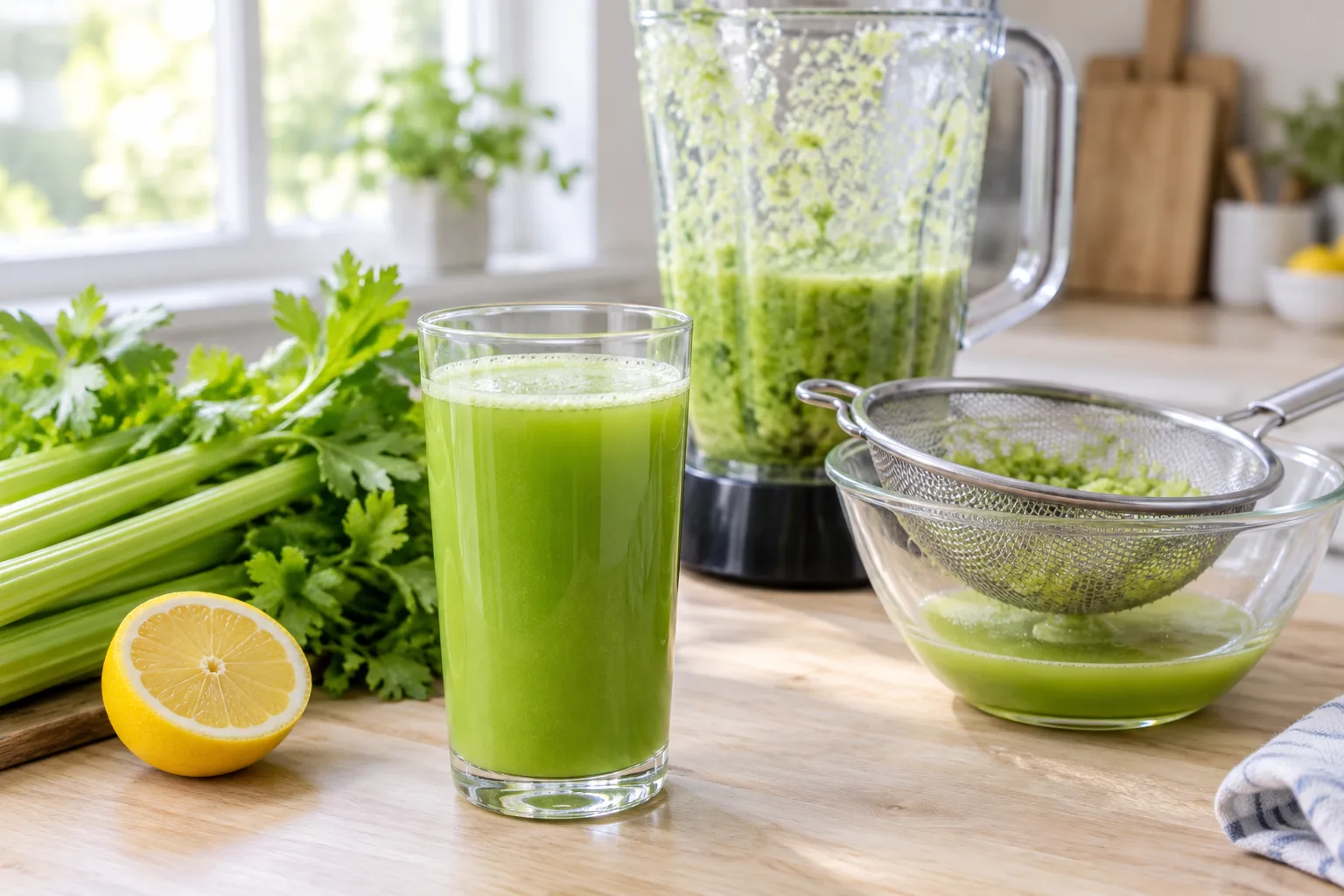
To make celery juice in a blender, chop one bunch of celery, blend it with 1/2 cup of water for about a minute, then squeeze the purée through a nut milk bag or press it through a fine sieve. You get about 2 cups of smooth green juice in 10 minutes, no juicer required.
That is the whole trick. The details below are what make the difference between bitter, foamy sludge and a clean, bright glass you actually want to drink.
Recipe
Blender Celery Juice (No Juicer)
- Prep:
- 10 min
- Total:
- 10 min
- Serves:
- 2 glasses (about 8 oz each)
Ingredients
- 1 medium bunch celery (about 1 lb / 450 g), leaves included if you like a stronger taste
- 1/2 cup (120 ml) cold water
- Optional: juice of 1/2 lemon, 1/2 cucumber or 1/2 green apple
Instructions
- 1Separate the stalks, rinse them well under running water and trim the dry base.
- 2Chop the celery into pieces about 1 inch (2 to 3 cm) long so the blender can catch them.
- 3Add the water first, then the celery. Start on low, then blend on high for 45 to 60 seconds until completely smooth.
- 4Pour the purée into a nut milk bag or a fine mesh sieve set over a bowl and squeeze or press out the juice.
- 5Stir in lemon juice if using and drink right away, or refrigerate in a sealed jar for up to 24 hours.
Approx. about 30 kcal per glass. Nutrition values are estimates.
What you need
- 1 medium bunch of celery, about 1 lb (450 g). Organic is optional; rinsing well matters more.
- 1/2 cup cold water. Just enough for the blades to move. More water only dilutes the taste.
- A blender. Any countertop blender works. High-speed models give more juice from the same bunch.
- Something to strain with: a nut milk bag (easiest), a clean thin kitchen towel, cheesecloth or a fine mesh sieve plus a spoon.
Step by step
1. Rinse and trim
Pull the stalks apart. Dirt hides at the base, so rinse each one under running water and cut off the dry bottom end. Keep the leaves if you like a stronger, more herbal flavor; leave them out for a milder juice.
2. Chop small
Cut the stalks into pieces about 1 inch long. Long celery strings wrap around the blades, so short pieces blend faster and more evenly.
3. Water first, then celery
Pour the water in first so the blades are not running dry. Add the celery, start on low for a few seconds, then switch to high for 45 to 60 seconds. Stop when you see a smooth, bright green purée with no visible chunks.
4. Strain and squeeze
Set the nut milk bag inside a bowl or wide jug, pour in the purée and twist the top closed. Squeeze firmly from the top down until only a dry ball of pulp is left. With a sieve, press the purée with the back of a spoon in batches; it takes a few minutes longer.
5. Drink or chill
Stir in a squeeze of lemon if you like, then drink it straight away or pour it into a glass jar filled to the top and close it tightly. Fresh is best; after about 24 hours in the fridge the taste turns flat.

How much juice does one bunch make?
Roughly 2 cups (16 oz) with a standard blender and 1/2 cup of water, which fills two 8-ounce glasses. A high-speed blender and a firm squeeze can get you a little more. If you want one large 16-ounce glass, use the whole bunch for one serving.
What is in a glass of celery juice?
USDA data for one medium bunch of raw celery (about 450 g), before straining:
- Calories: about 63
- Fiber: about 7 g
- Potassium: about 1,170 mg
- Sodium: about 360 mg
- Vitamin K: about 130 µg
- Sugar: about 6 g
Split into two glasses, each one has around 30 calories. Straining leaves most of the fiber in the bag, while minerals such as potassium and sodium dissolve into the liquid. For context: adult women need about 2,600 mg of potassium and 90 µg of vitamin K a day, so a glass covers a useful share, but so does simply eating the stalks.
Blender or juicer: what changes?
A juicer separates juice and pulp in one step and gives a slightly clearer drink. A blender plus a bag gets you almost the same result for the price of a strainer. The real difference is the fiber: celery juice from either machine has very little of it, which is why it is less filling than whole celery. If that matters to you, skip straining and drink it as a thin smoothie, or look at our ways to get more fiber into your day.
4 ways to make it taste better
Pure celery juice is salty, grassy and a bit bitter. If that is not for you yet, blend one of these in with the celery:
- Lemon: juice of half a lemon brightens the taste and takes the edge off the bitterness.
- Cucumber: half a cucumber makes it milder and more refreshing. It moves you toward our cucumber-spinach green juice from the blender.
- Green apple: half an apple adds sweetness and roughly 45 calories.
- Ginger: a thumb-sized piece makes it warming and spicy, a bit like a diluted ginger shot.
On days you want something sweeter and orange, our carrot ginger juice uses the same blend-and-strain method.
What celery juice can and cannot do
Celery juice is a low-calorie, hydrating drink with potassium and vitamin K. That is a real, modest benefit, especially if it replaces soda or sweet coffee drinks.
What the research does not support: claims that it "detoxes" the liver, flushes out parasites or melts belly fat. The National Center for Complementary and Integrative Health finds no compelling evidence that detox or cleanse programs remove toxins; your liver and kidneys already do that job. For weight loss, whole celery is actually the better choice, because the fiber you strain out is what helps you feel full.
If you enjoy it, drink it because you like it and because it keeps you hydrated. We put it in the same honest category as the other morning drinks people try for weight loss: helpful as a swap, not as a fat burner.
Does it help with bloating?
Celery is mostly water and has a mild diuretic reputation, and some people feel lighter after a glass. Others feel more bloated, because celery contains fermentable carbs (mannitol) that can cause gas in sensitive guts, especially people with IBS. If your belly reacts, try a small glass first or switch to drinks that tend to settle a bloated belly, such as warm ginger or peppermint tea.
Who should be careful
- Warfarin and other vitamin K antagonists: you do not have to avoid celery, but keep your vitamin K intake steady and talk to your doctor before starting a daily celery juice habit.
- Kidney disease or a potassium-restricted diet: a 16-ounce glass can add over 1,000 mg potassium and more than 300 mg sodium.
- Low-sodium diet: celery is naturally salty for a vegetable; count it.
- Celery allergy: celery is a common food allergen, especially in Europe, and reactions can be serious.
When to drink it
There is no magic time. Many people like it first thing in the morning because it is light and refreshing, but it works just as well with lunch or in the afternoon. If you drink it on an empty stomach and feel queasy, have it with food instead.
More drinks to try
If celery juice becomes a habit, rotate it with infused water pitchers if you want flavor without the blender or browse our everyday drinks we rotate besides plain water for warm and cold ideas through the week.
The bottom line
Blender celery juice is simple: one bunch of chopped celery, half a cup of water, one minute of blending and a good squeeze through a nut milk bag. It is light, hydrating and a fine replacement for sugary drinks, as long as you see it as a nice habit, not a cure.
This article is for general information and does not replace medical or nutrition advice. If you take blood thinners, have kidney disease or follow a special diet, check with your doctor or a registered dietitian before drinking celery juice daily.
FAQ
Celery Juice in a Blender: Questions
Can you make celery juice in a blender without a juicer?
Yes. Blend chopped celery with a small amount of water until smooth, then strain the purée through a nut milk bag, cheesecloth or fine sieve. The result is very close to juicer celery juice.
How much celery do I need for one glass of celery juice?
One medium bunch (about 1 lb or 450 g) plus 1/2 cup water gives roughly 2 cups of juice, so plan on half a bunch per 8-ounce glass.
Do I have to strain blender celery juice?
No. If you skip straining you keep the fiber, and the drink becomes a thin celery smoothie. That is more filling, but the texture is pulpy. Straining makes it smooth and closer to classic celery juice.
How long does celery juice last in the fridge?
It tastes best fresh. In a full, tightly sealed glass jar it keeps for about 24 hours in the fridge; after that the flavor turns flat and slightly bitter.
Does celery juice help with weight loss or detox?
Celery juice is very low in calories, so it can replace a sugary drink. It does not burn fat, and there is no good evidence that it detoxes the body or removes parasites. Your liver and kidneys handle that work.
Who should be careful with celery juice?
People on warfarin, because celery contains vitamin K, people told to limit potassium or sodium, for example with kidney disease, and anyone with a celery allergy. Ask your doctor if any of these apply.
Sources
We check health claims against research summaries and official fact sheets. Links open the original source.
- Celery, raw (SR Legacy, FDC ID 169988) · USDA FoodData Central, 2026
- Vitamin K – Fact Sheet for Health Professionals · NIH Office of Dietary Supplements, 2026
- Potassium – Fact Sheet for Health Professionals · NIH Office of Dietary Supplements, 2026
- “Detoxes” and “Cleanses”: What You Need To Know · National Center for Complementary and Integrative Health (NCCIH), 2026