Protein Coffee Recipe: Iced, Hot and No-Powder Versions
Coffee plus protein in one glass: an iced version with a ready-to-drink shake, a clump-free hot version and a blended Greek yogurt latte with about 20 g of protein and no powder at all.
By KateLast reviewed
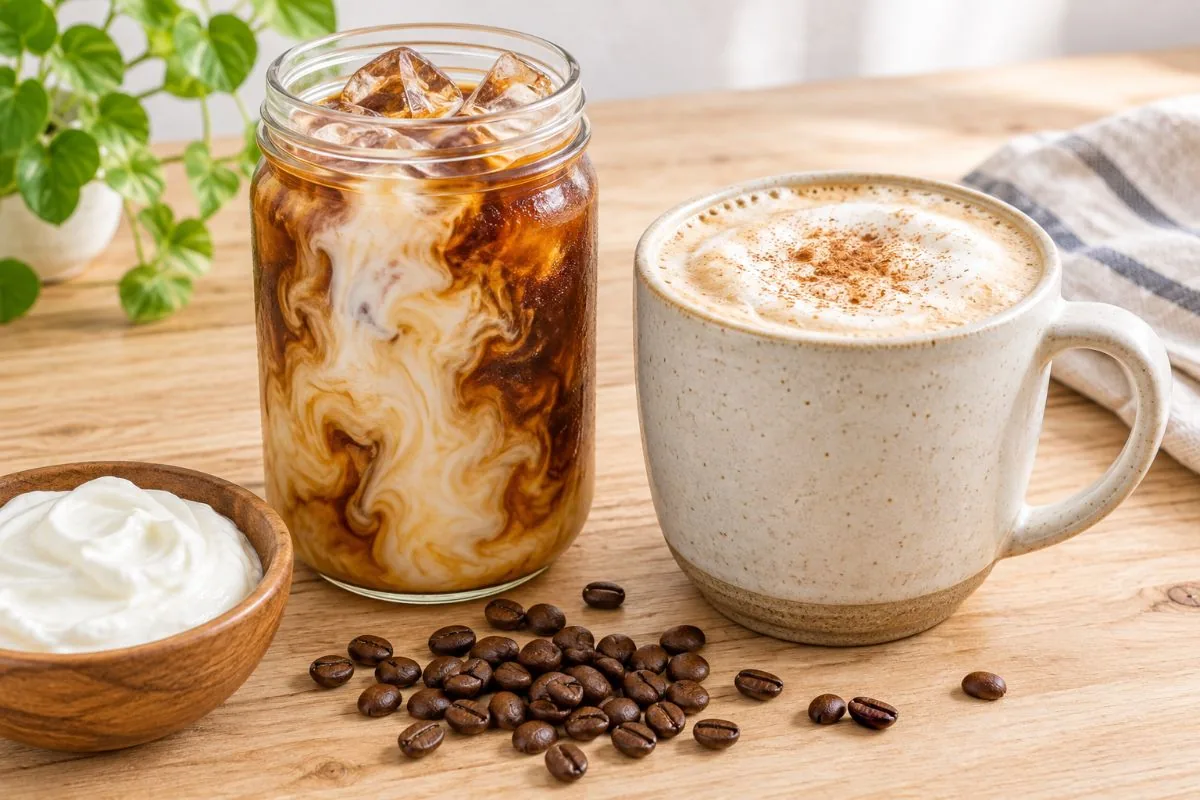
Protein coffee is simply coffee combined with a protein source: a ready-to-drink protein shake, a scoop of protein powder, or milk and Greek yogurt. The no-powder version below blends one cup of chilled coffee with 1/2 cup of 2% milk and a 170 g container of Greek yogurt for about 20 g of protein and roughly 155 kcal.
Pick the version that fits your morning: iced and shake-based when you are in a hurry, hot when it is cold outside, or blended when you would rather skip powders altogether.
Recipe
Blended Iced Protein Latte (No Protein Powder)
- Prep:
- 5 min
- Total:
- 5 min
- Serves:
- 1 large glass (about 2 1/2 cups)
Ingredients
- 1 cup (237 ml) brewed coffee, chilled (or cold brew diluted to drinking strength)
- 1/2 cup (122 g) 2% milk
- 1 single-serve container (170 g / 6 oz) plain nonfat Greek yogurt
- 1/2 tsp vanilla extract
- Pinch of ground cinnamon, optional
- 1–2 tsp maple syrup or 1 soft pitted date, optional
- Ice cubes
Instructions
- 1Brew the coffee ahead of time and chill it in the fridge, or use cold brew diluted to the strength you normally drink.
- 2Add the coffee, milk, Greek yogurt, vanilla and cinnamon to a blender. Add maple syrup or a date if you like it sweeter.
- 3Blend for 20–30 seconds until smooth and slightly foamy.
- 4Fill a large glass or jar with ice and pour the blended coffee over it.
- 5Taste and adjust: a splash more milk makes it thinner, a little more yogurt makes it thicker and tangier.
Approx. about 155 kcal (before sweetener). Nutrition values are estimates.
Three ways to make protein coffee at a glance
- Iced, with a protein shake: fastest, no blender. Protein depends on the shake label.
- Hot, with protein powder: cozy and quick once you know the clump-free trick. Protein depends on the powder label.
- Blended, with milk and Greek yogurt: no powder, creamy and tangy, about 20 g of protein from whole foods.
All three start with plain coffee, which is almost calorie-free: brewed coffee has about 1 kcal per 100 g. The calories and protein come from what you add.
Version 1: Iced protein coffee with cold brew and a protein shake
This is the "pour and go" method, and the one most people mean when they search for iced protein coffee.
You need:
- ice
- 1/2 to 1 cup cold brew or chilled brewed coffee
- 1 bottle or carton of ready-to-drink protein shake (vanilla, chocolate or caramel all work)
How to make it: Fill a tall glass or jar with ice, pour in the coffee, then top it with the protein shake. Stir or shake the closed jar for a few seconds. That's it.
How much protein? Check the label. Shakes vary a lot in protein, added sugar and calories. Example math: if your shake lists 20 g protein and 150 kcal, your iced coffee has about 20 g protein and roughly 150 kcal, because the coffee adds almost nothing.
Tip: Cold brew concentrate is much stronger than regular coffee. If your bottle says "concentrate," dilute it with water first, or you may get far more caffeine than you planned.
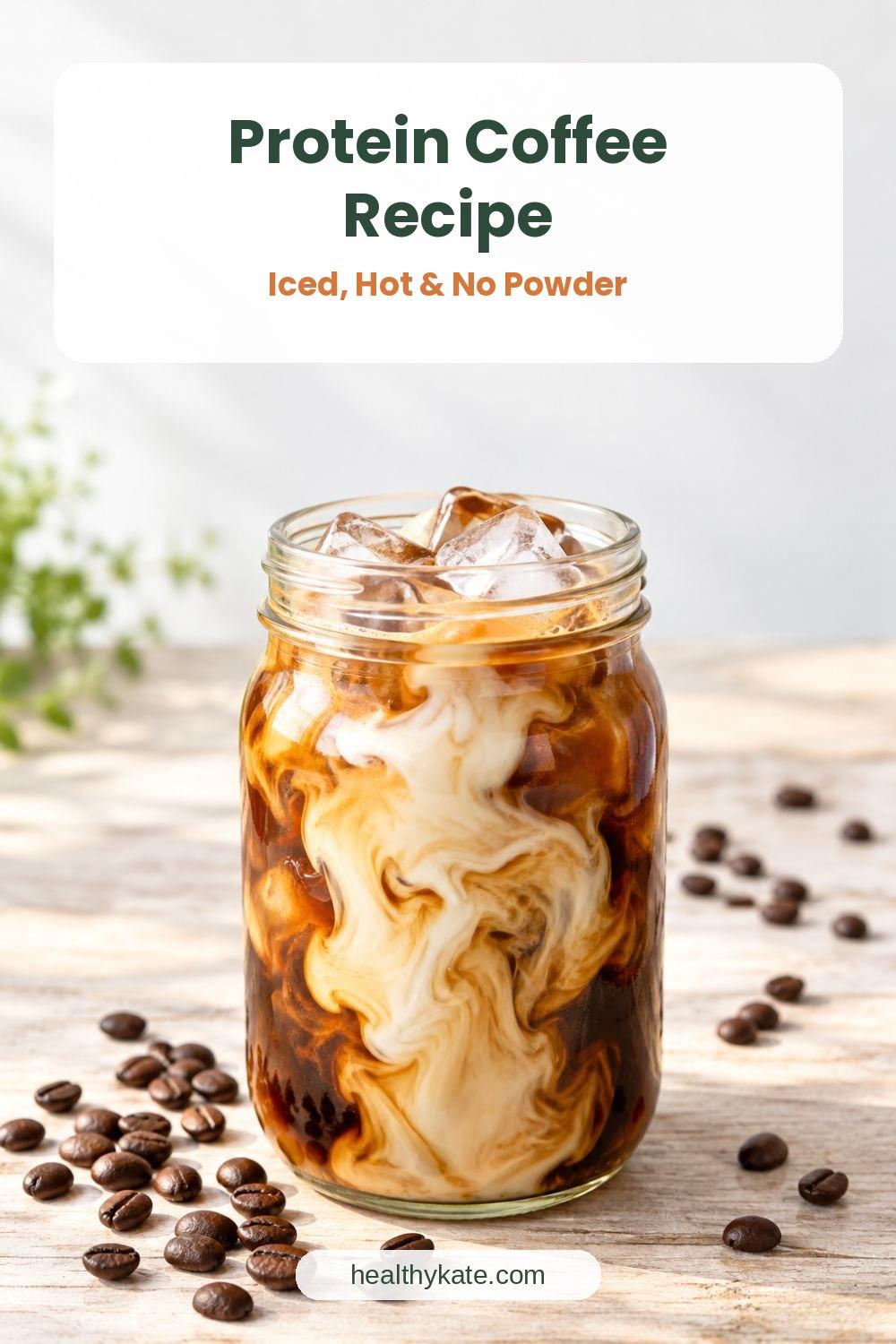
Version 2: Hot protein coffee without clumps
Stirring protein powder straight into steaming coffee usually ends in lumps. Many powders, especially whey, set when they hit very hot liquid. Two small steps fix it.
You need:
- 1 cup (237 ml) freshly brewed coffee
- 1 scoop protein powder (vanilla or unflavored)
- 2–3 tbsp milk or unsweetened plant milk
- cinnamon, optional
How to make it:
- Brew the coffee and let it sit for 2–3 minutes so it is hot but no longer steaming hard.
- In your mug, stir the powder with the milk into a smooth paste.
- Pour in the coffee slowly while whisking, or use a handheld milk frother for 10 seconds.
How much protein? Check the label of your powder. Many list about 20–25 g of protein per scoop, but scoop sizes and formulas differ. Three tablespoons (about 45 g) of 2% milk add another 1.5 g of protein and about 22 kcal.
If you like this frothy morning ritual, the coffee routine that keeps your energy steady adds simple tips on timing your cup and pairing it with food.
Version 3: Protein coffee without protein powder (the recipe card)
No powder in the pantry, or you simply prefer whole foods? Blend coffee with milk and Greek yogurt. It tastes like a thick, slightly tangy iced latte.
Here is the math, using USDA values:
- 1 cup (237 g) brewed coffee: about 2 kcal, 0 g protein
- 1/2 cup (122 g) 2% milk: 122 × 0.033 = about 4 g protein, 61 kcal
- 170 g nonfat plain Greek yogurt: 170 × 0.095 = about 16 g protein, 92 kcal
Total: about 20 g protein and roughly 155 kcal, before any sweetener. Maple syrup or a date adds sugar and calories, so start with a small amount and taste.
Greek yogurt works so well here because it adds a lot of protein for few calories and gives the drink body. It is the same trick used in these Greek yogurt protein smoothies, so you can use one tub for both.
Is protein coffee a good breakfast?
It can be a useful part of breakfast, especially if you usually start the day with coffee and nothing else. Harvard's Nutrition Source notes that adults need a minimum of 0.8 g of protein per kilogram of body weight per day. For a woman weighing 68 kg (150 lb), that is 68 × 0.8 = about 54 g as a baseline, and a 20 g coffee covers a good part of it.
What protein coffee lacks is fiber. On its own it may not keep you full until lunch. Add a piece of fruit, a small bowl of oats or a slice of whole-grain toast, or browse these breakfast ideas that land near 30 grams of protein for complete meals. For commuting days, pair your jar of coffee with one of these portable high-protein breakfast ideas.
Caffeine: how much is in your cup?
One cup (237 g) of brewed coffee has about 95 mg of caffeine (USDA lists 40 mg per 100 g, and 2.37 × 40 ≈ 95). The FDA cites 400 mg a day as an amount not generally associated with negative effects for most adults, which is roughly four cups of brewed coffee.
Keep in mind:
- Some protein shakes and powders contain added coffee or caffeine. Read the label so you do not double up.
- Cold brew concentrate and large café drinks can contain much more caffeine than a home-brewed cup.
- If caffeine affects your sleep, keep your protein coffee to the morning.
Who should be careful
- Pregnant, trying to conceive or breastfeeding: the FDA recommends talking with your health care provider about whether you need to limit caffeine.
- Caffeine-sensitive, anxious or prone to heart palpitations: use half-caf or decaf. The protein stays the same.
- Kidney disease or a prescribed protein limit: check with your doctor before adding extra protein.
- Lactose intolerance or milk allergy: use lactose-free milk and yogurt or a plant-based shake, and check the protein content, since many plant milks are low in protein.
- Protein powders: they are supplements, so quality varies. Choose one with a short ingredient list and little added sugar.
Small habits that make it work
Protein coffee is most helpful as part of a pattern, not as a magic drink. Making it the same way most mornings takes the guesswork out of breakfast, and it pairs nicely with the protein habits that matter after 40, like spreading protein across your meals.
On warm afternoons, swap to decaf or to one of the many healthy drinks for everyday hydration so your caffeine stays in the morning.
The bottom line
Protein coffee is easy: cold brew plus a protein shake for an iced version, slightly cooled coffee whisked with a powder paste for a hot one, or chilled coffee blended with milk and Greek yogurt for about 20 g of protein with no powder at all. Check labels for protein, sugar and hidden caffeine, keep total caffeine in mind and add a little fiber on the side.
This article is for general information and does not replace medical advice. If you are pregnant, have kidney or heart problems, are sensitive to caffeine or take medication, talk to your doctor before changing your caffeine or protein intake.
FAQ
Protein Coffee Questions
How do you make protein coffee?
The simplest way is to pour cold brew over ice and top it with a ready-to-drink protein shake. For hot coffee, let it cool for a few minutes and whisk in protein powder that you first stirred into a paste with a little milk. Without powder, blend chilled coffee with milk and Greek yogurt.
How much protein is in protein coffee?
It depends on what you add. The blended version with 1/2 cup of 2% milk and 170 g of nonfat Greek yogurt has about 20 g of protein. With protein powder or a shake, check the label: many list about 20–25 g per scoop or bottle, but brands vary.
Why does protein powder clump in hot coffee?
Very hot liquid makes many powders, especially whey, set into lumps before they dissolve. Let the coffee cool for a few minutes, mix the powder with a little milk first and use a whisk or milk frother.
Can I make protein coffee without protein powder?
Yes. Blend chilled coffee with milk and plain Greek yogurt. One 170 g container of nonfat Greek yogurt adds about 16 g of protein, and 1/2 cup of 2% milk adds about 4 g.
Can protein coffee replace breakfast?
On a rushed morning it can bridge the gap, but it has little fiber. Pair it with fruit, oats or a slice of whole-grain toast so you stay full longer.
How much caffeine is in protein coffee?
One cup of brewed coffee has about 95 mg of caffeine. Cold brew concentrate can be much stronger, so dilute it. The FDA cites 400 mg a day as an amount not generally linked to negative effects in most adults.
Sources
We check health claims against research summaries and official fact sheets. Links open the original source.
- Beverages, coffee, brewed from grounds, prepared with tap water (FDC ID 171890) · U.S. Department of Agriculture, FoodData Central, 2026
- Spilling the Beans: How Much Caffeine Is Too Much? · U.S. Food and Drug Administration, 2026
- Yogurt, Greek, plain, nonfat (FDC ID 171312) · U.S. Department of Agriculture, FoodData Central, 2026
- Milk, reduced fat, fluid, 2% milkfat (FDC ID 171267) · U.S. Department of Agriculture, FoodData Central, 2026
- Protein · Harvard T.H. Chan School of Public Health, The Nutrition Source, 2026