Chamomile Tea Benefits for Women: What It Can (and Can't) Do for Sleep, Cramps and Calm
Chamomile tea will not knock you out or melt belly fat, but small studies suggest it can help some women sleep through the night and ease period pain. Here is what the research shows, how to brew a cup that actually tastes good, and who should be careful.
By KateLast reviewed

Chamomile tea's best-supported benefits for women are modest but real: it may help you stay asleep and wake up less at night, and chamomile preparations have eased period pain in several small trials. It is caffeine-free, has about 2 calories per cup and is safe for most people, but it will not cure insomnia or melt fat.
That is the honest summary. Below is what the studies actually tested, how to brew a cup that tastes like flowers instead of hay, and the few situations where you should skip it.
What the research says, benefit by benefit
1. Sleep: fewer wake-ups, not more hours
The strongest evidence is for sleep quality. A 2024 meta-analysis pooled 10 clinical trials with 772 adults. Chamomile lowered scores on the Pittsburgh Sleep Quality Index, a standard sleep questionnaire, and in most of the studies that measured it, people woke up less often during the night. What it did not do: make people sleep longer overall or feel noticeably less tired during the day.
Two caveats matter here. The trials used different forms of chamomile, from tea to extract capsules, and they varied a lot in quality. And for diagnosed insomnia, the NIH's complementary health center (NCCIH) notes that the one insomnia study in an earlier review found no benefit.
So if you fall asleep fine but wake at 3 a.m., chamomile is a reasonable, low-risk thing to try. If you lie awake for hours most nights, it is time to talk to your doctor instead.
2. After a baby: a short-term lift
One of the few studies that used plain chamomile tea was done with women. In a randomized trial from Taiwan, 80 new mothers with poor sleep were split into two groups. Those who drank chamomile tea daily for two weeks reported fewer sleep problems tied to physical symptoms and lower depression scores than the control group.
Four weeks after they stopped, the difference was gone. That is useful to know: any benefit seems to last only while you keep drinking it, and it is no substitute for real support if low mood persists after birth.
3. Period cramps: promising, but small studies
Chamomile contains compounds that may reduce prostaglandins, the messengers that drive menstrual cramps. A 2021 systematic review found 7 clinical trials with 1,033 participants and concluded that chamomile can reduce both period pain and heavy bleeding in primary dysmenorrhea (cramps without an underlying condition).
The trials were small and of mixed quality, and not all of them used tea, so a mug is not a drop-in replacement for your usual pain relief. Still, a warm cup with a heat pad is a pleasant addition to your period routine. If your pain is severe, getting worse or not helped by over-the-counter medicine, get it checked.
4. Stress and a racing mind
NCCIH describes some preliminary studies in which a chamomile supplement may have helped people with generalized anxiety. That is supplement research, not tea, and it is early. The everyday version is simpler: a hot, caffeine-free drink you sip slowly is a cue to slow down. Pair it with the other parts of an evening wind-down, like dimmer lights and a set bedtime. Our five sleep habits for women over 40 cover the bigger levers.
5. Weight: only as a swap
There is no good evidence that chamomile tea burns fat or "flattens" your belly. It helps in a quieter way. A cup of plain brewed chamomile has roughly 2 calories, so it can replace a glass of wine, a hot chocolate or a second dessert in the evening. If evening grazing is your weak spot, a short routine for closing the kitchen after dinner that ends with a cup of tea is a habit that actually saves calories.
How to brew chamomile tea that tastes good
Most bitter, flat chamomile comes from water that is too cool or a lid left off. For one mug:
- Put 1 tea bag or 1 heaped teaspoon of dried chamomile flowers in a mug or infuser.
- Pour over 1 cup (250 ml) of water that has just boiled.
- Cover the mug with a saucer and steep for 5 minutes for a mild cup, up to 10 minutes for a stronger one. Covering keeps the aromatic oils in the cup.
- Strain, then add a thin slice of lemon or a teaspoon of honey if you like (honey adds about 20 kcal).
Fresh chamomile works too: use a little more fresh flowers than dried, and make sure they are true chamomile from a reliable source.
Best time to drink it
- For sleep: 30 to 60 minutes before bed. Keep it to one cup so a full bladder does not wake you up instead.
- During your period: a cup in the afternoon and one in the evening is a common rhythm.
- For a calmer evening: right after dinner, as the signal that the kitchen is closed.
Chamomile or another evening tea?
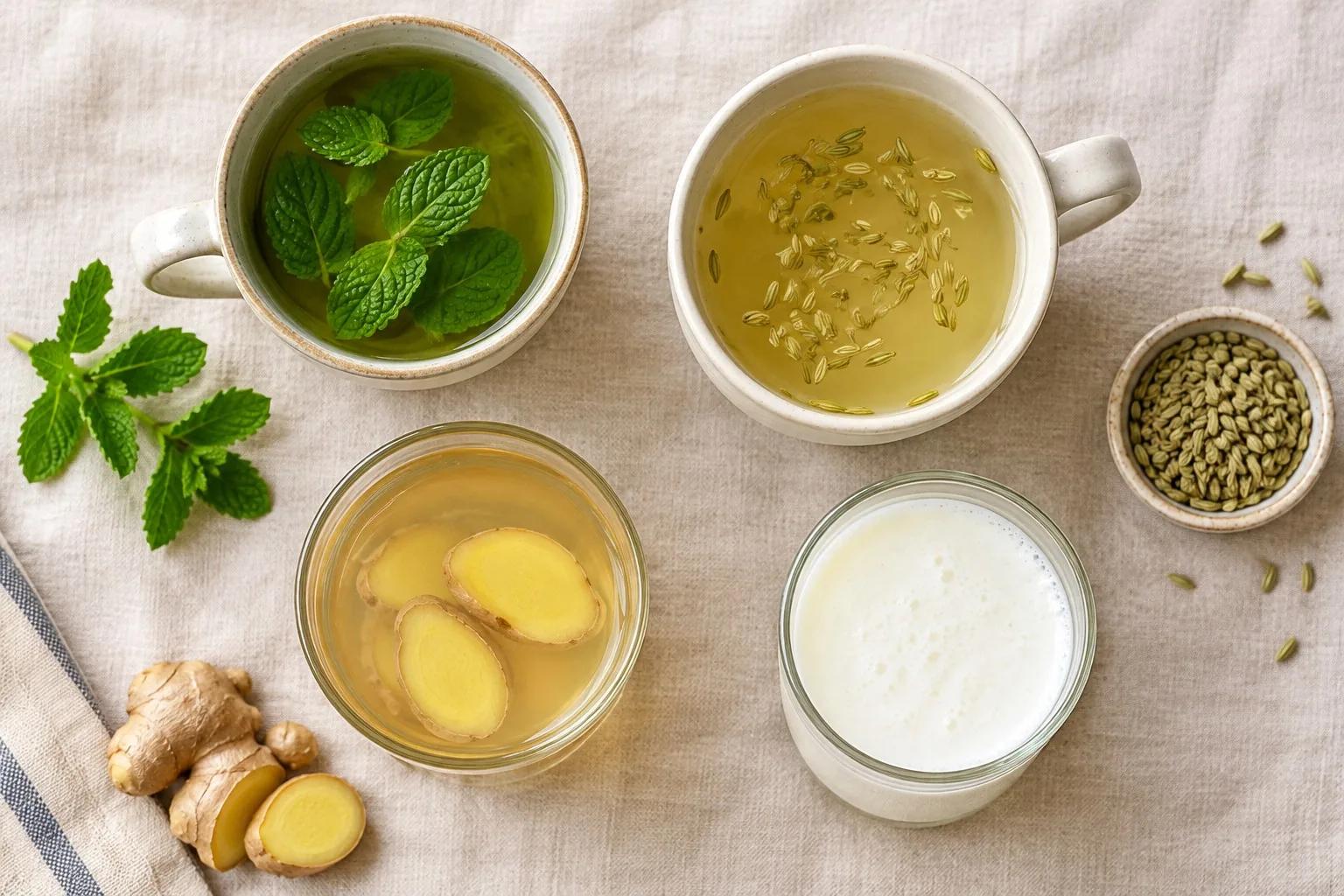
All three of these are caffeine-free, so the choice comes down to what you want help with:
- Chamomile if your main goal is winding down and staying asleep.
- Peppermint if you feel full or gassy after dinner. Here is what peppermint tea can do for bloating and digestion.
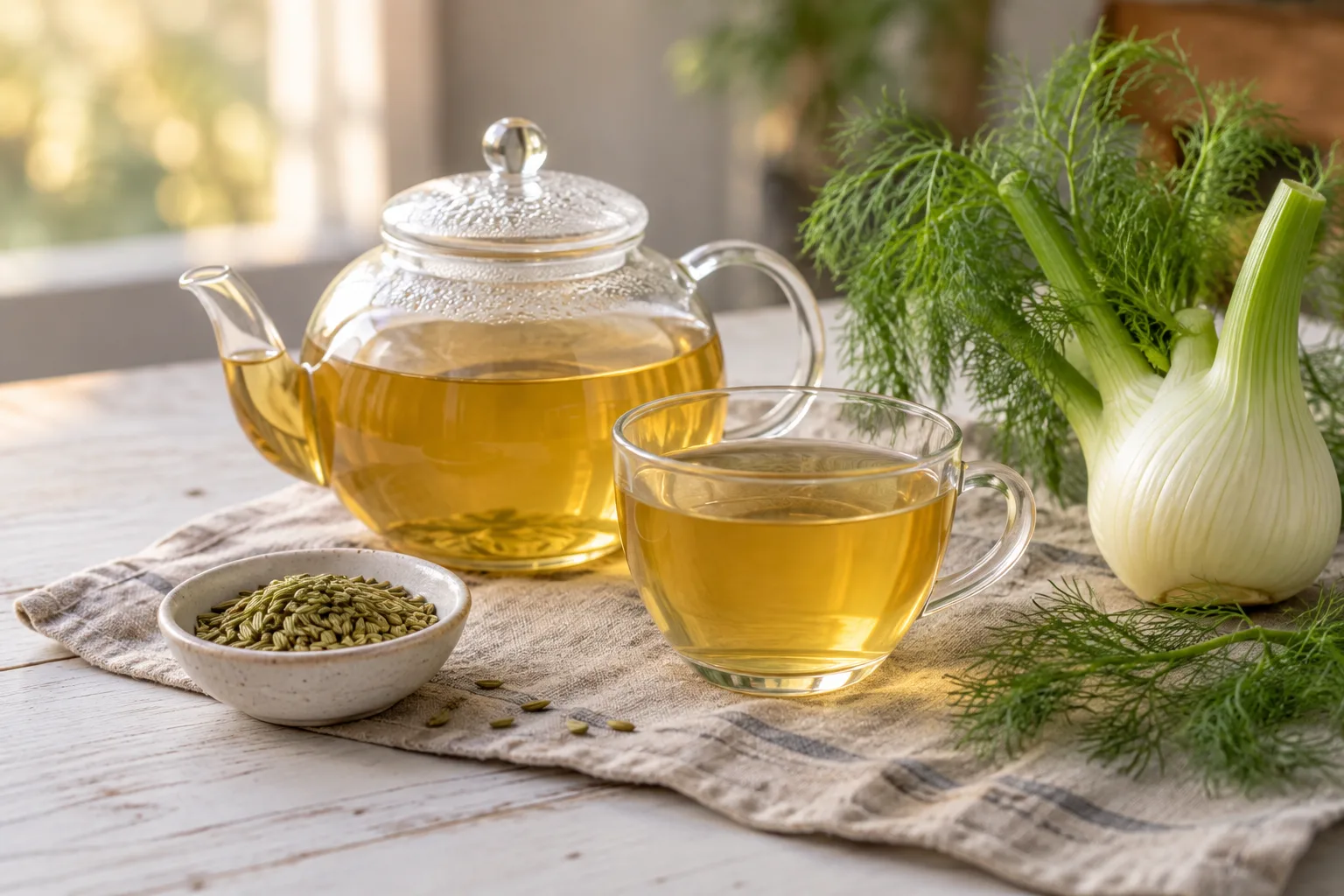
- Fennel if bloating is the bigger issue. Our guide on brewing fennel tea for a bloated belly has the exact amounts.
Want something cozier? Chamomile also blends well into milk. Try it in place of the turmeric in our golden milk mug for slow evenings, or go for the tart cherry version in the sleepy girl mocktail with magnesium.

Who should be careful
NCCIH considers chamomile likely safe in the amounts found in teas. A few groups should still check first:
- Allergies: if you react to ragweed, chrysanthemums, marigolds or daisies, chamomile is more likely to cause an allergic reaction.
- Blood thinners: chamomile may interact with warfarin.
- Other medicines: it may interact with some drugs broken down by the liver and could add to the effect of sedatives.
- Birth control pills: chamomile might reduce their effect, according to NCCIH.
- Pregnancy and breastfeeding: little is known about safety, so talk to your midwife or doctor before making it a daily habit.
The bottom line
Chamomile tea is a gentle, nearly calorie-free evening drink with a small but real body of evidence behind it: fewer night-time wake-ups for some people, short-term help for new mothers in one trial and less period pain in several small studies. Brew it covered, drink it before bed and enjoy it for what it is. For more caffeine-free ideas, our list of everyday drinks besides water is a good next stop.
This article is for general information and does not replace medical advice. Talk to your doctor before making changes, especially if you have a health condition, are pregnant or take medication.
FAQ
Chamomile Tea Questions
Is chamomile tea good for women?
For most women it is a safe, caffeine-free drink with almost no calories. Small studies suggest it may improve sleep quality, especially staying asleep, and a review of seven trials found chamomile preparations reduced period pain. The evidence is promising but limited, so think of it as a gentle helper, not a treatment.
When is the best time to drink chamomile tea?
About 30 to 60 minutes before bed works well for most people. That gives you time to wind down and use the bathroom before you lie down. During your period, a cup in the afternoon and one in the evening is a common rhythm, but there is no proven best schedule.
Can I drink chamomile tea every day?
Yes, for most healthy adults 1 to 3 cups a day is a normal food amount. NCCIH considers chamomile likely safe in the amounts found in teas. Check with your doctor first if you take warfarin, sedatives, birth control pills or other regular medication, or if you are pregnant or breastfeeding.
Does chamomile tea help with weight loss?
Not directly. No good study shows that chamomile burns fat. A cup of plain brewed chamomile has about 2 kcal, so it helps mainly as a swap: a warm evening ritual instead of dessert, wine or late-night snacking.
Does chamomile tea help with menopause symptoms?
There is no solid evidence that chamomile treats hot flashes or other menopause symptoms. If sleep is getting worse in perimenopause, a calming bedtime cup can be part of a wind-down routine, but persistent insomnia or night sweats are worth discussing with your doctor.
Who should not drink chamomile tea?
Skip it if you are allergic to ragweed, chrysanthemums, marigolds or daisies, because allergic reactions are more likely. Ask your doctor first if you take warfarin, sedatives, birth control pills or drugs broken down by the liver, and if you are pregnant or breastfeeding, since little is known about safety then.
Sources
We check health claims against research summaries and official fact sheets. Links open the original source.
- Chamomile: Usefulness and Safety · National Center for Complementary and Integrative Health (NIH), 2024
- Effects of chamomile (Matricaria chamomilla L.) on sleep: A systematic review and meta-analysis of clinical trials · Complementary Therapies in Medicine, 2024
- Effects of an intervention with drinking chamomile tea on sleep quality and depression in sleep disturbed postnatal women: a randomized controlled trial · Journal of Advanced Nursing (Chang & Chen), 2016
- The Effect of Chamomile on Pain and Menstrual Bleeding in Primary Dysmenorrhea: A Systematic Review · International Journal of Community Based Nursing and Midwifery, 2021
- Beverages, tea, herb, brewed, chamomile (SR Legacy, FDC ID 174156) · USDA FoodData Central, 2019