Fiber-Rich Buddha Bowl for Gut Health & Lasting Fullness
Chickpeas, quinoa, roasted sweet potato, avocado and a lemony hummus drizzle: a colorful bowl that keeps you full for hours and is easy to meal prep.
By KateLast reviewed
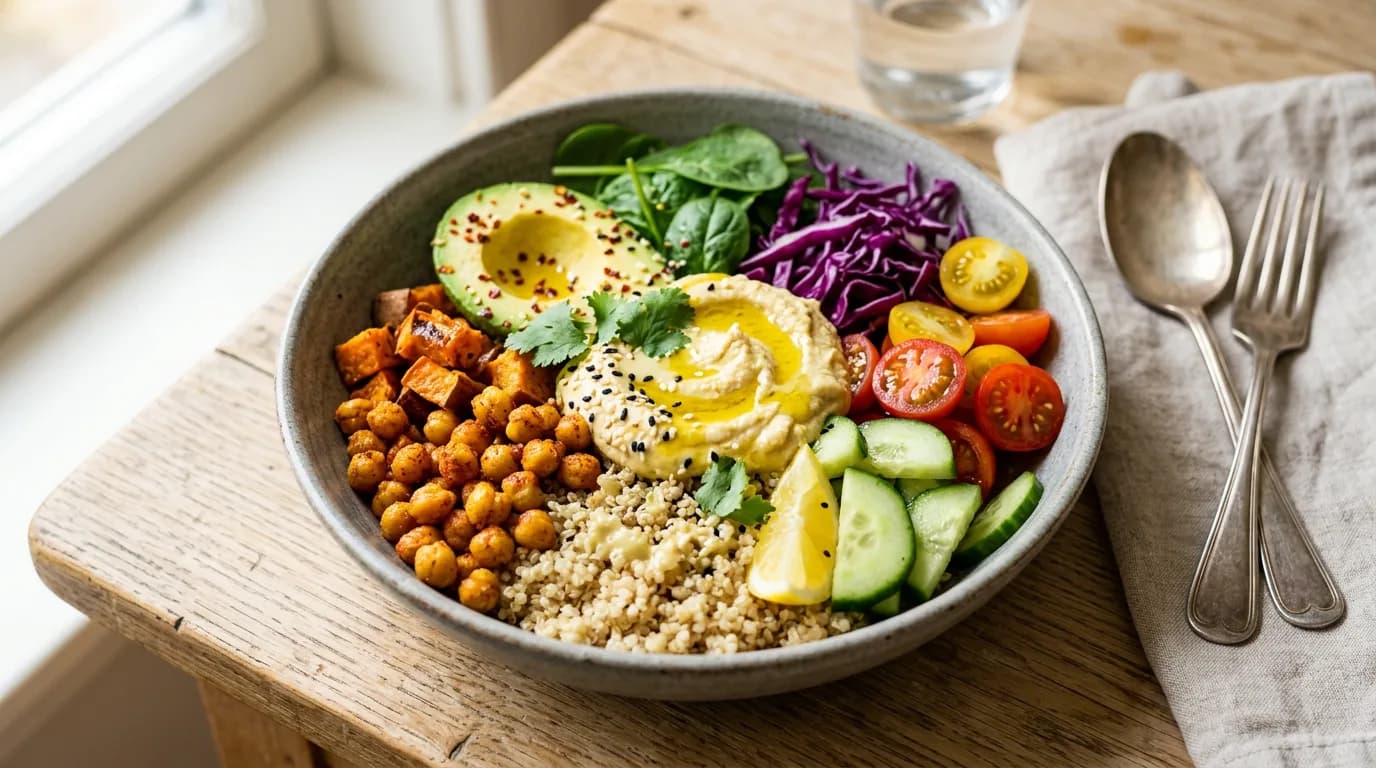
Some meals look healthy but leave you hungry an hour later. This Buddha bowl is the opposite: it is colorful, satisfying and built to keep you full well into the afternoon.
The secret is simple. Every bowl combines fiber, plant protein and healthy fats — the three things that help a meal feel substantial without being heavy.
Recipe
Fiber-Rich Buddha Bowl
- Prep:
- 15 min
- Cook:
- 25 min
- Total:
- 40 min
- Serves:
- 2 bowls
Ingredients
- 1 medium sweet potato, cubed
- 1 tbsp olive oil
- 1/2 tsp smoked paprika
- 1/2 cup dry quinoa (about 1 1/2 cups cooked)
- 1 can (15 oz) chickpeas, drained and rinsed
- 2 handfuls leafy greens (spinach, kale or mixed greens)
- 1 cup shredded red cabbage
- 1/2 cucumber, sliced
- 1 cup cherry tomatoes, halved
- 1 ripe avocado, sliced
- 4 tbsp hummus
- 1 lemon
- Salt, pepper, sesame seeds or fresh herbs to finish
Instructions
- 1Heat the oven to 425°F (220°C). Toss the sweet potato with olive oil, paprika and a pinch of salt and roast for 20–25 minutes until golden.
- 2Rinse the quinoa and cook it in 1 cup of water for about 15 minutes. Let it rest covered for 5 minutes, then fluff with a fork.
- 3Pat the chickpeas dry. Add them to the tray for the last 10 minutes if you like them crispy.
- 4Stir the hummus with the juice of half a lemon and 1–2 tbsp water until it is pourable.
- 5Divide greens and quinoa between two bowls. Arrange sweet potato, chickpeas, cabbage, cucumber, tomatoes and avocado on top.
- 6Drizzle with the hummus dressing, squeeze over more lemon and finish with salt, pepper and sesame seeds or herbs.
Approx. 620 kcal per bowl. Nutrition values are estimates.
Why this bowl keeps you full
Fiber slows down digestion and adds volume to a meal. Chickpeas, quinoa, sweet potato, cabbage and leafy greens all contribute, so one bowl can cover a large part of the fiber most adults fall short on.
Chickpeas and quinoa add plant-based protein, while avocado and hummus bring healthy fats. Together they help the meal feel satisfying instead of leaving you looking for a snack soon after.
The colors are not only for the photo. Different colored vegetables bring different plant compounds, which is one easy way to eat a wider variety without thinking about it.
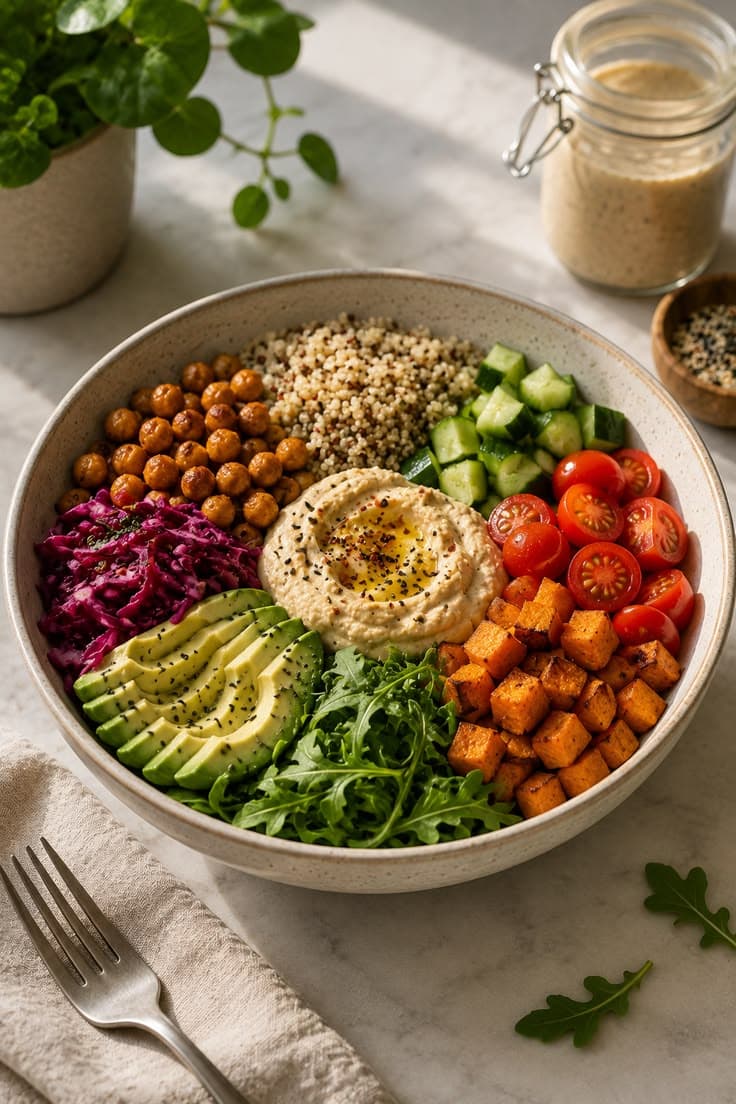
The Buddha bowl formula
Once you know the structure, you never need a recipe again:
- Base: quinoa, brown rice, farro or extra greens
- Protein: chickpeas, lentils, tofu, eggs or chicken
- Roasted vegetable: sweet potato, broccoli, cauliflower or squash
- Fresh crunch: cucumber, cabbage, carrots, radish
- Healthy fat: avocado, seeds, nuts, olives
- Sauce: hummus, tahini-lemon, yogurt-herb or peanut-lime
Pick one or two from each group and you have a new bowl every day of the week.
Tips for the best bowl
Roast hot. A hot oven gives the sweet potato caramelized edges. Do not crowd the tray, or the cubes will steam instead of roast.
Season every layer. A pinch of salt on the quinoa and a squeeze of lemon over the vegetables makes a big difference.
Thin the hummus. Hummus straight from the tub is too thick to drizzle. A little lemon juice and water turn it into a creamy dressing.
Prep components, not bowls. Keep roasted vegetables, quinoa and chickpeas in separate containers. Assemble fresh so the greens stay crisp.
Easy variations
- Mediterranean: add olives, feta and a yogurt-herb sauce.
- Asian-inspired: swap hummus for a peanut-lime dressing and add edamame and shredded carrots.
- Higher protein: add a jammy egg or grilled chicken.
- Lower carb: replace quinoa with extra greens and roasted cauliflower.
How a bowl like this fits into weight loss
Bowls like this make it easier to eat well without counting every calorie. You fill half the bowl with vegetables, a quarter with protein and a quarter with a fiber-rich carb — very close to the idea behind the Lazy Plate Method.
If you tend to get hungry in the afternoon, a fiber- and protein-rich lunch like this can also help with afternoon sugar cravings.
Nutrition at a glance
Approximate values per bowl (recipe makes 2):
- Calories: about 620 kcal
- Fiber: about 18 g
- Protein: about 21 g
- Healthy fats: from avocado, hummus and olive oil
That is a full, balanced meal in one bowl. If you want it lighter, reduce the avocado to a quarter per bowl and use 2 tablespoons of hummus.
How to roast sweet potatoes for Buddha bowls
Perfect roasted sweet potato is crispy on the edges and soft inside:
- Heat the oven to 425°F (220°C).
- Cut the sweet potato into even, bite-sized cubes, about 3/4 inch (2 cm).
- Toss with olive oil, smoked paprika and a pinch of salt.
- Spread in a single layer with space between the pieces.
- Roast for 25 to 30 minutes, turning once halfway through.
Add the chickpeas to the same tray for the last 15 minutes and they turn crispy too.
Meal prep plan: 4 Buddha bowls in 45 minutes
- Minute 0: start the oven and the quinoa.
- Minute 5: cube and season the sweet potato; get it in the oven.
- Minute 15: shred cabbage, slice cucumber and halve tomatoes.
- Minute 25: add chickpeas to the tray.
- Minute 40: cool everything, then portion into containers.
- Minute 45: mix the hummus dressing and store it in a jar.
Roasted vegetables, quinoa and chickpeas keep for 4 days. Add greens, avocado and dressing when you eat.
Sauce ideas
- Lemon tahini: 2 tbsp tahini, juice of 1 lemon, water to thin, salt.
- Green yogurt: Greek yogurt with herbs, garlic and lemon for extra protein.
- Peanut lime: peanut butter, lime juice, soy sauce, a little maple syrup and warm water.
- Thinned hummus: the quickest option; just stir in lemon juice and water.
More bowls you will love
For a no-cook version, make the chickpea and avocado bowl. Want more protein? The high-protein Mediterranean bowl has about 40 g per serving. For gut-friendly add-ons, see 5 flaxseed benefits for fiber and gut health.
FAQ
Buddha Bowl Questions
Can I meal prep this Buddha bowl?
Yes. Roast the sweet potato and cook the quinoa ahead. Store the components separately for up to 4 days and add avocado and dressing just before eating.
How much fiber is in this bowl?
Depending on portion sizes, one bowl provides roughly 15–20 g of fiber, mostly from chickpeas, quinoa, sweet potato, avocado and vegetables.
Can I add more protein?
Add a boiled egg, grilled chicken, baked tofu or edamame. A spoon of hemp seeds also adds protein without changing the flavor much.
What is the difference between a Buddha bowl and a grain bowl?
They are very similar. A Buddha bowl is usually plant-forward and colorful, with a grain, a plant protein, roasted and raw vegetables, a healthy fat and a sauce. A grain bowl simply starts with a grain and can include any protein.
Is a Buddha bowl good for weight loss?
A Buddha bowl can support weight loss because the fiber and protein help you stay full. Watch the portions of calorie-dense toppings like avocado, nuts and dressings.
Looking for a lower-carb dinner with more protein? Try this low-carb chicken and avocado salad.
No time to roast? This 15-minute chickpea and avocado bowl uses the same idea without cooking.
The bottom line
A good Buddha bowl is not about perfection. It is a simple formula you can repeat: a base, a protein, roasted and fresh vegetables, a healthy fat and a sauce you love. Make the components once and you have easy, filling lunches for days.