Healthy Iced Matcha Latte: A 5-Minute Recipe Without Added Sugar
Whisk 1 teaspoon of matcha into a splash of water, pour it over ice and unsweetened milk, and you have a café-style iced matcha latte with about 40 kcal and zero added sugar.
By KateLast reviewed
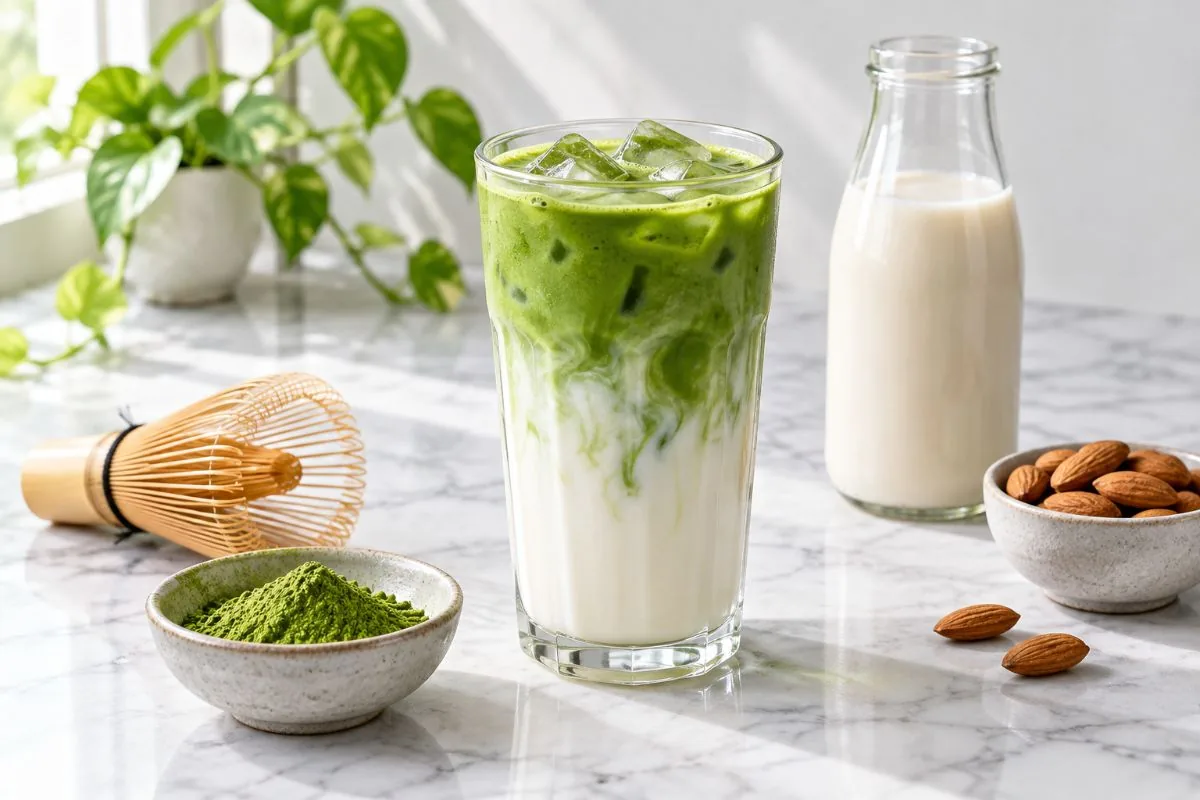
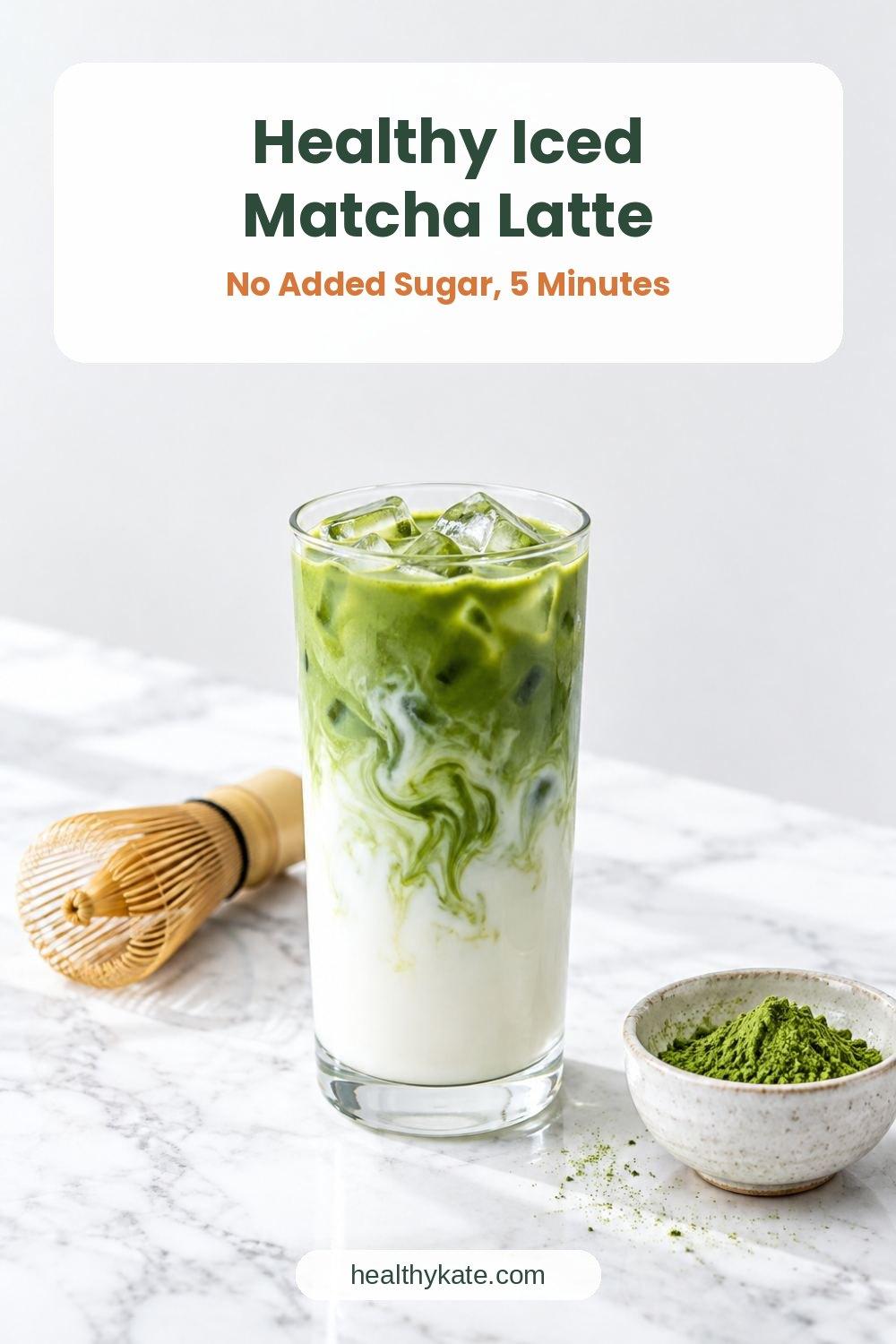
A healthy iced matcha latte is just 1 teaspoon of pure matcha whisked into 2 ounces of warm water, poured over ice and 1 cup of unsweetened milk. Made with unsweetened almond milk, it has about 40 kcal and no added sugar, and it takes five minutes.
The difference between this and many café versions is not the matcha itself. It is what goes in with it: sweetened matcha blends, flavored syrups and larger cups. Here is the recipe, the simple calorie math and a realistic look at caffeine and benefits.
Recipe
Healthy Iced Matcha Latte (No Added Sugar)
- Prep:
- 5 min
- Total:
- 5 min
- Serves:
- 1 tall glass (about 12 oz / 350 ml)
Ingredients
- 1 tsp (about 2 g) unsweetened matcha powder, or 2 tsp (about 4 g) for a stronger latte
- 2 oz (60 ml) warm water, not boiling
- 1 cup (240 ml) unsweetened almond milk or 2% milk
- 1 cup ice cubes
- 1 tsp maple syrup, optional
Instructions
- 1Sift the matcha into a small bowl or wide mug to break up any clumps.
- 2Add the warm water and whisk in a quick zigzag motion with a bamboo whisk or small milk frother for 20 to 30 seconds, until smooth and lightly foamy.
- 3If you want it sweet, stir the maple syrup into the warm matcha now so it dissolves.
- 4Fill a tall glass with ice and pour in the cold milk.
- 5Slowly pour the matcha over the milk for a layered look, then stir before drinking.
Approx. about 40 kcal with unsweetened almond milk, about 125 kcal with 2% milk. Nutrition values are estimates.
Homemade vs. café: where the sugar hides
Pure matcha is powdered green tea leaf and nothing else. Its label should list one ingredient. Many café versions use a sweetened matcha blend, where sugar is mixed into the powder before it ever reaches your cup, or add pumps of syrup on top. That means you often cannot order them truly unsweetened.
At home you control every gram:
- Matcha: read the label. "Matcha latte mix" or "sweetened matcha" usually lists sugar first. Choose a powder labeled pure or 100% green tea.
- Milk: "original" plant milks are often sweetened. Look for "unsweetened" on the front.
- Sweetener: add it last, measured with a teaspoon, not poured from a bottle.
If you are trying to cut back on sugary drinks, this one swap can matter more than any single ingredient. A homemade latte with 1 teaspoon of maple syrup has about 4 g of sugar. That is easy to taper down to zero over a couple of weeks.
The calorie math (almond milk vs. 2% milk)
These numbers come from USDA FoodData Central values per 100 g.
With unsweetened almond milk (15 kcal per 100 g):
- 1 cup = 240 g → 240 × 0.15 = about 36 kcal
- plus a few calories from the matcha powder
- Total: about 40 kcal, roughly 1 g protein
With 2% milk (50 kcal per 100 g):
- 1 cup = 244 g → 244 × 0.50 = about 122 kcal
- protein: 244 × 0.033 = about 8 g
- Total: about 125 kcal
Optional maple syrup: 1 tablespoon (20 g) has 52 kcal and about 12 g sugar, so 1 teaspoon adds about 17 kcal and 4 g sugar.
Which one is "healthier" depends on the job the drink has. If it is an afternoon refresher, almond milk keeps it light. If it is part of breakfast, the 8 g of protein in 2% milk helps you stay full longer. For a bigger protein hit, you could also blend matcha into one of our protein-packed breakfast smoothies.
How much caffeine is in matcha?
Honest answer: it varies by product and by how much you use. Matcha is not steeped and strained like regular tea. You drink the whole powdered leaf, so a matcha latte generally contains more caffeine than a cup of brewed green tea, which USDA lists at about 29 mg per cup.
Some brands print caffeine per serving on the label, so check yours. A few practical tips:
- Start with 1 teaspoon (about 2 g). Move to 2 teaspoons only if you know caffeine sits well with you.
- If you already had coffee, count it. Our coffee routine for a calmer morning boost explains how to time caffeine so it does not crash later.
- Keep matcha to the morning or early afternoon if caffeine affects your sleep.
Many people say matcha feels "smoother" than coffee. Tea naturally contains the amino acid L-theanine, and you can read what research does and does not show in our article on how L-theanine may support relaxed focus.
Tips for a smooth, non-clumpy latte
- Sift first. Matcha clumps easily. A small tea strainer takes five seconds.
- Use warm, not boiling water. Very hot water can make matcha taste more bitter.
- Whisk in a zigzag, not a circle. That builds foam and dissolves the powder faster than stirring.
- No whisk? Shake the matcha and water in a small jar with a lid for 20 seconds.
- Make it layered. Milk and ice first, matcha last. It looks pretty and is easy to stir.
3 easy variations
- Vanilla cinnamon: add 1/4 teaspoon vanilla extract and a pinch of cinnamon to the warm matcha. It tastes sweeter without extra sugar.
- Strawberry matcha: mash 3 or 4 strawberries in the bottom of the glass before adding ice and milk. Fruit adds natural sweetness and a pretty pink layer.
- Ginger matcha: grate a little fresh ginger into the warm water and strain it before whisking. If you like warming flavors, our ginger, turmeric and green tea drink ideas have more.
What matcha can and cannot do
Green tea is one of the better-studied drinks, but it is not a fat burner. The National Center for Complementary and Integrative Health (NCCIH) says catechins and caffeine in green tea may have a modest effect on body weight, and results depend on the product and how active people are.
The more important distinction is between the drink and pills. No safety concerns have been reported for green tea consumed as a beverage by adults. Rare cases of liver injury have been linked mainly to concentrated green tea extracts in capsules or tablets. A latte is the beverage form, not an extract.
So think of an iced matcha latte as a pleasant, low-sugar way to drink tea, not a treatment. If you enjoy green tea and want to build a regular habit around it, our simple green tea routine for everyday energy has more ideas.
Who should be careful
Matcha is fine for most healthy adults in normal amounts, but check with your doctor or pharmacist if you:
- are pregnant or breastfeeding (caffeine should stay moderate)
- are sensitive to caffeine, have anxiety, heart rhythm problems or trouble sleeping
- take medication that interacts with caffeine or green tea (some blood pressure and heart medications, for example)
- are considering green tea extract supplements rather than the drink
Matcha on an empty stomach can feel harsh for some people. Drinking it with or after a little food usually helps.
The bottom line
A healthy iced matcha latte comes down to three choices: pure matcha, unsweetened milk and a measured spoon of sweetener or none at all. With almond milk you are at about 40 kcal; with 2% milk about 125 kcal and 8 g protein. Enjoy it for the taste and a gentle caffeine lift, not as a weight-loss tool.
Want more refreshing options? Browse our favorite everyday drinks for hydration, digestion and glow.
This article is for general information and does not replace medical advice. If you are pregnant, breastfeeding, sensitive to caffeine or take medication, talk to your doctor before adding matcha or other caffeinated drinks to your routine.
FAQ
Iced Matcha Latte Questions
Is an iced matcha latte healthy?
It can be. Made with pure matcha, unsweetened milk and little or no syrup, it is a low-sugar drink with about 40 kcal (almond milk) to 125 kcal (2% milk). Many café versions are much sweeter because they use a pre-sweetened matcha blend or added syrup.
How do I make an iced matcha latte without sugar?
Use pure matcha powder whose only ingredient is green tea, unsweetened milk and no syrup. If plain tastes too grassy at first, add a few drops of vanilla extract or a pinch of cinnamon instead of sugar, or start with 1 teaspoon of maple syrup and cut back over time.
How much caffeine is in a homemade iced matcha latte?
It depends on the product and how much powder you use. Matcha is whole powdered tea leaf, so it generally contains more caffeine than a cup of brewed green tea, which has about 29 mg. Check your matcha label for a figure, and remember the FDA considers up to 400 mg a day generally safe for healthy adults.
Which milk is best for a healthy matcha latte?
Unsweetened almond milk keeps it lightest at about 36 kcal per cup. 2% milk has more calories (about 122 kcal per cup) but also about 8 g of protein, which makes the drink more filling. Both work; pick based on whether this is a light drink or part of breakfast.
Does matcha help with weight loss?
Not in a meaningful way on its own. Research suggests green tea catechins and caffeine may have only a modest effect on body weight. The bigger win is swapping a sugary café drink for a low-sugar homemade one.
Sources
We check health claims against research summaries and official fact sheets. Links open the original source.
- Beverages, almond milk, unsweetened, shelf stable (FDC ID 174832) · U.S. Department of Agriculture, FoodData Central, 2026
- Milk, reduced fat, fluid, 2% milkfat (FDC ID 171267) · U.S. Department of Agriculture, FoodData Central, 2026
- Beverages, tea, green, brewed, regular (FDC ID 171917) · U.S. Department of Agriculture, FoodData Central, 2026
- Green Tea: Usefulness and Safety · National Center for Complementary and Integrative Health (NIH), 2025
- Syrups, maple (FDC ID 169661) · U.S. Department of Agriculture, FoodData Central, 2026