5 L-Theanine Benefits for Calm Energy and Focus
L-theanine is an amino acid found in tea leaves and often explored for calm focus, smoother caffeine energy, and relaxed productivity.
By KateLast reviewed
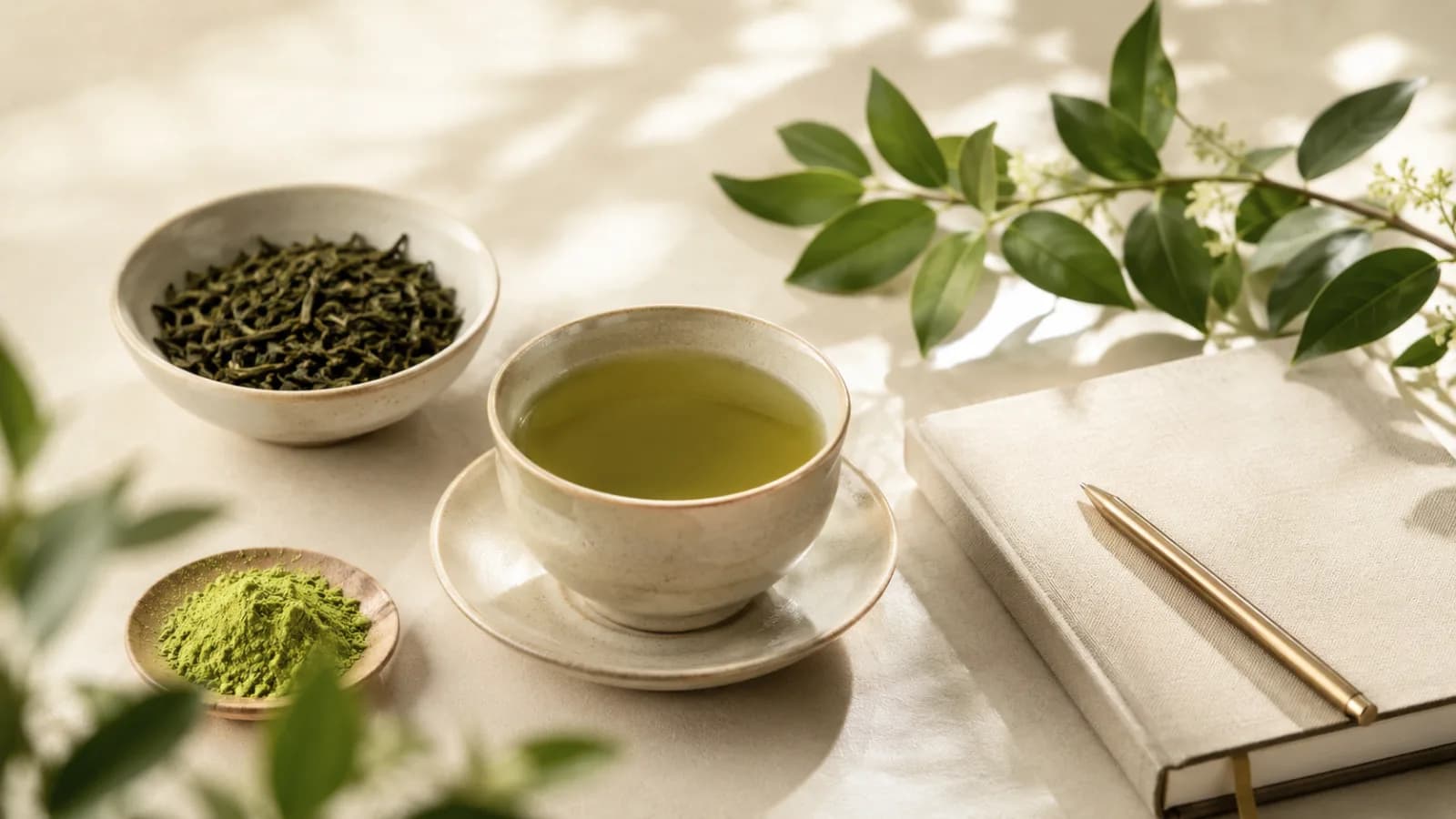
L-theanine is one of the most interesting compounds found in tea.
It is an amino acid naturally present in tea leaves, especially green tea.
You may have heard of it because people often describe the feeling of tea as different from coffee.
Coffee can feel sharper.
Tea can feel smoother.
One reason may be the combination of caffeine and L-theanine.
L-theanine is often discussed for calm focus, relaxed alertness, smoother caffeine energy, and productivity without feeling overly wired.
But it is important to stay realistic.
L-theanine is not a cure for anxiety.
It is not an ADHD treatment.
It is not a replacement for sleep.
And it will not fix an overloaded lifestyle by itself.
But it may be a helpful ingredient to understand if you want steady energy and better focus without relying only on stronger stimulants.
Here are five potential L-theanine benefits to know.
1. L-theanine may support calm focus
Many people are interested in L-theanine because it is often associated with calm focus.
That means feeling alert, but not overly stimulated.
Focused, but not tense.
Productive, but not frantic.
Some research suggests L-theanine may influence brain activity related to relaxation and attention, although results can vary depending on dose, caffeine intake, individual response, and study design.
The key idea is not that L-theanine knocks you out.
It is more often discussed as supporting a calm, centered state.
That can be helpful if you want to work, study, write, plan, or focus without feeling jittery.
Simple ways to use this idea:
- drink green tea during a work block
- switch your second coffee to tea
- use tea as a calm morning ritual
- pair tea with journaling or planning
- take a tea break before deep work
The real benefit may come from both the compound and the ritual, which is why it fits so well into a calm morning routine for energy and focus.
A warm drink.
A pause.
A calmer start.
A moment to focus.
2. L-theanine may smooth caffeine energy
One of the most popular reasons people use L-theanine is to pair it with caffeine.
Caffeine can increase alertness, but it can also cause jitters, racing thoughts, tension, or a crash for some people.
L-theanine is often paired with caffeine because it may support a smoother kind of alertness.
This is why green tea can feel different from coffee.
Green tea contains caffeine, but it also naturally contains L-theanine.
That does not mean everyone will feel the difference.
Some people are very sensitive to caffeine.
Some people barely notice tea.
Some people feel calmer with green tea than coffee.
The best approach is to pay attention to your own response.
If coffee makes you feel anxious or jittery, you could try:
- green tea
- matcha
- half-caf coffee
- coffee with food
- coffee earlier in the day
- lower-caffeine tea
- fewer total caffeinated drinks
The goal is not to quit caffeine if you enjoy it.
The goal is to use it in a way that supports your day instead of controlling your day.
3. L-theanine may help reduce caffeine jitters for some people
If you have ever had too much coffee, you know the feeling.
Your mind races.
Your hands feel shaky.
Your chest feels tense.
You feel alert, but not calm.
L-theanine may help some people feel less physically overstimulated when caffeine is involved.
That is why many focus supplements combine L-theanine with caffeine.
But more is not always better.
If caffeine gives you strong anxiety, panic symptoms, heart racing, insomnia, or digestive discomfort, the answer may not be adding another supplement.
The answer may be reducing caffeine.
Try asking:
- Am I drinking caffeine on an empty stomach?
- Am I drinking too much?
- Am I drinking it too late?
- Am I sleeping enough?
- Am I using caffeine to cover up exhaustion?
- Would tea feel better than coffee?
L-theanine can be useful, but it should not be used to force your body to tolerate more caffeine than it wants.
4. L-theanine may support relaxed productivity
Productivity is not just about doing more.
It is about doing the right things with a calm enough mind to stay consistent.
This is where L-theanine becomes interesting.
Many people do not want more stimulation.
They want less scattered energy.
They want to feel focused without feeling tense.
A simple tea routine can help create that kind of structure.
For example:
- brew green tea
- write down one priority
- set a 25-minute timer
- work without switching tabs
- take a short break
- repeat if needed
This is not magic.
It is a routine.
But routines matter.
If L-theanine, tea, and a calming ritual help you start work with less friction, that can be valuable.
The best focus habit is usually not the most intense one.
It is the one you can repeat.
5. L-theanine fits naturally into tea and coffee routines
One of the best things about L-theanine is that it can fit into habits many people already have.
Tea is the most natural source.
Green tea and matcha are especially common options.
You can also find L-theanine in supplement form, often as capsules, tablets, powders, or combined caffeine formulas.
But you do not need to start with supplements.
You can begin with tea.
Simple options:
- green tea in the morning
- matcha with breakfast
- green tea before a work session
- iced green tea in the afternoon
- tea instead of a second coffee
- green tea with lemon or mint
If you already drink coffee, you can experiment with replacing one cup with tea.
Not forever.
Just as a test.
See how your focus, energy, mood, and sleep respond. For timing and brewing tips, see these green tea habits for steady energy.
L-theanine and caffeine: why the combination is popular
The L-theanine and caffeine combination is popular because it may offer alertness with more calm.
Caffeine increases alertness and stimulation.
L-theanine is often associated with relaxation without sedation.
Together, they may support attention and focus in a way that feels smoother for some people.
This is why many productivity products combine both.
But the best source may be the simplest:
tea.
Green tea provides a natural combination of caffeine, L-theanine, and polyphenols.
Matcha can provide more concentrated tea compounds because you consume the powdered leaf.
However, matcha can also contain more caffeine than regular green tea, so timing matters.
If you are sensitive to caffeine, start small.
When should you take L-theanine?
There is no perfect time for everyone.
It depends on your goal.
For focus:
morning or early afternoon may work best, especially if paired with caffeine.
For smoother caffeine:
take it with coffee or choose green tea.
For calm:
some people use it later in the day, but avoid pairing it with caffeine close to bedtime.
For sleep:
L-theanine is sometimes used in evening routines, but it should not be treated as an insomnia treatment.
If sleep is your goal, first look at the basics:
- caffeine timing
- screen use
- bedroom temperature
- stress
- sleep schedule
- alcohol
- late meals
- light exposure
A supplement cannot replace a poor sleep routine. These sleep habits for women over 40 are a practical place to start.
Who should be careful with L-theanine?
L-theanine appears to have a generally good safety profile in available research, but long-term and high-dose supplement use should still be approached carefully.
Speak with a healthcare professional before using L-theanine supplements if you:
- are pregnant
- are breastfeeding
- take medication for blood pressure
- take sedatives
- take stimulant medication
- have anxiety or panic symptoms
- have a sleep disorder
- take multiple supplements
- have a medical condition
- are unsure whether it is appropriate for you
Also remember that tea contains caffeine.
Green tea as a beverage is generally safe for many adults, but caffeine can cause side effects in sensitive people, including trouble sleeping, nervousness, stomach upset, irritability, or faster heartbeat.
L-theanine supplement vs. tea
Tea is a food-based way to get L-theanine, caffeine, and polyphenols together.
Supplements can provide a more specific dose of L-theanine.
Neither is automatically better.
Tea may be better if you want a gentle ritual.
Supplements may be more controlled, but they also require more caution.
If you choose a supplement, look for:
- clear dosage
- third-party testing if possible
- no exaggerated claims
- no unnecessary stimulant blends
- transparent ingredients
- reputable manufacturing standards
Avoid products that promise instant anxiety relief, guaranteed focus, or dramatic brain changes.
Those claims are usually too strong.
FAQ
L-Theanine Questions
What does L-theanine do?
L-theanine is an amino acid found mainly in tea leaves. It is often studied for relaxed alertness, and some research suggests it may support calm focus, although individual responses vary.
Does L-theanine make you sleepy?
L-theanine is generally described as relaxing without being sedating, so most people do not feel drowsy from it. It is sometimes used in evening routines, but it should not be treated as a sleep aid or insomnia treatment.
How much L-theanine is in a cup of green tea?
A cup of brewed green tea typically contains roughly 8 to 30 mg of L-theanine, depending on the tea and brewing method. Supplements usually provide much higher amounts per serving.
Is it safe to take L-theanine with caffeine every day?
The combination appears to be well tolerated by many adults, but long-term research on high-dose supplements is limited. Talk to your doctor first if you are pregnant or breastfeeding, have anxiety or a sleep disorder, or take blood pressure, sedative, or stimulant medication.
The bottom line
L-theanine is an amino acid found in tea leaves.
It is often explored for calm focus, smoother caffeine energy, fewer jitters, relaxed productivity, and tea-based daily routines.
It may be especially interesting when combined with caffeine.
But it is not a cure-all.
It does not replace sleep, nutrition, movement, stress support, or medical care.
The best way to start is simple:
Try green tea.
Notice how you feel.
Drink caffeine earlier in the day.
Build a calm routine you can repeat.
Small daily habits can support steady energy more than another extreme reset.
Not sure what wellness routine fits your body best?
Different people struggle with different patterns.
For some, the issue is low energy.
For others, it is cravings, digestion, bloating, snacking, stubborn weight, poor sleep, or not having a routine that feels realistic.
Take the free quiz to find the weight-loss routine that fits your body.
This article is for general information and does not replace medical advice. Talk to your doctor before making changes, especially if you have a health condition or take medication.