The 7-Minute Kitchen Closing Ritual That Can Help Stop Night Snacking
If late-night snacking keeps pulling you back into the kitchen, this simple 7-minute kitchen closing ritual can help you create a clean break after dinner and feel more in control of your evening.
By KateLast reviewed
Late-night snacking can feel incredibly frustrating.
You may eat a balanced dinner, tell yourself the kitchen is closed, and still find yourself walking back in an hour later.
Not because you are “weak.”
Not because you have no discipline.
And not because you need another strict diet rule.
Often, night snacking happens because your evening has no clear ending point.
Dinner ends, but the food environment stays open.
The kitchen lights are still on.
Snacks are visible.
The dishes are still there.
You keep walking past the fridge.
Your brain still sees the kitchen as an option.
That is why a simple kitchen closing ritual can be so helpful.
It gives your evening a clear signal:
Dinner is done.
The kitchen is closed.
Now your body can move into rest mode.
This is not about restriction. It is about creating structure.
And sometimes, structure is exactly what makes weight loss feel easier.
Why Night Snacking Feels So Automatic
Night snacking often has very little to do with real hunger.
Sometimes it is habit.
Sometimes it is boredom.
Sometimes it is stress.
Sometimes it is your brain looking for comfort after a long day.
And sometimes it is simply because food is still easy to access.
You are tired, your willpower is lower, and the kitchen is right there.
So the goal is not to fight yourself every night.
The goal is to make the decision easier before cravings show up.
A kitchen closing ritual works because it removes the “open loop” after dinner.
Instead of leaving the evening unfinished, you create a small routine that tells your brain: we are done eating for tonight.
What Is a Kitchen Closing Ritual?
A kitchen closing ritual is a short routine you do after dinner to physically and mentally end the eating part of your day.
It does not need to be complicated.
It does not need to be perfect.
And it does not need to take more than a few minutes.
The idea is simple:
You clean up the food environment, make a calming drink, set one small boundary, and move yourself out of the kitchen.
That is it.
The ritual is not meant to punish you for eating.
It is meant to help you feel calm, finished, and in control.
The 7-Minute Kitchen Closing Ritual
Here is the simple version.
You can do this after dinner tonight.
Minute 1: Clear the Visual Food Cues
Start by putting away anything that makes snacking feel easy.
Close the snack drawer.
Put leftovers in containers.
Move sweets out of sight.
Clear plates from the table.
Put tempting foods back into cabinets.
This does not mean you are not allowed to eat those foods.
It simply means they do not need to sit in front of you all evening.
Visible food cues can make cravings feel louder.
A clearer kitchen can make your mind feel calmer.
Minute 2: Reset the Countertop
Wipe down the counter or table.
This sounds small, but it creates a strong visual signal.
A messy kitchen says:
“We are still in food mode.”
A clean kitchen says:
“This part of the day is complete.”
You do not need to deep clean the entire room.
Just create one clear surface.
That one small action can make the evening feel more closed and settled.
Minute 3: Prepare a Calming Drink
Make something warm and simple.
This could be:
herbal tea
peppermint tea
ginger tea
warm lemon water
decaf tea
plain hot water
The drink is not a magic weight loss trick.
Its purpose is emotional.
It gives your hands something to hold.
It gives your mouth something comforting.
It creates a new cue that replaces unnecessary snacking.
For many people, the habit is not “I need food.”
It is “I want something comforting.”
A warm drink can satisfy that comfort need without turning into a snack spiral. If you like mint, here are a few peppermint tea benefits worth knowing.
Minute 4: Decide Your Kitchen Closing Sentence
Choose one simple sentence you say to yourself every night.
For example:
“I am done eating for tonight.”
“My body has what it needs.”
“The kitchen is closed now.”
“I can eat again tomorrow.”
“I am choosing rest now.”
This may feel almost too simple, but it helps because your brain likes clear rules.
Not harsh rules.
Clear rules.
You are not telling yourself, “I can never have snacks.”
You are simply saying, “Tonight, dinner is finished.”
Minute 5: Brush Your Teeth or Use Mouthwash
This is one of the easiest physical signals that eating is done.
Once your mouth feels fresh, random snacking becomes less appealing.
You do not have to use this as a strict rule.
But it can be a helpful signal for your body and brain.
Fresh mouth.
Clean kitchen.
Evening closed.
Sometimes weight loss habits work best when they are simple and sensory.
Minute 6: Move Out of the Kitchen
This step matters.
Do not finish the ritual and then keep standing in the kitchen.
Leave the room.
Go to the couch.
Go to your bedroom.
Take a short walk.
Stretch for five minutes.
Read something calming.
Take your tea somewhere else.
The goal is to change the environment.
If you stay near the fridge, your brain keeps seeing food as an available option.
If you physically move away, the craving loop becomes easier to interrupt. A 10-minute after-dinner walk is one of the easiest ways to do that.
Minute 7: Start a Non-Food Evening Cue
Choose one tiny action that tells your body the next part of the evening has started.
This could be:
turning on a small lamp
lighting a candle
putting on cozy socks
playing calm music
opening a book
writing tomorrow’s top priority
doing a short skincare routine
The goal is to give your evening a replacement rhythm.
Because if you remove snacking but do not replace it with anything, the evening can feel empty.
And when the evening feels empty, food becomes entertainment.
A small non-food cue gives your brain something else to transition into.
Why This Works Better Than “Just Have More Willpower”
Willpower is unreliable at night.
By the evening, you have already made hundreds of decisions.
You may be tired from work, family, errands, stress, or simply the day itself.
So expecting yourself to fight cravings with discipline every night is not a great strategy.
A ritual works differently.
It does not ask you to be stronger.
It makes the environment clearer.
It gives you a repeatable sequence.
It reduces decision-making.
It creates closure.
That is why this can feel much easier than saying, “I just won’t snack tonight.”
What If You Are Actually Hungry?
This is important.
The goal is not to ignore real hunger.
If you are genuinely hungry at night, it may mean your meals earlier in the day were too small, too low in protein, or not satisfying enough.
In that case, the solution is not to shame yourself.
The solution is to learn from it.
Ask yourself:
Did I eat enough at dinner?
Did I skip lunch?
Was my breakfast too light?
Did I have enough protein today?
Did I eat mostly quick carbs?
Did I drink enough water?
Sometimes night hunger is information. Building meals around protein and fiber combos that keep you full longer can make evenings calmer.
But mindless snacking feels different.
Real hunger builds gradually and feels physical.
Mindless snacking often feels urgent, emotional, or automatic.
This ritual is designed for the second one.
How to Make the Ritual Feel Beautiful
Your evening routine should not feel like a punishment.
Make it feel calm and feminine.
Use a mug you love.
Keep your tea visible.
Use a small candle.
Fold your dish towel neatly.
Play soft music.
Put your phone away for a few minutes.
Create a small moment that feels like care, not control.
That emotional difference matters.
If a habit feels restrictive, you will eventually resist it.
If a habit feels soothing, you are more likely to repeat it.
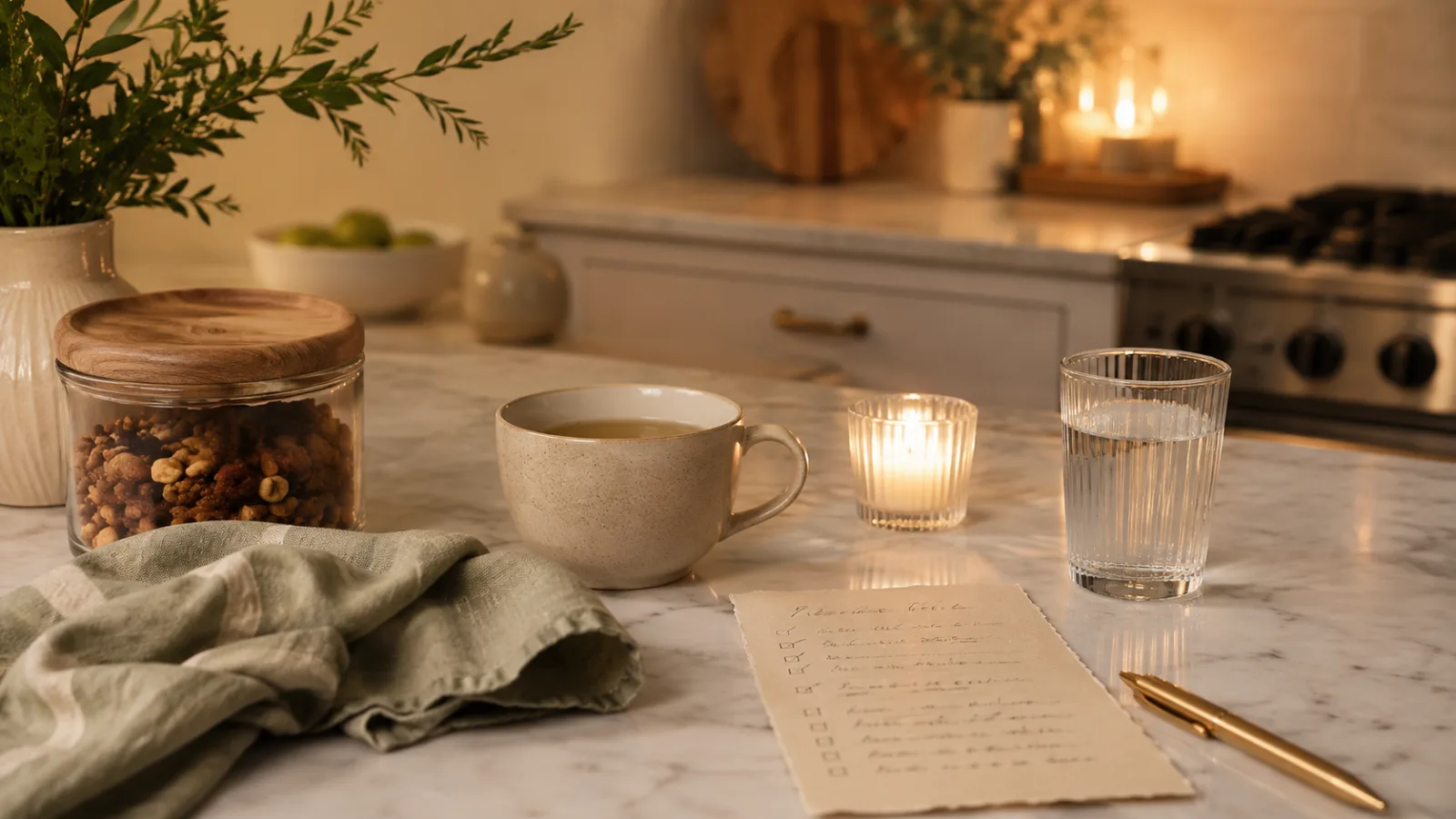
A Simple Checklist You Can Use Tonight
After dinner, follow this:
Put leftovers away.
Move snacks out of sight.
Clear one counter or table.
Make a warm drink.
Say your kitchen closing sentence.
Brush your teeth or use mouthwash.
Leave the kitchen.
Start one calming non-food cue.
That is the entire ritual.
It does not need to be perfect.
It just needs to be repeated.
Common Mistakes to Avoid
The first mistake is making the ritual too complicated.
Do not turn it into a full cleaning routine.
You are not trying to reset your entire home.
You are simply closing the eating environment.
The second mistake is being too strict.
If you tell yourself you are never allowed to eat at night, your brain may push back.
Instead, keep it gentle:
“I am done eating for tonight.”
That feels very different from:
“I am not allowed to eat.”
The third mistake is staying in the kitchen afterward.
The ritual only works if you actually leave the food environment.
The fourth mistake is expecting cravings to disappear instantly.
At first, your brain may still ask for the old habit.
That is normal.
You are teaching it a new pattern.
Why This Habit Can Support Weight Loss
Weight loss often becomes easier when your evenings become calmer.
Many people do well during the day but struggle at night.
A few extra bites here, a handful of snacks there, a sweet treat while scrolling — these things can add up without feeling like a real meal.
A kitchen closing ritual helps because it creates a boundary.
Not a harsh boundary.
A supportive one.
It helps you stop eating when dinner is actually done.
It helps reduce automatic trips to the kitchen.
It helps you move into rest mode, which fits well with other sleep habits to wake up more rested.
And it gives you a repeatable routine that does not require calorie counting or perfection.
FAQ
Night Snacking Questions
Why do I snack so much at night?
Night snacking is often driven by habit, tiredness, stress, boredom, or easy access to food rather than real hunger. It can also happen when meals earlier in the day were too small or low in protein.
How do I stop eating after dinner?
A clear after-dinner routine can help, such as putting food away, making a warm drink, brushing your teeth, and leaving the kitchen. Eating balanced meals during the day also makes evening hunger less likely.
Is it bad to eat late at night for weight loss?
What and how much you eat over the whole day matters more than the exact time. Still, late-night snacking often adds extra food without much satisfaction, so reducing mindless evening eating can support weight loss for many people.
What can I drink at night instead of snacking?
Herbal teas such as peppermint, ginger, or chamomile, warm water with lemon, or decaf tea are common choices. A warm drink can meet the need for comfort without turning into a snack routine.
The Bottom Line
If night snacking is one of the hardest parts of weight loss for you, do not start by blaming yourself.
Start by changing the rhythm of your evening.
A 7-minute kitchen closing ritual can help you create a clear ending after dinner, reduce mindless snacking, and feel more in control around food.
You do not need to be perfect.
You do not need to overhaul your entire diet.
You just need one small routine that tells your brain:
Dinner is done.
The kitchen is closed.
Now it is time to rest.
This article is for general information and does not replace medical advice. Talk to your doctor before making changes, especially if you have a health condition or take medication.