5 Zinc Benefits for Immunity, Skin, and Metabolism
Zinc is an essential mineral your body needs for immune function, skin repair, protein metabolism, and everyday wellness. Here are five benefits to know.
By KateLast reviewed
Zinc is one of those minerals that does not always get much attention.
But your body needs it every day.
Zinc is involved in immune function, skin health, wound healing, protein synthesis, DNA synthesis, taste, smell, and many normal enzyme reactions in the body.
That does not mean zinc is a magic supplement.
And it does not mean more zinc is always better.
But getting enough zinc from food can be an important part of a balanced wellness routine.
Here are five zinc benefits to know — plus simple food sources and safety notes.
1. Zinc supports immune function
Zinc is best known for its role in immune health.
Your immune system needs zinc to function normally.
That is one reason people often think about zinc during cold and flu season.
Zinc helps support normal immune cell function and plays a role in how your body responds to everyday immune challenges.
But zinc should not be treated like a cure.
If you are already low in zinc, getting enough may help your body function better.
But taking too much zinc does not make your immune system “supercharged.”
A better goal is consistency:
- eat zinc-rich foods
- get enough sleep
- manage stress
- stay hydrated
- eat enough protein
- include fruits and vegetables
- move regularly
Immune health is not one supplement.
It is the whole routine.
2. Zinc helps maintain healthy skin
Zinc also plays a role in skin health.
Your body uses zinc for normal cell growth, tissue repair, and wound healing.
This is why zinc often comes up in conversations about skin, breakouts, healing, and overall skin appearance.
But again, it is important to be realistic.
Zinc is not an instant skin fix.
Skin can be affected by hormones, stress, sleep, digestion, skincare, medications, diet, genetics, and many other factors.
Still, getting enough zinc can be one part of supporting healthy skin from the inside.
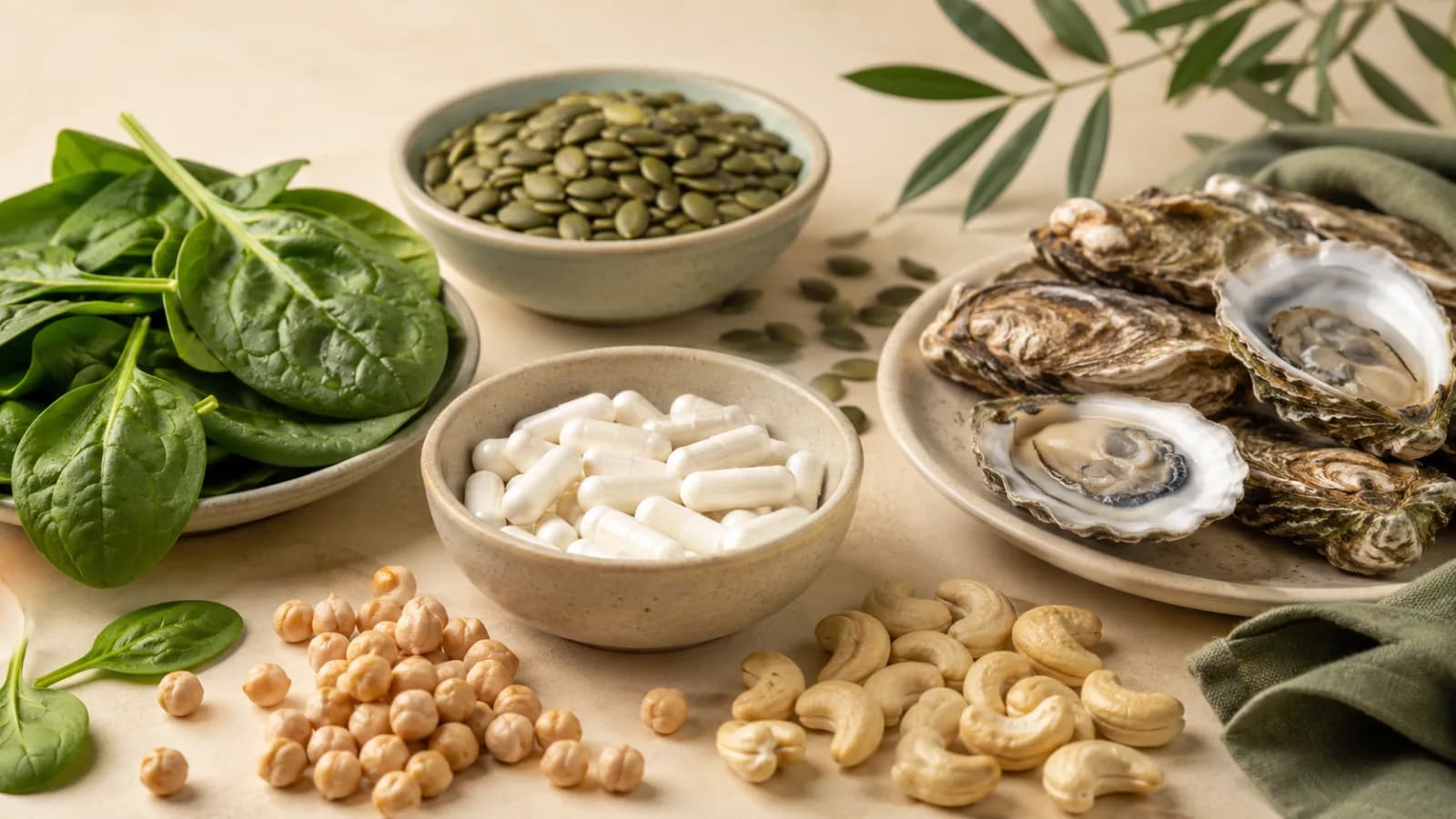
Zinc-rich foods that may fit into a skin-supporting routine include:
- oysters
- beef
- pumpkin seeds
- chickpeas
- cashews
- lentils
- yogurt
- oats
- eggs
If you have ongoing acne, rashes, slow wound healing, or sudden skin changes, it is worth speaking with a healthcare professional instead of guessing with supplements.
3. Zinc supports normal hormone-related processes
Zinc is often talked about in relation to hormones.
This is because zinc is involved in many normal body processes, including cell signaling, enzyme activity, reproductive health, thyroid-related processes, and overall metabolism.
But we should be careful with the phrase “hormone balance.”
Zinc does not simply “balance hormones” on its own.
Hormones are influenced by many factors:
- sleep
- stress
- nutrition
- body composition
- menstrual cycle
- menopause
- thyroid health
- medications
- blood sugar patterns
- medical conditions
A better way to say it is:
Zinc is one important nutrient that supports normal body function, including processes connected to hormone health.
If you are dealing with symptoms like irregular cycles, intense PMS, hair loss, severe fatigue, hot flashes, acne, sudden weight changes, or mood changes, it is better to get proper guidance.
Food can support your body, but it should not replace medical care when symptoms are significant.
4. Zinc helps with protein metabolism and repair
Zinc plays a role in protein synthesis and normal cell repair.
That means it is connected to how your body builds, repairs, and maintains tissues.
This can matter if you are trying to support:
- strength
- muscle maintenance
- workout recovery
- healthy aging
- skin repair
- general resilience
Zinc is not a workout supplement in the same way creatine or protein powder might be.
But it is one of the minerals your body needs for normal repair and maintenance.
If your goal is to feel stronger and more energized, think of zinc as part of the foundation.
A strong foundation includes:
- enough protein (see these protein habits for women over 40)
- enough calories
- enough minerals
- resistance training
- hydration
- sleep
- recovery
Zinc alone does not build muscle.
But your body still needs it to function properly.
5. Zinc fits into healthy aging routines
As people get older, nutrient density becomes more important.
You want meals that do more than just fill you up.
You want meals that support energy, repair, immune health, skin, muscle, and long-term wellness.
Zinc-rich foods can be part of that.
The best part is that zinc can come from many everyday foods.
Animal-based zinc sources include:
- oysters
- beef
- crab
- poultry
- pork
- dairy
Plant-based zinc sources include:
- pumpkin seeds
- chickpeas
- lentils
- cashews
- hemp seeds
- oats
- fortified cereals
- beans
Plant-based sources are valuable, but zinc from plant foods can be less easily absorbed because of compounds called phytates found in legumes, grains, nuts, and seeds.
That does not mean plant foods are bad.
It just means variety and preparation matter.
Soaking, sprouting, fermenting, and cooking can help improve mineral availability in some plant foods.
Best zinc-rich foods to add to your routine
Here are simple zinc-rich foods to consider.
Oysters
Oysters are one of the richest food sources of zinc.
They are not an everyday food for everyone, but they are worth knowing about.
Beef
Beef is another rich source of zinc and provides zinc in a form the body can absorb well.
If you eat beef, choose portions that fit your overall routine and pair it with vegetables, fiber-rich carbs, or legumes.
Pumpkin seeds
Pumpkin seeds are one of the easiest plant-based zinc sources to use.
Add them to oatmeal, yogurt bowls, salads, soups, or snack mixes. Here is more on pumpkin seed benefits for sleep and energy.
Chickpeas and lentils
Chickpeas and lentils provide zinc, fiber, and plant-based protein.
They work well in soups, bowls, salads, hummus, and stews. A high-fiber chickpea and avocado bowl is an easy place to start.
Cashews
Cashews are simple, portable, and easy to add to snacks.
They also provide healthy fats and other minerals.
Spinach
Spinach is not the highest zinc food, but it can contribute to a nutrient-rich diet.
It works well in omelets, smoothies, salads, soups, and grain bowls.
Should you take a zinc supplement?
Some people may need supplements, but it is best not to guess.
Too much zinc can cause problems.
High zinc intake may lead to nausea, digestive discomfort, copper deficiency, reduced immune function, or interactions with medications.
Zinc supplements can also interact with certain antibiotics and other medications.
If you think you may be low in zinc, speak with a healthcare professional and consider testing or personalized guidance.
Food-first is usually the best place to start.
Signs you may not be getting enough zinc
Possible signs of low zinc can include:
- frequent infections
- slow wound healing
- changes in taste or smell
- poor appetite
- hair thinning
- skin issues
- unexplained fatigue
These symptoms can have many causes, so they do not automatically mean zinc is the issue.
If symptoms are persistent, it is better to get checked instead of self-treating.
Tips to support your zinc levels
Use these simple habits:
- eat a balanced diet with zinc-rich foods
- include protein at meals
- use pumpkin seeds, lentils, chickpeas, or cashews regularly
- pair plant-based sources with a varied diet
- soak or cook legumes properly
- avoid high-dose zinc supplements unless advised
- talk to a healthcare professional if you suspect deficiency
- stay consistent instead of chasing quick fixes
FAQ
Zinc Questions
What foods are high in zinc?
Oysters are one of the richest sources, followed by beef, crab, poultry and dairy. Plant sources include pumpkin seeds, chickpeas, lentils, cashews, hemp seeds, oats and fortified cereals.
Is zinc good for your skin?
Zinc is involved in normal cell growth, tissue repair and wound healing, so getting enough may support healthy skin. It is not a quick fix for acne or other skin issues, which have many causes, so persistent problems are worth discussing with a doctor or dermatologist.
Is it safe to take zinc every day?
Getting zinc from food every day is normal, but high-dose supplements taken long term can cause nausea, copper deficiency and other problems. Check with your doctor before supplementing, especially if you are pregnant, breastfeeding or take medications such as certain antibiotics.
What are signs of low zinc?
Possible signs include frequent infections, slow wound healing, changes in taste or smell, poor appetite, hair thinning and skin issues. These symptoms have many other causes too, so testing and personal advice are better than guessing.
The bottom line
Zinc is a small mineral with a big role in the body.
It supports immune function, skin repair, protein metabolism, normal cell processes, and everyday wellness.
But zinc is not a magic solution.
The goal is not to take as much as possible.
The goal is to get enough through a balanced, realistic routine.
Small nutrition habits can make a real difference when you repeat them consistently.
Not sure what wellness routine fits your body best?
Different people struggle with different patterns.
For some, the issue is cravings.
For others, it is low energy, digestion, bloating, snacking, stubborn weight, skin changes, or not having a routine that feels realistic.
Take the free quiz to find the weight-loss routine that fits your body.
This article is for general information and does not replace medical advice. Talk to your doctor before making changes, especially if you have a health condition or take medication.