5 Collagen Habits for Women Over 40 (Plus the Best Collagen Foods)
Collagen production slows with age, especially after menopause. These five daily habits and five collagen-supporting foods help your skin, joints and muscles from the inside.
By KateLast reviewed

Collagen is the most abundant protein in your body. It gives skin its firmness, keeps joints cushioned and supports bones and muscles. Production slows gradually with age, and after menopause it drops faster. You cannot stop that process, but daily habits make a real difference in how well your body keeps making it.
Why collagen matters more after 40
Lower estrogen levels during perimenopause and menopause are linked to a faster loss of skin collagen. Many women notice drier skin, more fine lines and stiffer joints in their 40s and 50s. The good news: your body still makes collagen at every age when it gets the right building blocks and signals.
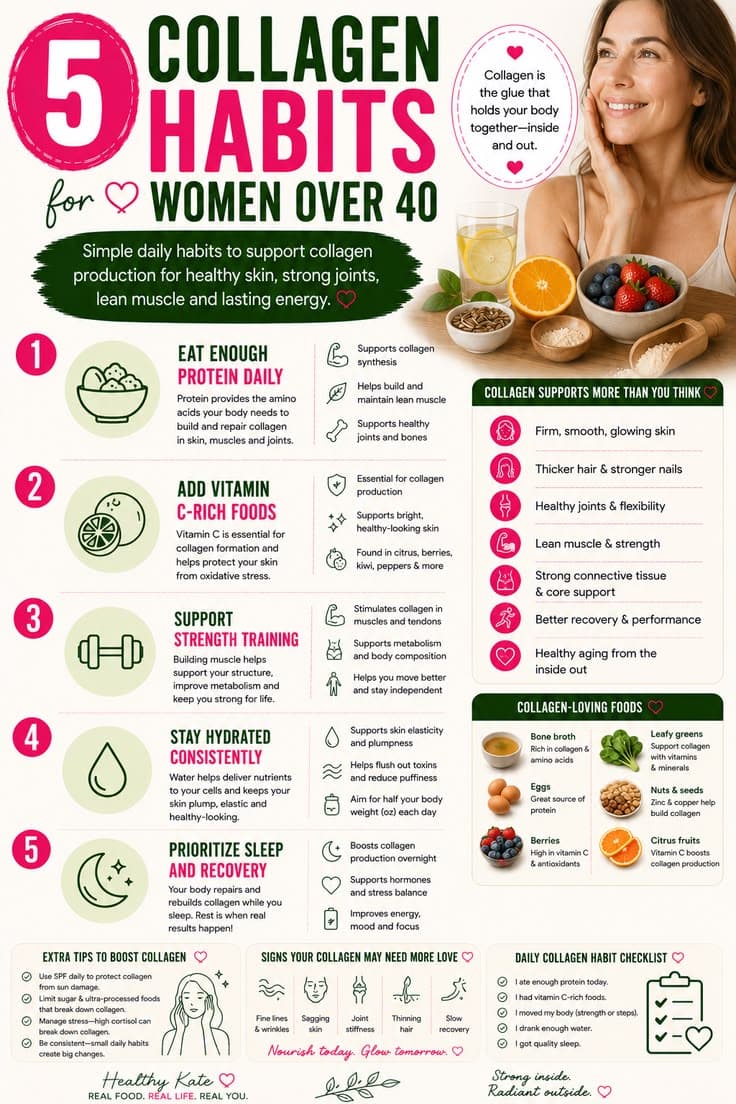
1. Eat enough protein every day
Collagen is made from amino acids, especially glycine, proline and lysine. Without enough total protein, your body has fewer building blocks. Aim for a palm-sized portion of protein at every meal: eggs, fish, chicken, Greek yogurt, beans or tofu. Read more in 5 protein habits for women over 40.
2. Add vitamin C-rich foods
Vitamin C is essential for collagen synthesis; your body cannot build stable collagen without it. Easy sources are citrus fruits, berries, kiwi, bell peppers and broccoli. A simple trick: add berries to breakfast and bell pepper strips to lunch.
3. Support strength training
Strength training stimulates collagen in muscles, tendons and connective tissue, and it helps keep bones strong. Two to three short sessions a week are enough to start. Here is why strength training matters for women's metabolism, with an easy beginner plan.
4. Stay hydrated consistently
Well-hydrated skin looks plumper and smoother, and water supports the tissues that collagen lives in. Keep a bottle nearby and drink a glass with every meal. Infused water like our cucumber lemon water makes it easier.
5. Prioritize sleep and recovery
Your body repairs tissue, including collagen, while you sleep. Short nights and constant stress speed up breakdown. Aim for 7 to 9 hours and a calm evening routine, like the one in these sleep habits for women over 40.
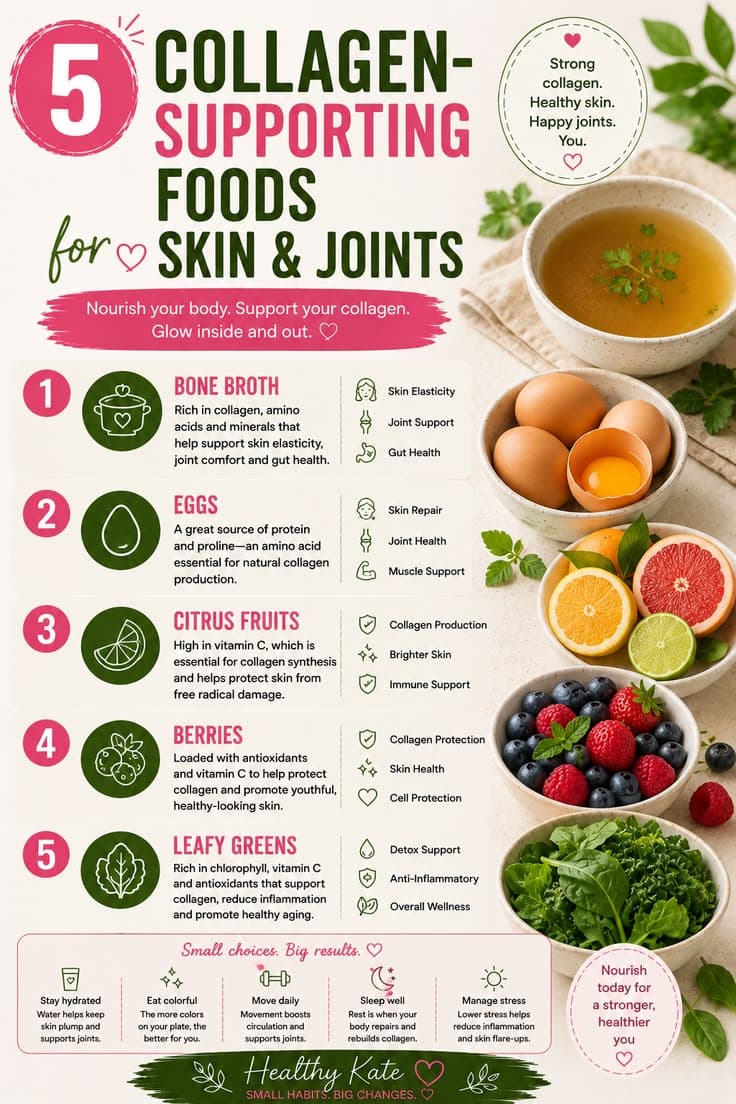
5 collagen-supporting foods
- Bone broth: contains collagen, gelatin and minerals. Sip it warm or use it as a base for soups.
- Eggs: high-quality protein plus proline in the whites. See why eggs are so good for you.
- Citrus fruits: oranges, grapefruit, lemons and limes are rich in vitamin C.
- Berries: vitamin C plus antioxidants that help protect existing collagen. More in blueberry benefits for skin and healthy aging.
- Leafy greens: vitamin C, antioxidants and chlorophyll for overall skin health.
Zinc and copper also matter for collagen. Pumpkin seeds, nuts, beans and seafood are good sources; read about zinc benefits for skin.
What damages collagen
- UV exposure: the biggest outside factor. Use sunscreen daily, even in winter.
- Smoking: reduces blood flow to the skin and breaks down collagen.
- Lots of added sugar: excess sugar can form compounds that stiffen collagen fibers.
- Chronic stress and poor sleep: slow down repair.
A simple collagen-friendly day
- Breakfast: eggs with spinach and a cup of berries.
- Lunch: salmon or chicken salad with bell peppers and a lemon dressing.
- Snack: Greek yogurt with kiwi or a handful of pumpkin seeds.
- Dinner: a warm soup with bone broth, vegetables and beans.
- Evening: a short walk and lights out on time.
What about collagen supplements?
Collagen peptides are popular, and some studies show modest improvements in skin hydration and elasticity. They are not a replacement for the habits above, and quality varies. If you want to try one, choose a third-party tested product and talk to your doctor if you have kidney problems or take medication.
FAQ
Collagen Questions
Do collagen supplements work?
Some studies suggest hydrolyzed collagen peptides may modestly improve skin hydration and elasticity, and joint comfort in some people. Results vary, and supplements work best on top of enough protein, vitamin C, sleep and sun protection.
Which foods contain the most collagen?
Collagen itself is found in animal connective tissue: bone broth, chicken skin, fish skin and gelatin. Foods rich in protein, vitamin C, zinc and copper help your body make its own collagen.
When does collagen start to decline?
Collagen production gradually declines from around your mid-20s. After menopause, skin collagen drops faster, which is why habits matter more after 40.
What damages collagen the most?
Sun exposure without protection, smoking, high sugar intake and poor sleep are among the biggest factors that speed up collagen breakdown.
The bottom line
Collagen loss after 40 is normal, but your habits decide how well your body keeps up. Enough protein, vitamin C, strength training, water and sleep are the foundation. Add collagen-supporting foods every day, protect your skin from the sun, and your body does the rest.
This article is for general information and does not replace medical advice. Talk to your doctor before making changes, especially if you have a health condition, are pregnant or take medication.