The 3-Color Lunch Formula for Weight Loss and Fewer Afternoon Cravings
The 3-color lunch formula helps you build simple, balanced lunches that feel fresh and satisfying. It is an easy way to support steady energy, better fullness, and fewer afternoon cravings without counting calories.
By KateLast reviewed
Lunch can either support your afternoon or make the rest of the day harder.
You may start the morning with good intentions.
You drink your coffee.
You maybe eat something light.
You tell yourself today will be different.
But then lunch happens.
Maybe it is too small.
Maybe it is mostly bread or pasta.
Maybe it is a random snack plate.
Maybe it is something quick because you are busy.
And then, a few hours later, the afternoon cravings start.
You feel tired.
You want something sweet.
You need another coffee.
You start looking for snacks.
Your energy drops, and your motivation drops with it.
This does not mean you are doing anything wrong.
It often means your lunch is not giving your body enough structure.
That is where the 3-color lunch formula can help.
It is simple, visual, and easy to remember.
No calorie counting.
No strict meal plan.
No complicated recipes.
Just a better way to build a lunch that looks good, tastes good, and helps you feel more satisfied.
What Is the 3-Color Lunch Formula?
The 3-color lunch formula is a simple way to build a balanced lunch using color as your guide.
Instead of asking, “How many calories is this?” you ask:
“Do I have at least three colors on my plate?”
The colors usually come from vegetables, fruits, herbs, or whole-food ingredients.
For example:
green cucumber
red tomatoes
orange sweet potato
purple cabbage
yellow bell pepper
blueberries
dark leafy greens
pink salmon
white beans
The goal is not to make your plate perfect.
The goal is to make your lunch more balanced, more satisfying, and more nutrient-rich without making it feel complicated.
A colorful plate usually means more variety.
More variety often means more fiber, texture, flavor, and volume.
And that can make weight loss meals feel much less boring.
Why Color Helps You Eat Better Without Overthinking
Many people make healthy eating too complicated.
They try to track every bite.
They search for the perfect macro split.
They cut out whole food groups.
They follow strict meal plans that do not fit real life.
But most people do not need more food rules.
They need an easier way to make better choices.
Color is helpful because it is visual.
You can look at your plate and immediately see whether the meal is balanced or flat.
A beige lunch usually looks like this:
bread
pasta
crackers
chips
pastries
plain rice
processed snacks
These foods are not automatically bad, but if your lunch is mostly beige and low in protein or fiber, you may not feel full for long.
A colorful lunch feels different.
It gives your eyes variety.
It gives your body more volume.
It gives your meal more texture.
It makes healthy eating feel more abundant.
That matters because weight loss meals should not feel tiny, sad, or restrictive.
They should feel satisfying enough to repeat.
The Basic 3-Color Formula
Here is the simplest version:
Choose one green food.
Choose one bright color food.
Choose one protein or filling base.
Then add a small amount of healthy fat or sauce.
That is it.
For example:
green spinach
orange roasted sweet potato
white chicken or chickpeas
olive oil dressing
Or:
green cucumber
red tomatoes
yellow eggs
avocado
Or:
green kale
purple cabbage
pink salmon
tahini dressing
You can use this formula for bowls, plates, wraps, salads, leftovers, or meal prep containers.
It does not need to look like a perfect Pinterest recipe.
It just needs to help you build a lunch that is more balanced than a random snack meal.
Step 1: Start With Something Green
Green is usually the easiest place to start.
This could be:
spinach
romaine lettuce
arugula
kale
cucumber
zucchini
green beans
broccoli
edamame
fresh herbs
Green foods add freshness and volume.
They also make the plate feel lighter and more alive.
You do not need to make a huge salad.
Even adding cucumber slices, spinach, or steamed broccoli can change the whole meal.
If you do not love raw greens, use cooked vegetables instead.
Roasted broccoli, sautéed zucchini, or green beans can still work beautifully.
The point is not to eat food you hate.
The point is to make your lunch feel fresher and more complete.
Step 2: Add One Bright Color
The second color makes the meal more interesting.
Choose something red, orange, yellow, purple, or pink.
Examples include:
tomatoes
carrots
bell peppers
sweet potato
beets
red cabbage
berries
mango
corn
radishes
pomegranate seeds
roasted pumpkin
This step helps your meal feel less like “diet food.”
Color makes food more appealing.
And when healthy food looks appealing, you are more likely to actually want it.
That is important.
A lunch that you force yourself to eat is not a sustainable lunch.
A lunch that feels beautiful, fresh, and satisfying is much easier to repeat.
Step 3: Add Protein So the Meal Actually Lasts
Color is helpful, but color alone is not enough.
A bowl of vegetables may look healthy, but it may not keep you full.
That is why protein matters.
Good lunch protein options include:
chicken
turkey
eggs
tuna
salmon
shrimp
tofu
tempeh
lentils
beans
chickpeas
Greek yogurt dressing
cottage cheese
edamame
Protein helps the lunch feel more complete.
It gives your body something more substantial than vegetables alone.
This can make a big difference in your afternoon cravings.
If lunch is too light, your body may start asking for quick energy later.
That often shows up as cravings for sweets, bread, chips, or another coffee.
A colorful lunch with protein is much more likely to carry you through the afternoon.
Step 4: Add Fiber-Rich Carbs If You Need Them
Many women try to make lunch “healthy” by removing carbs completely.
But that can backfire.
If your lunch is only vegetables and protein, you may feel light at first, but then hungry again an hour later.
Carbs are not the enemy.
The goal is to choose carbs that fit the meal and help you feel steady.
Good options include:
sweet potato
rice
quinoa
beans
lentils
corn
whole grain bread
potatoes
fruit
oats in a savory bowl
whole grain wraps
You do not need a huge portion.
But adding a small amount of slow carbs can make lunch feel more satisfying and help reduce the urge to snack later.
A balanced lunch is not about eating as little as possible.
It is about eating enough of the right things so your body stops fighting you later.
Step 5: Add a Small Amount of Healthy Fat
Healthy fat makes the meal feel finished.
It adds flavor, texture, and satisfaction.
Examples include:
avocado
olive oil
nuts
seeds
tahini
hummus
feta
salmon
pumpkin seeds
peanut dressing
You do not need much.
A little can go a long way.
This is especially helpful if your lunch often feels “too clean” and leaves you wanting something else.
Sometimes what is missing is not more food.
It is satisfaction.
A small amount of fat can make a colorful lunch feel much more enjoyable.
Easy 3-Color Lunch Ideas
Here are a few simple combinations you can try.
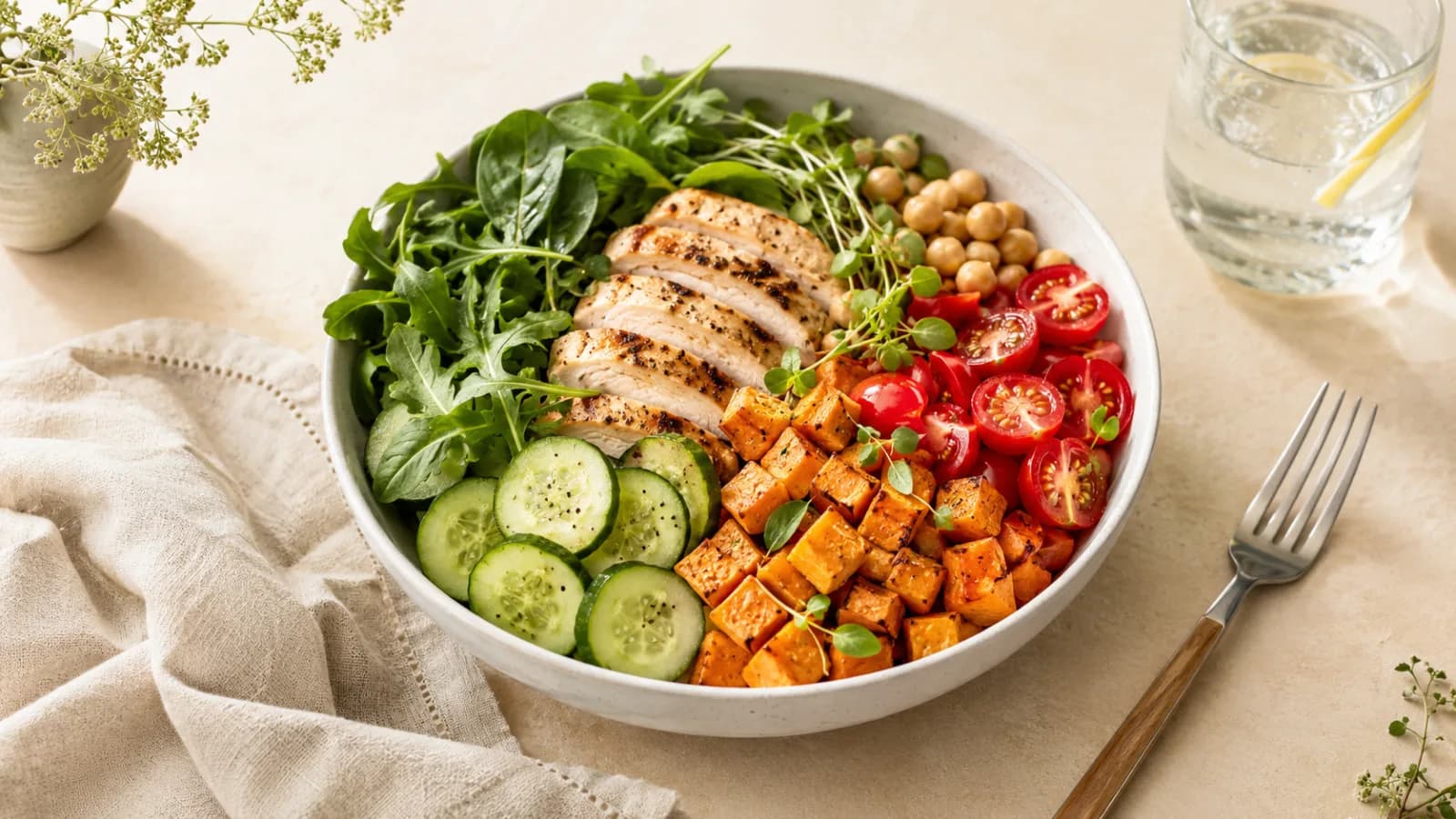
Green, Orange, and White Bowl
Spinach
Roasted sweet potato
Chicken or chickpeas
Cucumber
Olive oil lemon dressing
This is simple, filling, and easy to meal prep. For a ready-made version, try this chickpea avocado bowl or, with more protein, this high-protein Mediterranean bowl.
Green, Red, and Yellow Plate
Cucumber
Tomatoes
Boiled eggs
Corn
Avocado
This works well when you want something fresh and quick.
Purple, Green, and Pink Bowl
Purple cabbage
Kale
Salmon
Cucumber
Tahini dressing
This feels more elevated but is still easy to build. A Mediterranean salmon and avocado salad is a similar low-effort option.
Green, Red, and Beige Wrap
Romaine lettuce
Tomatoes
Turkey or tofu
Hummus
Whole grain wrap
This is a good option if you do not want a bowl or salad.
Green, Orange, and Brown Meal Prep Box
Broccoli
Carrots
Lentils
Rice
Pumpkin seeds
This is a simple plant-based option that still feels filling.
Why This Formula Helps With Afternoon Cravings
Afternoon cravings often happen for a few reasons.
Your lunch was too small.
Your lunch had too little protein.
Your lunch had too little fiber.
Your lunch was mostly quick carbs.
You ate while distracted and did not feel satisfied.
You waited too long between meals.
You can read more about these reasons you crave sugar in the afternoon.
The 3-color lunch formula helps because it naturally encourages a more complete meal.
More color usually means more volume.
More volume helps the meal feel bigger.
Protein helps the meal last longer.
Fiber-rich carbs support steadier energy.
Healthy fat adds satisfaction.
Together, these things can make the afternoon feel easier.
Not perfect.
But easier.
And when weight loss feels easier, you are more likely to stay consistent.
How to Use the Formula When You Are Busy
You do not need to cook a fresh lunch every day.
This formula works with leftovers and quick ingredients.
Keep a few simple items ready:
washed greens
chopped cucumber
cherry tomatoes
boiled eggs
canned chickpeas
microwave rice
pre-cooked chicken
frozen vegetables
hummus
avocado
Greek yogurt dressing
Then build a quick plate or bowl.
For example:
greens + tomatoes + chickpeas + rice + hummus
or:
cucumber + carrots + eggs + avocado + toast
or:
broccoli + sweet potato + tofu + tahini
The point is not to follow a recipe.
The point is to make balanced lunches easier to assemble.
How to Make It Feel More Feminine and Enjoyable
Healthy food does not need to look boring.
Use a real plate instead of eating from a container when you can.
Add herbs.
Use a nice bowl.
Slice your vegetables neatly.
Add lemon.
Sprinkle seeds.
Use a dressing you actually enjoy.
These little details matter.
When a meal feels beautiful, you slow down more naturally.
You notice it more.
You enjoy it more.
And you are less likely to feel like you are “on a diet.”
This is one of the hidden benefits of the 3-color formula.
It makes healthy eating feel more abundant instead of restrictive.
Common Mistakes to Avoid
The first mistake is using color but forgetting protein.
A colorful salad without protein may not keep you full.
The second mistake is making the meal too low in carbs.
If you feel tired or snacky after lunch, you may need a small portion of slow carbs.
The third mistake is adding too many toppings.
Nuts, cheese, avocado, dressing, and seeds can all be healthy, but together they can make the meal much heavier than expected.
The fourth mistake is making the meal too complicated.
You do not need ten ingredients.
Three colors and one protein source are enough.
The fifth mistake is forcing yourself to eat foods you dislike.
Choose colors you actually enjoy.
Healthy eating works better when your meals taste good.
A Simple Rule for Your Next Lunch
The next time you build lunch, do not start with calories.
Start with color.
Ask yourself:
Where is my green?
Where is my second color?
Where is my protein?
Then add carbs and fat based on what your body needs. If you want a simple portion guide for that, the lazy plate method pairs well with this formula.
This one habit can make lunch feel easier, prettier, and more satisfying.
You do not need a perfect meal plan.
You just need a simple formula you can remember.
FAQ
3-Color Lunch Questions
What is a good lunch for weight loss?
A helpful weight loss lunch usually combines vegetables for volume, a clear protein source, some fiber-rich carbs, and a little healthy fat. This mix tends to keep you fuller for longer than a very light salad or a mostly beige meal.
Why do I get cravings in the afternoon after lunch?
Afternoon cravings are often linked to a lunch that was too small, low in protein or fiber, or eaten in a rush. Long gaps between meals, poor sleep, and stress can also play a role.
Does eating more colorful food help with weight loss?
Color itself does not cause weight loss, but colorful plates usually contain more vegetables and fruit, which add fiber and volume. That can make meals more satisfying and support healthier eating patterns over time.
Can I meal prep 3-color lunches?
Yes. Washed greens, chopped vegetables, cooked grains, boiled eggs, chickpeas, or pre-cooked chicken can be prepared ahead and combined in a few minutes. Keep dressings and avocado separate until you eat.
The Bottom Line
The 3-color lunch formula is a simple way to build better lunches without overthinking food.
It helps you add more volume, more variety, more protein, and more satisfaction to your meals.
That can support weight loss because it makes your afternoons easier.
Fewer random cravings.
Less energy crashing.
Less feeling like you need snacks to survive the day.
And more meals that feel fresh, balanced, and realistic.
Start with one lunch.
Add three colors.
Add protein.
Keep it simple.
That may be enough to change how the rest of your day feels.
This article is for general information and does not replace medical advice. Talk to your doctor before making changes, especially if you have a health condition or take medication.