5 Ginger Benefits for Digestion, Energy, and Everyday Wellness
Ginger is a simple root used in teas, meals, smoothies, and wellness routines. Here are five potential benefits for digestion, comfort, and everyday energy.
By KateLast reviewed
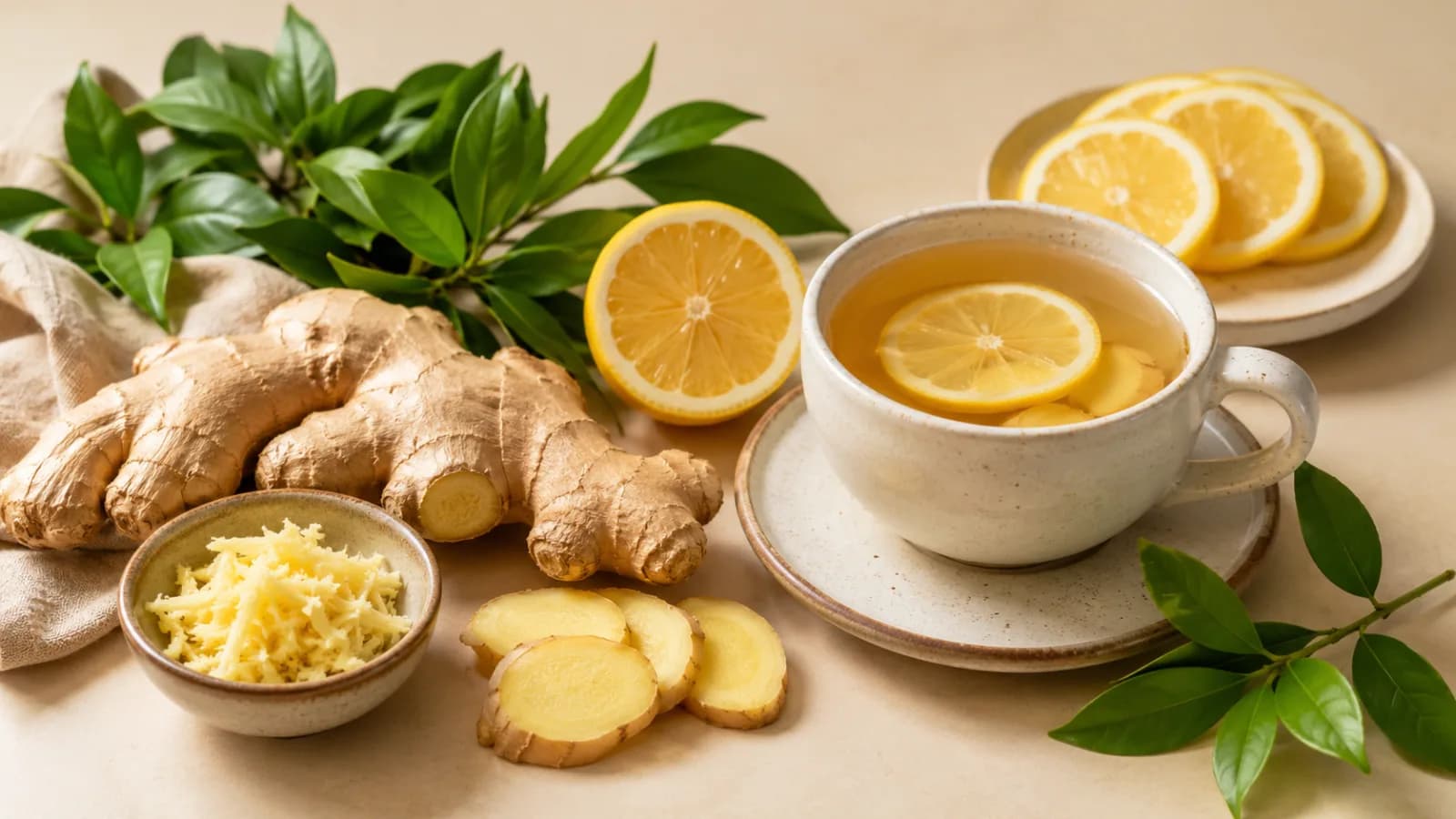
Ginger is one of those simple ingredients that shows up everywhere.
You can find it in tea, soups, smoothies, stir-fries, wellness shots, morning drinks, and traditional remedies.
It has a warm, spicy flavor and a long history of use in different food and wellness traditions.
But why do so many people talk about ginger for digestion, bloating, metabolism, and daily energy?
The answer is not that ginger is a miracle ingredient.
It is simply a versatile root that may support comfort and routine in several helpful ways.
Here are five ginger benefits to know — and simple ways to use it.
1. Ginger may support digestive comfort
One of the most common reasons people use ginger is digestive comfort.
Ginger is often enjoyed after meals, in teas, or as part of morning routines because it feels warming and soothing.
Some people like ginger when their stomach feels heavy, unsettled, or slow after eating.
That does not mean ginger fixes every digestive issue.
Bloating, stomach discomfort, reflux, constipation, diarrhea, and nausea can have many different causes.
But as a gentle food ingredient, ginger can be a useful part of a routine focused on digestive comfort, much like these peppermint tea benefits for digestion and less bloating.
Simple ways to try ginger:
- fresh ginger tea
- ginger added to soups
- ginger in stir-fries
- ginger blended into smoothies
- grated ginger in dressings
- lemon ginger water
- ginger added to oatmeal or warm drinks
Start small.
Ginger has a strong taste, and too much may irritate your stomach if you are sensitive.
2. Ginger is often used for nausea support
Ginger is probably best known for nausea.
It has been studied for several types of nausea and vomiting, including pregnancy-related nausea, chemotherapy-related nausea, and nausea after surgery.
The research is not equally strong for every situation, but ginger is one of the better-known natural options people explore for nausea support.
Many people use ginger in forms like:
- ginger tea
- ginger capsules
- ginger chews
- ginger powder
- fresh ginger
- ginger lozenges
If nausea is occasional and mild, ginger tea may be a simple option to try.
But if nausea is frequent, intense, unexplained, related to pregnancy, related to medication, or connected to another medical issue, it is better to speak with a healthcare professional.
Also, ginger supplements are different from using ginger as a food.
Supplements can be more concentrated, so it is worth being careful with dosage and interactions.
3. Ginger can add warmth to morning drinks
A warm morning drink can be a helpful daily anchor.
For some people, starting the day with something warm and calming makes the whole morning feel more intentional.
Ginger fits well here because it adds flavor without needing much sugar.
Simple morning drink ideas:
- ginger lemon water
- ginger tea
- ginger with warm water and honey
- ginger turmeric tea
- ginger added to green tea
- ginger with mint and lemon
A simple ginger morning drink could be:
- hot water
- a few slices of fresh ginger
- lemon juice
- optional honey
- steep for 5 to 10 minutes
If you want something stronger in flavor, try this ginger turmeric wellness shot with lemon and orange.
This kind of habit is not about forcing a complicated detox routine.
It is about creating a small daily ritual that feels easy to repeat.
And easy-to-repeat habits are often the ones that matter most.
4. Ginger contains antioxidant and anti-inflammatory compounds
Ginger contains natural plant compounds, including gingerols and shogaols.
These compounds are part of why ginger is often discussed in the context of inflammation, antioxidants, and overall wellness.
But it is important to keep this realistic.
Eating ginger does not cancel out poor sleep, high stress, a low-nutrient diet, or an inconsistent routine.
It is not a replacement for medical care.
But it can be a flavorful way to add more plant compounds to your meals.
Simple food ideas:
- add grated ginger to stir-fries
- use ginger in soups
- mix ginger into marinades
- add ginger to salad dressings
- use ginger in smoothies
- add ginger to roasted carrots
- use ginger in curry-style dishes
This is where ginger shines: it makes healthy meals taste better.
And when healthy meals taste better, they are usually easier to repeat.
5. Ginger can fit into simple metabolism-support routines
You may see ginger described as a “metabolism booster.”
That phrase is popular, but it can be misleading.
Ginger does not magically speed up weight loss.
However, ginger can fit into routines that support digestion, warmth, hydration, flavor, and consistency.
That matters because many people do not need another extreme plan.
They need a routine that feels simple enough to keep.
For example, ginger can be part of:
- a morning tea routine
- a hydration habit
- a digestive comfort routine
- a flavorful meal-prep routine
- a lower-sugar drink swap
- a calming evening drink
The real benefit is often not the ingredient alone.
It is the routine around it.
If ginger helps you drink more water, make better meals taste good, or replace a sugary drink with something more supportive, that can be valuable.
Easy ways to enjoy ginger
You do not need complicated recipes.
Try these simple options.
Ginger tea
Slice fresh ginger and steep it in hot water for 5 to 10 minutes.
Add lemon or honey if you like.
Lemon ginger water
Add ginger slices and lemon to warm or cold water.
This can be a simple alternative to sugary drinks. For a cooler version, try this cucumber lemon water with mint and ginger.
Smoothies
Add a small piece of fresh ginger to smoothies with berries, greens, citrus, or pineapple. It works well in this pineapple smoothie with chia seeds.
Start with a small amount because the flavor is strong.
Meals
Use ginger in stir-fries, soups, curries, marinades, salad dressings, and sauces.
It pairs well with garlic, lemon, lime, soy sauce, sesame, carrots, chicken, tofu, fish, and vegetables.
Oatmeal or warm bowls
A little ground ginger can add warmth to oatmeal, baked oats, chia pudding, or breakfast bowls.
It pairs well with cinnamon, apple, pear, banana, and pumpkin.
Who should be careful with ginger?
Ginger as a normal food ingredient is generally well tolerated by many people.
But higher amounts or concentrated supplements may not be right for everyone.
You should speak with a healthcare professional before using ginger supplements if you:
- are pregnant
- are breastfeeding
- take blood-thinning medication
- take diabetes medication
- take blood pressure medication
- have gallbladder issues
- have reflux or frequent heartburn
- are preparing for surgery
- have a medical condition
- are unsure whether ginger is safe for you
Ginger can also cause side effects in some people, especially at higher doses.
Possible side effects include:
- heartburn
- stomach discomfort
- diarrhea
- mouth or throat irritation
- gas or belching
Start small and pay attention to how your body responds.
FAQ
Ginger Questions
Is it okay to drink ginger tea every day?
For most healthy adults, a cup or two of ginger tea made from fresh ginger is generally well tolerated as part of a normal diet. If you notice heartburn or stomach discomfort, use less ginger or drink it less often.
Does ginger help with bloating?
Some people find warm ginger tea soothing after meals, and ginger has been studied for digestive comfort, but research on bloating specifically is limited. Bloating has many possible causes, so frequent or painful bloating is worth discussing with a doctor.
Can ginger help you lose weight?
Ginger is not a weight-loss ingredient on its own, and any effect seen in studies has been small. It can help by adding flavor to low-sugar drinks and meals that make a healthy routine easier to keep.
Who should avoid ginger supplements?
People who are pregnant or breastfeeding, take blood thinners, diabetes or blood pressure medication, have gallbladder issues, or are preparing for surgery should check with a doctor before taking ginger supplements. Supplements are more concentrated than ginger used in food.
The bottom line
Ginger is a simple, affordable, versatile root.
It may support digestive comfort, nausea relief, warm morning routines, antioxidant intake, and everyday wellness habits.
But ginger is not a magic fix.
The best way to use it is as part of a routine that already feels realistic.
Add it to tea.
Use it in meals.
Try it in warm drinks.
Keep it simple.
Small habits are easier to repeat — and repeated habits are what shape your routine.
Not sure what wellness routine fits your body best?
Different people struggle with different patterns.
For some, the issue is cravings.
For others, it is low energy, digestion, bloating, snacking, stubborn weight, or not having a routine that feels realistic.
Take the free quiz to find the weight-loss routine that fits your body.
This article is for general information and does not replace medical advice. Talk to your doctor before making changes, especially if you have a health condition or take medication.