5 Vitamin D Habits for Energy, Mood and Healthy Aging
Vitamin D supports bones, immunity, muscles and mood, and many people run low in fall and winter. Five simple habits to keep your levels healthy, plus the best food sources.
By KateLast reviewed

Vitamin D is often called the sunshine vitamin because your skin makes it when exposed to sunlight. It supports strong bones, immune function, muscles and mood. In fall and winter, or if you spend most of the day indoors, levels can drop, and many people do not notice until they feel tired and low.
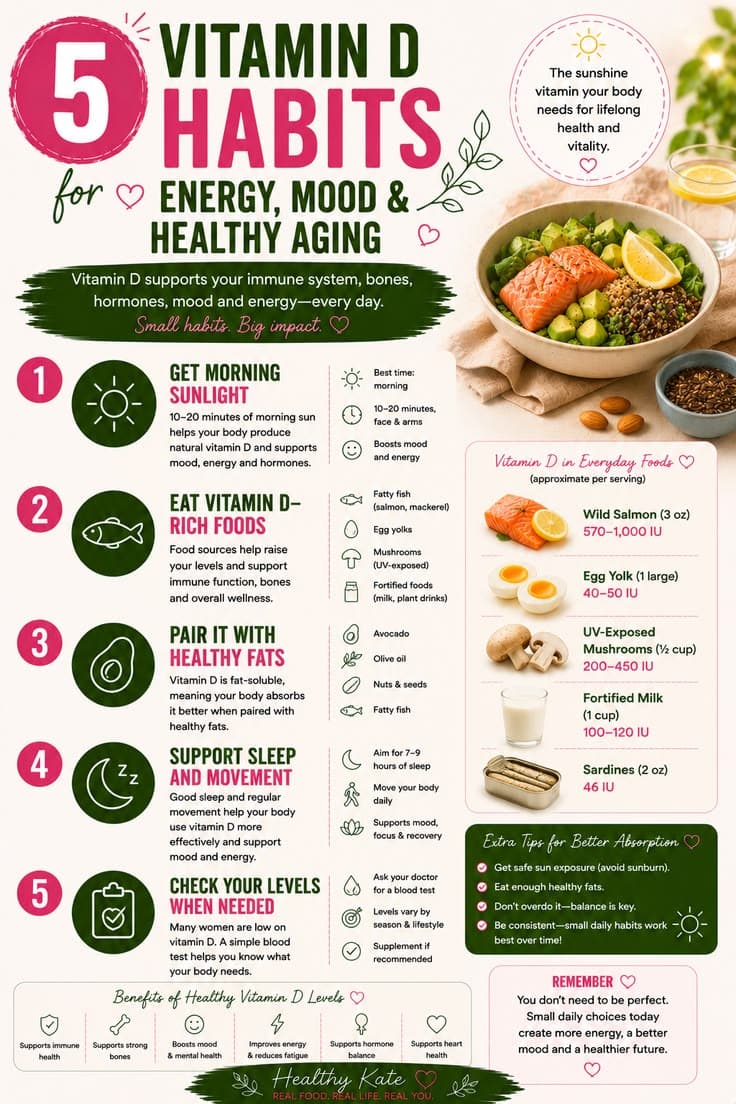
1. Get morning sunlight
Ten to thirty minutes of daylight on your face and arms, a few times a week, helps your body make vitamin D in spring and summer. Morning light also helps set your internal clock for better sleep at night. Combine it with a walk, like in our calm morning routine. In winter at northern latitudes, the sun is often too weak for vitamin D production, so the other habits matter more.
2. Eat vitamin D-rich foods
Only a few foods provide meaningful amounts (approximate values):
- Wild salmon (3 oz): 570 to 1,000 IU
- Sardines (2 oz): about 100 IU
- Egg yolk (1 large): about 40 IU
- UV-exposed mushrooms (1/2 cup): 200 to 450 IU
- Fortified milk or plant milk (1 cup): about 100 to 120 IU
Try our keto salmon dinner with roasted vegetables or a Mediterranean salmon salad.
3. Pair it with healthy fats
Vitamin D is fat-soluble, which means it is absorbed better with some fat in the meal. Take a supplement with your largest meal, and enjoy vitamin D foods with avocado, olive oil, nuts or eggs.
4. Support sleep and movement
Regular movement, especially outdoors, and good sleep support the systems vitamin D works with, like muscles, bones and mood. Weight-bearing exercise is particularly important for bone health; see why strength training matters for women.
5. Check your levels when needed
A simple blood test (25-hydroxy vitamin D) shows your status. It is worth asking about if you are often tired, spend little time outdoors, have darker skin, are over 50 or have a condition that affects absorption. Supplement doses should be based on your levels, because too much vitamin D can cause problems.
Benefits of healthy vitamin D levels
- Bones: vitamin D helps your body absorb calcium.
- Immunity: it plays a role in immune cell function.
- Muscles: low levels are linked to weakness and a higher risk of falls in older adults.
- Mood: low vitamin D is associated with low mood, especially in winter, although research on supplements for mood is mixed.
Extra tips for better absorption
- Get safe sun exposure and avoid sunburn.
- Eat enough healthy fats.
- Don't overdo it: balance is key.
- Be consistent: small daily habits work best over time.
Who is more likely to be low?
- People who spend most of their time indoors
- People living far from the equator, especially in winter
- People with darker skin, which produces less vitamin D from the same sun exposure
- Adults over 50 and people with higher body weight
- People with conditions that affect fat absorption
FAQ
Vitamin D Questions
How much vitamin D do adults need?
U.S. recommendations are 600 IU (15 mcg) per day for adults up to 70 and 800 IU after 70. Some people need more if their levels are low; your doctor can advise you.
Can you get enough vitamin D from food?
It is hard. Only a few foods are naturally rich in vitamin D, mainly fatty fish, egg yolks and UV-exposed mushrooms. Fortified foods and sunlight usually make up the rest.
Should I take a vitamin D supplement?
Many people take one in fall and winter, especially at northern latitudes. Because too much vitamin D can be harmful, it is best to test your levels and agree on a dose with your doctor.
Does sunscreen block vitamin D?
Sunscreen reduces vitamin D production, but in real life most people still make some. Protecting your skin from sunburn remains important.
The bottom line
Vitamin D supports your bones, immunity, muscles and mood. Get daylight when you can, eat fatty fish and eggs, pair them with healthy fats, stay active and check your levels if you suspect you are low, especially in the darker months.
This article is for general information and does not replace medical advice. Talk to your doctor before making changes, especially if you have a health condition, are pregnant or take medication.