5 Resveratrol Benefits for Healthy Aging and Wellness
Resveratrol is the plant compound in red grapes, berries and peanuts that is often linked to healthy aging. Here is what it may do, what research really shows and how to get it from food.
By KateLast reviewed
Resveratrol became famous as the "red wine compound" behind the so-called French paradox. Since then it has been studied for heart health, blood sugar and healthy aging, and it shows up in more and more supplements.
But what does resveratrol actually do, and is it worth paying attention to? Here is a clear, balanced look at the potential benefits, the best food sources and what the research can and cannot tell us yet.
What is resveratrol?
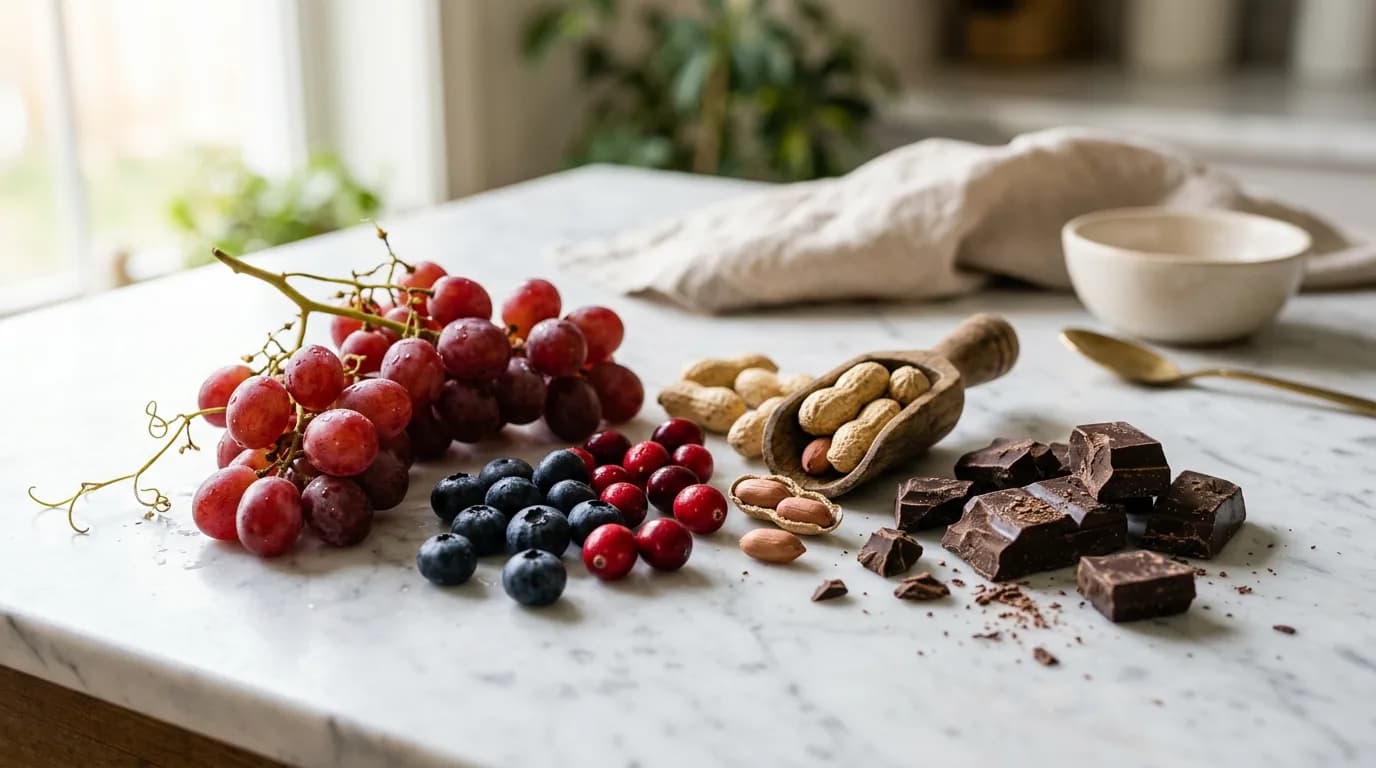
Resveratrol is a polyphenol, a natural plant compound that plants produce to protect themselves from stress such as UV light, fungi and injury. You find it mainly in the skins of red grapes, in berries, peanuts and a few other foods.
An important detail: much of the exciting research comes from lab and animal studies. Human studies are smaller and the results are mixed. Resveratrol is also absorbed and broken down quickly by the body, which is one reason why effects seen in the lab do not always show up in people.
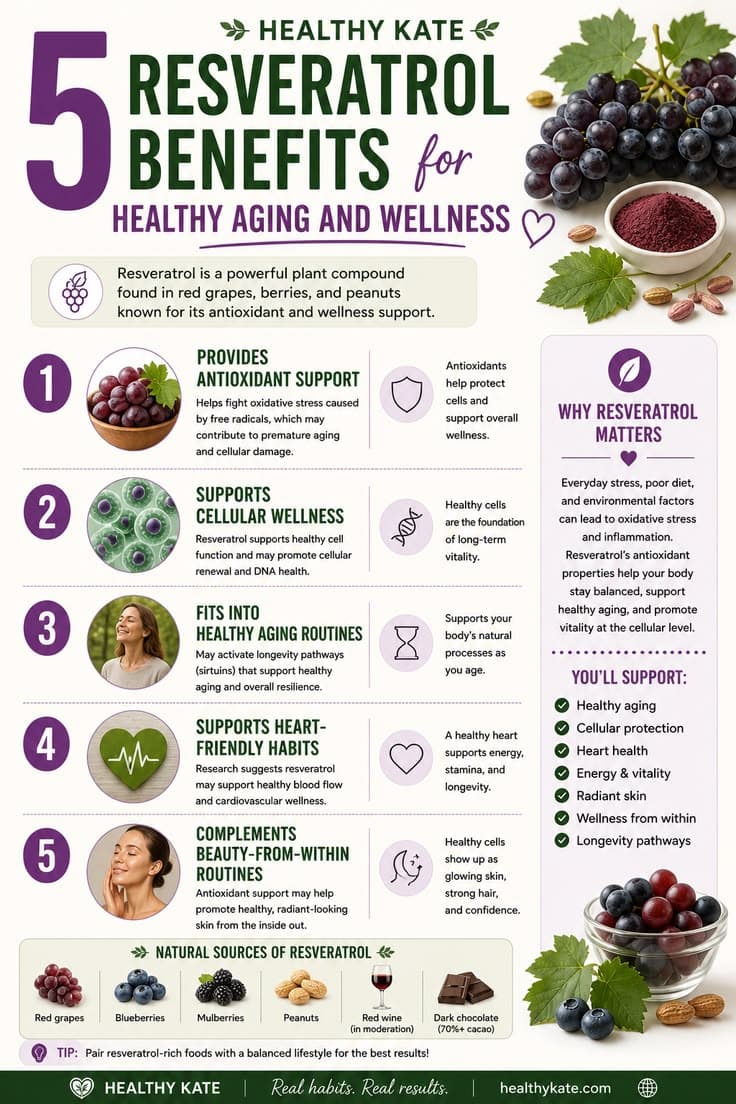
1. Antioxidant support for healthy aging
Like other polyphenols, resveratrol has antioxidant properties. It may help the body manage oxidative stress, one of the processes linked to aging. Researchers are especially interested in its effect on sirtuins, proteins involved in cell maintenance, though how much this matters in humans is still unclear.
Resveratrol works best as part of a colorful diet. Blueberries are a great example, because they bring resveratrol, anthocyanins and fiber together.
2. Heart and blood vessel health
Some studies suggest resveratrol may support flexible blood vessels and healthy blood flow, and a few found modest effects on blood pressure. The results are not consistent, and resveratrol is not a replacement for any heart medication.
Habits with stronger evidence for heart health include daily walking, eating more plants and fiber, and limiting alcohol.
3. Blood sugar and metabolic health
Several small human studies looked at resveratrol and insulin sensitivity, particularly in people with type 2 diabetes. Some saw small improvements in blood sugar markers, others did not.
If steady blood sugar is your goal, start with the basics that work for almost everyone: morning habits for steady blood sugar and pairing carbs with protein and fiber.
4. A calmer inflammatory response
Chronic, low-grade inflammation is linked to many age-related problems. Resveratrol has shown anti-inflammatory effects in lab studies, and some human trials found changes in inflammatory markers. It is often discussed alongside other plant compounds such as turmeric and curcumin.
5. Brain health
Researchers are exploring whether resveratrol may support blood flow to the brain and memory as we age. Early human studies are interesting but small, so it is too soon to call resveratrol a brain supplement. Sleep, movement and a varied, plant-rich diet remain the best-proven brain habits.
Best food sources of resveratrol
- Red and purple grapes, especially the skins
- Blueberries, cranberries and mulberries
- Peanuts and peanut butter, especially with the skins
- Pistachios
- Dark chocolate and cocoa in moderation
Food amounts are small, but they come with fiber, vitamins and many other polyphenols. A handful of grapes or berries each day is a simple, safe habit.
What about red wine?
A glass of red wine contains only around a milligram of resveratrol, while studies often use 150 mg or more. You would have to drink an unhealthy amount of wine to get there, and alcohol itself works against healthy aging, sleep and weight. Grapes and berries are the better choice.
Resveratrol supplements: what to know
- Studies use very different doses, so there is no agreed "best" amount.
- Higher doses can cause digestive discomfort.
- Resveratrol may increase the effect of blood thinners and interact with other medications.
- It is not recommended during pregnancy or breastfeeding, and people with hormone-sensitive conditions should ask their doctor first.
Other supplements often discussed for healthy aging include CoQ10. As always, food and daily habits come first, and any supplement is worth discussing with your doctor or pharmacist.
FAQ
Resveratrol Questions
What foods are high in resveratrol?
The best-known sources are the skins of red and purple grapes, blueberries, cranberries, mulberries, peanuts (especially with the skin), pistachios and dark chocolate. Amounts in food are small, but they come with fiber and other helpful plant compounds.
Should I drink red wine for resveratrol?
No. A glass of red wine contains only a tiny amount of resveratrol, far below what is used in studies, and alcohol has its own health risks. Grapes and berries give you the same compounds without the alcohol.
Is it safe to take resveratrol supplements?
Food amounts are considered safe. Supplements are less studied, can cause stomach upset at higher doses and may interact with blood thinners and some other medications. They are not recommended during pregnancy or breastfeeding, so talk to your doctor before trying one.
Does resveratrol help with weight loss?
There is no strong evidence that resveratrol leads to meaningful weight loss in people. Some small studies looked at blood sugar and metabolic markers with mixed results. Balanced meals, movement and sleep matter far more.
The bottom line
Resveratrol is a fascinating plant compound with promising lab results and early human research on heart health, blood sugar, inflammation and brain health. The evidence is not strong enough to call it an anti-aging solution. The best way to benefit is simple: eat more colorful plants such as grapes, berries and nuts, move every day and protect your sleep.
This article is for general information and does not replace medical advice. Talk to your doctor before making changes, especially if you have a health condition or take medication.