5 Berberine Benefits for Blood Sugar and Metabolism
Berberine is a plant compound often explored for healthy blood sugar, metabolism, cravings, and daily wellness routines. Here is what to know before trying it.
By KateLast reviewed
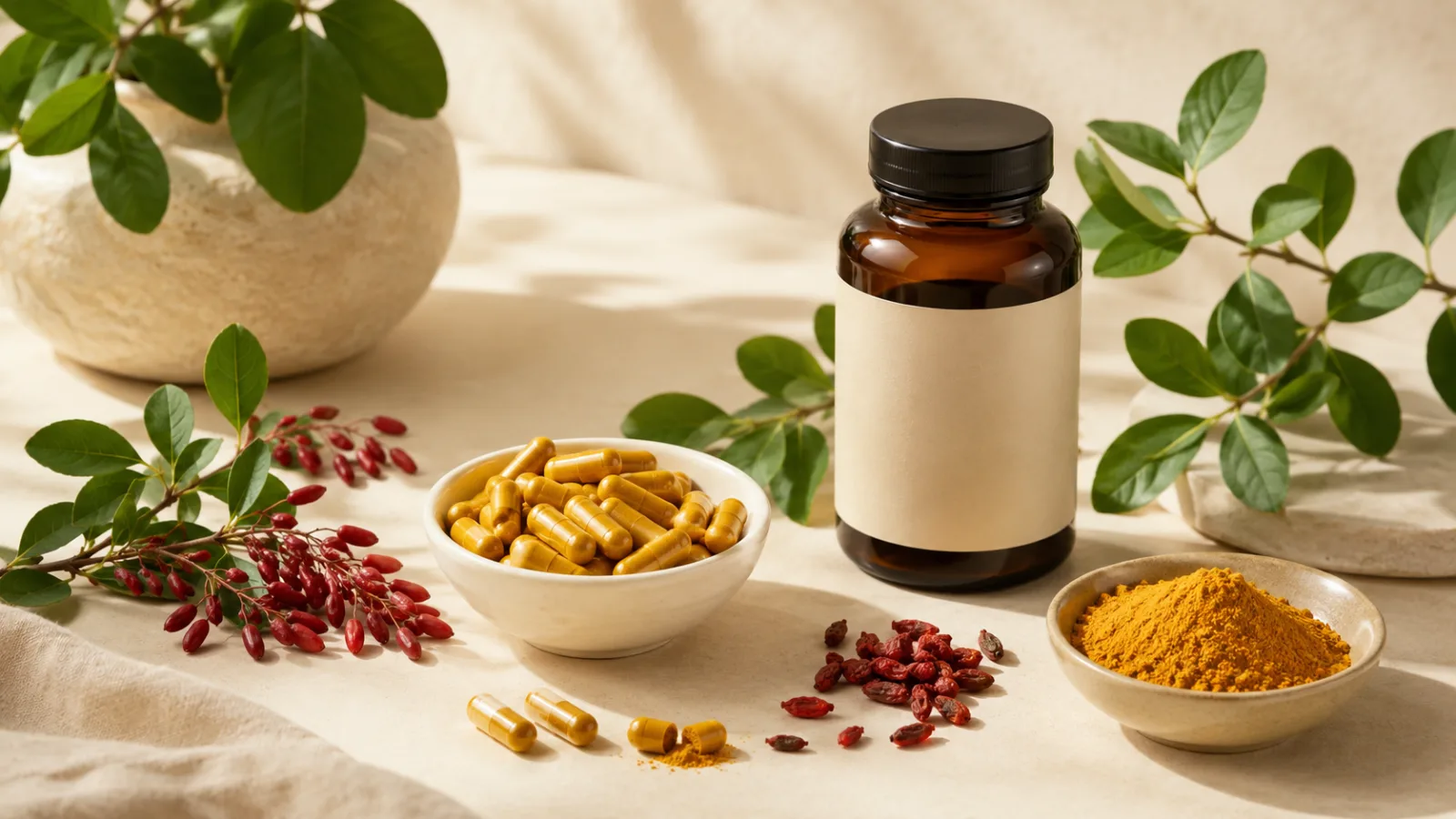
Berberine has become one of the most talked-about supplements in the wellness world.
You may have seen it mentioned for blood sugar, metabolism, cravings, weight management, cholesterol, or even as a so-called “natural Ozempic.”
But that last comparison can be misleading.
Berberine is not Ozempic.
It is not a prescription medication.
And it should not be treated as a shortcut or replacement for medical care.
Berberine is a plant compound found in several plants, including barberry, goldenseal, Oregon grape, and others. It has a long history of use in traditional wellness systems, and today it is being studied for possible effects on blood sugar, cholesterol, and other metabolic markers.
That does not mean everyone should take it.
But if you are curious about berberine, it helps to understand what people use it for, what the potential benefits are, and where caution matters.
Here are five potential berberine benefits to know.
1. Berberine may support healthy blood sugar balance
One of the biggest reasons people explore berberine is blood sugar support.
Blood sugar balance can influence how you feel throughout the day.
When your routine does not support steady energy, you may notice patterns like:
- energy crashes
- stronger cravings
- feeling hungry soon after meals
- afternoon fatigue
- difficulty staying consistent
- reaching for quick snacks
This does not mean every craving or energy dip is caused by blood sugar.
But blood sugar is one part of the bigger energy-and-metabolism picture, and simple morning habits for steady blood sugar are a good place to start.
Berberine has been studied for its possible effects on glucose metabolism and may modestly lower blood glucose levels in some people with type 2 diabetes.
That is exactly why caution matters.
If you take medication for diabetes, blood sugar, or insulin sensitivity, do not add berberine without speaking with a healthcare professional.
Combining supplements with blood sugar medication can increase the risk of blood sugar going too low.
For healthy adults who are simply curious, berberine is still not something to treat casually.
Blood sugar is not a guessing game.
2. Berberine may fit into metabolism-support routines
Berberine is often discussed in connection with metabolism.
But metabolism does not just mean “burning calories.”
Your metabolism is connected to how your body uses energy, processes nutrients, manages glucose, responds to meals, and adapts to daily habits like sleep, stress, movement, and food choices.
This is why berberine is often explored as part of a broader metabolic wellness routine.
The key phrase is:
part of a broader routine.
Berberine does not replace:
- protein-rich meals
- fiber
- movement
- sleep
- stress management
- hydration
- medical care
- a realistic daily routine
But for some people, it may be one supplement they explore alongside lifestyle changes.
If your goal is weight management, the most important question is not only:
“What supplement should I take?”
A better question is:
“What routine can I actually repeat?”
Because even a promising supplement will not help much if the rest of your routine feels impossible to keep.
3. Berberine may help reduce cravings for some people
Cravings can be complicated.
They may be connected to sleep, stress, low protein intake, skipped meals, hormones, emotional eating, blood sugar swings, habits, or simply having very restrictive food rules.
Because berberine is often discussed in connection with blood sugar and metabolic support, some people are curious whether it may also help with cravings.
The realistic answer is:
Maybe for some people, but it is not a craving “off switch.”
If cravings are mostly caused by skipping meals, under-eating, poor sleep, or stress, berberine will not solve the root issue.
A better cravings routine usually includes:
- enough protein
- enough fiber
- regular meals
- better sleep
- less extreme restriction
- stress support
- realistic snacks
- hydration
Berberine may fit into a broader routine for some people, but it should not be the only strategy.
If you want fewer cravings, start with the basics first. It also helps to understand why you crave sugar in the afternoon.
Eat enough.
Build balanced meals.
Sleep consistently.
Avoid making your diet so strict that cravings become stronger.
Then, if berberine still feels relevant, approach it carefully.
4. Berberine may support steady energy indirectly
Some people are interested in berberine because they feel like their energy is inconsistent.
They may feel good after eating, then crash later.
Or they may feel like motivation disappears when energy drops.
Energy is influenced by many factors:
- sleep
- calories
- meal timing
- hydration
- stress
- iron levels
- thyroid health
- blood sugar patterns
- medications
- activity level
- overall health
Berberine may support energy indirectly if it helps support a healthier metabolic routine for the right person.
But it is not a stimulant.
It does not work like caffeine.
And it should not be used to push through fatigue without understanding why the fatigue is happening.
If you are dealing with persistent fatigue, dizziness, weakness, shortness of breath, unusual thirst, frequent urination, or major energy changes, it is worth getting checked by a healthcare professional.
Supplements should not be used to cover up symptoms that need attention. If low iron is part of the picture, iron-rich foods may help your meals do more.
5. Berberine pairs best with healthy habits
This is the most important point.
Berberine is usually not a standalone solution.
It works best, if used at all, as part of a routine that already supports your body.
That means:
- eating real, nutrient-dense meals
- getting enough protein
- including fiber-rich foods
- walking or moving regularly
- prioritizing sleep
- managing stress
- limiting ultra-processed foods
- staying consistent with habits you can actually repeat
A supplement can feel appealing because it seems simple.
But the foundation still matters.
If your daily routine is built around poor sleep, skipped meals, high stress, constant snacking, and no structure, berberine alone is unlikely to change everything.
But if you are already working on your routine, it may be something worth learning about. These insulin-supporting habits for steady energy are a strong foundation.
How people usually take berberine
Berberine is commonly sold as capsules or tablets.
Many products use dosages like 500 mg per serving, sometimes taken once or multiple times daily.
In the clinical trials on blood sugar, most participants took 0.9 to 1.5 g per day, split into two or three doses with meals (Xie et al., 2022). Those were people with type 2 diabetes, often under medical supervision, so the numbers are not a self-dosing guide.
However, dosage depends on the product, the person, and the reason for use.
Do not copy a dosage from a random social media post.
Always read the label and speak with a healthcare professional if you have any medical conditions, take medication, or are unsure whether it is safe for you.
Also, supplement quality matters.
If you choose a supplement, look for:
- clear ingredient labels
- third-party testing when possible
- transparent dosage information
- no unrealistic claims
- reputable manufacturing standards
- clear warnings and directions
Avoid products that promise dramatic weight loss, instant fat burning, or medication-like results.
Who should be careful with berberine?
Berberine is not right for everyone.
Speak with a healthcare professional before taking berberine if you:
- take diabetes medication
- take blood sugar medication
- take blood pressure medication
- take blood thinners
- are pregnant
- are breastfeeding
- have liver or kidney disease
- have a medical condition
- are preparing for surgery
- take several supplements or medications
- are unsure whether it fits your situation
Berberine may affect blood sugar and may interact with medications.
It can also cause digestive side effects in some people, such as stomach discomfort, constipation, diarrhea, gas, or nausea.
Natural does not automatically mean risk-free.
For the bigger picture on meals, movement and sleep, see our metabolic support guide and the cravings hub.
FAQ
Berberine Questions
Is berberine really a natural Ozempic?
No. Berberine is a plant compound sold as a supplement, while Ozempic is a prescription medication that works differently. Research on berberine for weight is limited, and the comparison mostly comes from social media.
Does berberine lower blood sugar?
Studies suggest berberine may modestly lower blood glucose in some people with type 2 diabetes. Because it can affect blood sugar, combining it with diabetes medication may raise the risk of levels dropping too low, so talk to your doctor first.
What are the side effects of berberine?
The most common side effects are digestive, such as stomach discomfort, constipation, diarrhea, gas, or nausea. Berberine may also interact with several medications.
Who should not take berberine?
Berberine is not recommended during pregnancy or breastfeeding. People who take medication, especially for blood sugar, blood pressure, or blood thinning, or who have liver or kidney disease should speak with a doctor before trying it.
The bottom line
Berberine is a plant compound often explored for blood sugar support, metabolic wellness, cravings, energy, and weight management routines.
It may be useful for some people.
But it is not a magic solution.
It is not a replacement for medication.
And it is not a substitute for healthy habits.
If you are curious about berberine, approach it like a serious supplement:
learn what it does, check whether it fits your situation, and speak with a healthcare professional if you take medication or have health concerns.
The best wellness routine is not the most extreme one.
It is the one you can repeat safely and consistently.
Not sure what wellness routine fits your body best?
Different people struggle with different patterns.
For some, the issue is cravings.
For others, it is low energy, digestion, blood sugar swings, snacking, stubborn weight, or not having a routine that feels realistic.
Take the free quiz to find the weight-loss routine that fits your body.
This article is for general information and does not replace medical advice. Talk to your doctor before making changes, especially if you have a health condition or take medication.
Sources
We check health claims against research summaries and official fact sheets. Links open the original source.
- Glucose-lowering effect of berberine on type 2 diabetes: a systematic review and meta-analysis (Xie et al.) · Frontiers in Pharmacology, 2022
- The effects of berberine supplementation on cardiovascular risk factors in adults: a systematic review and dose-response meta-analysis (Zamani et al.) · Frontiers in Nutrition, 2022
- Berberine and Weight Loss: What You Need To Know · National Center for Complementary and Integrative Health (NIH), 2023