Why Walking in Nature Is So Good for Your Body & Mind
A walk through a park or along a forest trail does more than move your legs. Here is why green walks feel so restorative and how to build an easy nature-walk habit.
By KateLast reviewed
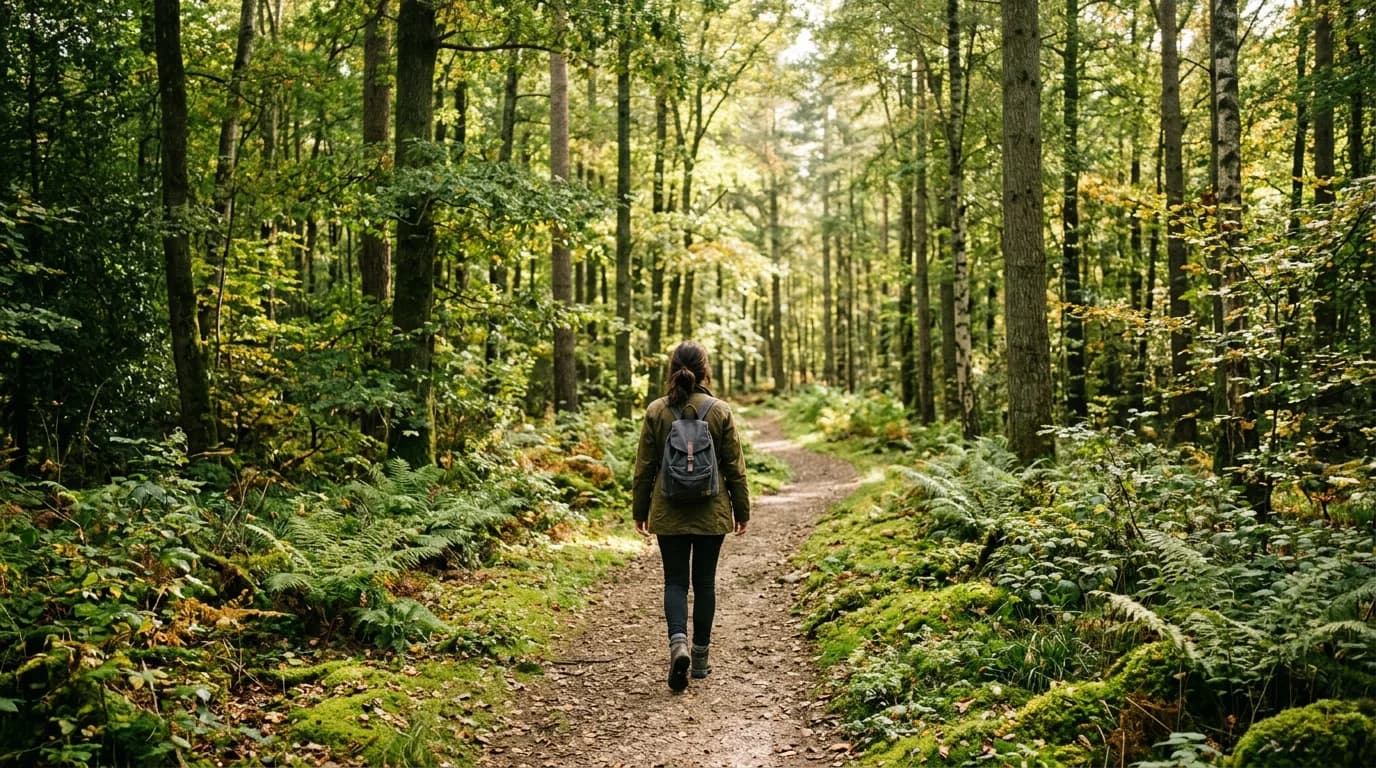
Some days a walk is just a walk. And some days you come back from twenty minutes under the trees feeling like someone opened a window in your head.
That feeling is not your imagination. Walking in nature combines gentle movement, daylight, fresh air and a break from constant input, and together they make a surprisingly powerful daily habit.
Here is why a green walk does so much for your body and mind, and how to make it part of a busy week.
1. It gives your nervous system a break
Most of our day is spent in "on" mode: notifications, deadlines, traffic, screens. Natural surroundings ask very little of your attention. Leaves moving, birdsong and wide views let your mind rest without effort.
Many people notice they breathe slower and their shoulders drop within the first ten minutes. If your stress tends to show up as tension or evening snacking, this is one of the gentlest resets you can do.

2. It supports a better mood
A walk outside combines two well-known mood helpers: movement and daylight. Even a short walk can leave you feeling clearer and more optimistic than when you started.
Walking in green spaces also tends to interrupt rumination, that loop of replaying the same worry. A changing environment gives your thoughts something else to land on.
3. Morning daylight helps your sleep rhythm
Your internal clock takes cues from light. Getting outside in the morning or around midday helps your body tell the difference between day and night, which can make it easier to feel sleepy at bedtime.
If your evenings feel wired and your mornings groggy, a daylight walk pairs well with the habits in our guide to sleep habits for women over 40.
4. It is movement you actually want to repeat
The best exercise is the one you keep doing. Walking in nature rarely feels like a workout, yet it adds steps, works your legs and core on uneven paths and gets your heart rate up on small hills.
Because it feels like a treat rather than a chore, it is much easier to stay consistent, and consistency is what supports healthy weight over time.
5. It can calm stress-driven cravings
When you are tired and stressed, the pull toward sugary snacks gets stronger. A walk will not erase cravings, but it can create space between the stress and the snack.
Try a short walk when you notice the mid-afternoon slump instead of reaching for something sweet. It works especially well together with the tips in why you crave sugar in the afternoon.
6. It supports digestion after meals
A relaxed walk after eating helps many people feel lighter and less bloated. You do not need a forest for this: a loop around the block after dinner already counts. Our 10-minute after-dinner walk explains how to make it a habit.
7. It reconnects you with your own pace
There is no tracker telling you to go faster. Walking in nature invites you to notice things: the smell after rain, the light through leaves, how your body feels today. That kind of attention is a small daily practice of being kind to yourself.
An easy 20-minute nature walk routine
You do not need a hiking trail. Use whatever green space is closest.
- Minutes 0–5: Arrive. Walk slowly, leave your phone in your pocket and take a few deeper breaths.
- Minutes 5–15: Find your rhythm. Walk at a pace where you could still talk but feel warm. Take a hill or stairs if you can.
- Minutes 15–18: Notice five things. Something you see, hear, smell, feel and one thing you are grateful for.
- Minutes 18–20: Slow down. Let your breathing settle before you go back inside.
Do this three to five times a week and it quickly becomes a part of your day you look forward to.
How to make it stick
- Anchor it to something you already do: after the school run, during your lunch break or right after dinner.
- Lay out your shoes and jacket the night before so there is no decision to make.
- Bring a friend. Walking with someone makes it more fun and much harder to skip. Read more in why walking with a friend makes healthy habits easier.
- Dress for the weather, not for the mood. Rainy walks are often the most refreshing ones.
- Build up gradually. Start with 10 minutes and add time as it starts to feel easy. A 30-minute daily walk is a great longer-term goal.
Pair it with good fuel
Walks feel better with steady energy. A filling breakfast with protein and fiber, like this Greek yogurt bowl, or a glass of water before you head out makes a noticeable difference.
FAQ
Walking in Nature – Common Questions
How long should a nature walk be to feel the benefits?
Many people notice a calmer mood after 20 to 30 minutes outdoors. Research on time in nature often points to about two hours per week in total, which you can split into several shorter walks.
Does a city park count as nature?
Yes. A park, a tree-lined street, a riverside path or a botanical garden all count. The point is greenery, open sky and a break from screens and traffic noise.
Is walking in nature better than walking on a treadmill?
Both move your body. Outdoor walks add daylight, fresh air, changing terrain and a mental break that many people find more restorative, which also makes the habit easier to keep.
Can walking in nature help with weight loss?
Walking adds daily movement and can help with stress-related snacking, but it works best together with balanced meals, enough protein and good sleep. It is a supportive habit, not a quick fix.
The bottom line
Walking in nature is one of the simplest things you can do for yourself: free, gentle and good for both body and mind. You do not need a perfect trail or a lot of time. Step outside, find some green, and let the walk do its quiet work.
This article is for general information and does not replace medical advice. If you have health concerns or are starting a new exercise routine, talk to your doctor.