5 Milk Thistle Benefits for Liver Wellness
Milk thistle is a plant traditionally used for liver-related wellness. Learn about silymarin, antioxidant support, liver-friendly habits, and important safety notes.
By KateLast reviewed
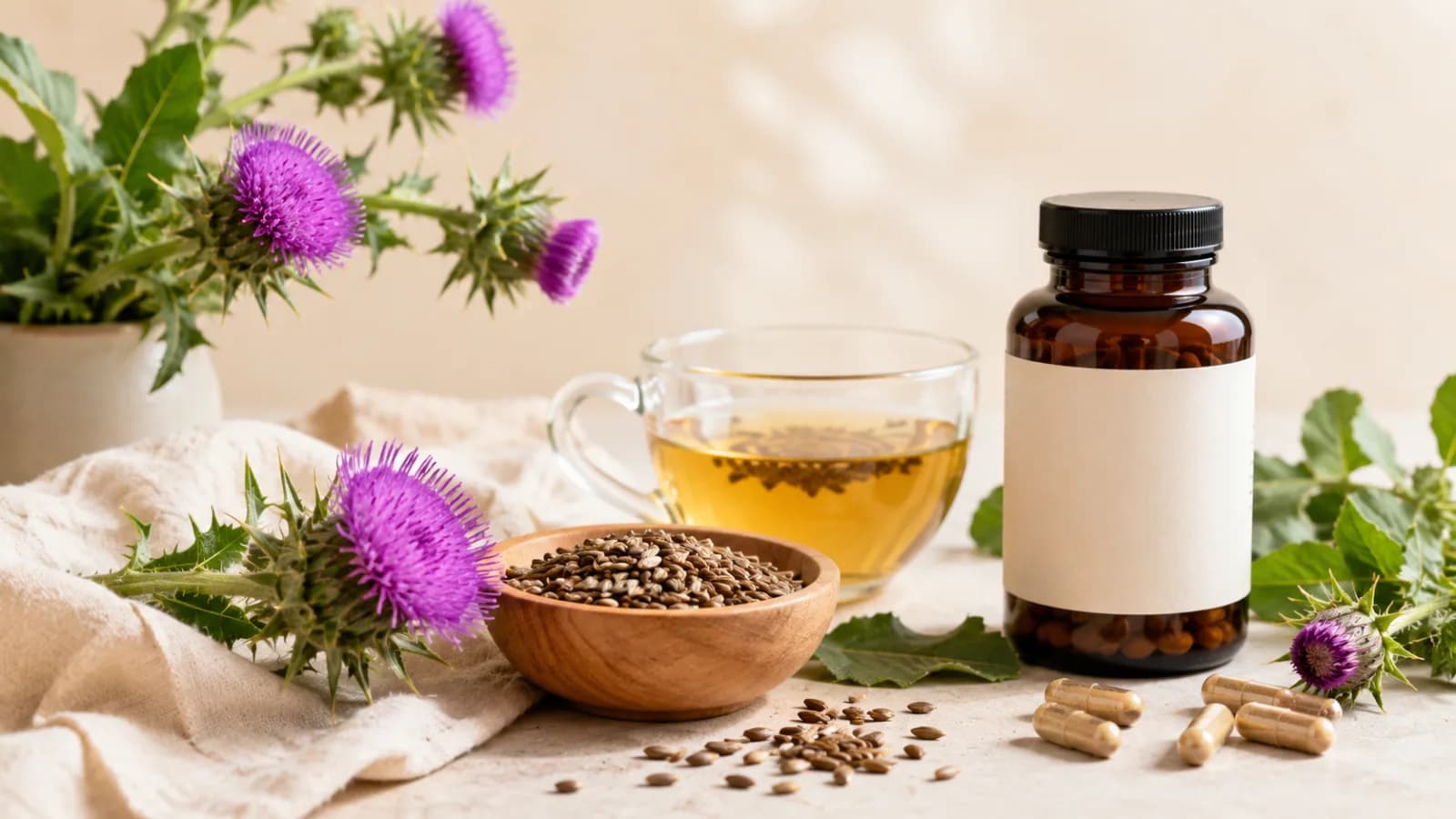
Milk thistle is one of the most well-known herbs connected to liver wellness.
You may have seen it in supplements, teas, tinctures, or “liver support” formulas.
It has a long history of traditional use, and its most talked-about plant compound is called silymarin.
Silymarin is extracted from milk thistle seeds and is often discussed because of its antioxidant properties.
But milk thistle should be approached realistically.
It is not a liver detox shortcut.
It does not replace medical care.
And it should not be used to self-treat liver disease.
Your liver already performs detoxification every day. The better question is not “How do I detox my liver?” but “How do I build habits that support overall liver wellness?”
Here are five potential milk thistle benefits to know.
1. Milk thistle is traditionally used for liver wellness
Milk thistle has been used for centuries in traditional wellness systems, especially in relation to the liver and gallbladder.
Today, people often explore it as part of a liver-friendly routine.
That does not mean it has been proven to cure liver problems.
Research on milk thistle for liver diseases has been mixed, and several studies have not found clear benefits for certain liver conditions.
Still, milk thistle remains popular because of its history of use and its silymarin content.
A realistic way to think about milk thistle is this:
It may be a supportive herb for some people, but it is not the foundation of liver health.
The foundation is still:
- limiting alcohol
- eating nutrient-dense meals
- maintaining a healthy weight
- moving regularly
- managing blood sugar
- sleeping well
- staying hydrated
- avoiding unnecessary toxins
- following medical advice
Supplements should support your routine, not replace the basics.
2. Milk thistle provides antioxidant support
Silymarin, the main active extract in milk thistle, is often discussed for its antioxidant activity.
Antioxidants help protect cells from oxidative stress.
Oxidative stress can increase with poor sleep, alcohol, smoking, pollution, illness, high stress, and low-nutrient diets.
This is one reason milk thistle is often included in wellness products.
But antioxidant support does not mean a supplement can erase an unhealthy routine.
A better approach is to combine food-based and lifestyle-based antioxidant support.
That may include:
- colorful fruits and vegetables
- enough protein
- healthy fats
- herbs and spices
- regular movement
- quality sleep
- less alcohol
- stress management
- not smoking
Berries are an easy start, as these blueberry benefits for healthy aging show, and spices like turmeric add flavor too.
Milk thistle may fit into this bigger picture, but it should not be treated as the whole picture.
3. Milk thistle may fit into digestion-friendly routines
Milk thistle is often connected to bile flow and digestion in traditional herbal use.
Bile helps your body digest fats, and the liver and gallbladder are both involved in this process.
Some people explore milk thistle as part of a digestion-friendly wellness routine.
However, digestion is complex.
Bloating, nausea, reflux, abdominal pain, constipation, diarrhea, and food intolerance symptoms can have many different causes.
Milk thistle should not be used to guess your way through digestive symptoms.
If you have ongoing digestive discomfort, speak with a healthcare professional.
For general digestive wellness, it is better to start with the basics:
- eat enough fiber
- drink water consistently
- include protein at meals
- eat slowly
- manage stress
- walk after meals
- limit foods that trigger symptoms
- sleep well
Simple additions like flaxseed for fiber and digestion or a cup of peppermint tea for less bloating can also fit into this routine.
Milk thistle can be discussed as a traditional herbal support, but your daily habits still matter most.
4. Milk thistle may support liver-friendly habits
A healthy liver is supported by your overall lifestyle.
Your liver is involved in many important processes, including nutrient metabolism, bile production, and processing substances in the body.
Milk thistle is often marketed for “liver support,” but the real support comes from consistent daily choices.
Liver-friendly habits include:
- limiting alcohol
- avoiding smoking
- eating a balanced diet
- choosing fiber-rich foods
- getting regular movement
- maintaining healthy blood sugar
- managing cholesterol
- drinking enough water
- using medications only as directed
- avoiding unnecessary supplement stacking
This last point matters.
Many people take several supplements at once without thinking about the liver.
But the liver helps process many compounds.
More supplements do not always mean more health.
If you are taking multiple supplements or medications, it is smart to review them with a healthcare professional.
5. Milk thistle can fit into a simple wellness routine
One reason milk thistle is popular is that it feels simple.
It is usually sold as a capsule, tablet, liquid extract, or tea.
That makes it easy to add to a routine.
But simple does not automatically mean safe or necessary.
Before taking milk thistle, check:
- the product quality
- the ingredient label
- the dose
- possible interactions
- whether you actually need it
- whether it fits your health situation
NCCIH has raised concerns about quality issues in some milk thistle supplements, including products containing different amounts of silymarin than listed on the label or possible contamination. That is why supplement quality matters.
If you use supplements, choose brands with transparent testing and avoid products that make dramatic detox, cleanse, or cure claims.
What is silymarin?
Silymarin is a group of compounds extracted from milk thistle seeds.
It is often described as the main active component of milk thistle.
Silymarin is commonly discussed for antioxidant and liver-related research.
You may see products labeled as:
- milk thistle
- silymarin
- milk thistle extract
- standardized silymarin extract
These are not always the same.
A product labeled “milk thistle” may contain different amounts of silymarin depending on the extract and manufacturing quality.
That is one reason reading labels matters.
Is milk thistle a liver detox?
No supplement should be treated as a liver detox shortcut.
Your liver already detoxifies your body continuously.
Milk thistle does not replace liver function.
And it does not give you a free pass to drink heavily, eat poorly, sleep badly, or ignore medical advice.
A better way to frame milk thistle is:
It may be a traditional herbal support that some people explore as part of a broader liver-friendly routine.
That is very different from saying it detoxes your liver.
Be careful with products that promise:
- instant liver cleanse
- rapid detox
- hangover cure
- fat loss detox
- liver repair
- toxin removal
- guaranteed liver protection
Those claims are usually exaggerated.
Who should be careful with milk thistle?
Milk thistle is generally well tolerated by many people when taken orally, but it is not right for everyone.
Speak with a healthcare professional before using milk thistle if you:
- have liver disease
- take medication
- take blood thinners
- take diabetes medication
- have hormone-sensitive conditions
- are pregnant
- are breastfeeding
- have allergies to ragweed, daisies, chrysanthemums, or related plants
- are preparing for surgery
- take multiple supplements
- have a medical condition
Mayo Clinic notes that milk thistle may interact with certain medications, including some diabetes drugs and medications processed by the liver.
If you already have a liver condition, do not self-treat with supplements.
Get medical guidance.
Possible side effects
Milk thistle can cause side effects in some people.
Possible side effects include:
- nausea
- diarrhea
- bloating
- gas
- upset stomach
- headache
- itching
- allergic reactions
People allergic to plants in the same family may be more likely to react.
Start carefully and stop using it if you notice concerning symptoms.
How to support liver wellness without overcomplicating it
If liver wellness is your goal, start with habits that actually matter.
Limit alcohol
Alcohol is one of the most direct lifestyle factors affecting the liver.
Reducing or avoiding alcohol can be one of the most meaningful steps for liver health.
Eat a nutrient-dense diet
Build meals around protein, fiber, vegetables, fruits, healthy fats, and minimally processed foods.
Move your body
Regular movement supports metabolism, blood sugar, body composition, and overall wellness.
Stay hydrated
Hydration supports normal body function and helps your routine feel steadier.
Sleep well
Sleep helps your body recover and supports many metabolic processes.
Be careful with supplements
Avoid stacking many supplements without guidance.
Natural products can still have side effects and interactions.
FAQ
Milk Thistle Questions
What is milk thistle good for?
Milk thistle has a long history of traditional use for liver and gallbladder wellness, mainly because of its silymarin content, which has antioxidant properties. Research on specific liver conditions is mixed, so it should not be used to treat liver disease on your own.
Does milk thistle detox the liver?
No supplement detoxes the liver. Your liver already processes substances every day, and habits like limiting alcohol, eating well, and moving regularly matter far more than any product.
What are the side effects of milk thistle?
Milk thistle is generally well tolerated, but some people notice nausea, diarrhea, bloating, or allergic reactions, especially if they react to ragweed or daisies. Stop using it if you notice concerning symptoms.
Who should avoid milk thistle?
Talk to your doctor first if you are pregnant or breastfeeding, have liver disease or a hormone-sensitive condition, or take medication such as diabetes drugs or blood thinners. Milk thistle may interact with medications processed by the liver.
The bottom line
Milk thistle is a plant with a long history of traditional use for liver-related wellness.
Its main active extract, silymarin, is often discussed for antioxidant support.
Milk thistle may fit into a liver-friendly wellness routine for some people.
But it is not a detox shortcut.
It is not a cure for liver disease.
And it should not replace healthy habits or medical care.
If you are curious about milk thistle, learn what it does, choose quality products, avoid exaggerated claims, and speak with a healthcare professional if you take medication or have health concerns.
Your liver does a lot for you.
Support it with real habits, not quick fixes.
Not sure what wellness routine fits your body best?
Different people struggle with different patterns.
For some, the issue is low energy.
For others, it is cravings, digestion, bloating, snacking, stubborn weight, poor sleep, or not having a routine that feels realistic.
Take the free quiz to find the weight-loss routine that fits your body.
This article is for general information and does not replace medical advice. Talk to your doctor before making changes, especially if you have a health condition or take medication.