5 Lymphatic Flow Habits for Less Puffiness and More Energy
Simple daily habits like drinking water, gentle movement, deep breathing, and calming routines may help support lymphatic flow and reduce everyday puffiness.
By KateLast reviewed
Some days, your body just feels heavier than usual.
Your face may look puffy.
Your rings may feel tighter.
Your legs may feel swollen after sitting for hours.
Or you may simply feel sluggish, uncomfortable, and not quite like yourself.
A lot of wellness content calls this “poor lymph flow.”
That can sound dramatic, but the basic idea is simple:
Your lymphatic system helps move fluid through your body and supports immune function. Unlike your heart, your lymphatic system does not have one central pump. Movement, breathing, hydration, and daily routines can all play a role in how your body feels.
That does not mean puffiness is always a lymph problem.
Swelling can have many causes, including salt intake, hormones, heat, travel, medications, pregnancy, kidney issues, heart issues, venous problems, or medical conditions.
But if you are looking for gentle daily habits that may help you feel less puffy and more refreshed, these are simple places to start.
1. Drink water early in the day
Hydration is one of the simplest habits to start with.
Many people wake up and go straight to coffee, then realize later in the day that they barely drank any water.
That can make the whole day feel more sluggish.
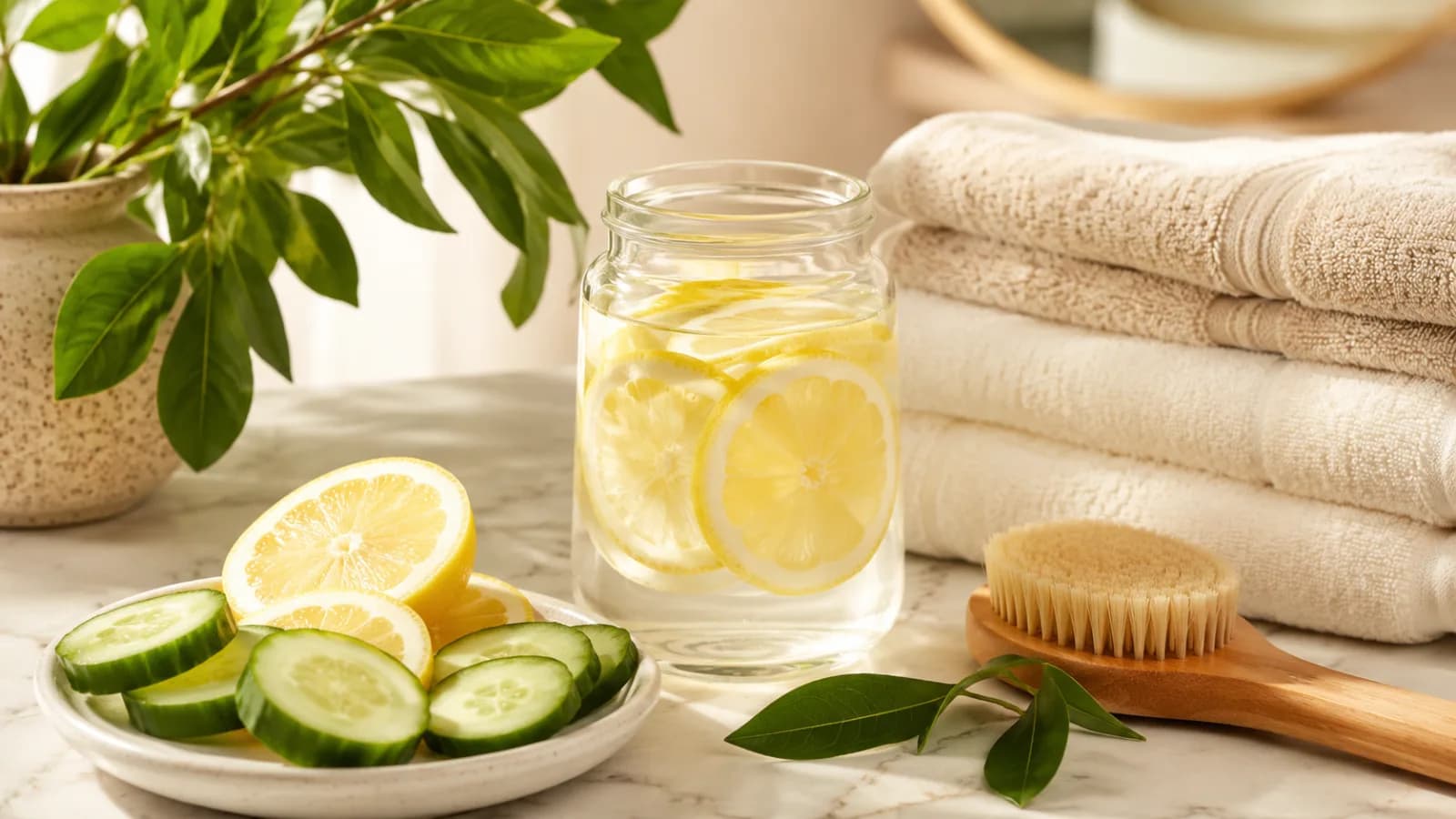
Try starting your morning with a glass of water before anything else, or make it a simple lemon water morning habit.
You can keep it simple:
- plain water
- water with lemon
- water with cucumber
- warm water
- sparkling water if that helps you drink more
The goal is not to force huge amounts of water.
The goal is to make hydration easier to remember.
A simple morning cue can help:
Wake up → drink water → start your day.
This habit is especially useful if you often feel puffy after salty meals, travel, poor sleep, or long periods of sitting.
2. Take a gentle morning walk
Movement is one of the best low-friction ways to support circulation and fluid movement.
You do not need an intense workout.
A gentle walk can be enough to wake up your body, move your muscles, and help you feel more alert.
Try:
- a 10-minute walk after breakfast
- a slow walk around the block
- walking while listening to a podcast
- walking outside for morning light
- walking after sitting for a long time
The important part is consistency.
A gentle walk is easier to repeat than a workout you dread. If evenings suit you better, a 10-minute walk after dinner works too.
And when a habit is easier to repeat, it has a better chance of becoming part of your normal routine.
3. Try dry brushing before showering
Dry brushing is popular in wellness routines because it feels simple, quick, and energizing.
It involves using a dry body brush on the skin before showering.
Some people like it because it makes their skin feel smoother and gives them a sense of “waking up” their body.
If you try it, keep it gentle.
Your skin should not feel scratched, burned, or irritated.
Basic tips:
- use light pressure
- avoid broken or irritated skin
- brush toward the center of the body
- keep strokes slow and comfortable
- stop if your skin feels painful or overly red
- moisturize after showering if needed
Dry brushing is not a cure for puffiness or medical swelling.
But as part of a calming body-care routine, it may help you feel more connected to your body and more refreshed.
4. Add deep breathing breaks
Deep breathing is one of the most underrated wellness habits.
It is free.
It is simple.
And you can do it almost anywhere.
When you are stressed, your breathing often becomes shallow.
That can make your body feel tense and your mind feel scattered.
Deep breathing can help signal calm to your nervous system and make your body feel less locked in “go mode.”
Try this:
Inhale slowly through your nose for 4 seconds.
Pause for 1 second.
Exhale slowly for 6 seconds.
Repeat for 2 to 5 minutes.
You can do this:
- before bed
- after lunch
- during work breaks
- after a stressful moment
- before eating
- after waking up
It may seem too simple to matter, but small breathing breaks can make your whole routine feel calmer.
5. Eat more water-rich foods
Hydration does not only come from drinks.
Water-rich foods can also support a lighter, fresher routine.
Examples include:
- cucumber
- watermelon
- celery
- oranges
- berries
- lettuce
- zucchini
- tomatoes
- grapefruit
- bell peppers
These foods can be especially helpful because they often provide water, fiber, and micronutrients at the same time. Cucumber is a good example, and these cucumber benefits for hydration and less bloating show why it is such an easy addition.
Simple ideas:
- cucumber with lemon and salt
- berries with Greek yogurt
- watermelon after a walk
- salad with tomatoes and bell peppers
- celery with hummus
- citrus fruit with breakfast
Again, the goal is not perfection.
The goal is making your normal meals feel more hydrating and refreshing.
Extra habits that may help with puffiness
If puffiness is something you notice often, these small habits may also help:
- get up and move after long periods of sitting
- elevate your legs for a few minutes
- limit very salty meals if they make you feel swollen, and balance them with potassium-rich electrolyte foods
- prioritize sleep
- wear comfortable clothing that does not feel too tight
- stretch gently
- avoid sitting in one position for too long
- take breaks during travel
- keep your evening routine calm
Some people also explore lymphatic massage or professional lymphatic drainage. This type of massage is used to help move excess fluid when the lymphatic system is not draining well, but it is not something everyone needs. If you have ongoing swelling, pain, or a medical condition, it is better to ask a healthcare professional first.
When puffiness or swelling should be checked
Everyday puffiness can happen for many normal reasons.
But persistent or sudden swelling should not be ignored.
Speak with a healthcare professional if you notice:
- swelling in one leg only
- sudden swelling
- swelling with pain
- swelling with shortness of breath
- swelling with chest discomfort
- swelling after surgery or injury
- skin that looks shiny, tight, red, or warm
- swelling that leaves a dent when pressed
- swelling that does not improve
- unexplained weight gain with fluid retention
Mild edema can sometimes improve on its own, but swelling can also be related to underlying medical issues, so it is important not to self-diagnose.
FAQ
Lymphatic Flow Questions
What are signs of poor lymphatic flow?
People often describe puffiness, a heavy feeling in the legs, or rings feeling tighter, but these signs are not specific and can have many causes, such as salt, heat, hormones, or long periods of sitting. Ongoing, sudden, or one-sided swelling should be checked by a healthcare professional rather than self-diagnosed.
What is the fastest way to reduce puffiness naturally?
Gentle movement, a glass of water, elevating your legs, and taking a break from sitting may help everyday puffiness feel better. Very salty meals, poor sleep, and travel can make it worse, so small changes there can also help.
Does dry brushing really help lymphatic drainage?
Research on dry brushing and lymph flow is limited, so it is best seen as a pleasant body-care habit rather than a treatment. If you try it, use light pressure and avoid irritated or broken skin.
Does drinking more water reduce water retention?
Staying well hydrated is part of a healthy routine, and some people notice they feel less puffy when they drink enough through the day. It is not a cure for swelling, and people with heart or kidney conditions should follow their doctor's fluid advice.
The bottom line
You do not need a complicated routine to support your body.
Start with simple habits:
Drink water early.
Take a gentle walk.
Try dry brushing if it feels good.
Add deep breathing breaks.
Eat more water-rich foods.
Small habits can help your body feel lighter, calmer, and more supported.
And the best routine is usually the one you can actually repeat.
Not sure what wellness routine fits your body best?
Different people struggle with different patterns.
For some, the issue is cravings.
For others, it is low energy, puffiness, digestion, bloating, snacking, stubborn weight, or not having a routine that feels realistic.
Take the free quiz to find the weight-loss routine that fits your body.
This article is for general information and does not replace medical advice. Talk to your doctor before making changes, especially if you have a health condition or take medication.