5 Apple Cider Vinegar Habits for Digestion and Appetite Support
Apple cider vinegar is popular for digestion and appetite, but how you use it matters. Five safe habits, what research actually shows and who should skip it.
By KateLast reviewed

Apple cider vinegar (ACV) has been used in kitchens for centuries, and today it is one of the most popular wellness habits on social media. Research suggests it may modestly support blood sugar after meals and appetite, but it is acidic, so how you use it matters a lot.
What research says
Several small studies found that a tablespoon or two of vinegar with a carbohydrate-rich meal can lower the rise in blood sugar afterwards. The acetic acid may slow stomach emptying, which can also help you feel full sooner. Effects on weight in studies were small. Think of ACV as a small helper, not a fix.
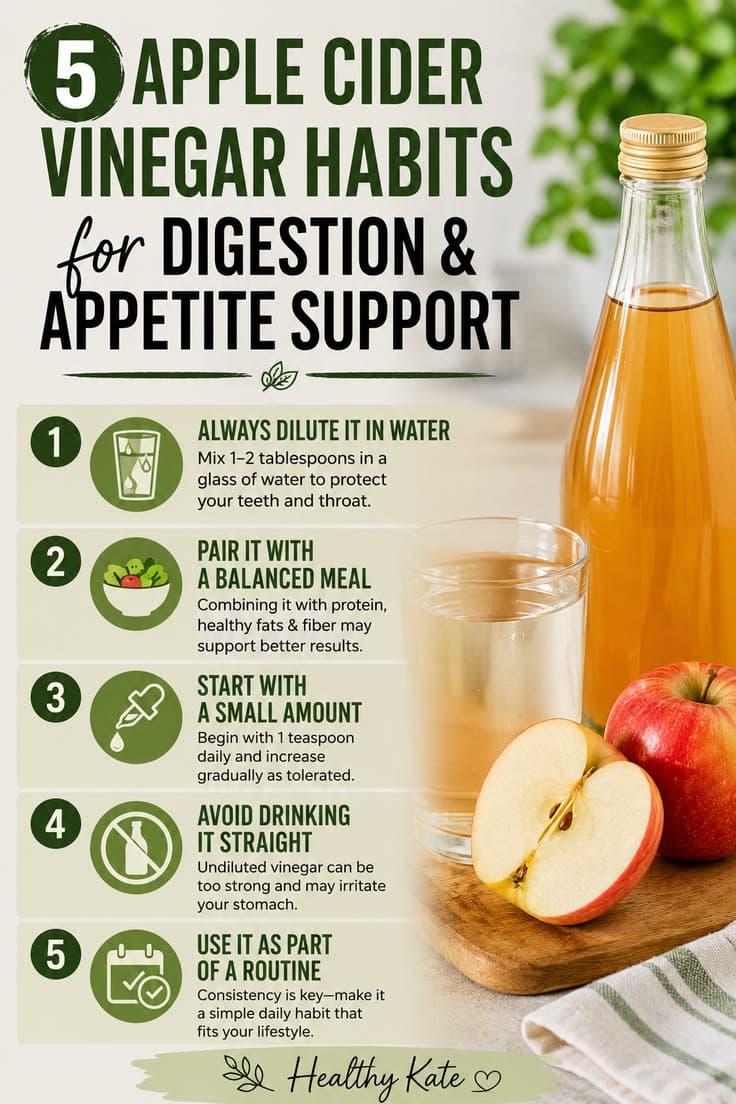
1. Always dilute it in water
Mix 1 to 2 teaspoons (up to 1 tablespoon) in a large glass of water. Undiluted vinegar can irritate your throat and damage tooth enamel.
2. Pair it with a balanced meal
Combining vinegar with a meal that contains protein, healthy fats and fiber works with your body. A simple way: use ACV in a salad dressing with olive oil. Balanced meals matter more than the vinegar itself; see the Lazy Plate Method.
3. Start with a small amount
Begin with 1 teaspoon per day and increase slowly if you tolerate it well. More is not better.
4. Avoid drinking it straight
Shots of undiluted ACV are a common social media trend but can burn the esophagus and erode teeth. Use a straw and rinse your mouth with water afterwards.
5. Use it as part of a routine
Consistency matters more than amount. Make it a simple ritual, like a diluted glass before lunch or a homemade vinaigrette on your daily salad.
Easy ways to use apple cider vinegar
- Salad dressing: 3 tbsp olive oil, 1 tbsp ACV, 1 tsp mustard, salt and pepper.
- Morning drink: 1 tsp ACV in warm water with lemon and a pinch of cinnamon.
- Marinades: ACV tenderizes chicken and adds tang.
- Quick pickles: sliced cucumber or red onion in ACV, water and a pinch of salt.
Who should be careful
ACV is not for everyone. Skip it or talk to your doctor if you have reflux, ulcers, slow stomach emptying (gastroparesis), kidney disease or low potassium, or if you take diabetes medication, insulin, digoxin or diuretics. Stop if you notice throat burning, stomach pain or nausea.
Better than a shot: habits that support digestion and appetite
ACV can be a small addition, but these habits make a bigger difference:
- Eat protein at every meal.
- Add fiber gradually: see 5 fiber habits for women over 40.
- Walk for 10 minutes after meals: here is the after-dinner walk habit.
- Drink water throughout the day.
- Eat slowly and stop when you are comfortably full.
For more ideas on blood sugar, read 5 morning habits for steady blood sugar.
FAQ
Apple Cider Vinegar Questions
Does apple cider vinegar help with weight loss?
A few small studies found modest effects on appetite and body weight, but the evidence is limited. Apple cider vinegar is not a weight-loss solution on its own.
When is the best time to drink apple cider vinegar?
Most studies used vinegar shortly before or with a meal, often one containing carbohydrates. Taking it with food is also gentler on your stomach.
Can apple cider vinegar damage your teeth?
Yes, its acidity can erode tooth enamel. Always dilute it, consider drinking with a straw and rinse your mouth with water afterwards.
Who should avoid apple cider vinegar?
People with reflux, stomach ulcers, gastroparesis, kidney disease or low potassium, and those taking diabetes medication, insulin or diuretics should talk to their doctor first.
The bottom line
Apple cider vinegar may offer small benefits for blood sugar and appetite when used wisely: diluted, with a meal and in small amounts. Treat it as a flavorful habit inside a balanced routine, not as a shortcut.
This article is for general information and does not replace medical advice. Talk to your doctor before making changes, especially if you have a health condition, are pregnant or take medication.